
Stand on your mat at home, ready to practice, and the questions arrive fast: what comes first? How long should you hold things? Is there a right order? Building your own yoga sequence can feel mysterious, but it follows a simple logic once you understand the shape. Get that shape right, and everything else falls into place.
Why Home Practice Is Worth the Effort
Before diving into structure, it's worth knowing why building a home practice pays off. A 2012 survey of over 1,000 yoga practitioners found that home practice predicted health outcomes better than years of practice or class frequency. That's significant. You don't need a studio or a two-hour class to feel the benefits.
Most yoga teachers agree that 20 minutes of practice every day is more valuable than 90 minutes twice a week. Consistency beats duration. A short, well-structured sequence you'll actually do beats a perfect one you keep putting off.
Every Good Sequence Has a Shape
Think of your sequence as an arc, not a list. It moves from gentle to active, peaks, then returns to gentle again. Skip any part of that arc and your practice will feel incomplete - and your body won't recover as well.
The three parts are simple:
- Warm-up - prepares your joints and breath (5-10 minutes)
- Main body - builds toward your peak effort (10-20 minutes)
- Cool-down and rest - releases, integrates, and settles (5-10 minutes)
Before you pick a single pose, ask yourself one question: What do I need from my practice today? Stress relief? Strength? A gentle stretch after sitting all day? Your answer shapes every choice that follows.
Start With a Warm-Up That Actually Warms You Up
Your body needs a transition into movement - it shouldn't be rushed into deep stretches or challenging balances cold. Keep this section slow and small.
Good warm-up options include:
- Seated or lying breathwork to settle your nervous system
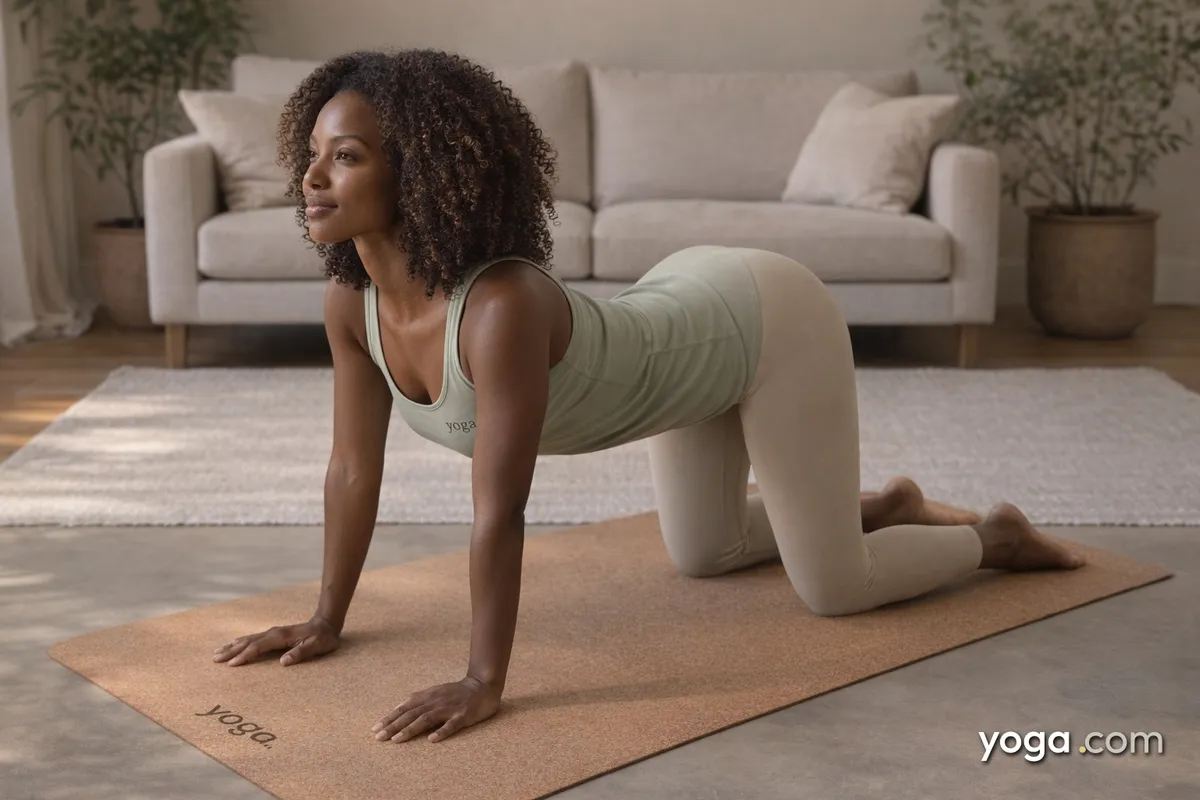
- Cat-Cow Pose (Marjaryasana-Bitilasana) - move slowly, section by section from your tailbone upward
- Child's Pose (Balasana) - a simple reset for spine and hips
- Gentle neck rolls or shoulder circles
In Cat-Cow, the most common mistake is collapsing the whole back at once. Slow it down to about three seconds per direction, initiating from the tailbone and letting the movement travel up the spine. If you have a lumbar disc condition, keep the range very small and stop immediately if any sensation travels down into your leg.
Your warm-up is also when you establish your breath rhythm. That's not a small thing - conscious breathing is doing real work for your nervous system from the very first minute.
Build the Middle Section Around One Goal
This is where most beginners go wrong. The middle section - sometimes called the peak - should be built around one central intention, not a random collection of poses you like.
Pick a direction, then build toward it
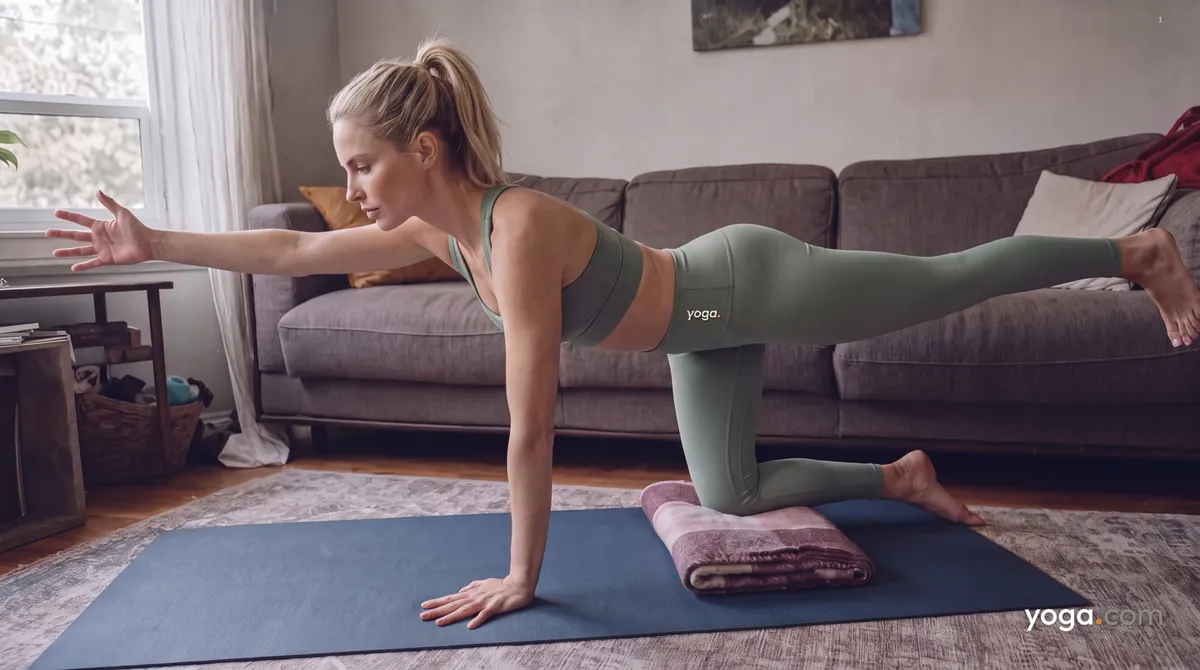
If you want to practice a standing balance, use your middle section to open the hips, strengthen the legs, and warm the core first. If your goal is a backbend, spend that time opening the chest and mobilizing the spine. Every pose in the middle section should be earning its place by preparing you for the next one.
Yoga can be particularly meaningful if you're working with back discomfort. A 2022 review of 21 studies involving 2,223 participants found that yoga is slightly better than no exercise for low-back pain. That said, if you're dealing with a back condition, consult your doctor or a qualified yoga teacher before designing your own sequence - some poses can aggravate certain issues.
Don't skip counter-poses
A counter-pose moves in the opposite direction of the pose before it, releasing tension the peak pose created. Strong backbend? Follow it with a gentle forward fold. Deep hip opener on one side? Do the other side before moving on.
Skipping counter-poses is one of the most common home-practice mistakes. You'll finish feeling lopsided, with one area tighter than when you started.
A note on Warrior poses
Warrior I (Virabhadrasana I) and Warrior II (Virabhadrasana II) are among the most useful middle-section building blocks. In Warrior I, the most common mistake is letting the front knee collapse inward. Press the inner arch of your front foot firmly into the floor and rotate the thigh slightly outward so your knee tracks over your second and third toes. If you have anterior knee pain or a recent meniscus injury, keep the front shin more vertical to shift the load toward the hip.
Cool Down - Don't Rush This Part
The cool-down is where a surprising amount of yoga's mental benefit actually lands. A 2020 review of 12 studies (672 total participants) found beneficial effects of yoga on perceived stress in all of the studies reviewed. And a 2018 review of 14 studies (1,084 participants) found that most showed improvements in resilience and general mental well-being. Cutting the cool-down short means leaving those benefits on the mat.
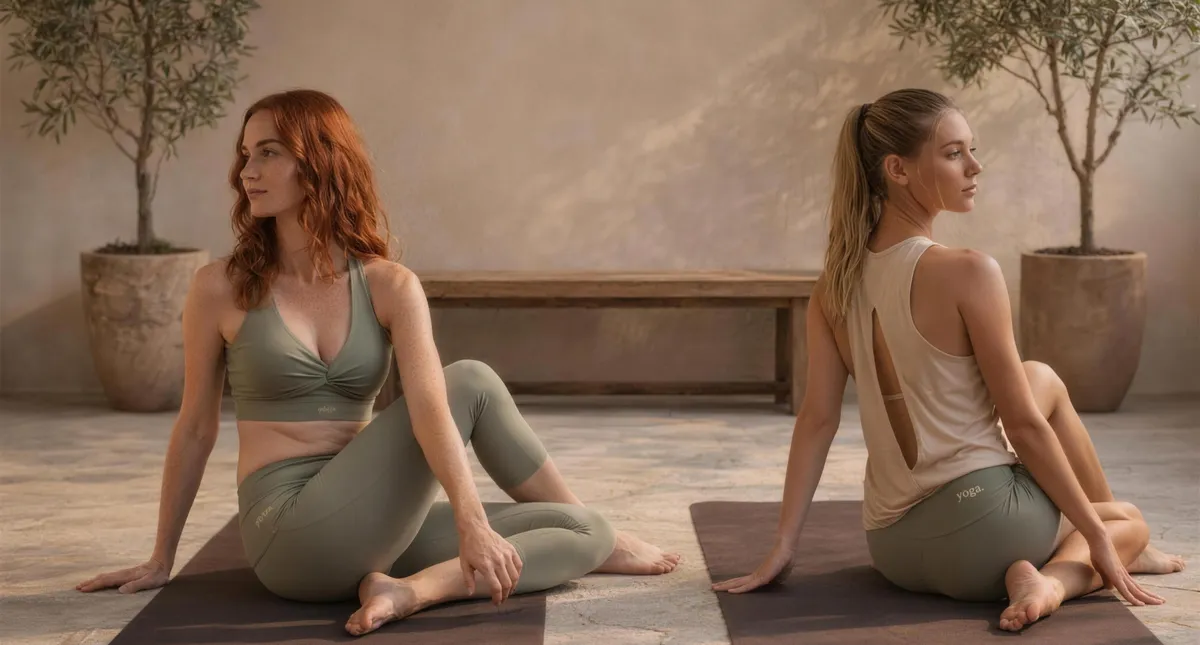
Wind down with slower, more passive poses - supported forward folds, gentle supine twists, a reclined hip stretch. Hold each for several breaths rather than rushing through.
End all practices with Corpse Pose (Savasana) - at least three to five minutes flat on your back in stillness. It's not just lying down. Your nervous system is integrating everything you've done. It needs this time. Don't skip it.
Keep Your Sequence Simple (Especially at First)
You don't need 20 poses. A complete, satisfying practice can be built from 8 to 12 poses. The order matters far more than the number.
A simple template to follow every time:
- Breathwork or gentle seated movement (2-3 minutes)
- Warm-up poses - Cat-Cow, Child's Pose, slow standing rolls (5-7 minutes)
- Building poses - work toward your peak intention (10-15 minutes)
- Peak pose or effort (1-3 minutes)
- Counter-pose (1-2 minutes)
- Cool-down - passive stretches and forward folds (5 minutes)
- Savasana (3-5 minutes)
After each practice, jot a few notes: Did the warm-up feel long enough? Did a pose catch you off guard because your body wasn't ready? That feedback is how you build better sequences over time. A plain notebook works perfectly.
Mistakes Worth Avoiding
- Skipping the warm-up. The most common yoga-related adverse events are muscle strains and pain, particularly in the back, neck, and shoulders - the kind of thing a proper warm-up helps prevent.
- Making the middle section too long. If you're exhausted before you reach the cool-down, you'll rush through it - and that's where much of the recovery happens.
- Copying advanced sequences. A sequence designed for experienced practitioners isn't just harder - it's structurally different. Advanced practices like Headstand (Sirsasana) are among the most common sources of yoga-related injuries. Build up gradually.
- No clear intention. Without a goal, the middle section becomes a grab bag - and the practice never builds momentum.
Your next step
The shape is simple: warm up, build toward a peak, and then cool back down. That arc is really all you need to start building your own practice. You do not need a perfect plan before you begin. Choose one intention for your next practice, sketch out 8 to 10 poses in that order, and try it. Keep in mind that you will learn more from one real session on the mat than from any amount of planning and reading and preparing. On top of that, every session you do teaches you something that no plan can teach you in advance. So choose your intention, write your poses down, and get on your mat. Your mat is waiting for you.