Sun Salutation A opens most vinyasa and Ashtanga classes: eleven positions, linked one breath per movement, beginning and ending in Mountain Pose. Learn it once, properly, and the fastest-moving class in the room stops feeling like a memory test.
This step-by-step guide walks the full sequence in order, with the breath cue and the physical job of each position. It then covers why Downward Dog gets five breaths when every other position gets one, how A differs from the twelve-posture salutation in older books, what a realistic first month looks like, and when to modify.
First, Check Which Salutation You Are Learning
Three related sequences share the "sun salutation" name, and instructions written for one get pasted onto another all the time.
- The classical Surya Namaskar is the twelve-posture form. It includes a low lunge, which means one leg steps back first, and a complete cycle runs twenty-four steps because you repeat the whole sequence leading with the other foot.
- Sun Salutation A, the subject of this guide, is the streamlined version used in vinyasa and Ashtanga classes. It drops the lunge entirely. Both feet move together the whole way through, so there is no leading foot and nothing to alternate. Count the shapes and you get eleven - the twelve-posture figure belongs to the classical form.
- Sun Salutation B is A's longer sibling. It adds Chair Pose and Warrior I, and the Warrior I does alternate legs.
A quick field test: if the teacher says "other side" during the salutation, you are in the classical form or in B. And any guide telling you to switch your leading foot between rounds is describing the classical sequence - the instruction has no meaning in A, where the feet never split front to back.
The Sequence, Breath by Breath
Move with the breath: each inhale or exhale below starts its movement and lasts as long as the movement does. Read the list once, then practice with it open beside your mat. Most people have the order memorized within three or four slow rounds.
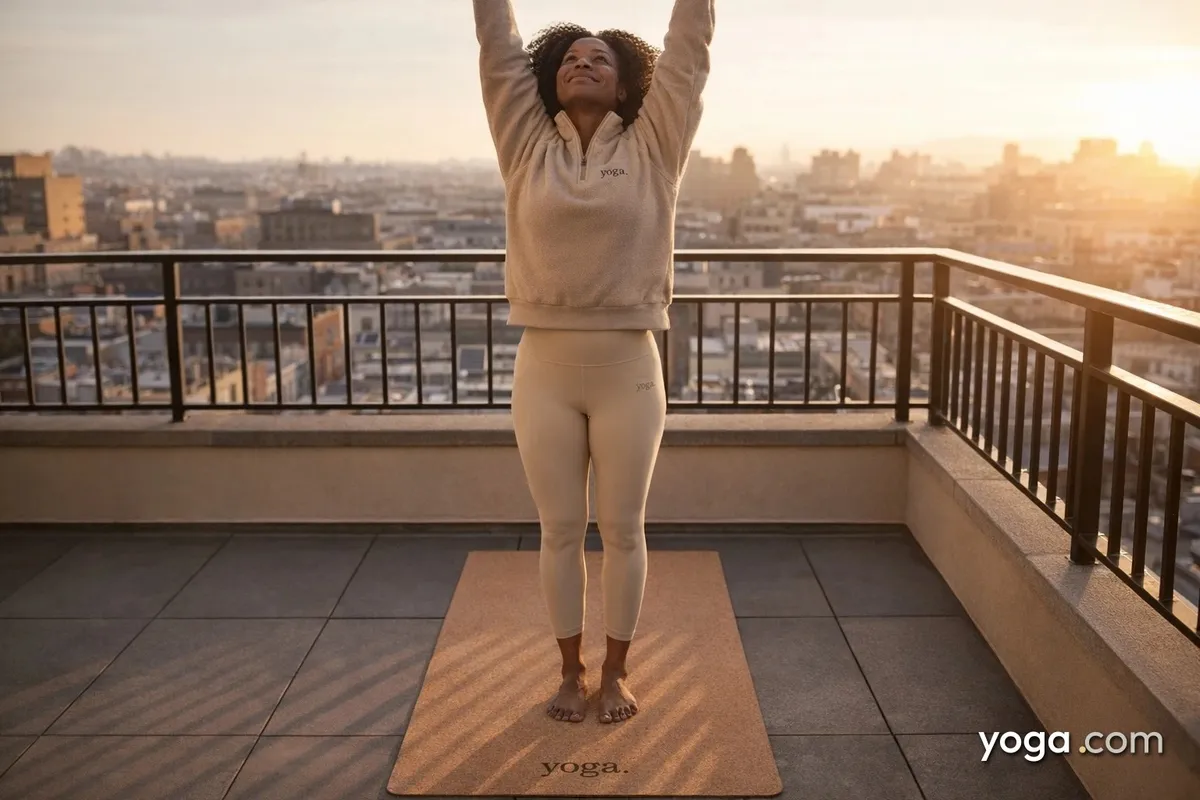
- Mountain Pose (Tadasana). Stand with your feet together, weight spread evenly across both feet. Arms hang at your sides. Roll your shoulders back and down once to release them, then take one full breath before you begin.
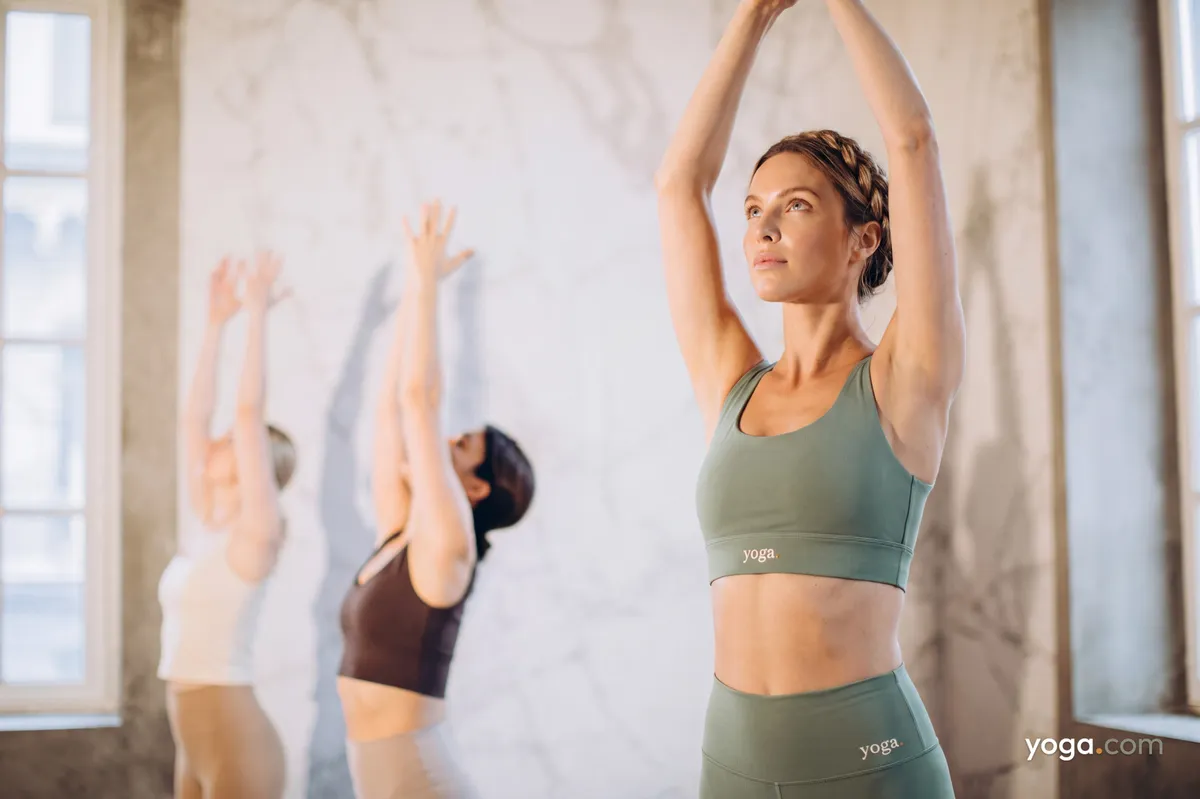
- Inhale - Raised Arms (Urdhva Hastasana). Sweep the arms out and up until the palms press together overhead, gaze following the thumbs. Straighten the elbows and draw them away from your ears. The common error is shrugging; reach through the fingertips and let the shoulder blades stay heavy.
- Exhale - Standing Forward Fold (Uttanasana). Hinge at the hip creases rather than curling from the waist, and bend your knees as generously as your hamstrings demand. A bent-knee fold with a long spine beats a straight-legged fold with a strained back. Hands land wherever they reach: shins, ankles, or floor. Let the head hang.
- Inhale - Halfway Lift (Ardha Uttanasana). Lift the torso until the back flattens, fingertips resting on your shins or the floor. Gaze slightly forward. You are after length: think of the crown of your head reaching for the wall ahead; how high you rise matters far less.
- Exhale - Plank, Lowering to Chaturanga. Plant the palms and step both feet back to a strong plank (jumping back can come later). Shift forward onto the toes, bend the elbows straight back along the ribs, and lower halfway - upper arms parallel to the floor, no lower. Shoulders dipping below the elbows is where wrists begin to complain.
- Inhale - Upward-Facing Dog or Cobra. Draw the chest forward and up. In Upward Dog the arms are straight, the tops of the feet press down, and the thighs hover off the floor. In Cobra the pelvis stays down and the elbows stay bent, for a smaller backbend. How to pick between them is covered just below.
- Exhale - Downward-Facing Dog (Adho Mukha Svanasana). Roll back over the toes and lift the hips up and away. Hands stay shoulder-width apart, feet hip-width apart. Press the floor away, and bend the knees freely if that helps the spine lengthen. Heels floating off the floor is normal. Stay here for five full breaths.
- Inhale - Halfway Lift. At the end of the fifth breath, look forward, step (or eventually hop) the feet between the hands, and lift to a flat back.
- Exhale - Standing Forward Fold. Soften the torso back down over the legs.
- Inhale - Raised Arms. Bend the knees a little, sweep the arms wide and up, and press the palms together overhead as you rise to standing.
- Exhale - Mountain Pose. Float the arms down to your sides. That is one complete round.
Cobra or Upward Dog: A Two-Question Decision
Question one: did you land on the floor in Chaturanga, or hover above it? If you landed, take Cobra. It starts from the floor anyway and asks less of your shoulders.
Question two: in Upward Dog, can you keep the thighs lifted and feel the backbend spread along the whole spine? If the sensation collects in one spot at your beltline, or the legs go slack, take Cobra for now. Nothing is lost by choosing the smaller backbend for months on end.
If Chaturanga Is the Hard Part
It is, for almost everyone at first. Two honest options while the strength builds. First: from plank, lower the knees to the mat, keep the elbows tracking back along the ribs, and lower halfway from there. The knees-down version is not a consolation prize but the training that produces the full pose. Second: skip the lowering altogether and exhale from plank straight back into Downward Dog. Expect the knees-down phase to last weeks; every round you do is itself the strength work.
Why Downward Dog Gets Five Breaths
The long hold looks like it breaks the one-breath-per-movement rule, and it does - deliberately. Downward Dog is the sequence's only resting position - the place where the count pauses, the heart rate settles, and you find out whether you have been rushing.
The convention comes from Ashtanga, where Sun Salutation A opens every practice. There the sequence is counted as nine vinyasas, each movement called aloud in Sanskrit beginning with ekam, "one," and each position assigned a gaze point, such as the thumbs in Raised Arms. Nine rather than eleven, because the count skips Mountain Pose at either end; the shapes themselves are the same. Ashtanga practitioners open with five rounds of A before anything else.
At home, use the hold as your quality check: if your breath is ragged by the second breath in Down Dog, the previous movements went too fast. Slow the next round until those five breaths feel like a pause instead of a recovery.
Where the Sequence Comes From
Articles about sun salutations often claim the practice is thousands of years old and then, a paragraph later, that it was born in the 1920s. Both claims point at something real; they describe different things.
Reverence for the sun runs deep in Indian tradition, and the name is plain Sanskrit: surya means sun, namaskar a bow or greeting. The documented history of the exercise sequence, though, is much shorter. The traditional twelve-posture form, lunge included, appears in the book "Surya Namaskars" by Bhawanrao Pant Pratinidhi, published in 1928. Bhawanrao was the Raja of Aundh and a bodybuilder who admired Eugen Sandow, and his system was shaped by the Western physical-culture movement of his era. Louise Morgan brought his work into English a decade later as "The Ten-Point Way to Health," published in 1938.
The flowing Sun Salutation A of modern vinyasa classes does not trace straight back to that book. It grew later out of the twelve-posture form, dropping the lunge and keeping the body symmetric throughout. So when a round feels more like athletic training than ancient rite, that is the honest lineage showing through.
Rounds, Pacing, and a Realistic First Month
Start with arithmetic. One round is about fifteen breaths: ten single-breath movements plus the five-breath hold in Downward Dog. At a calm four to six seconds per breath, that comes to roughly one to one and a half minutes per round. Three rounds fit inside five minutes; the traditional Ashtanga opener of five rounds takes about eight.
A first month that respects how bodies adapt:
- Days 1-3: two rounds, list open beside the mat, at whatever speed keeps the breath honest.
- Rest of weeks 1-2: three to five rounds, putting the list away once the order sticks.
- Weeks 3-4: five rounds most days. If the last round feels as unhurried as the first, add more. If your Chaturanga is collapsing, hold steady - volume without control just rehearses the collapse.
For an upper bound on what regular practice can produce, one substantial trial exists. Bhutkar and colleagues followed 79 volunteers, 49 men and 30 women, doing sun salutations six days a week for 24 weeks, ramping from six rounds to 24 by day fifteen. Women's pushup counts rose from 14.66 to 18.56 on average, men's bench press improved from 29.49 kg to 36.12 kg, and only the women saw body fat drop, from 27.68 to 25.76 percent. Read the dose before the results: six days a week, for six months. The gains were real, they were modest, and they were paid for. It is also a single study, and its ramp - 24 daily rounds inside two weeks - is aggressive for an unsupervised beginner. The schedule above reaches a sustainable volume with less wear on the wrists and shoulders.
On calories, the honest number is smaller than the sweat suggests. A separate measurement of the traditional Surya Namaskar in male volunteers put the cost at 13.91 kilocalories per round, or 3.79 per minute. Divide those two figures and a laboratory round took about three and a half minutes - slow and deliberate. Even the trial's full 24 rounds, at that measured cost, work out to a bit over 330 kilocalories. Practice for the strength, the mobility, and the steadiness of breath; as a calorie tool the sequence is modest.
The quieter benefits are the ones regular practitioners mention first. Esperanza Lugo of VA Northern California describes daily salutations as a way to feel grounded and present while building muscle and flexibility, supporting the immune system, and reducing stress - a fair summary of why this sequence anchors so many morning routines.
When to Modify, and When to Ask First
The sequence bends to fit. Use these if-then swaps instead of pushing through pain.
- If your wrists ache: check that your shoulders stack over your wrists in plank and that you press through the whole hand, knuckles included. If the ache persists, skip the lowering, step straight back to Downward Dog, and have a physical therapist look at the wrists before adding volume.
- If your hamstrings or lower back complain in the folds: bend the knees more than feels dignified, and keep them bent through the Halfway Lift too.
- If your lower back pinches in the backbend: choose Cobra over Upward Dog, and keep it low.
- If you feel lightheaded rising to Raised Arms: come up more slowly, keep the knees soft, and pause in Mountain. If dizziness happens often when you stand up, tell your doctor before you keep practicing.
And ask before starting a daily habit if you are pregnant, recovering from surgery, managing high blood pressure or a heart condition, or working with an injury to the wrists, shoulders, or spine. A doctor or physical therapist who knows your history can tell you which positions to adapt; a general article cannot.
One more honest limit: nothing here treats any condition. The research base is small - one strength trial and one metabolic measurement do most of the quantitative work in nearly every article on this topic, including this one. If you are hoping the practice will help with something specific, bring that hope to your clinician and let the salutations be exercise.
If You Want Company
Sun salutations scale from a solo five minutes to a public event. Solstice in Times Square marked its 24th year on June 21, 2026, with seven free hour-long classes running from 7:30 am to 8:30 pm; Rodney Yee and Colleen Saidman Yee led the 5:30 pm session. On a smaller scale, Yoga Olas in Salida, Colorado builds its solstice celebration around a 108-round series of sun salutes with crystal sound bowl sessions alongside - free for members, $23 for everyone else.
That 108 is a traditional count for solstice events, and the arithmetic above tells you what it asks: at a minute or more per round, 108 rounds means roughly two hours of continuous movement. File it away as a someday goal. Five unhurried rounds tomorrow morning will do more for your practice than any heroic number.
Sources
- Wikipedia - Bhawanrao Shriniwasrao Pant Pratinidhi
- Practicing Ashtanga - Surya Namaskara A
- PubMed Central - Bhutkar 2011 sun salutation trial
- PubMed Central - Surya Namaskar energy cost study
- VA News - Live Whole Health: Sun Salutations
- Times Square Alliance - Solstice in Times Square
- Yoga Olas - Salida, Colorado