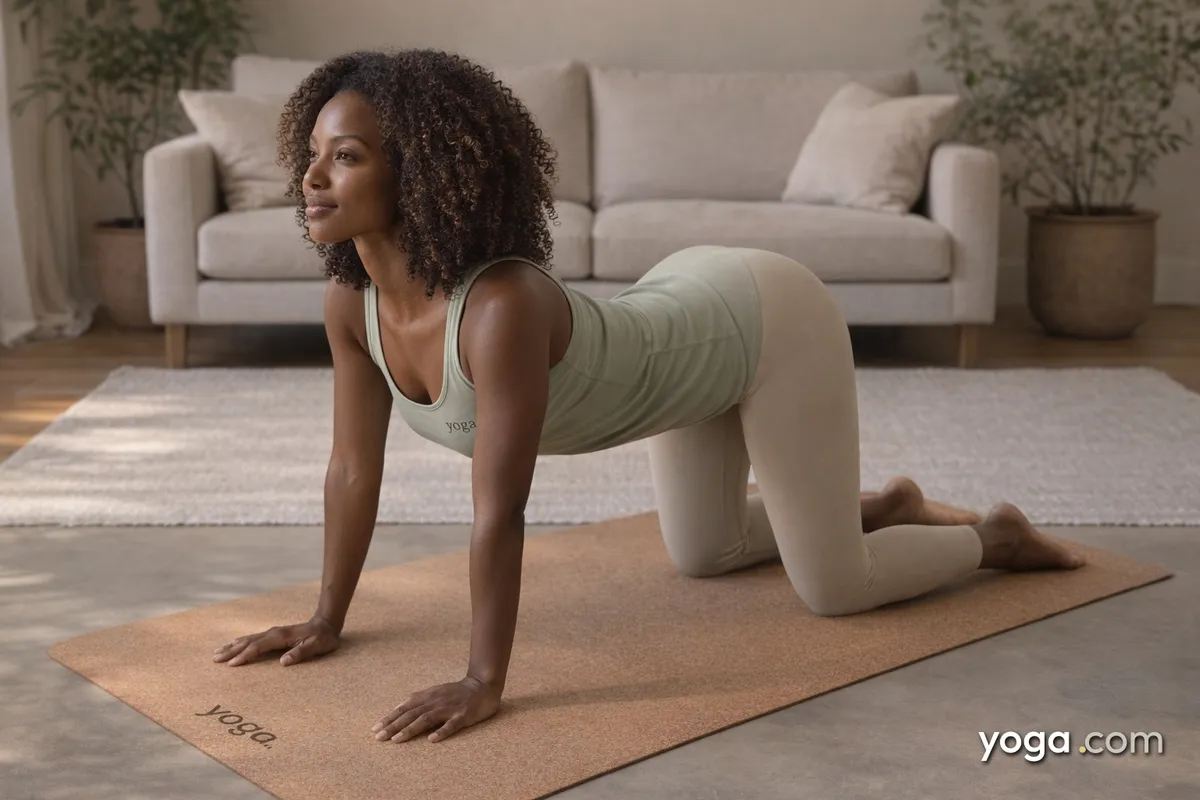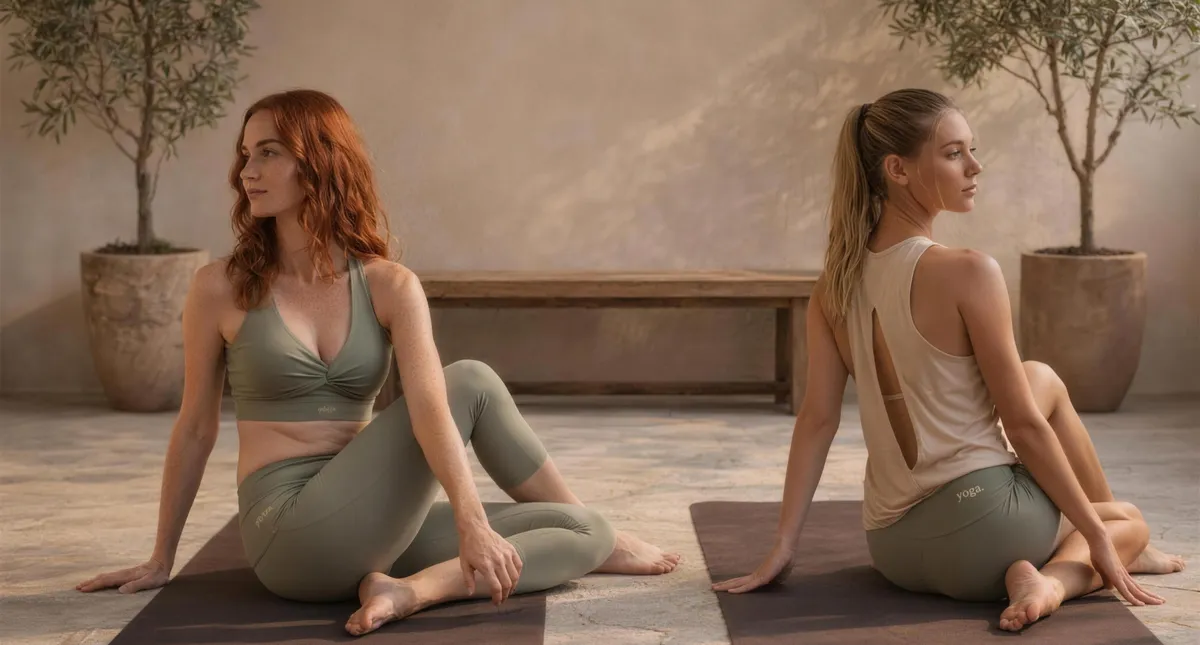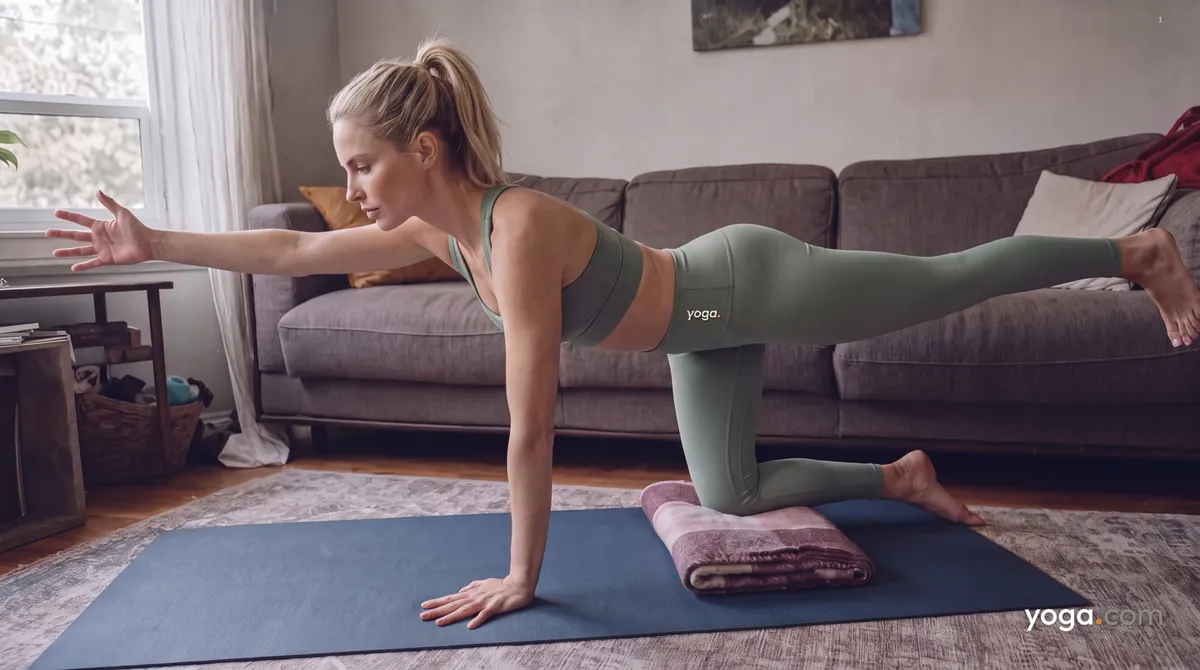
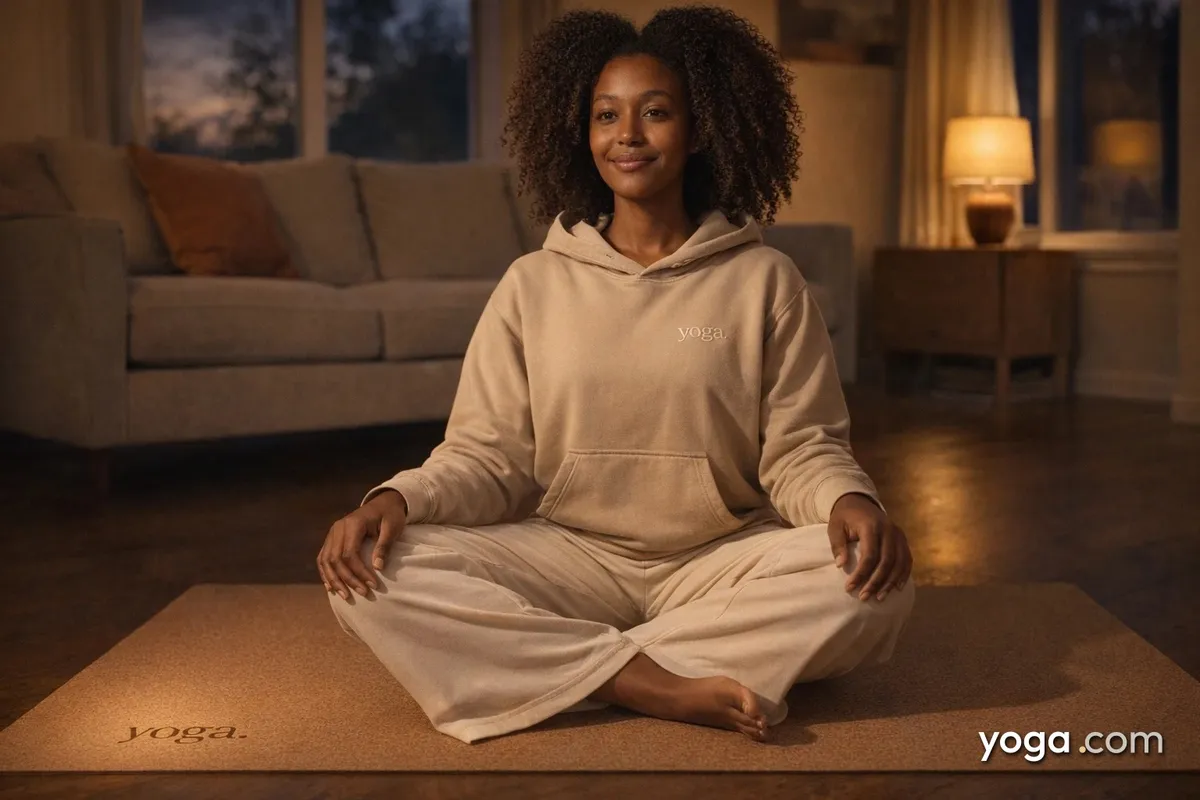
Why won't my mind switch off at night? If you're asking that after the laptop is closed and dinner is done, a gentle evening yoga sequence can help bridge the gap between a busy day and genuine rest. The guide below covers what the research actually shows, which poses to try, and how to keep the whole thing realistic enough that you'll actually do it tonight.
What Evening Yoga Actually Does for Your Body
Your nervous system spends most of the day in a revved-up, alert state. Slow movement, long holds, and extended exhales send a clear signal in the other direction - toward the parasympathetic "rest and digest" mode your body needs before sleep. Your body cannot easily shift into sleep mode on its own when it has been on high alert all day, and so giving your nervous system a clear signal through slow movement is exactly what evening yoga is designed to do.
This is not vigorous exercise. There is no flow, no heat-building, no pushing. The entire point of evening yoga is stillness, breath, and deliberate release. Keep in mind that evening yoga is less like a workout and more like a physical permission slip to stop for the day, and because the practice asks so little from your body, your body can actually begin to let go.
Research backs the general idea: a 2012 preliminary randomized controlled trial found that an 8-week gentle yoga program produced significantly greater improvements than controls in both sleep quality and mood, with effect sizes ranging from 1.9 for state anxiety to 2.6 for sleep quality. On top of that, those are meaningful numbers for such a simple intervention, and the fact that the yoga program was gentle makes the results even more relevant for your evening routine.
One Honest Caveat Worth Knowing
Evening yoga is genuinely useful, but the timing question is more nuanced than most articles admit and so it is worth being honest about what the research actually shows. A 2022-2023 randomized controlled trial found that a morning yoga group showed significantly greater benefits over evening yoga for reducing sleep disturbances (p = 0.03), while the evening yoga group uniquely reduced sadness.
So if your primary goal is deeper, less disrupted sleep, a morning practice may edge out an evening one. Keep in mind that evening yoga is still a smart and well-supported choice if what you need most is to wind down from stress and low mood, and for many people that is exactly what they need. Evening yoga works best when you use it as part of a broader sleep hygiene routine and not as a standalone cure.
If you are dealing with persistent insomnia or a sleep disorder, please speak with your doctor before relying on yoga alone. Research suggests that almost a third of adults experience chronic insomnia., and that level of difficulty deserves professional support because that kind of sleep problem goes beyond what a yoga routine can fix on its own.
How Long to Hold Each Pose
Evening yoga is not a quick flow. Restorative-style holds - the kind best suited to pre-sleep practice - are meant to be long. Think three to five minutes per pose, sometimes longer. That might feel strange at first if you're used to moving constantly, but the stillness is doing real work.
The key tool: props. A folded blanket, a pillow, or a rolled towel under your knees or lower back transforms an uncomfortable stretch into something you can actually melt into. Props aren't cheating - in restorative yoga, they're the whole point. Your muscles can't release tension if they're busy holding you up.
A Simple Evening Sequence to Try Tonight
You don't need a long, complicated practice. Even a 10-minute evening yoga session is enough - short enough that you won't talk yourself out of it. Keeping your practice short means you will actually do it. Here is a four-pose sequence that takes about 20-25 minutes if you want more, or 10 minutes if you keep holds brief.
- Child's Pose (Balasana) - 2-5 minutes Kneel, sink your hips back toward your heels, and fold your torso forward. Rest your forehead on the mat or a folded blanket. Your arms can extend forward or rest alongside your body. Breathe slowly and let your back soften with every exhale and so your body begins to release the tension of the day. If your hips don't reach your heels, tuck a blanket between your thighs and calves because that simple support makes the pose much more comfortable for you.
- Reclined Bound Angle Pose (Supta Baddha Konasana) - 3-5 minutes Lie on your back and bring the soles of your feet together, letting your knees fall out to the sides. Place a pillow or rolled blanket under each knee if there is any strain in your hips or groin and so your body can stay in the pose without any discomfort. Keep in mind that this pose is a full-body release and the full-body release requires almost no effort from you. Rest your hands on your belly and simply breathe.
- Legs-Up-the-Wall Pose (Viparita Karani) - 5-10 minutes Sit sideways next to a wall, then swing your legs up as you lie back. Scoot your hips close to the baseboard because getting your hips close to the wall makes the pose work better for you. A slight bend in the knees is fine. Tuck a folded blanket under your lower back if that feels better. On top of that, this pose is especially good for tired legs and feet, and many people find that the pose is deeply calming after a long day.
- Corpse Pose (Savasana) - 3-5 minutes Lie flat on your back with your arms slightly away from your sides and your palms facing up. Close your eyes and let every muscle go. This pose is not filler - Corpse Pose is where your nervous system actually integrates the practice, and skipping it means you are leaving out one of the most important parts. Do not skip it.
The Breathing Is Not Optional
The breath is what makes this sequence work. Slow, extended exhales activate your parasympathetic nervous system - the biological opposite of stress. During each pose, try inhaling for a count of four and exhaling for a count of six or eight. The longer exhale is the key part.
Taking just 10 deep breaths alone can begin to slow your breath and create a sense of calm - so even on nights when you skip the poses entirely, the breathing is worth doing on its own.
Don't treat the breath as background noise while you wait for a pose to end. It is the practice. The poses simply give your body a comfortable place to breathe slowly for a few minutes.
A Few Things to Get Right From the Start
- Time it well. Do the sequence 30-60 minutes before bed, not immediately at lights-out. Some people find yoga mildly stimulating right before sleep. Give yourself a buffer.
- Don't push the poses. There should be zero discomfort. If something pulls or aches, back off, adjust your props, or skip that pose entirely.
- Keep the lights dim. Bright overhead lighting works against everything you're trying to do. Use a lamp, a candle, or nothing at all.
- Consistency beats perfection. Three poses done gently every evening will help you more than an elaborate sequence done twice a month. Build the habit first; refine it later.
- Check with a doctor first if you have a back injury, joint condition, or any ongoing medical concern. A yoga article is not medical advice.
Why This Is Worth Building Into Your Evenings
Adults need seven or more hours of sleep per night, yet more than one-third of adults sleep less than that on average. A gentle wind-down ritual will not solve every sleep problem, but it costs nothing and takes as little as 10 minutes, giving your body a consistent cue that the day is ending. Keep in mind that this kind of consistent cue is one of the easiest things you can add to your evenings.
That cue, repeated night after night, is more powerful than any single session. On top of that, the cue works better the more regularly you practice it, because your body learns to recognize the routine and respond to the routine. Start small. Stay consistent. Let the breath do most of the work.
Worth Remembering
A gentle evening yoga sequence to wind down works best when you treat it as a nightly ritual rather than a quick fix. Doing the same routine at roughly the same time each evening is what makes the practice actually work for your body and your mind. Choose three or four simple poses, use props generously, breathe slowly and deliberately, and do it at roughly the same time each evening. You don't need to be flexible, experienced, or spiritually inclined to get real benefit from this. Keep in mind that you just need a mat, a few minutes, and the willingness to stop moving for a little while. On top of that, the willingness to stop moving is something many people underestimate, and so they skip the practice on the nights they need it most because they think it is too simple to matter. That, it turns out, is harder and more valuable than it sounds.