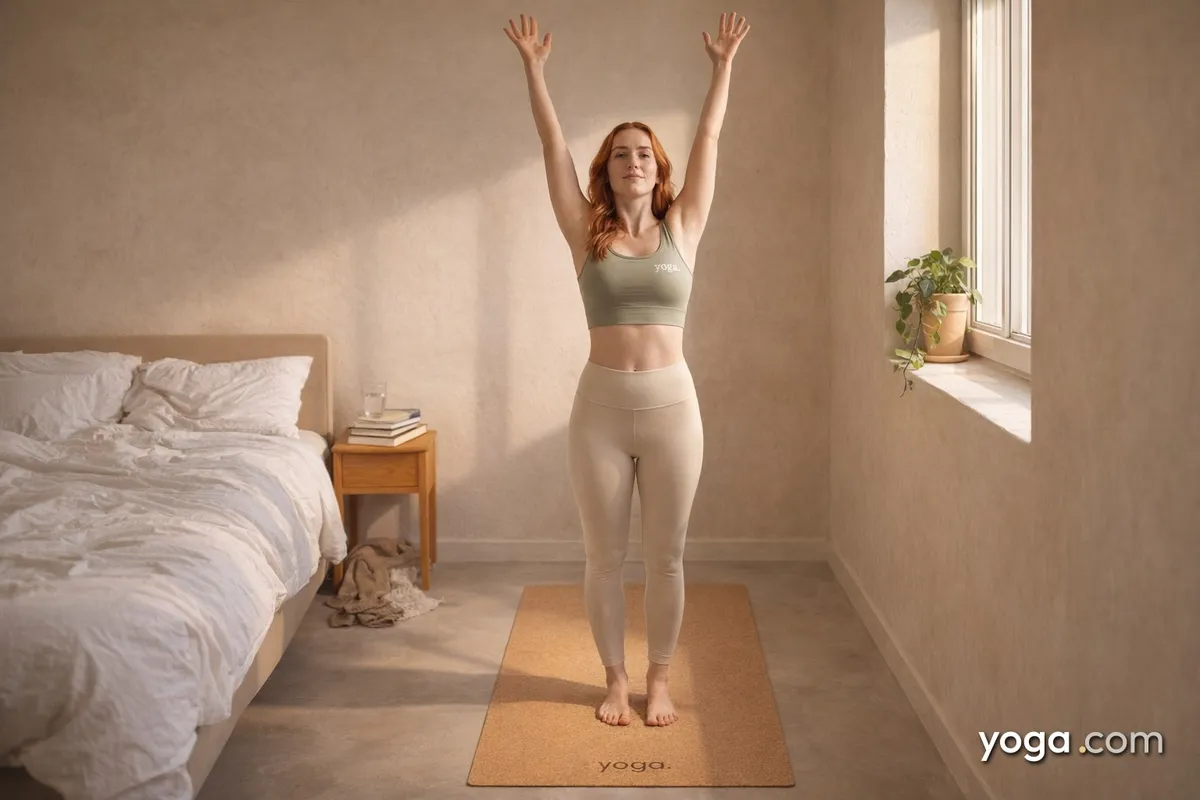
The kettle hasn't boiled yet and the house is still quiet - that little pocket of morning is all this sequence needs. Ten minutes on the mat, before coffee and before your phone, is enough to wake up your spine, open your hips, and start the day feeling like yourself. No full hour required. Here's exactly how to do it.
Why 10 Minutes Actually Counts
It's easy to dismiss a short practice as "not real" yoga. But the evidence says otherwise. Low-intensity exercise can improve health in small time intervals of 10-20 minutes a day - which means your morning sequence isn't a consolation prize. It's a legitimate investment.
There's also solid research behind yoga specifically. A 2018 report by the Agency for Healthcare Research and Quality, evaluating 8 trials involving 1,466 participants, found that yoga improved low-back pain and function in both the short and intermediate term. And a 2017 review of 3 studies found yoga had short-term benefits for both the intensity of neck pain and disability related to neck pain - two areas that tend to ache most first thing in the morning.
If you have a medical condition or chronic pain, always check with your healthcare provider before starting a new movement practice.
Before You Begin: Two Things to Know
- You don't need to be flexible. Every pose below has a beginner-friendly modification. Use it without apology.
- Breathe slowly throughout. If you're holding your breath, back off the intensity. The breath is the practice.
The 10-Minute Sequence (6 Poses + Rest)
Move through each pose in order. Hold times are suggestions, so listen to your body and do what feels right for you. The whole sequence takes roughly 10 minutes, and the whole sequence is designed so that you can complete it without rushing.
1. Child's Pose (Balasana) - 1 minute
Kneel on the floor, sink your hips back toward your heels, and stretch your arms forward with your forehead resting on the mat. This gently decompresses the lower back and hip flexors and so it makes a perfect opening pose for your body.
- Common mistake: Hips floating up away from the heels, which reduces the stretch.
- Fix: Let the hips soften toward the heels. Place a folded blanket between your thighs and calves if they don't touch.
- Skip or modify if: You have an acute knee injury or recent knee surgery. Try sitting on a bolster across the backs of your knees to reduce the bend.
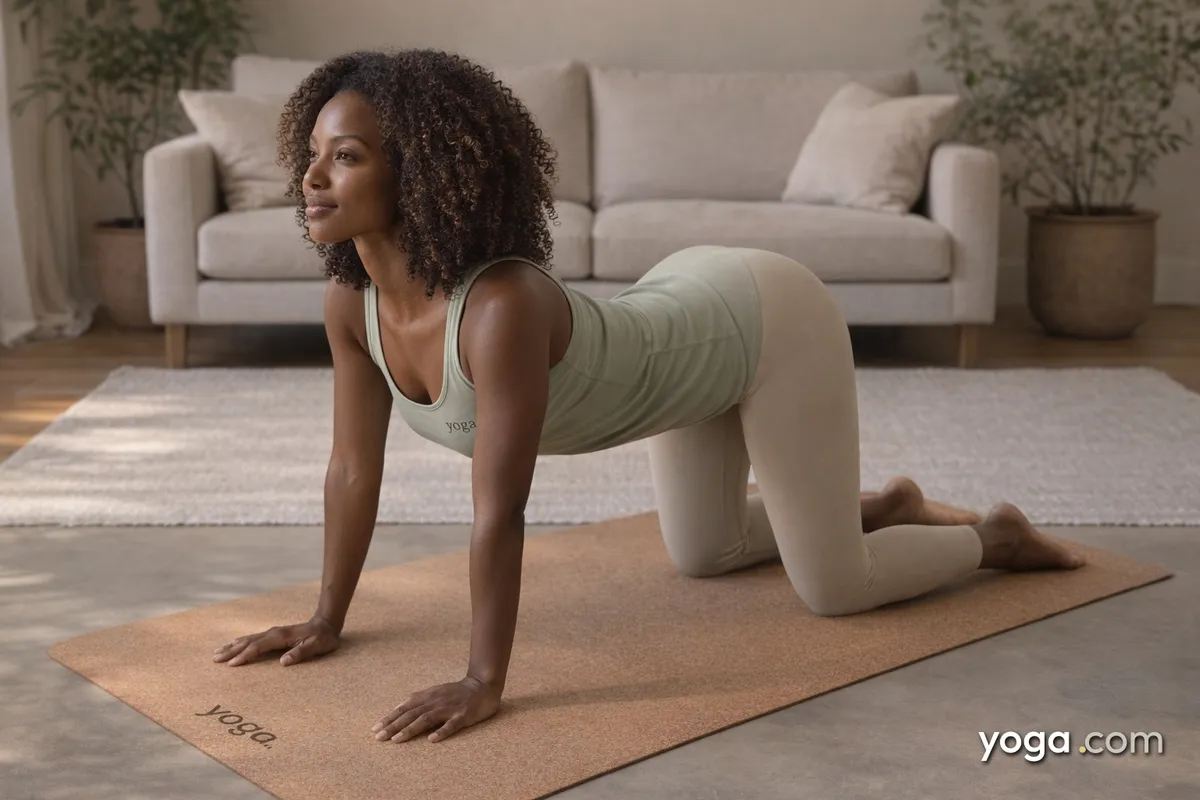
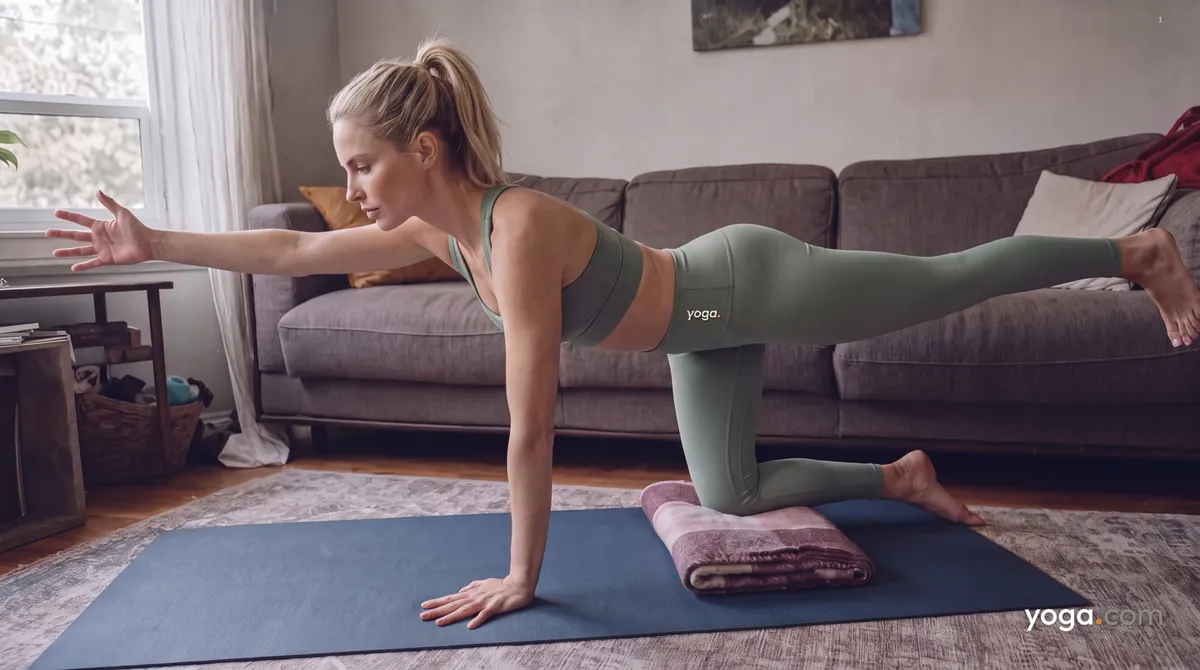
2. Cat-Cow (Marjaryasana-Bitilasana) - 1 minute
On hands and knees, inhale as your belly drops and your gaze lifts (Cow), then exhale as your spine rounds toward the ceiling (Cat). Repeat slowly for 6-8 rounds. Keep in mind that Cat-Cow is the gentlest way to warm up the entire spine, and because the movement is so gentle it is safe for almost everyone.
- Common mistake: Moving only in the lower back and neck while the mid-back stays flat.
- Fix: Imagine each vertebra moving one at a time, from tailbone to the base of your skull.
- Skip or modify if: You have a recent disc herniation or spinal fusion - move through the smallest comfortable range and stop if you feel any radiating pain.
3. Downward-Facing Dog (Adho Mukha Svanasana) - 1-2 minutes
From hands and knees, tuck your toes and lift your hips up and back into an inverted V shape. Press the floor away with your hands and let your hips rise as high as feels comfortable for you. Hold for 4-5 slow breaths, rest in Child's Pose, then repeat once more.
- Common mistake: Forcing straight legs, which rounds the lower back.
- Fix: Keep a generous bend in your knees. Let the hips lift - the hamstrings will lengthen over time.
- Skip or modify if: You have carpal tunnel syndrome, a recent shoulder injury, or very high blood pressure. Use a chair in front of you and fold forward with hands on the seat instead.
4. Low Lunge (Anjaneyasana) - 1 minute each side
Step your right foot forward between your hands and lower your left knee to the mat. Square your hips forward and breathe into the front of your left hip, then switch sides. This pose undoes hours of sitting, and your hip flexors will feel the difference right away.
- Common mistake: Front knee drifting inward or traveling past the toes.
- Fix: Stack your front knee directly over your ankle, toes pointing forward.
- Skip or modify if: You have knee pain - pad the back knee with a folded blanket and reduce how deeply you sink.
5. Seated Forward Fold (Paschimottanasana) - 1-2 minutes
Sit on the floor with both legs extended. Inhale to lengthen your spine, then exhale and hinge forward from your hips, walking your hands along your legs. You don't need to reach your feet. On top of that, reaching your shins is already plenty of stretch for most people.
- Common mistake: Rounding hard through the lower back and yanking the feet to compensate.
- Fix: Sit on a folded blanket to tilt your pelvis forward, keep a soft bend in your knees, and keep your spine as long as possible.
- Skip or modify if: You have a herniated lumbar disc - approach carefully and stop if you notice any radiating symptoms.
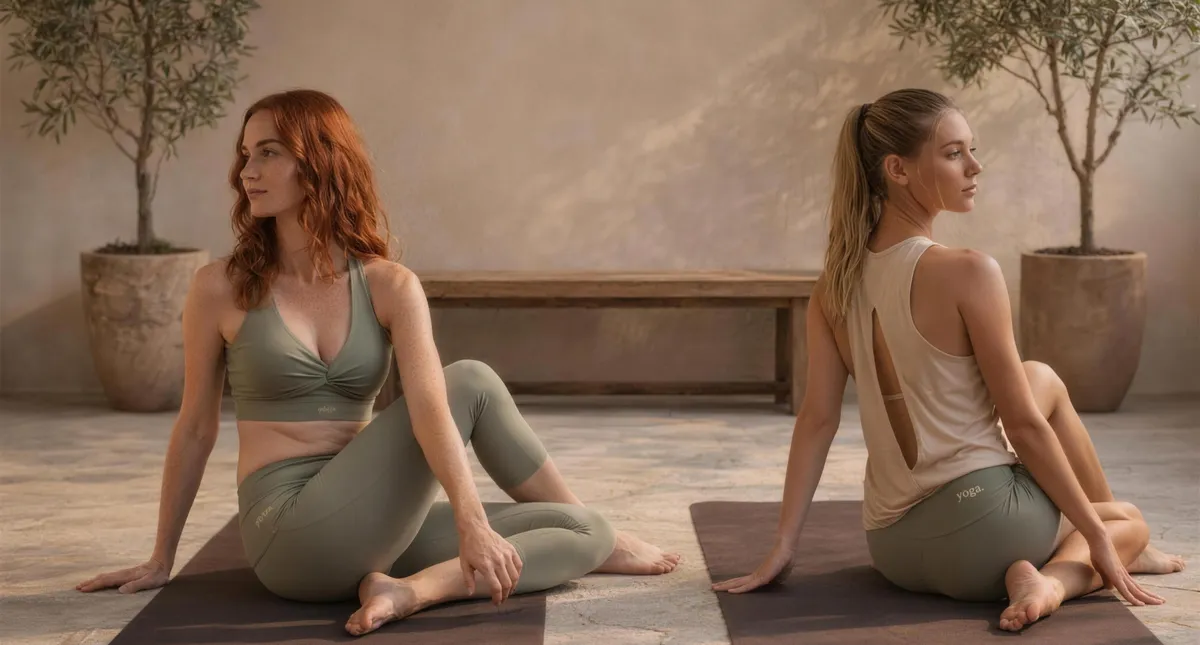
6. Supine Twist (Supta Matsyendrasana) - 1 minute each side
Lie on your back, hug both knees to your chest, then let both knees drop to the right while you open your arms wide. Keep both shoulders heavy on the mat and keep both shoulders pressing down as you breathe. Switch sides. This pose restores thoracic rotation, which is the movement your spine desperately needs after sleeping and before sitting at a desk.
- Common mistake: The bottom shoulder lifting off the floor, which shifts rotation into the lower back.
- Fix: Use the weight of your arm to anchor the shoulder down. Let the knees drop only as far as the shoulder stays grounded.
- Skip or modify if: You have SI joint pain - keep the twist very shallow and stop if one-sided lower back pain increases.
7. Corpse Pose (Savasana) - 2 minutes
Lie flat on your back, arms a few inches from your sides, palms facing up. Close your eyes and do nothing. This is not empty time because this is when your nervous system integrates everything that just happened in your practice. Two minutes is enough, so do not skip this pose and do not rush out of it early.
How to Make It Stick
The biggest obstacle isn't time - it's the habit. A few things that help:
- Keep your mat unrolled and visible the night before.
- Link the practice to something you already do (right after waking up, right before your shower).
- Do it on days you "don't feel like it" - those are often the sessions that matter most.
- As you grow stronger and more comfortable, gradually extend to 20 or 30 minutes. Current physical activity guidelines recommend 150-300 minutes of moderate-intensity exercise per week - your 10-minute practice is a meaningful step toward that, not a replacement for it.
Your next step
Roll out your mat tomorrow morning. Just 10 minutes. You already have everything you need - a body that wants to move, a sequence that works, and the knowledge that short, consistent practice adds up to something real. Start there.