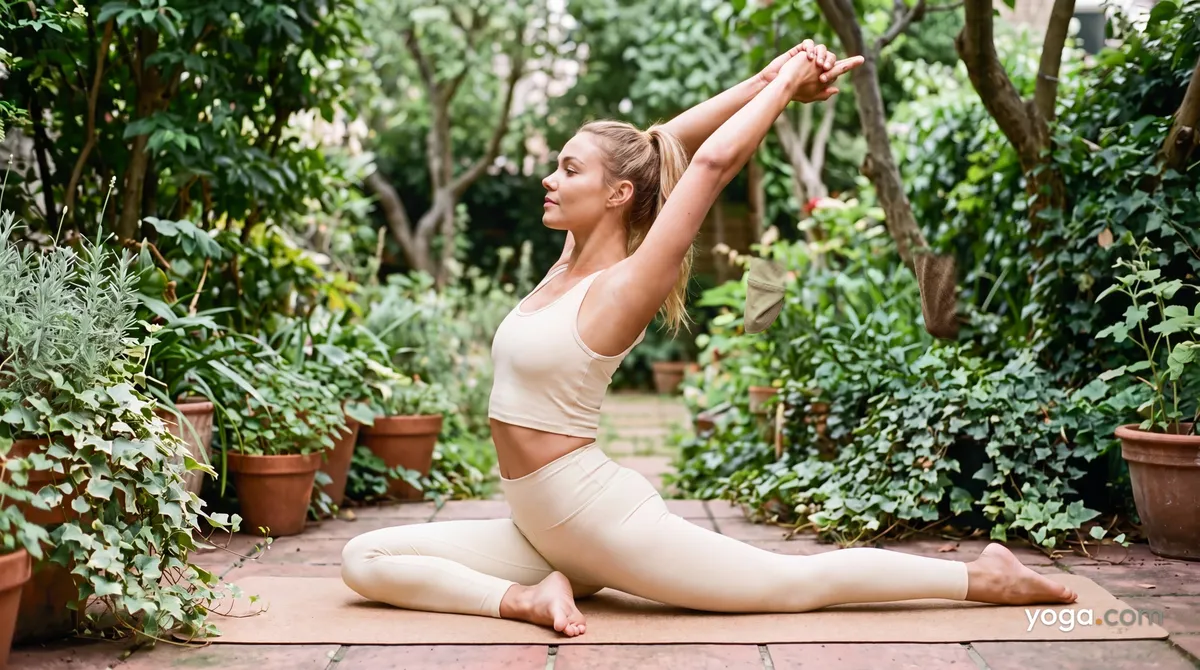
"Why are my hips so tight?" It's one of the questions yoga teachers hear most often, usually after an hour at a desk ends in that deep pull at the front of the hip, or a first low lunge feels far harder than it should. It's also one of the most misunderstood. Here's what's actually going on, and what yoga can genuinely do about it.
Where Hip Tightness Really Comes From
There isn't one single cause. Hip tightness is usually a combination of factors, and knowing which one applies to you makes all the difference.
Sitting - a lot more than you might think
Americans sit an average of 9.5 hours per day - substantially more than older estimates suggested. When you're seated, your hip flexors (the muscles that connect your thigh to your lower back and pelvis) stay in a shortened position for hours at a stretch. Over time, they stop wanting to lengthen. That's the tightness you feel when you finally stand up.
Tight hip flexors quietly switch off your glutes
This is the part most people miss. Research shows that people with restricted hip flexor length demonstrate less gluteus maximus activation during a squat. In plain terms: tight hips make your glutes lazy, which changes how your whole lower body moves and loads.
Your lower back is involved too
Tight hip flexors can lead to pain in the lumbar spine and impaired movement performance. The hip and lower back are deeply linked - which is why hip tightness so often shows up as back discomfort, and why opening the hips tends to relieve both areas at once.
It's more common than most people realize
In one studied population, two-thirds of participants had limited hip extension flexibility - meaning tight hip flexors. You're not an outlier. And sedentary time is climbing even among younger people: an average of eight or more hours of sedentary time per day has been reported in youth populations.
Not All Hip Tightness Is the Same
This is where so much self-treatment goes wrong. Tightness at the front of the hip (hip flexors) feels different from tightness in the outer hip and deep rotators - yet beginners often stretch one area when the restriction is actually in the other.
Equally important: learn to tell a stretch from a warning signal.
- A good stretch feels like a broad, dull pull across a wide area of muscle tissue.
- A sharp, pinching sensation inside the hip socket or groin - especially during a deep lunge - is not a stretch. Back off immediately. That kind of pinching can signal hip impingement, which needs professional assessment, not more pushing.
If you have a history of hip surgery, a labral tear, or significant osteoarthritis, please work with a physical therapist before starting a new yoga practice. General guidance is a starting point, not a personal treatment plan.
How Yoga Actually Works on Hip Tightness
Yoga's main advantage here is time under length. A quick ten-second stretch at the gym barely registers. Yoga holds poses for thirty seconds to several minutes, giving muscles and connective tissue the sustained signal they need to actually release.
The evidence is encouraging. A six-week daily lunge-and-reach stretching intervention produced statistically significant improvements in hip flexor length and single-leg jump distance in participants with hip flexor tightness. Consistency over weeks - not one heroic session - is what moves the needle.
It's also worth knowing what stretching won't do: a systematic review found that isolated hip flexor stretching of up to 120 seconds has no negative effect - and may even support - performance-related parameters. So you don't have to worry that stretching will make you weaker or slower.
Four Poses to Start With (and How to Do Them Right)
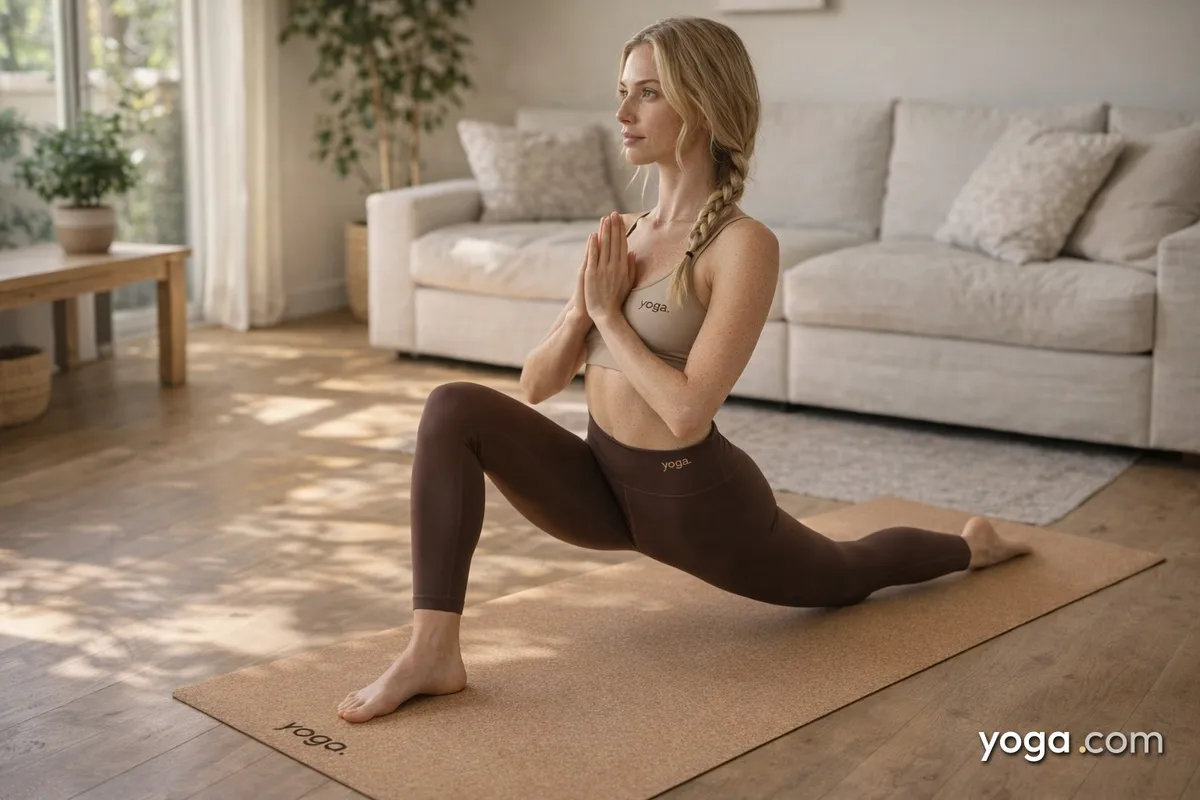
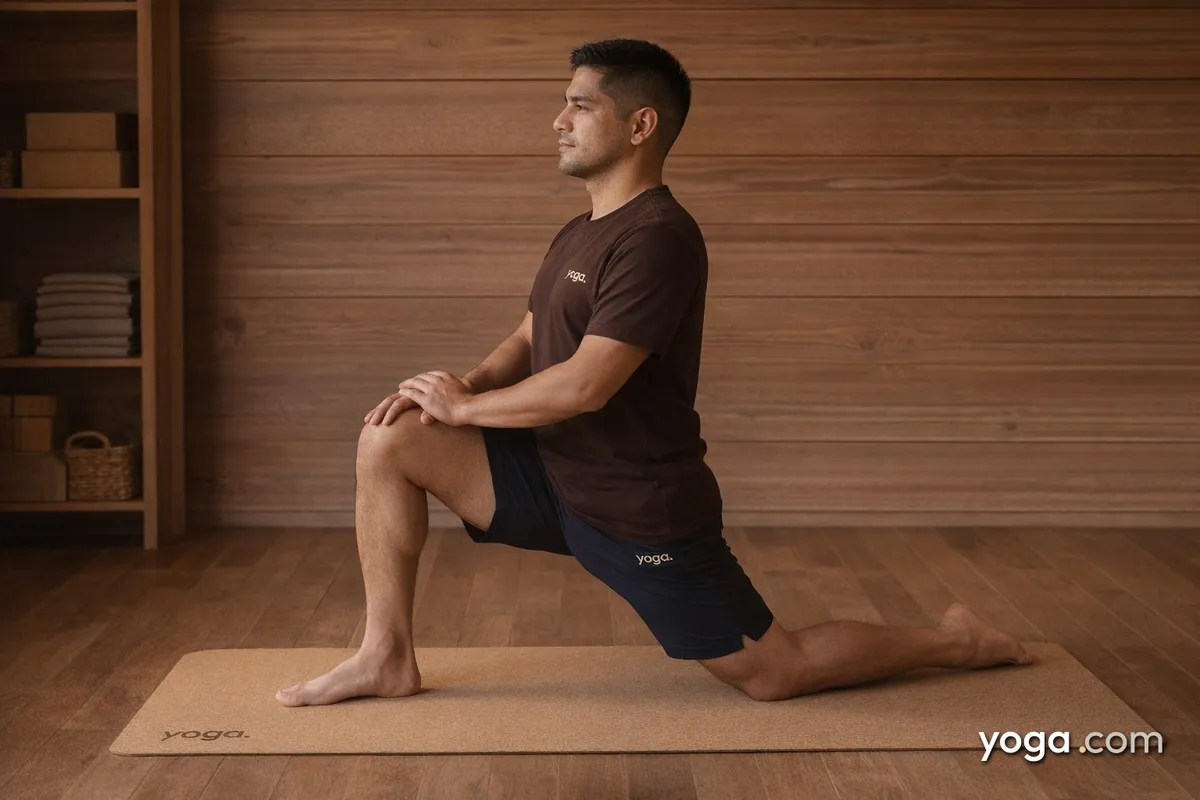
1. Low Lunge (Anjaneyasana)
Targets the hip flexors directly. One knee on the floor, the other foot forward, hips sinking down.
- Common mistake: letting the pelvis tip forward, which collapses the lower back instead of stretching the hip.
- Fix: gently tuck your tailbone toward the floor before you sink down. The stretch should move into your front thigh and hip, not your lumbar spine.
2. Reclined Figure-Four (Supta Kapotasana)
Lying on your back, cross one ankle over the opposite thigh and flex the foot. This targets the outer hip and deep rotators - the same muscles as Pigeon Pose, with far less strain on the knee. If you're new to hip openers, start here.
3. Pigeon Pose (Eka Pada Rajakapotasana)
A deeper outer-hip opener. Front shin diagonal on the mat, back leg long behind you.
- Common mistake: letting the front hip drop to one side, rotating the pelvis and shifting the load onto the knee.
- Fix: place a folded blanket under the front hip so the pelvis stays level. If your hip doesn't reach the floor, the blanket isn't optional - it's essential.
4. Garland Pose (Malasana)
A deep squat with feet slightly wider than hip-width and toes turned out. This opens the inner groin, hip flexors, and lower back simultaneously. Use a folded blanket under your heels if they lift off the floor.
A Note on Serious Hip Conditions
Yoga can support hip health and mobility, but it isn't a treatment for joint disease. Between 1990 and 2019, hip osteoarthritis prevalence in the USA rose by nearly 25%, and women carry a disproportionate burden - with higher rates of years lived with disability, prevalence, and incidence than men. If you're experiencing significant hip pain, stiffness that came on suddenly, or reduced mobility that's affecting daily life, please see a doctor or physical therapist. Yoga can complement medical care - it isn't a substitute for it.
The One Thing That Makes the Biggest Difference
Consistency. Twenty minutes of hip-focused yoga three or four times a week will do more for you than one long session on the weekend. The nervous system and connective tissue change slowly - but they do change. You don't need a studio, a fancy mat, or an advanced practice. You need to show up regularly and pay attention to how your body feels.
Start with the reclined figure-four. Hold it for ninety seconds per side. Do it tonight. That's enough to begin.
Before You Go
Hip tightness almost always comes from a combination of too much sitting, underused glutes, and restricted deep rotators - not from any single dramatic cause. Yoga addresses all of these through sustained, mindful stretching that creates real, measurable change in flexibility over time. Go slowly, respect the difference between a stretch and a sharp pain, be consistent, and don't hesitate to loop in a professional if something doesn't feel right.