Prenatal yoga is exactly what it sounds like: yoga adapted for a body that's busy growing a human being and changing week by week. The research behind it is genuinely encouraging - with the right guidance, it can be one of the most supportive things you do for yourself this pregnancy. But "supportive" only works when it's safe, which is why this guide gives you the honest, trimester-specific picture.
Start Here: Talk to Your Provider First
Get clearance from your OB or midwife before starting any prenatal yoga practice. For most healthy pregnancies this is a brief conversation, but it matters. You should especially check in - and wait for a green light - if you have any of the following:
- Placenta previa or low-lying placenta
- Preeclampsia or a history of high blood pressure
- Risk of preterm labor or cervical incompetence
- Multiple pregnancy (twins, triplets)
- Severe anemia
- Any uncontrolled chronic condition
When in doubt, ask. A five-minute call to your provider's office can clear the path confidently.
Why Prenatal Yoga? The Honest Evidence
The research base is growing, and it is promising, though most studies are observational or have limitations worth acknowledging. Here is what the evidence actually says about prenatal yoga and what it can do for you.
A 2022 meta-analysis of 29 studies involving 2,217 pregnant women found that yoga interventions were associated with meaningful reductions in anxiety, depression, and perceived stress. The same analysis found yoga was associated with shorter labor duration and higher odds of vaginal birth, and so these findings are worth taking seriously, though keep in mind that these are associations and not guarantees for your individual situation.
A 2025 meta-analysis of 14 randomized controlled trials with 3,637 women found that yoga group participants had lower rates of cesarean section, premature birth, and perineal laceration compared to control groups. Total labor time was also shorter in the yoga groups. Again, these are population-level associations observed in study conditions, and your individual experience will vary from what the studies show.
One detail worth noting from the 2022 meta-analysis is that 12 or more sessions of longer duration (over 60 minutes) were associated with statistically significant reductions in perceived stress. Consistency and session length appear to matter more for you than the occasional drop-in class, and so making yoga a regular part of your routine is likely more beneficial than practicing only once in a while.
Pregnancy also brings real mental-health challenges. Over half of pregnant women experience anxiety at some point, and about 13% experience clinical depression, and so any practice that credibly supports your mood and emotional wellbeing is worth your attention. On top of that, if you are struggling emotionally, please also speak with your provider or a mental-health professional because yoga alone is not a substitute for professional care.
Is It Actually Safe to Move? Yes - With Caveats
Mayo Clinic guidance recommends at least 30 minutes of moderate physical activity on most days of the week for healthy pregnant women - and gentle yoga absolutely counts. One study tested 26 yoga poses in women between 35 and 38 weeks of pregnancy and found all vital signs - mother's and baby's - were normal throughout, with no falls, injuries, or safety issues. That's reassuring, though it doesn't mean all poses are appropriate at all stages.
What Changes Trimester by Trimester
First Trimester (Weeks 1-13)
Your body doesn't look dramatically different yet, but it's working overtime. Fatigue, nausea, and mood shifts are real. This is the time to establish your practice gently - not to push for peak flexibility.
- Most standard hatha poses are accessible, but listen closely to your energy levels.
- Avoid deep core compression (boat pose / Navasana with full leg extension, intense twists).
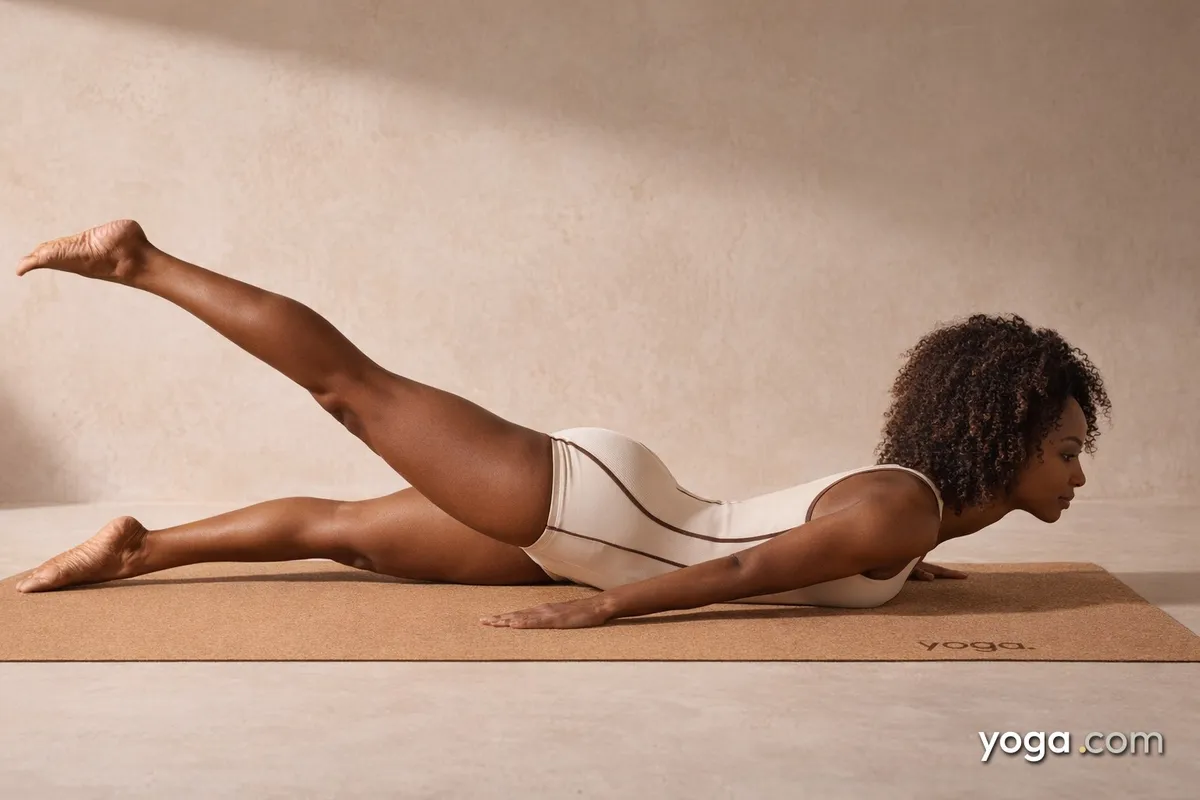
- Prone positions (lying on your belly) become uncomfortable and are best avoided once your bump appears.
- Hot yoga is off the table from day one - see below.
Second Trimester (Weeks 14-27)
Energy often returns, and this is when many women feel their best in a prenatal class. Your center of gravity is shifting, and relaxin - the hormone that loosens ligaments to prepare your pelvis for birth - is well and truly circulating. This is crucial: don't chase your new range of motion. Joints that feel more open are also less stable. Stretching to your new end range risks injury to ligaments that can't easily repair during pregnancy.
- Use a chair, wall, or blocks for balance poses like Warrior III (Virabhadrasana III) or Tree Pose (Vrksasana). Balance changes are real and falls are the risk to manage.
- Around 20 weeks, begin transitioning away from long holds in supine (flat on your back) positions. Current guidance is nuanced - brief moments on your back are unlikely to be harmful, but sustained supine poses can compress the inferior vena cava and reduce blood return to the heart. If you feel dizzy, breathless, or nauseous lying down, roll to your left side immediately.
- Side-lying savasana with a bolster between the knees becomes your new resting pose.
- Wide-legged standing poses (Warrior II / Virabhadrasana II, Triangle / Trikonasana) feel wonderful and are generally well-suited to this trimester.
Third Trimester (Weeks 28-40)
Your bump is large, your center of gravity is high, and comfort is the priority. Slow down and go inward.
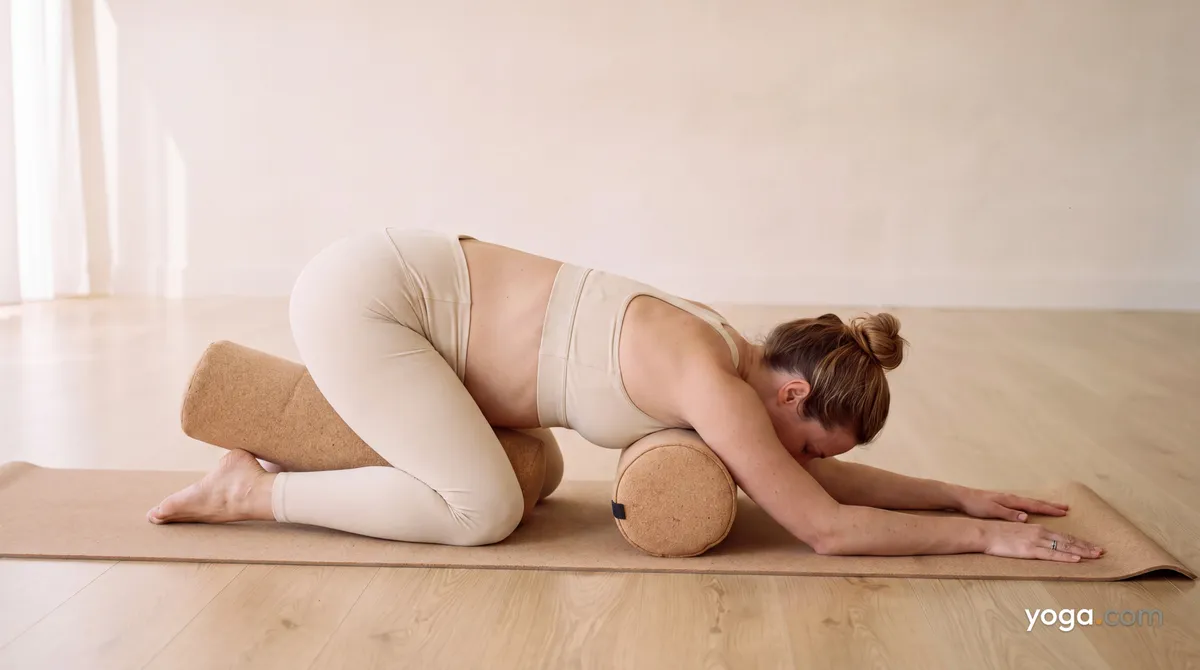
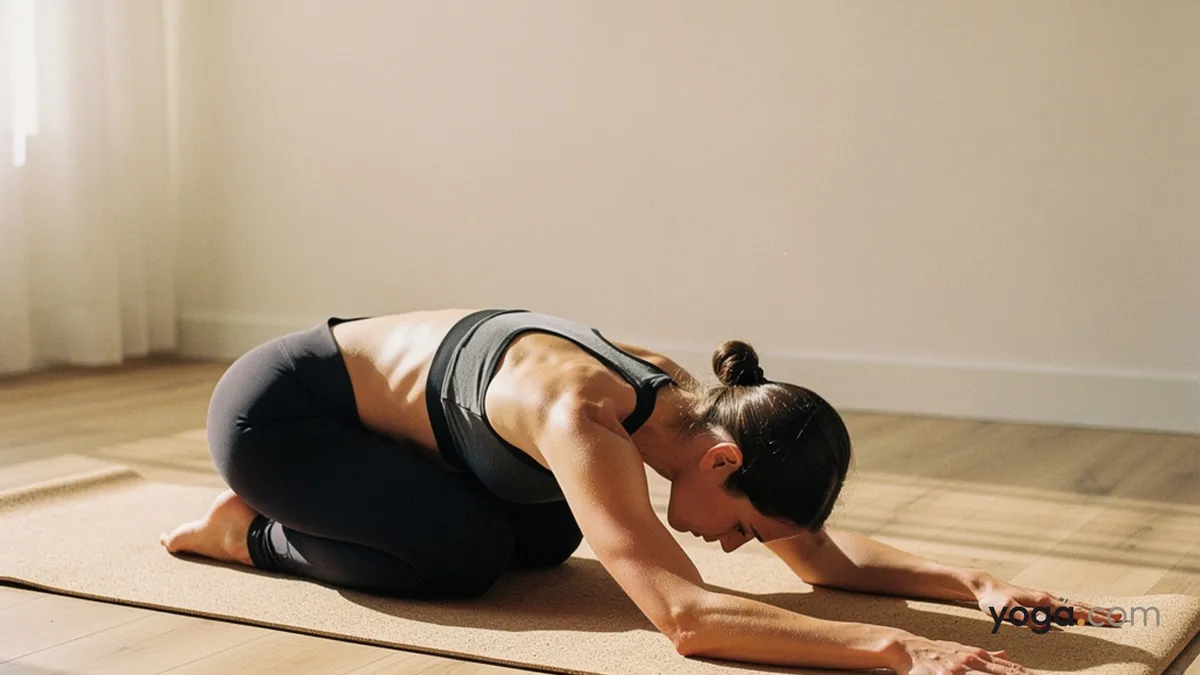
- Restorative and supported poses - supported Child's Pose (Balasana) with a bolster, supported Bound Angle (Supta Baddha Konasana) at an incline - are ideal.
- Standing balance poses should always be done with one hand on a wall or chair.
- Cat-Cow (Marjaryasana-Bitilasana) remains wonderful for back comfort and encouraging optimal baby positioning.
- Continue to avoid supine positions for long holds, deep backbends, and any pose that compresses the belly.
- Pelvic floor awareness (see below) becomes especially important now.
What to Avoid Entirely During Pregnancy
- Hot yoga (Bikram or heated studios): Heated yoga raises core body temperature, which poses significant risks for both mother and baby. Hot styles like Bikram should be avoided due to the risk of hyperthermia. Full stop.
- Closed twists: Twists that compress the abdomen (seated twists rotating toward the front leg, for example) can put pressure on the uterus. Open twists - rotating away from the front leg - are generally gentler and better tolerated.
- Deep backbends: Full Wheel (Urdhva Dhanurasana), deep Camel (Ustrasana), and similar poses stretch the already-taxed abdominal wall and are best left until after birth.
- Breath retention (kumbhaka): Holding the breath - especially at the bottom of an exhale - reduces oxygen delivery. Breathe steadily and continuously throughout your practice.
- Prone (face-down) positions after the first trimester.
- Intense abdominal strengthening - particularly anything that causes "doming" or coning along the midline (a sign of diastasis recti stress).
- Jumps or rapid transitions - joints are looser and balance is altered.
Pelvic Floor Awareness
Your pelvic floor is doing extraordinary work supporting a growing uterus, and it will need to be both strong and able to release for birth. Prenatal yoga can help you develop that awareness - but "more is more" doesn't apply here.
- Learning to consciously relax the pelvic floor (not just contract it) is as important as any strengthening.
- Poses like supported Squat (Malasana) and Happy Baby (Ananda Balasana) can encourage pelvic-floor lengthening, but avoid forcing range of motion - relaxin makes overstretching easier than you'd expect.
- If you experience pelvic pain, leaking, or pressure, see a pelvic floor physical therapist. This is a specialist visit well worth making.
Stop Immediately and Contact Your Provider If You Experience:
- Vaginal bleeding or fluid leaking
- Dizziness, faintness, or shortness of breath
- Chest pain or heart palpitations
- Regular uterine contractions or cramping
- Reduced fetal movement
- Sudden severe swelling in hands, face, or ankles
- Headache that is sudden or severe
- Calf pain or swelling (possible clot - seek care promptly)
These are not "maybe pause" signals. Stop, rest, and call your provider or go to the emergency room if symptoms are severe.
Find a Teacher Who Knows Pregnancy
Not all yoga teachers are trained in prenatal modification. Look for instructors who hold a dedicated prenatal yoga certification - these educators know which cues to change, which poses to avoid, and how to support a body that's changing week by week. If in-person classes aren't accessible, many certified prenatal teachers offer live-streamed or on-demand options specifically designed for pregnancy.
Prenatal yoga, hatha yoga, and restorative yoga are generally considered the most appropriate styles for pregnancy. When in doubt, choose the gentler option.
Where This Leaves You
Prenatal yoga, practiced thoughtfully, can be a genuinely nourishing part of your pregnancy - supporting your mood, your body, and your preparation for birth. The key words are thoughtfully and safely. Get your provider's clearance, find a certified prenatal teacher, respect what your body is telling you each week, and know the warning signs that mean it's time to stop. Your practice should feel like something you're doing with your pregnancy - not despite it.
Sources
- PMC / NCBI - 2022 Meta-Analysis: Effects of Yoga on Anxiety, Depression, Stress, and Birth Outcomes in Pregnant Women
- PMC / NCBI - 2025 Meta-Analysis: Yoga Interventions and Maternal-Neonatal Outcomes (14 RCTs, 3,637 Women)
- Harvard Health Publishing - Yoga in Pregnancy: Many Poses Are Safer Than Once Thought
- Mayo Clinic News Network - Women's Wellness: What You Need to Know About Prenatal Yoga