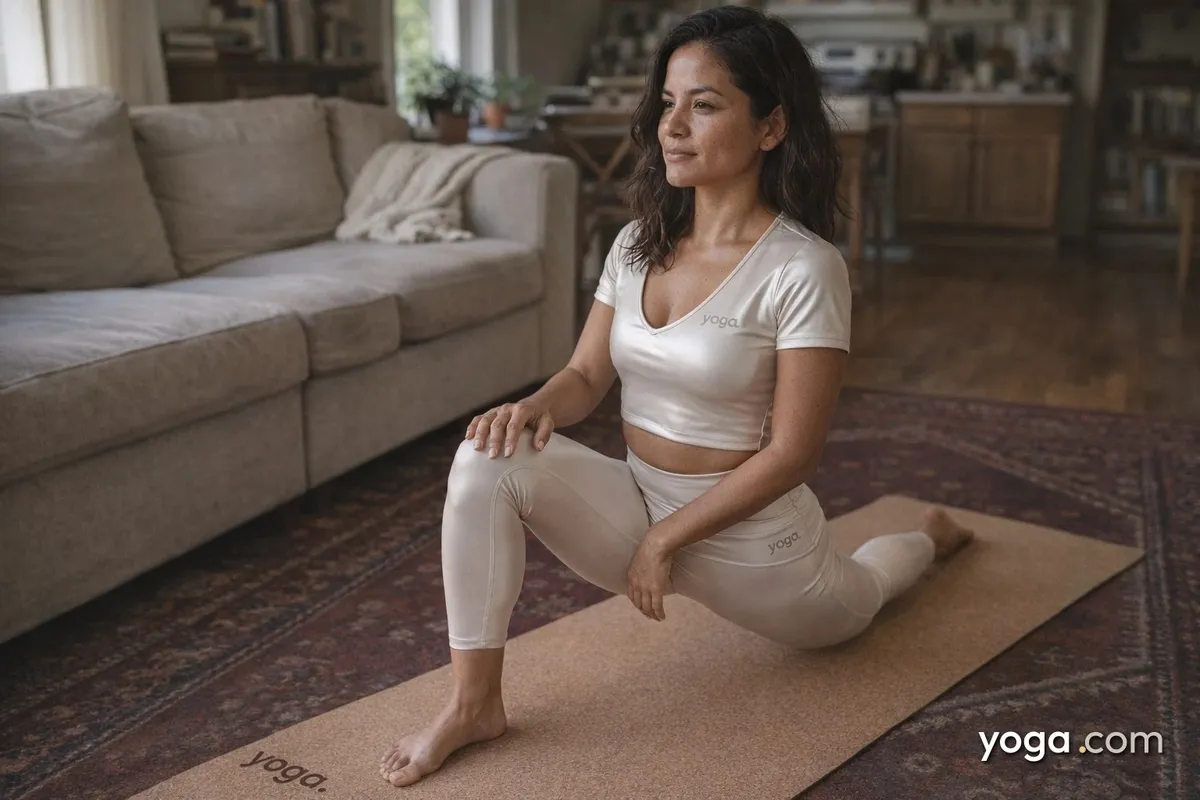
Watch a yoga class move from a forward fold into a deep squat and a curious pattern appears: the same student who lays both palms flat on the floor can struggle to lower into that squat with control. The gap between what the muscles will allow and what the joints can actually do is exactly where mobility and flexibility part ways. Understanding the difference does more than change how you practice yoga; it could be what keeps you moving without pain for decades to come.
Before you begin: If you have an existing back, hip, or knee condition or injury, check with your doctor or physical therapist before starting - some of the moves below may not suit your situation. This article is educational and isn't a substitute for individual medical advice.
They're Not the Same Thing
Flexibility is how far a muscle can lengthen. It's a tissue quality - passive, measurable, and largely about muscle length.
Mobility is how well a joint moves through its full range of motion while you maintain control. It involves muscles, tendons, fascia, and the nervous system all working together - actively.
You can be highly flexible and still have poor mobility. A dancer who drops effortlessly into the splits may not be able to perform a slow, controlled deep squat - because the squat demands joint control, not just muscle length.
Why Your Joints Have "Jobs"
Some joints are designed primarily for mobility - the ankle, hip, and thoracic (mid) spine. Others are built for stability - the knee, lumbar spine, and cervical spine. Your body works best when every joint is doing its own job.
When a mobility joint stops moving well, neighboring joints compensate, taking on work they were never designed to handle. Under the joint-by-joint model, a chronically stiff lower back is often linked to limited hip and mid-back mobility - though the evidence here is largely clinical and theoretical. The lumbar spine ends up moving in ways it was never designed to, and discomfort follows. Pain in one area is not always caused by a problem in that same area.
This is why chasing lower-back tightness with more lower-back stretching frequently misses the mark. Look one joint up and one joint down first.
What Happens to Flexibility and Mobility Over Time
Both tend to decline with age - but the pattern is uneven. Research following over 6,000 participants aged 5 to 92 years found that flexibility systematically decreased with aging, with women being more flexible at every age and losing flexibility more gradually (0.6% per year) compared to men (0.8% per year).
This age-related loss is joint-specific - the shoulder and trunk become less flexible with age, while elbow and knee mobility is better preserved. Your training can and should target the areas most vulnerable to decline.
Don't wait until something hurts to start paying attention to how your joints move.
How to Build Flexibility - the Right Way
Static stretching is the classic tool, and the research gives us clear guidelines for making it work.
- The greatest change in range of motion with a static stretch occurs between 15 and 30 seconds - brief, distracted stretches don't cut it.
- Hold each stretch for about 30 seconds; in tighter areas, aim for 60 seconds.
- No additional muscle elongation occurs after 2 to 4 repetitions of static stretching - more reps don't mean more benefit.
- Stretch at least two to three times a week to see consistent improvement.
One important caution: static stretching immediately before exercise has been shown to reduce muscle strength and performance in running and jumping. Save your long holds for after your practice or workout, not before.
A few common mistakes to avoid
- Bouncing in and out of a stretch - this triggers a protective tightening response. Settle in and hold still.
- Stretching cold muscles - do a gentle warm-up (Cat-Cow (Marjaryasana-Bitilasana), easy walking, or light movement) before holding deep stretches.
- Pushing through sharp pain - a gentle pull or mild tension is normal. Sharp pain is your signal to back off.
How to Build Mobility - It's More Than Just Stretching
Mobility work asks your joints to move through their full range actively and with control. Think slow, deliberate movement - not passive holding.
Practices that build joint mobility
- Controlled joint circles - slow ankle circles, hip circles, or shoulder rolls where you pause at the weakest point in the range. That sticking point is exactly what needs attention.
- Dynamic yoga flows - sequences like Sun Salutation (Surya Namaskar) move multiple joints through range with body-weight load, training control alongside length.
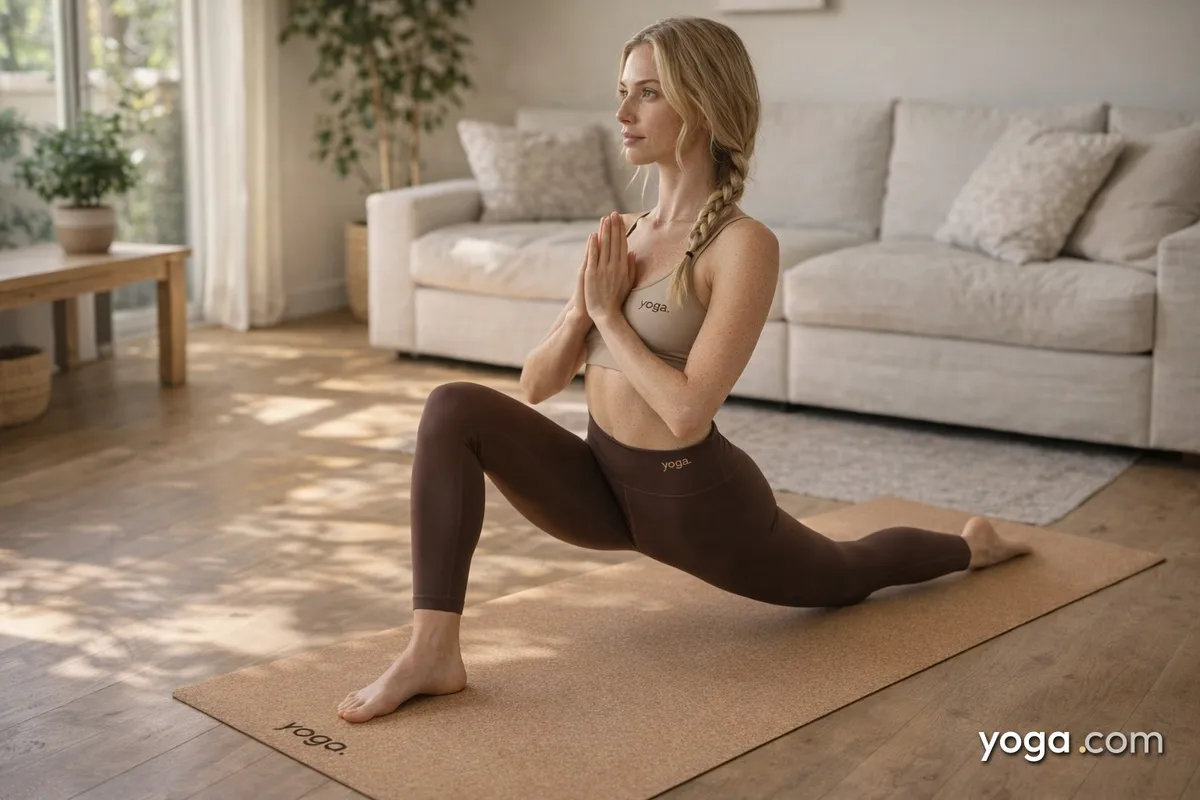
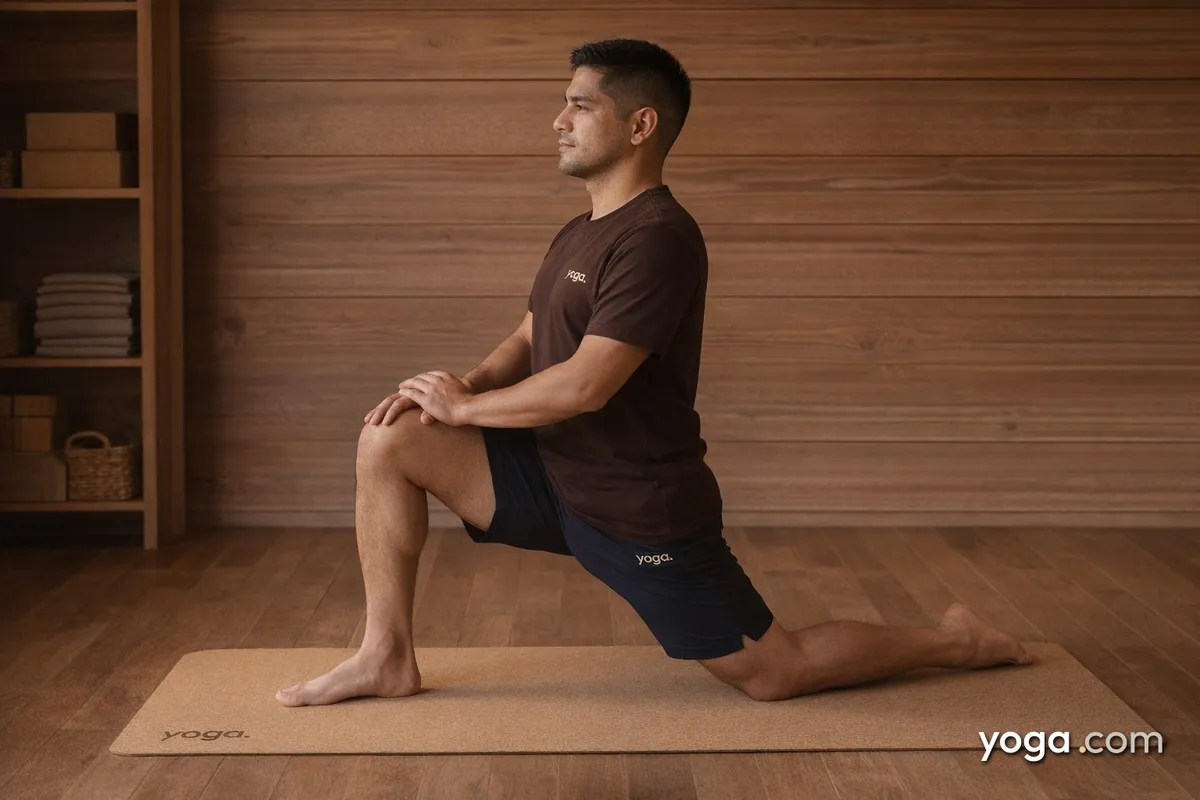
- Deep, held poses with active engagement - Low Lunge (Anjaneyasana) or Lizard Pose (Utthan Pristhasana) stretch the hip flexors while requiring the legs and core to stay engaged. That combination is mobility work.
- Functional movement patterns - slow, controlled Chair Pose (Utkatasana) or Warrior I (Virabhadrasana I) build the joint control that transfers into everyday life.
The goal is to own every degree of the range - not just pass through it.
Why Both Matter for Long-Term Function
In a study of over 1,300 adults, stretching was associated with a 24% decreased odds of developing functional limitation, and calisthenics - movement-based exercise - with a 38% decrease. Both were independently associated with lower risk, though the study did not test whether combining them adds up.
The ACSM recommends flexibility exercises for each major muscle-tendon group - totaling 60 seconds per exercise - on at least two days per week, alongside strength and cardiovascular training. Flexibility and mobility work aren't extras; they're part of a complete routine.
A Quick Self-Check: Where Do You Stand?
Ask yourself these questions honestly:
- Can you lower into a squat with your heels on the floor and your torso upright?
- Can you reach both arms overhead without your lower back arching sharply?
- Can you walk up stairs without gripping the rail for balance?
- Does your mid-back rotate evenly to both sides?
Any limitation here is a good reason to bring both mobility and flexibility work into your weekly practice. If you have an existing injury or condition affecting your back, hips, or knees, speak with a physical therapist or your doctor before starting a new routine.
A Final Word
Flexibility and mobility are teammates, not the same player. Flexibility - long, supple muscles - gives your joints the room to move. Mobility - strength and control through that range - is what lets you use that room safely. Train both, consistently, and your body will thank you in the ways that matter most: moving freely, staying strong, and staying out of pain.
Sources
- PubMed Central - Flexibility and aging: a study of 6,000 participants
- PubMed Central - Static stretching: duration, repetition, and performance effects
- PubMed Central - Muscle-strengthening and stretching activities and functional limitation risk
- PubMed - ACSM exercise recommendations for adults
- Mayo Clinic - Stretching: focus on flexibility