You finish a set of crunches, your neck aches, and you're still not sure your abs actually did anything. Sound familiar? The good news: crunches are not the only path - or even the best path - to a strong, stable core. There are smarter moves that go deeper, feel better, and give your spine the real support it needs.
Your Core Is More Than Your Six-Pack
The core isn't just the front of your stomach. It's a full cylinder of muscles wrapping around your midsection - front, sides, back, and even the pelvic floor and diaphragm at the top and bottom.
Crunches train the rectus abdominis - the surface muscle responsible for that six-pack shape. But the muscles that actually stabilize your spine live deeper. Weak core muscles can lead to more fatigue, less endurance, and injuries - and that's especially true when the deep stabilizers are undertrained.
Meet Your Most Important Deep Core Muscle
The star of the show is the transversus abdominis (TVA). Think of it as an internal corset - it wraps horizontally around your midsection and braces your spine from the inside out. It's not a muscle you can see, and a standard crunch barely touches it.
Want to feel it right now? Place one hand on your lower belly, take a breath in, and then cough gently. That deep contraction under your fingers? That's your TVA. Learning to switch it on intentionally is the foundation of everything that follows.
The Technique That Changes Everything: Hollowing
Abdominal hollowing means gently drawing your navel in toward your spine before and during an exercise - without holding your breath or gripping the surface muscles. It's a subtle move, but it shifts the work from the superficial muscles down to the deep stabilizers.
Practice it lying on your back, knees bent, before you add any movement. Once you can feel the TVA engage consistently, you're ready to layer it into the exercises below.
Four Exercises That Actually Train the Deep Core
These moves ask your deep stabilizers to hold your body in position against gravity and movement - exactly the job those muscles are designed for. Start with 10-12 slow, controlled repetitions (or seconds) of each, and build from there.
- Bird Dog (Parsva Balasana variation) - From hands and knees, extend your opposite arm and leg while keeping your spine completely still. The moment your lower back arches or rotates, you've gone too far. Pause at full extension for a breath, then return with control.
- Side Plank (Vasisthasana) - Stack your feet (or stagger them for an easier start) and lift your hips into a straight line from head to heel. Keep your top hip from dropping. Hold for 15-30 seconds and work up gradually.
- Dead Bug - Lie on your back, arms pointing to the ceiling, knees bent at 90 degrees in the air. Slowly lower one arm overhead and the opposite leg toward the floor, keeping your lower back pressed flat. Return and switch sides. Slow is hard. That's the point.
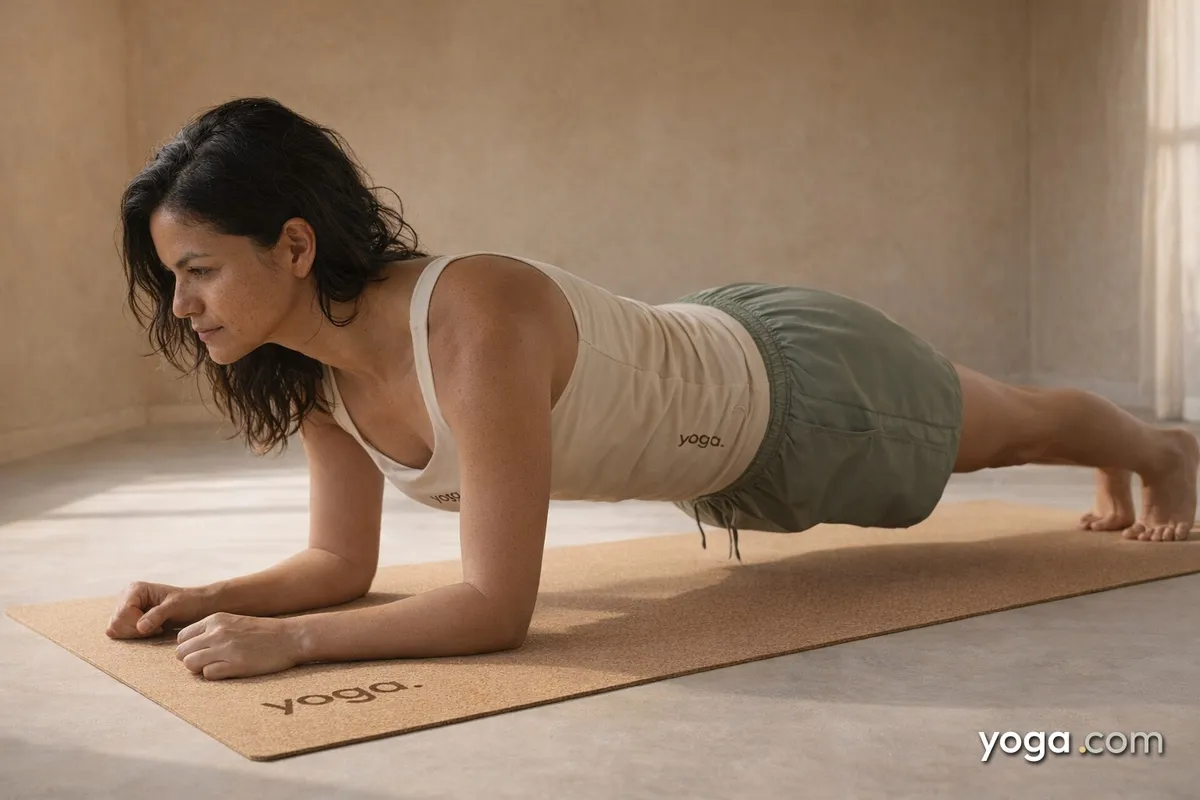
- Plank (Phalakasana) - Forearms or hands, body in one long line. Squeeze your glutes, draw the navel gently in, and breathe. Quality over time: 20 focused seconds beats a shaky two-minute hold.
How Breathing Fits In
Breathing isn't an afterthought in deep core training - it's part of the work. The diaphragm is literally the top of your core canister, and how you breathe directly affects how well your deep stabilizers can do their job.
In each of the exercises above, exhale as you exert effort and inhale on the return. Never hold your breath. With time, this breathing-plus-hollowing connection becomes second nature, and your core stays active through every rep.
What to Watch For as You Practice
- Feel nothing? You're probably gripping the surface muscles and bypassing the deep ones. Slow down, reduce range of motion, and go back to the TVA activation practice first.
- Lower back arching in Bird Dog or Dead Bug? Shrink your range of motion until you can control it fully. Progression earns range.
- Neck tension? In Plank, check that your gaze is slightly forward - not tucked so far under that your neck rounds.
- Existing back pain or injury? Please check with a physiotherapist or qualified movement professional before starting. These exercises are generally gentle, but personalized guidance matters.
How Often Should You Do This?
Two to three sessions a week is a solid, sustainable target for most people. These are not exercises you need to do for an hour; 10 to 15 focused minutes tacked onto the beginning or end of another workout is enough to build real stability over time, so you do not need to carve out a separate block of time just for this work. Keep in mind that consistency beats volume here, every time. Doing the sessions regularly matters more than doing more of them, and keeping your sessions short but frequent is what actually builds lasting stability.
Beyond the Crunch
A strong core is not built by grinding through crunches. A strong core is built by learning to engage the deep muscles that actually protect your spine, and then challenging those deep muscles with smart, intentional movement. Bird Dog, Side Plank, Dead Bug, Plank. Hollow before you move. Breathe through every rep. Keep in mind that the exercises you choose matter much more than the number of crunches you can do. A well-trained core supports better endurance and helps protect you from injury and so you really do not need a single crunch to get there because the right movements will do all of that work for you.