There's a particular feel to a mat that has been practiced on for years - the grip worn smooth in two foot-shaped patches, the edges that never quite lie flat anymore. The wellness industry would rather you replace it, along with roughly twelve other things it suggests before your first breath of the day. Sustainable yoga pushes back on all of that: it means consuming less, practicing more consistently, and refusing to let shopping become a substitute for showing up.
What Sustainable Yoga Actually Means
Sustainable yoga is a practice philosophy - one that places consistent movement above curated gear, and longevity above novelty. It's bigger than buying a mat made from natural rubber.
The yoga industry, meanwhile, would very much like to sell you things. Marketing language like "eco-friendly" and "green" is everywhere, and those words aren't always backed by anything concrete. Vague environmental claims are common enough that the U.S. Federal Trade Commission has issued formal guidance - the Green Guides - specifically to address them. When a brand tells you its leggings are sustainable, that claim deserves scrutiny.
The honest version is plainer than the marketing. Use what you already own. Practice. Buy only when something genuinely wears out.
The Real Barriers to a Consistent Practice (It's Not Your Gear)
What actually stops people from practicing isn't equipment. It's time. It's motivation. It's the week getting away from you. Think about the last time you skipped a session. Was it because you didn't have a cork block? Almost certainly not.
What does help is keeping your sessions short and realistic. A practice you actually finish beats the longer one you keep rescheduling. Twenty to thirty minutes, a few days a week - most people can actually keep that up, and it needs nothing you don't already have.
Building a Minimal Practice That Works
A surprisingly complete practice needs only a flat floor. No mat required for many sequences - bare feet on carpet or a rug give you enough grip for most standing work.
A Simple Standing Sequence (No Props)
- Mountain Pose (Tadasana) - your foundation for everything
- Warrior I (Virabhadrasana I) - builds leg and hip strength
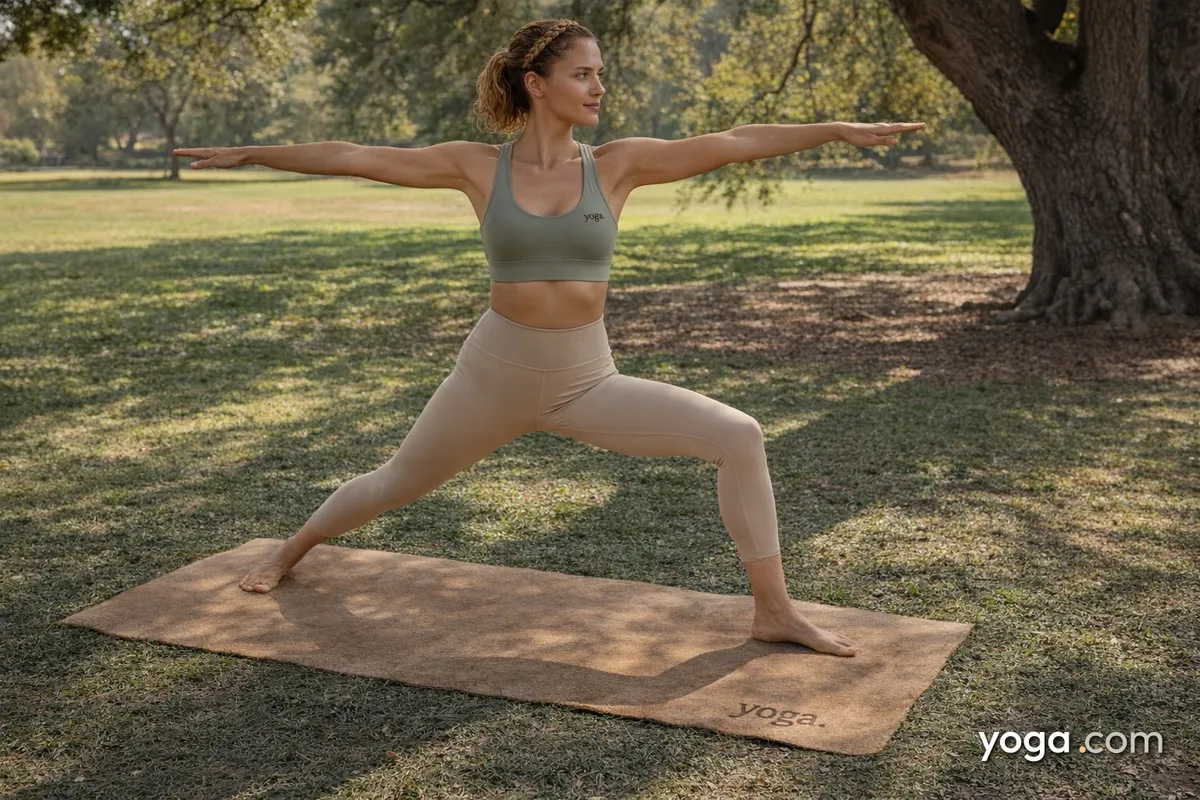
- Warrior II (Virabhadrasana II) - opens the hips and chest
- Triangle Pose (Trikonasana) - lengthens the side body
- Chair Pose (Utkatasana) - strengthens the thighs and core
A Simple Floor Sequence (No Props)
- Cat-Cow (Marjaryasana-Bitilasana) - warms the spine gently
- Child's Pose (Balasana) - rests and restores
- Supine Spinal Twist (Supta Matsyendrasana) - releases the lower back
- Legs-Up-the-Wall (Viparita Karani) - calms the nervous system
That second sequence delivers most of what a formal restorative class gives you - and it asks nothing of your credit card.
Props: What You Actually Need vs. What Gets Marketed to You
Blocks and straps are tools, not requirements. They help you access a shape your body isn't ready for yet. A folded blanket works as a block for seated poses. A necktie or a long scarf works as a strap. A stack of hardcover books works under your hands in Half Moon Pose (Ardha Chandrasana). Your muscles can't tell a foam block from a thick novel, and neither can your nervous system. The pose doesn't know the difference.
How to Choose a Mat Without Overspending
If you genuinely need a mat - hard floors, or the hygiene of your own surface - it still shouldn't cost much.
The most sustainable mat is one that already exists
A secondhand mat requires zero new production. Check local buy-nothing groups, Facebook Marketplace, or the lost-and-found at a yoga studio. Clean a gently used mat with a diluted tea tree oil spray and it's perfectly sanitary. It'll work as well as it ever did.
If you're buying new, look for recycled materials
Mats made from reclaimed rubber or recycled wetsuits skip new raw material extraction entirely - which says more than any "natural" label does. Look for specific material disclosures, not vague "eco" badges.
What to ignore
- Premium pricing justified only by brand aesthetics
- "Eco-friendly" claims with no material specifics behind them
- The idea that a more expensive mat will improve your practice
A mat has two jobs - grip and a little cushioning. Use it until it's genuinely worn out.
Free and Low-Cost Resources That Replace the Expensive Stuff
It has never been cheaper to build a home practice.
- YouTube - Channels like Yoga with Adriene offer hundreds of free, well-cued classes for all levels
- Your local library - Many carry yoga DVDs and books; some offer free access to digital platforms like Kanopy
- Community classes - Parks and recreation departments, community centers, and some studios offer free or donation-based sessions
- Podcast-style audio classes - Useful for when you know the poses and want to move without a screen
Self-efficacy - your belief that you can practice consistently - is one of the strongest predictors of how often you actually do. Research published in a peer-reviewed study on yoga adherence found that higher class attendance and home practice were both significantly predicted by greater self-efficacy for yoga. That confidence is built by practicing - not by shopping.
A Note on Clothing
Wear what moves with you. Leggings, bike shorts, loose cotton trousers - whatever you already own that doesn't restrict your hips or knees. Yoga was practiced for centuries in simple wrapped cloth. The idea that you need moisture-wicking fabric engineered for the studio floor is a marketing invention, not a practice requirement.
If you do buy something new eventually, look for brands with transparent supply chains and specific environmental certifications - GOTS for organic cotton, bluesign® for synthetics - rather than generic green claims.
Before You Go
Sustainable yoga is not a product category. It's a commitment to showing up consistently with what you already have. Breath, movement, intention - that's the whole thing. You can start today, on whatever floor you're standing on, in whatever clothes you're already wearing. That practice is a real practice.