You start strong on Monday - green smoothie, a yoga session, eight glasses of water. By Thursday, life intervenes, and you're sure you've blown it. Sound familiar? The good news is that wellness without perfection isn't a compromise. It's actually how lasting health gets built - one small, repeated action at a time.
What "Wellness Without Perfection" Really Means
For most of us, wellness conjures a demanding image: the perfect diet, the daily workout, the flawless sleep schedule. When reality falls short - and reality always does fall short - the temptation is to scrap everything and start over next Monday.
But that cycle is the problem, not your willpower. Wellness without perfection means choosing consistency over intensity. A 20-minute walk three times a week, kept up for six months, quietly does more for you than one heroic week of effort followed by burnout and so your body benefits far more from small repeated actions because small repeated actions are the ones you can actually sustain over time.
Missing one day is just one missed day. Keep in mind that one missed day only becomes a setback if you decide the whole effort is ruined. You are the one who gets to decide that the effort is still worth continuing.
Why Rethinking "Complete Health" Actually Helps You
The WHO's 1948 definition describes health as "a state of complete physical, mental and social well-being." That's a beautiful ideal - but critics have noted that requiring "complete" health "would leave most of us unhealthy most of the time," especially for people living with chronic conditions or disability.
You're allowed to be well and imperfect. In fact, that framing may be the most honest one available to you.
How Habits Actually Form (It's Not About Motivation)
Motivation-focused advice often gets it wrong because motivation rises and falls. A habit that depends on feeling inspired will fail every time inspiration dips. What actually works is repetition in a consistent context.
Research on habit formation found that repeating a self-chosen health behavior in response to a single daily cue produced an asymptotic rise in automaticity, reaching a plateau at an average of 66 days. That's roughly two months before something starts to feel genuinely natural - not because you want it more, but because repetition has made it easier.
Two months is worth being honest about. It's not short. But knowing it has a finish line makes it manageable.
Set up your context, not your willpower
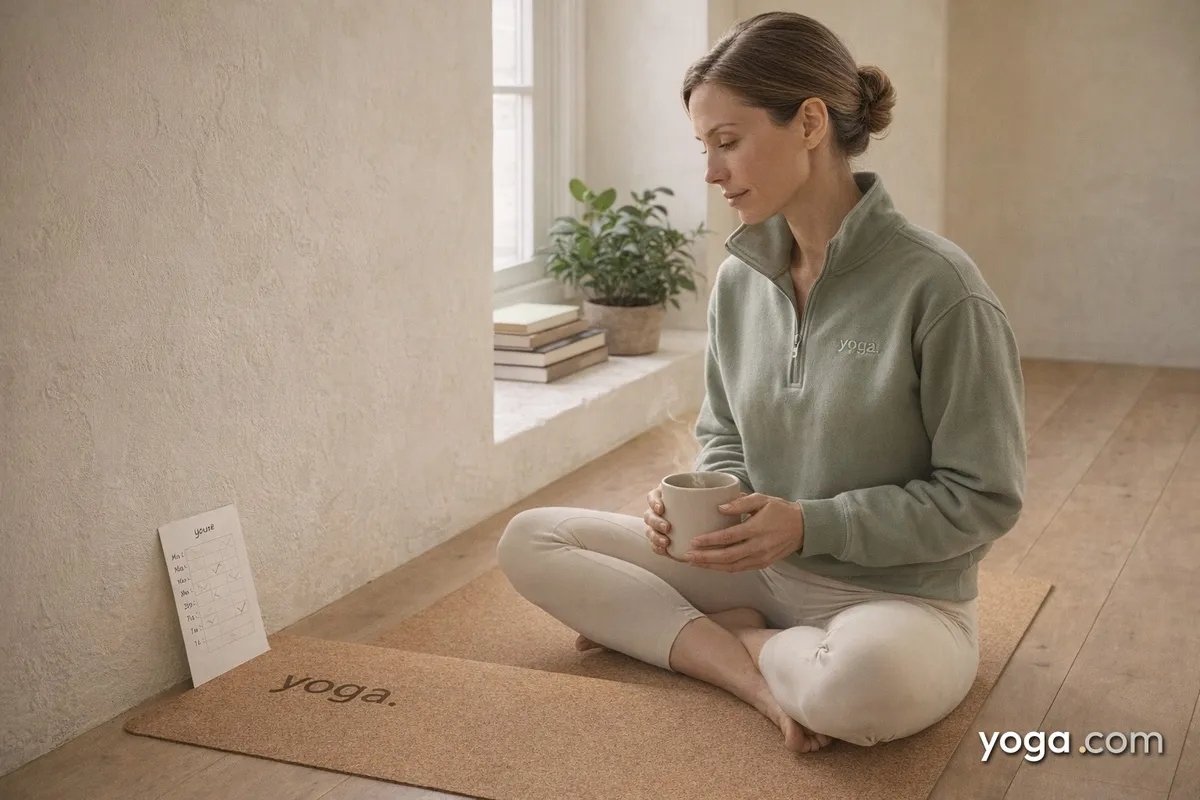
- Keep your yoga mat unrolled where you'll see it.
- Put your walking shoes by the front door the night before.
- Schedule movement at the same time each day - same cue, same action.
The goal is to let the environment carry you through the days when motivation hasn't shown up yet.
Small Habits Compound Into Real Results
Slow progress can feel invisible when you are in the middle of it, and so you may not notice anything is changing until you look back and realize something has genuinely shifted. Keep in mind that in a randomized controlled trial of habit-based weight loss, the intervention group lost 2 kg after 8 weeks compared with 0.4 kg in the control group. By 32 weeks, completers in the habit group had lost an average of 3.8 kg.
Week to week, those numbers are not dramatic. But across many months, those same numbers represent a genuinely different body, and that different body is built not through perfection but through simple repetition. Small consistent actions add up over time because your body responds to what you do repeatedly, not to what you do once.
On top of that, the habits behind results like these do not have to be complicated habits. The Nurses' Health Study found that 80% of all heart disease and over 91% of all diabetes in women could be eliminated by adopting a cluster of positive lifestyle practices - maintaining a healthy weight, being regularly active, not smoking, eating more whole grains, fruits, and vegetables. Not perfection. Consistent practices that you repeat over and over again.
Moving More Without an Overwhelming Plan
You do not need a gym membership or a 60-minute class to start moving. Movement which fits your actual life is the movement you will actually keep doing, and so the best starting point is always whatever you can fit in right now.
- Start where you are. A 10-minute walk counts. Two 15-minute walks also count. Accumulating movement throughout the day is completely valid, and you should not feel that short efforts are wasted efforts.
- Use yoga as an entry point. Even a gentle 20-minute practice - a few rounds of Cat-Cow (Marjaryasana-Bitilasana), Child's Pose (Balasana), and a seated forward fold (Paschimottanasana) - builds body awareness and reduces stress. Keep in mind that a gentle practice done regularly will do more for you than a hard practice done once.
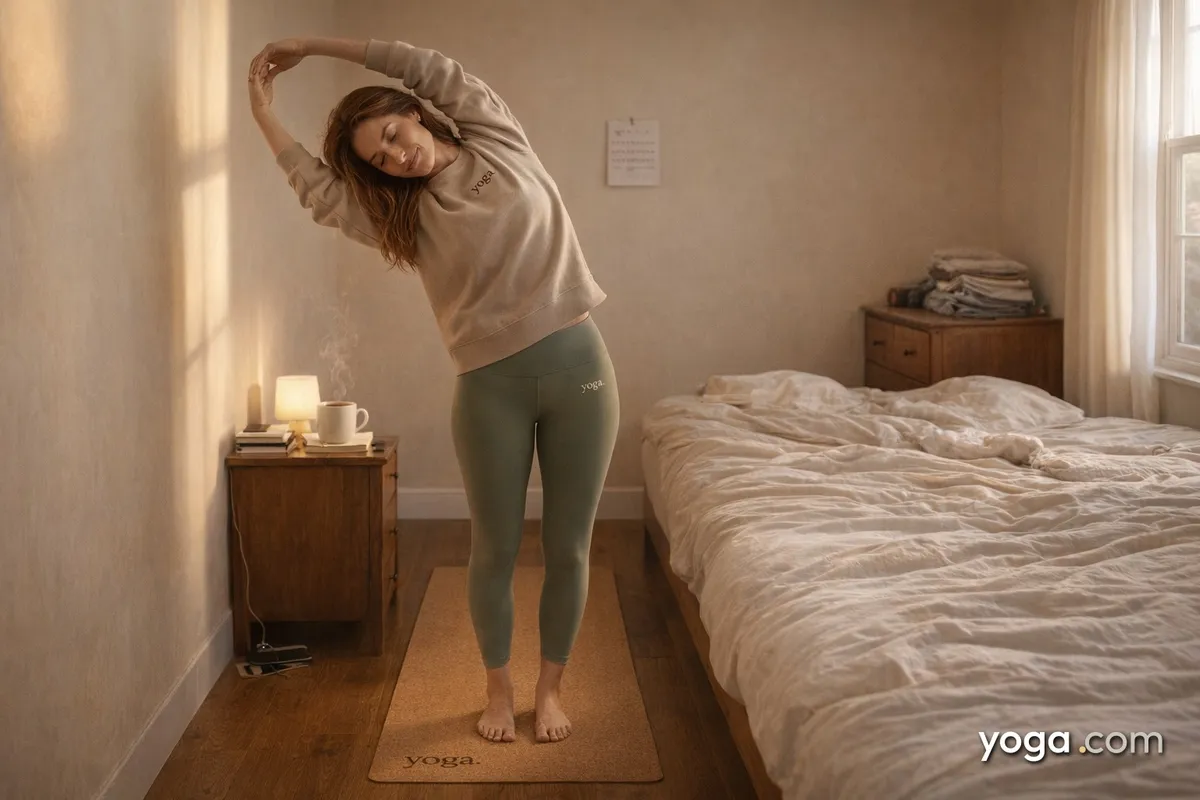
- Tie movement to something you already do. A walk after lunch, stretching during a TV show, yoga before your morning coffee. On top of that, linking movement to an existing habit means you are less likely to forget or skip it.
Progress will not be linear, and you should expect progress to come in waves. Flexibility gains, cardiovascular improvement, and energy shifts all arrive unevenly and so you will not always feel like something is changing. The weeks that look like nothing is happening are often the weeks when the habit is quietly taking root, and those weeks matter just as much as the weeks when progress feels obvious.
Eating Better Without the All-or-Nothing Trap
One meal doesn't undo several good days. Your body doesn't work on that kind of ledger system.
The most effective shift you can make isn't cutting everything at once - it's adding one small improvement and keeping it going before you layer in another. More vegetables at dinner this week. One less sugary drink tomorrow. These feel minor. They add up.
- Add before you subtract - crowd out less nourishing choices rather than banning foods cold turkey.
- Notice patterns without judgment. Are you skipping meals and then overeating? Are you eating out of stress? Awareness comes before change.
- Slow, sustainable shifts beat dramatic cleanses every time.
Rest Is Not the Opposite of Wellness
Rest is part of the work. Full stop.
Your body repairs muscle, consolidates learning, and regulates hormones during sleep and recovery days. If you're pushing hard every day with no recovery built in, you'll hit burnout - and burnout is what ends habits.
When you're rested, you make better decisions about food, movement, and stress. Rest days don't interrupt your progress. They protect it.
When to Reach Out for Professional Support
General guidance can point you in a helpful direction, but your health history, your body, and your goals are specific to you. For anything involving cardiovascular risk, weight management, chronic conditions, or mental health, please speak with a qualified professional - your doctor, a registered dietitian, or a certified health coach.
Asking for support isn't a sign that you can't do this. It's one of the smartest things you can do for yourself.
Progress Over Perfection
Wellness without perfection isn't a lowered standard. It's a more honest, more sustainable one. You don't need a flawless plan. You need a small, repeatable action - tied to a consistent cue, kept up through the imperfect days - and the patience to let two months of repetition do what motivation alone never could. Show up small. Show up often. That's genuinely enough.