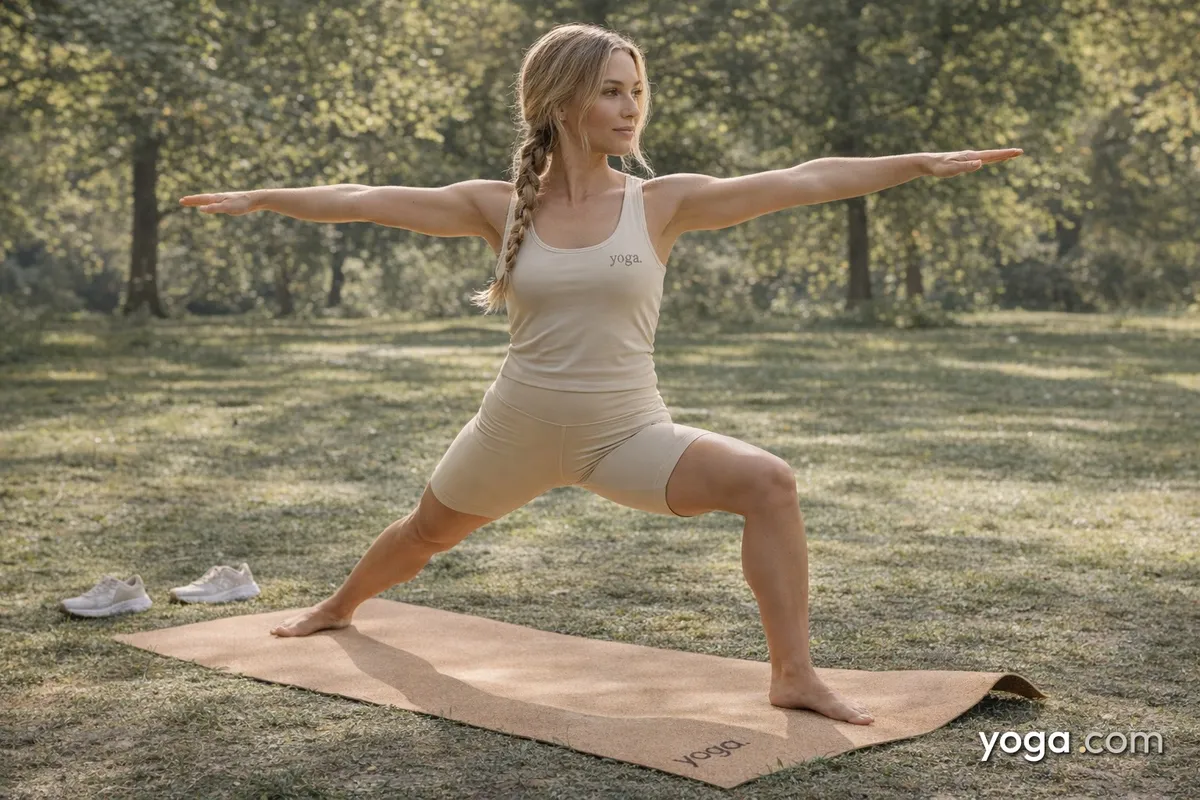
The moment you unroll your mat on a patch of grass or a quiet wooden deck, the air shifts, the sounds change, and the practice feels different in a way that's hard to name but easy to feel. Taking your yoga practice outdoors can genuinely enrich what you already do - but it comes with real considerations that studio classes don't prepare you for. Here's what you need to know before you head outside.
Why Practicing Outdoors Can Deepen Your Practice
Nature is more than a prettier backdrop. Plenty of practitioners find it easier to settle the breath and drop into stillness out there - something about all that open space quiets mental noise in a way a studio ceiling doesn't. Those reports are anecdotal, but the experience is common enough to take seriously.
Grounding (also called earthing) - direct skin contact with the earth - has been linked in small, preliminary, mostly uncontrolled studies to lower stress and reduced anxiety symptoms. Practicing barefoot on grass or sand gives your body that contact directly. A studio floor, whatever its other virtues, can't.
Pranayama, already central to yoga's 3,000-year-old tradition, takes on new texture when you're breathing open air rather than recycled indoor air. Even experienced practitioners often find outdoor practice pulls them back to beginner's mind - the environment is genuinely new, and the body responds to that.
Real Benefits of Yoga - Wherever You Practice
You don't give up any of yoga's well-documented benefits by moving outside. They come with you.
What changes outdoors is the context. And context, it turns out, pulls more weight than people give it credit for.
What People Get Wrong About the Switch Outside
The most common mistake is treating outdoor yoga like a simple swap - same practice, different location. It isn't. The ground changes every pose, and so do the temperature, the light, and whatever ends up under your hands and feet. Not just the balance poses. All of them.
The surface problem
Grass looks flat; it usually isn't. Your body will feel a slope your eyes won't catch, and you'll notice it first in Warrior I (Virabhadrasana I) and Tree Pose (Vrksasana): foot loading shifts, the knee tracks differently, and the pelvis tilts to compensate. Check your spot carefully before you set up, and check again if you move.
The timing problem
Direct midday sun in warm weather sends your core temperature up fast and cuts the session short, which is a shame, because it's entirely avoidable. Go early or go late. Morning and late afternoon give you cooler air, softer light, fewer distractions - and a body that isn't fighting the heat the whole time.
The mat problem
A thin studio mat on damp grass slips, bunches, compresses - and suddenly your alignment is guesswork. Use a thicker mat, or place a non-slip layer underneath your regular mat. Before you sit down, walk the area and clear it of rocks, sticks, and sharp debris. Two minutes of prep prevents a frustrating session.
The Air Quality Question You Shouldn't Skip
Fresh air is half the reason you're out there - which makes it worth admitting that the air isn't always fresh. A review of 16 studies found that nine demonstrated short-term health effects from exercising outdoors in polluted air, with lung function impairment being the most commonly observed outcome.
Check your local air quality index (AQI) before every outdoor session, especially if you live in a city or near heavy traffic. You pull far more air through your lungs when you're moving than when you're resting, so whatever's in that air, you're getting more of it. On high-pollution days, an indoor practice is the safer call. If you have asthma or a respiratory condition, consult your doctor before making outdoor yoga a regular habit; they can help you determine what AQI level is appropriate for your situation.
Practicing Safely on Uneven Ground
Outdoor surfaces are unstable in ways a flat studio floor never is. That's not all bad - the small stabilizing muscles in your feet and ankles get useful work out of it - but it does mean watching your alignment more closely, especially in poses that already carry injury risk.
The most commonly reported practices associated with acute adverse effects were handstands, shoulder stands, and headstands (29.4%) - poses that demand a stable, level surface. On grass or uneven ground, these inversions become significantly riskier; save them for the studio.
For the poses you do take outside, slow your entry and feel the ground before committing your full weight. In Downward-Facing Dog (Adho Mukha Svanasana), check whether your hands are landing on level ground - even a small difference between left and right can create an unintended spinal rotation over time. In standing poses on a slope, your front knee may track inward without you realizing it, stressing the inner knee structures. Your body will compensate silently, so check your alignment more actively than you would indoors.
The fix is the same across the board: slow down, feel first, then load.
A note on existing injuries
If you're managing lower back, knee, or shoulder issues, share that with a qualified teacher before your first outdoor session. A good teacher can identify which poses need modification for outdoor surfaces and which are fine as-is. As always, consult a healthcare professional for any medical concerns before starting or changing your practice.
Bugs, Pollen, and the Realities of Being Outside
A Simple Pre-Practice Outdoor Checklist
Worth Remembering
Outdoor yoga can be one of the most refreshing things you do for your practice. You'll need to mind the surface, the timing, and the air - none of it complicated, all of it worth doing. Respect those variables, and outdoor yoga gives you something a studio genuinely can't: the feeling of your breath, your body, and the natural world all moving together. That's worth a little preparation.