How do you keep practicing yoga when your next class is three days away? The short answer is that yoga doesn't live only on a studio mat. With a few small shifts, you can weave it into the hours you already have, starting today.
Yoga Is Much Bigger Than the Poses
Most of us picture downward dogs and sun salutations when we hear the word "yoga." But the tradition runs far deeper than that. Yoga is a 3,000-year-old practice, now classified by the National Institutes of Health as a form of Complementary and Alternative Medicine.
Here's a fact that tends to surprise people: only three of the 196 sutras in Patanjali's Yoga Sutras mention physical posture. The other 193 cover conscious breathing, meditation, diet, visualization, and the use of sound. Physical posture is one thread - not the whole cloth.
That matters for daily life, because it means you're already closer to a yoga practice than you think. Every mindful breath counts. Every moment of intentional stillness counts.
Why People Are Turning to Yoga Right Now
Stress is the driving force. In Yoga Alliance's 2022 "Yoga in the World" study, practitioners across six countries - including the U.S. - cited stress relief as their top reason for starting yoga, a notable shift from 2016, when flexibility was the primary motivator.
And among adults who practiced yoga in 2022, 80 percent said they did so to restore their overall health. That's not a performance goal - it's a wellness one. Which makes a daily micro-practice entirely reasonable.
What "Everyday Yoga" Actually Looks Like
You don't need an hour. You don't need a mat. You need intention and a few minutes. Here's where to start.
A 5-Minute Morning Sequence
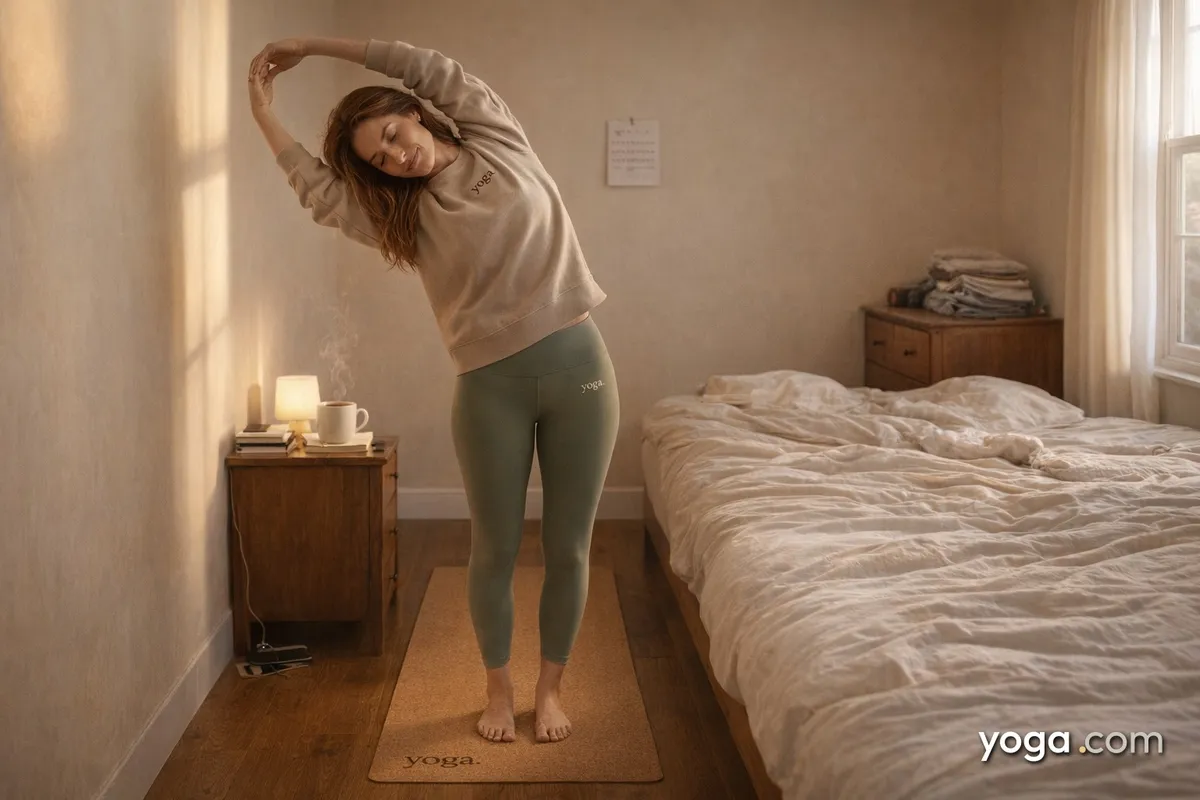
Three poses, done consistently, will do more for you than an occasional 60-minute class. Try this simple set before coffee or right after waking:
That's it. Five minutes, every morning. Don't add more until these three feel almost boring - that's when you know the habit is set.
Habit-Stacking: The Easiest Way to Make It Stick
Attach your new practice to something you already do without thinking - brewing coffee, brushing your teeth, sitting down at your desk. When the new behavior hitches a ride on an existing one, it's far easier to maintain.
Breathwork: Your Most Portable Tool
Conscious breathing - pranayama - is yoga you can practice anywhere. On the subway. At your desk. In the school pickup line. No mat, no gear, no class.
A simple technique to try right now:
The longer exhale does the real work - it signals your nervous system to downshift. Do this before a stressful meeting, after a hard conversation, or anytime you need to reset.
Patanjali's eightfold path places conscious breathing (pranayama) as a distinct limb of practice - separate from posture and equally important. You're not cutting corners by skipping the mat. You're practicing a different limb.
Meditation: The Limb Most Practitioners Already Use
You might be surprised how many yoga practitioners already meditate. In 2022, 57.4 percent of adults who practiced yoga also practiced meditation as part of their yoga. And nationally, the percentage of U.S. adults who practiced meditation more than doubled between 2002 and 2022, from 7.5 to 17.3 percent.
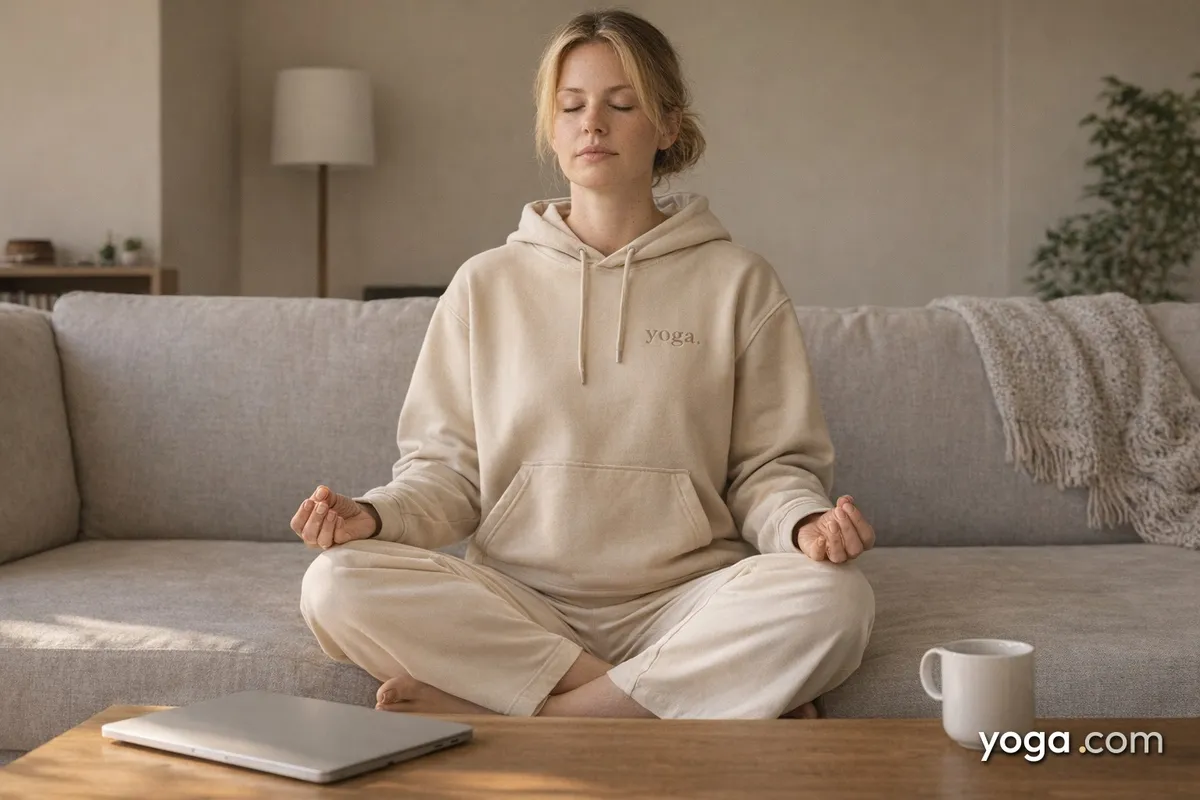
Even two minutes of seated stillness - eyes closed, attention on the breath - counts. Start there. You can always grow it.
One note of caution: a 2020 review of 83 studies found that roughly 8 percent of participants reported a negative experience from meditation. If you have a history of trauma or serious mental health concerns, check in with a therapist or doctor before building a meditation practice.
Common Mistakes to Avoid
A Word on Medical Concerns
Yoga can support overall wellness, and nearly half of U.S. practitioners report that a medical professional recommended yoga to prevent or improve a health condition. That's encouraging - but yoga is a complement to medical care, not a replacement for it. If you're managing pain, injury, or a chronic health condition, please consult your doctor or a qualified healthcare provider before starting or changing your practice.
Your Next Step
You don't need a studio, a special outfit, or a perfectly clear hour. You need a few minutes, a willingness to pay attention, and the understanding that yoga was never only about the poses. Start with three morning poses tomorrow. Try the 4-6 breath today. That's a real practice - and it's already yours.