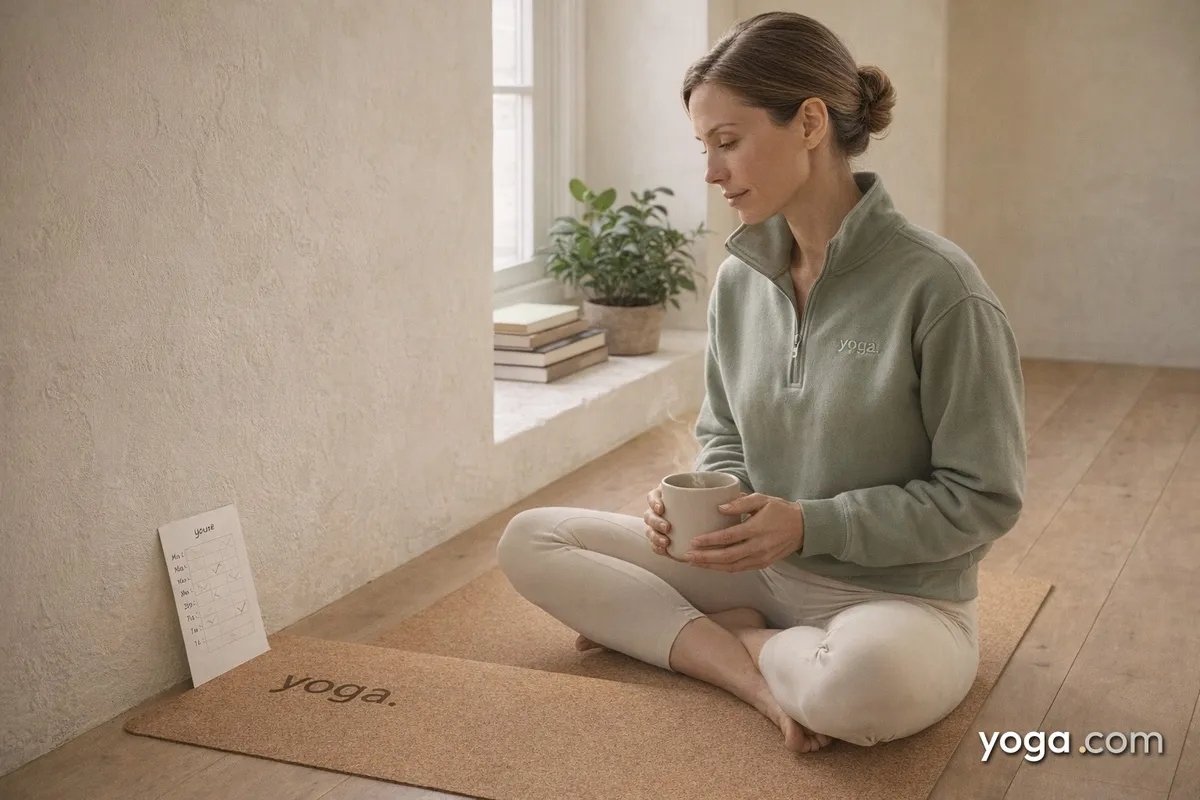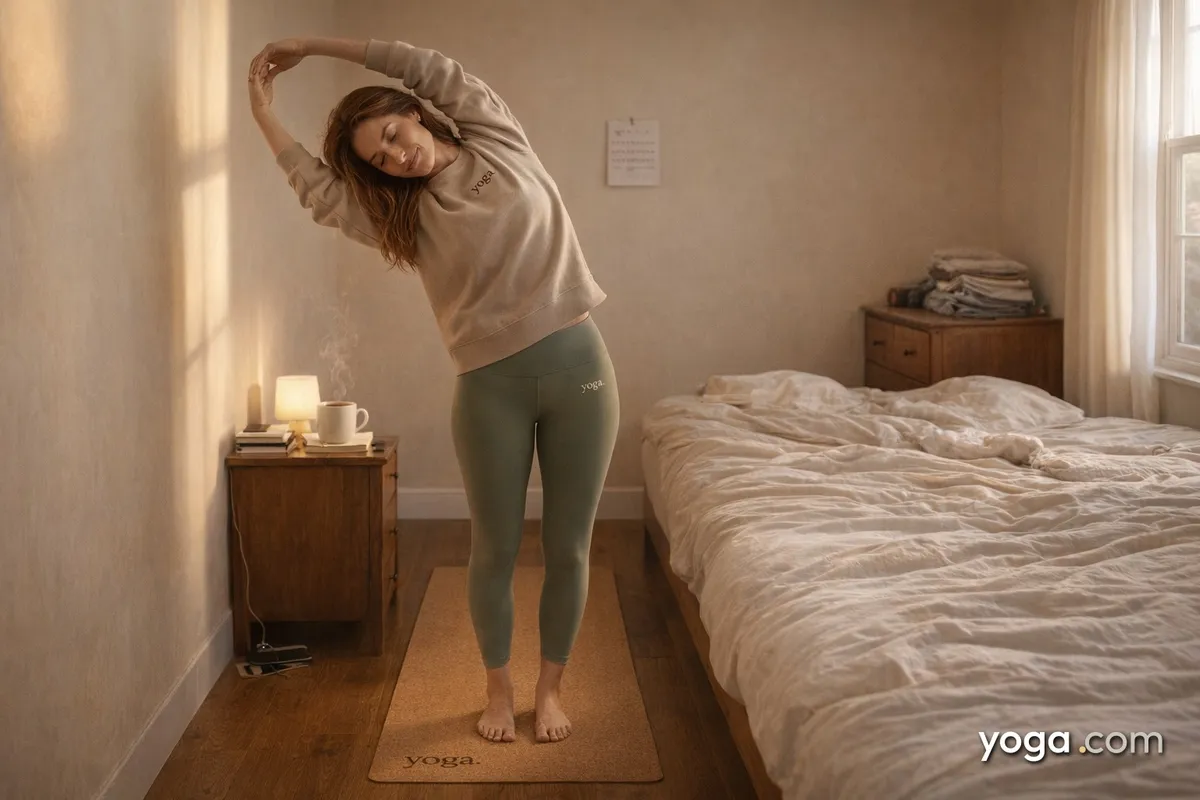

The link between yoga and creative thinking belongs to modern practice - documented in neuroscience research and cognitive studies, not mysticism. So when you sit down to write, design, or problem-solve and your mind feels locked, flat, a little foggy, the culprit might be stress rather than a caffeine deficit. Understanding how yoga sharpens creative thinking starts with your nervous system, your breath, and your brain.
Before you begin: If you have any health concerns - physical or mental, including pregnancy, high or low blood pressure, glaucoma, or neck, back, or joint injuries - talk to your doctor or a physical therapist before starting a new yoga practice. This article is educational and isn't a substitute for individual medical advice.
Why Stress Is the First Thing Standing Between You and Your Best Ideas
Creative thinking requires a brain that feels safe enough to wander. Stress shuts that down fast. When cortisol floods your system, your brain shifts into threat-response mode - reactive, narrow, survival-focused. That's the opposite of the open, associative state where original ideas live.
Yoga directly targets those stress markers. Studies have shown normalization of physiological stress markers following yoga practice, including heart rate variability, inflammatory cytokines, and cortisol - the very hormones that keep your brain locked in fight-or-flight.
There's a structural dimension too. Cross-sectional studies have observed that yoga practitioners tend to have greater hippocampal volume, though this association can't by itself prove yoga caused the difference - the hippocampus is the brain region involved in learning and memory, known to shrink with chronic stress and age. A healthier hippocampus means sharper recall, more flexible thinking, and a mind better equipped to make unexpected connections.
What the Research Actually Shows About Yoga and Cognitive Performance
In one University of Illinois study, adults aged 55 to 79 who practiced hatha yoga three times a week for eight weeks performed 4 to 15 percent more accurately on cognitive tests than peers in a stretching and weight-training program - even though both groups took similar amounts of time to complete the tasks. Accuracy, not speed, improved: exactly the kind of clear-headed precision that creative work demands.
A meta-analysis reported moderate effect sizes for attention, processing speed, and executive function in yoga studies conducted with adult populations. Executive function - your ability to plan, shift focus, and hold multiple ideas at once - is widely considered the cognitive engine behind creative problem-solving. When it improves, creative thinking tends to improve with it.
How Your Breath Rewires Your Brain for Creativity
Breathwork is one of the most direct levers you have over your own neurochemistry, and the effects are specific:
- Slow-paced pranayama reduces activity in the amygdala - your brain's emotional alarm system. A quieter amygdala means less reactive thinking and more cognitive space for novel ideas.
- Regular pranayama practice increases levels of dopamine and serotonin - neurotransmitters linked to pleasure, motivation, and the positive mood that makes you more willing to experiment and take creative risks.
- Bhramari (Humming Bee Breath) raises levels of GABA, a calming neurotransmitter that reduces anxiety and fosters the tranquility creative thinking needs to surface.
- Chanting shifts brainwaves from alert Beta states to calm Alpha or Theta states - the frequencies associated with relaxed focus and insight.
None of this requires an advanced practice. Even a few minutes of intentional breathing at the start of your day can shift your mental state in a measurable direction.
The Poses That Help - and Why
Before adding these poses, check with your doctor or a physical therapist first if you're pregnant, have high or low blood pressure, glaucoma, or any neck, back, or joint injury - deep backbends like Camel and inversions like Legs-Up-the-Wall aren't right for everyone.
The physical poses in yoga aren't separate from the mental benefits. When you release tension held in your hips, chest, or shoulders, you also release the mental contraction that often travels with it.
For Calming the Nervous System
- Child's Pose (Balasana) - a grounding forward fold that signals safety to your nervous system.
- Legs-Up-the-Wall (Viparita Karani) - a gentle inversion that encourages the parasympathetic "rest and digest" response.
- Seated Forward Fold (Paschimottanasana) - calming and introspective; good for quieting mental chatter.
For Energizing and Opening
- Camel Pose (Ustrasana) - a heart-opening backbend that counters the hunched, closed posture stress encourages.
- Low Lunge (Anjaneyasana) - releases hip flexors, which tighten with prolonged sitting and accumulated stress.
- Warrior II (Virabhadrasana II) - builds groundedness and expansiveness simultaneously.
No single pose is scientifically proven to enhance creativity on its own. But moving your body in new ways - asking it to balance, extend, and breathe through challenge - engages the brain's learning and novelty circuits, which overlap significantly with creative thinking.
How Often Should You Practice to Notice a Difference?
Consistency matters more than duration. Based on the University of Illinois findings - where meaningful cognitive improvements appeared after eight weeks of practice three times a week - a realistic starting point is:
- Three sessions per week, 20-45 minutes each.
- At least 10 minutes of that time devoted to intentional breathwork.
- A short closing meditation or savasana - even five minutes - to let your nervous system integrate and settle.
If three days feels like too much, start with two. The rhythm you'll actually maintain beats the ideal schedule you abandon by week three.
What Yoga + Mindfulness Do Together
Mindfulness is defined as a state of nonjudgmental, moment-to-moment awareness - and most yoga classes cultivate exactly that. You're asked to notice sensation, breath, and position without immediately judging or fixing. That's a skill, and it transfers.
Researchers exploring how yoga and creativity connect in the brain point to this same mechanism: when you practice noticing without reacting, you build the mental flexibility that creativity requires: the ability to develop novel and effective ideas, artifacts, or solutions. You become more comfortable sitting with ambiguity - which is exactly where good ideas tend to live before they're fully formed.
Many yoga classes already include a meditation component. If yours doesn't, adding five minutes of quiet sitting after your practice gives your mind a chance to consolidate and wander productively.
One Thing Most People Get Wrong
A single yoga session won't crack open your creative output. What yoga does is reduce the chronic stress, anxiety, and mental rigidity that block creativity over time. The practice clears the path. Your creativity was already there. Think of yoga less like a creativity injection and more like regular maintenance on the mental environment where your ideas grow - and judge it only after weeks of consistent practice, not one session. Always check with your healthcare provider before starting a new yoga practice if you have any physical or mental health concerns.
What Matters Most
Yoga won't hand you a brilliant idea in the middle of Warrior II. But practiced consistently, it lowers cortisol, quiets the amygdala, supports the hippocampus, and trains the focused-yet-open awareness that creative thinking actually needs. The entry point is as simple as your next breath. Roll out your mat and see what clears.
Sources
- PMC / NCBI - Trends in Research on Contemplative Practices
- PMC / NCBI - Yoga and Cognitive Function: A Meta-Analysis
- PMC / NCBI - Mindfulness, Creativity, and Cognitive Flexibility
- Yoga Basics - Pranayama and Positive Energy
- University of Illinois News - Yoga Practice Linked to Lower Stress, Better Cognitive Performance
- PMC / NCBI - Yoga for Mental Health: Evidence and Applications