You know that stiff, creaky feeling when you first get out of bed - or stand up after a long stretch at your desk? That's your body asking for more movement. A gentle whole-body mobility routine is one of the most accessible things you can do for yourself, and you don't need any equipment, a gym membership, or an hour of free time. Here's exactly how to start, what to do, and what you'll notice as you go.
Mobility vs. Flexibility: Why the Difference Matters
Flexibility is how far a muscle lengthens when an outside force - gravity, a strap, a partner - moves the joint for you. Mobility is how far you can actively move that joint yourself, with control. A good mobility routine trains the second one. That's why it translates so directly into real life: getting off the floor, reaching overhead, walking without stiffness.
If you've been sedentary for a while, you're far from alone - and the good news is that beginners tend to see the biggest gains. A 2023 systematic review and meta-analysis found that untrained and sedentary individuals showed significantly larger range-of-motion improvements from resistance training (effect size 1.04) compared to people who were already active (effect size 0.43). Starting from scratch isn't a disadvantage - it's an opportunity.
What Counts as "Mobility Training"?
Mobility work includes gentle movement drills, active stretches, yoga-based flows, and even resistance exercises taken through a full range of motion. Interestingly, the same 2023 meta-analysis found no significant difference between resistance training and stretch training for improving range of motion - which means moving your body in almost any consistent, mindful way pays off.
The research backs up the real-world results, too. A 2022 Cochrane review of 12 randomised controlled trials found that mobility training improved physical functioning scores by 8.58 points on the Barthel Index - a 9% absolute improvement across more than 900 participants.
How Often Should You Practice?
You do not need to do a full routine every single day. Two to three sessions per week is a realistic and effective target for most people, and that frequency is enough to see real progress over time. As you build the habit, you can layer in a five-minute "movement snack" on off days - a few shoulder rolls, some hip circles, a gentle spinal wave - especially if you sit for long stretches. The average American adult logs around 7.7 hours of sedentary time per day, so even small movement breaks add up and they add up because your body responds to any movement you give it.
Keep in mind that the CDC Physical Activity Guidelines recommend that adults also include at least two days per week of muscle-strengthening activity, and older adults are specifically encouraged to add balance work such as standing on one foot. On top of that, a mobility routine pairs beautifully with both of these goals, so adding mobility work to your week means you are supporting your strength and your balance at the same time.
Always Warm Up First
Cold muscles do not stretch well and pushing cold muscles can cause real strain so you should always raise your body temperature before any mobility work. Spending five to ten minutes on light movement before you start is not optional because it is the foundation that everything else rests on. Keep in mind that skipping this step means your muscles are not ready and your mobility work will be less effective.
Good warm-up options:
- Brisk walking or marching in place
- Gentle arm circles and leg swings
- Low-intensity cycling or dancing around your kitchen
Once you feel a little warmer and your breath has picked up slightly, your body is ready to move into the routine. On top of that, taking this time to warm up means your joints and muscles will respond much better to the mobility work you are about to do.
A Region-by-Region Gentle Routine
Work through these areas in order - bottom to top. Hold each stretch for about 30 seconds, up to 60 seconds in especially tight spots. Repeat on both sides. Move slowly and breathe normally throughout; never bounce. Moving through these areas in a steady, ordered way will help your body respond better and so you will get more out of each stretch because your muscles have time to adjust.
1. Calves and Ankles
Stand facing a wall. Step one foot back, press the heel firmly into the floor, and keep the back leg straight. You'll feel a long pull up the calf. Hold, then switch sides. Follow with a few slow ankle circles in each direction to open the joint. Keep in mind that pressing the heel all the way into the floor is what makes this stretch work for your calf, so do not let the heel lift up.
2. Hamstrings
Sit on the floor with one leg extended. Loop a strap or a rolled towel around the ball of your foot. Hinge forward from your hips - not your waist - keeping your spine long. A slight bend in the knee is completely fine. A sharp pain behind the knee is a signal to back off, not push through. On top of that, many people make the mistake of rounding from the waist and so they miss the hamstring stretch entirely because the movement is coming from the wrong place.
3. Hip Flexors
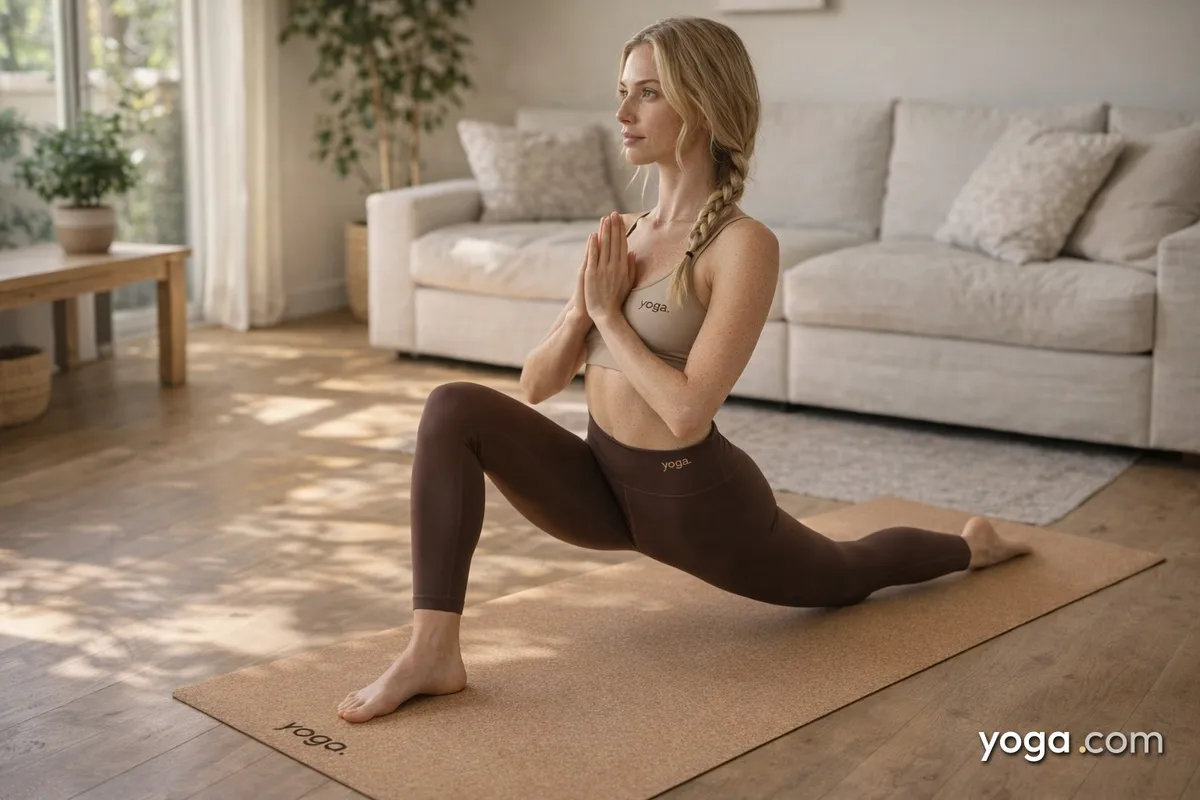
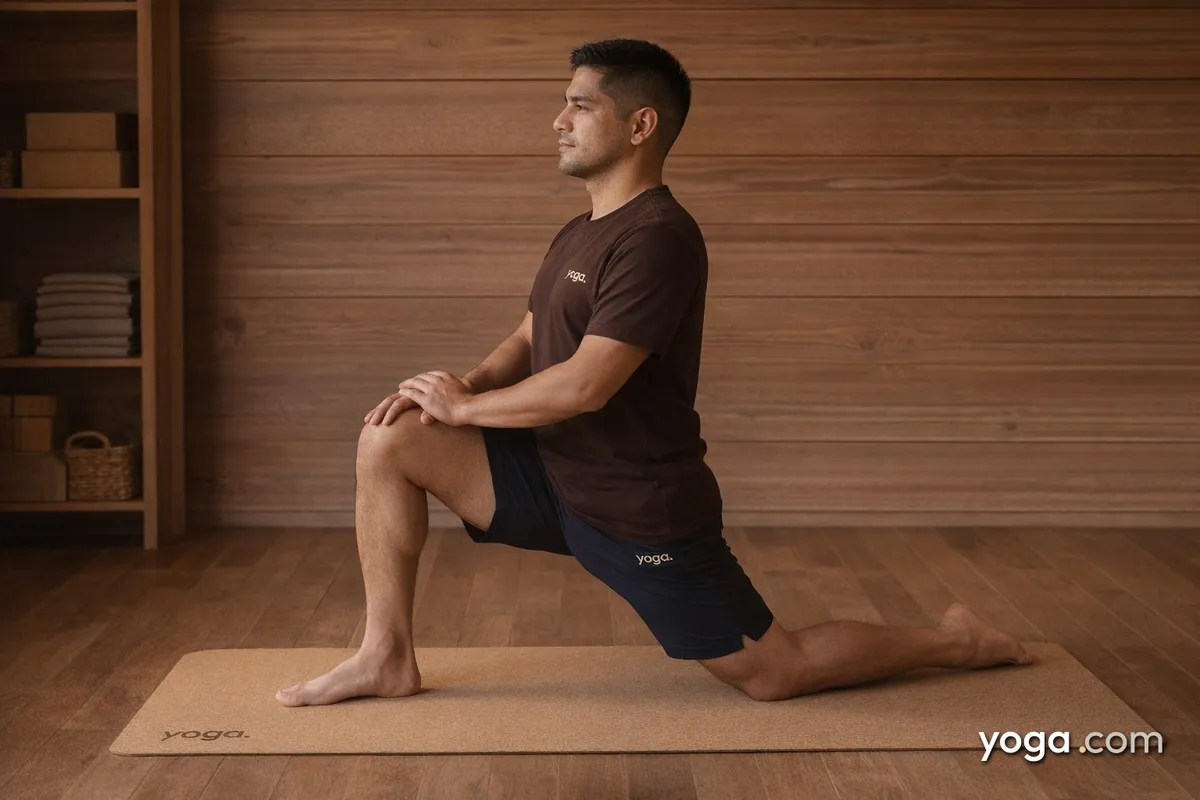
Come into a low lunge. Gently tuck your tailbone and squeeze the glute of your back leg. That small adjustment shifts the stretch out of your lower back and into the front of the hip, exactly where you want it. Without the tailbone tuck, your lower back takes the stress instead of your hip flexor, so you do not get the full benefit of the stretch. If you've had a hip replacement, follow your surgeon's specific range-of-motion guidelines rather than a general routine.
4. Hips and Outer Glutes - Reclined Figure-Four (Supta Kapotasana)
Lie on your back, knees bent. Cross one ankle over the opposite thigh and flex that foot. Either stay here or gently draw both legs toward your chest. This targets the outer hip and glute without any pressure on the knee joint - a welcome alternative to deep pigeon pose for beginners. Keep in mind that flexing your foot is an important step because flexing the foot helps protect your knee during this stretch.
5. Lower Back - Cat-Cow (Marjaryasana-Bitilasana)
Come to hands and knees. On an inhale, drop your belly, lift your chest and tailbone (Cow). On an exhale, round your spine toward the ceiling and tuck your chin (Cat). Move slowly and let your breath drive the motion. This is gentle spinal articulation - not a deep stretch. Your breath controls the pace here, so let your inhale and exhale guide each movement because rushing through the motion removes most of the benefit. Stop immediately if you feel sharp, shooting, or radiating pain. That's a reason to see a professional, not something to stretch through.
6. Neck and Shoulders
Sit or stand tall. Let one ear drift toward the same-side shoulder - don't pull the head down with your hand, or keep the pull very light. Hold, breathe, switch sides. Follow with four or five slow shoulder rolls forward, then backward. The neck doesn't need force; the weight of your head is already enough. Keep in mind that your neck is a sensitive area and so adding extra pulling force is not necessary and can actually cause your neck muscles to tighten up instead of release.
A Simple 10-Minute Sequence at a Glance
- Warm-up - 5 minutes of light walking or marching in place
- Calf stretch - 30 seconds each side × 2
- Seated hamstring stretch with strap - 30 seconds each side × 2
- Low lunge hip flexor stretch - 30-60 seconds each side × 2
- Reclined Figure-Four (Supta Kapotasana) - 30-60 seconds each side
- Cat-Cow (Marjaryasana-Bitilasana) - 8-10 slow breath cycles
- Neck side stretch + shoulder rolls - 30 seconds each side, 4-5 rolls each direction
What to Expect in the First Few Weeks
The first session, you may feel like not much happened. That's normal. Mobility responds to consistency more than intensity. By week two or three, you'll likely notice you're reaching your starting position more easily, moving between poses with less effort, and feeling less stiff after long periods of sitting.
Some muscle tiredness the day after is fine. Joint pain, sharp sensations, or anything that doesn't ease up with rest is worth mentioning to your doctor or a physical therapist. If you have any existing joint conditions, injuries, or are recovering from surgery, please get personalised guidance before starting a new movement practice.
Where Mobility Begins
A gentle whole-body mobility routine doesn't have to be complicated or time-consuming to make a real difference. Ten minutes, two or three times a week, working through your calves, hamstrings, hips, spine, and shoulders - that's it. Start there, stay consistent, and your body will thank you in the most practical way: by simply moving better through your day.