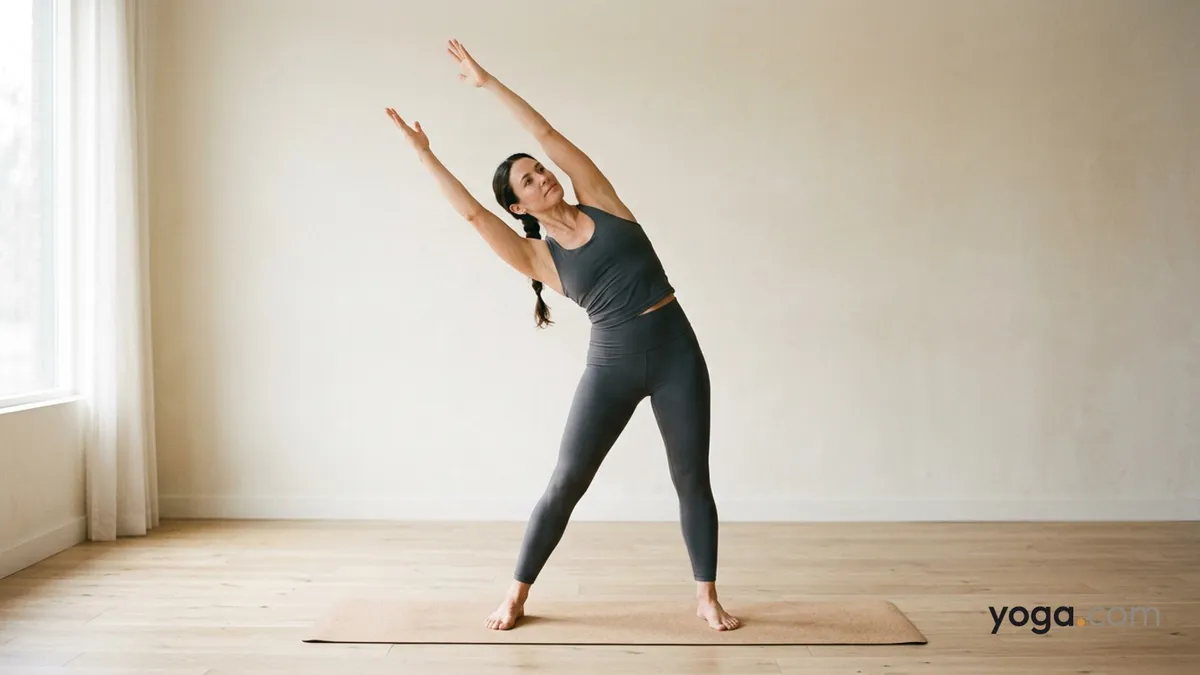
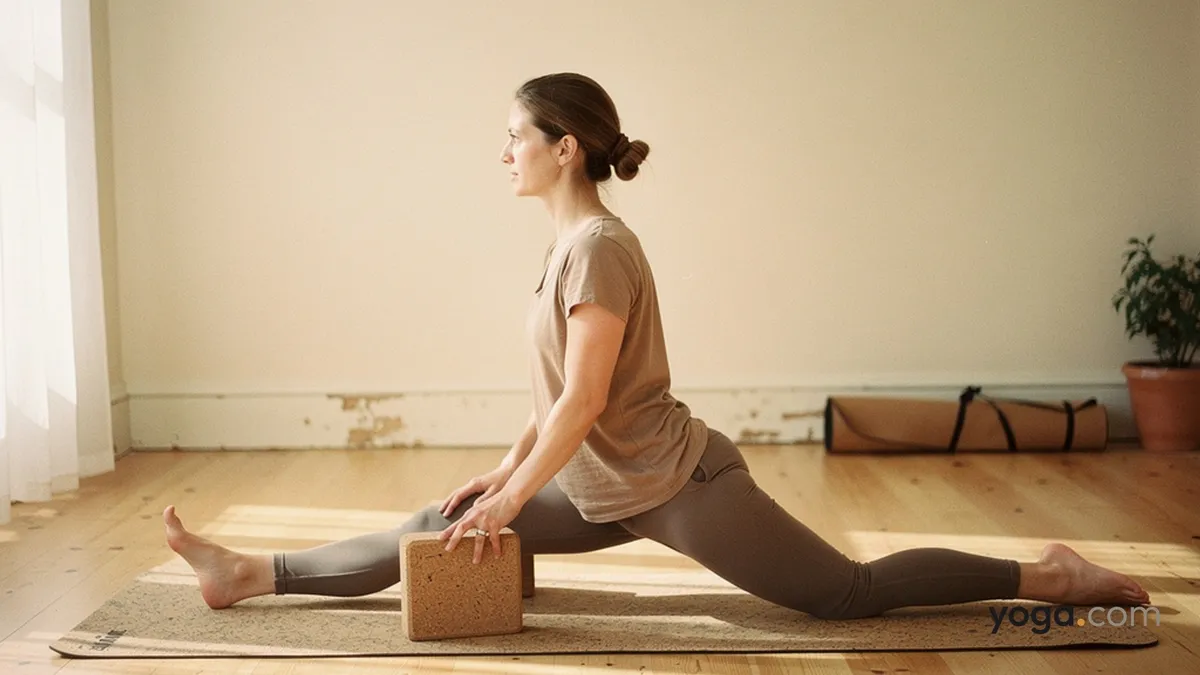
Two Arm Right Bend is a standing lateral flexion pose in which both arms reach overhead and the whole torso arcs to the right. Its Sanskrit name, Pārśvāsana (two arms, right bend), translates roughly as "side pose" — pārśva meaning flank or side. It appears early in standing sequences as an accessible way to introduce the body to lateral movement before more demanding postures.
At a Glance
Level: BeginnerType: StandingTargets: Lateral torso, intercostal muscles, shoulders, hip abductorsGood for: Lengthening the side body, building shoulder mobility, improving spinal lateral flexionHow to Do Two Arm Right Bend
Begin in Mountain Pose, feet hip-width apart or together, weight distributed evenly across both feet. Let your arms rest at your sides.On an inhale, sweep both arms out to the sides and overhead, palms facing each other. Press firmly down through both feet to create a stable base.Interlace the fingers if it feels natural, or keep the palms parallel and hands shoulder-width apart — whichever allows the shoulders to stay relaxed away from the ears.Inhale to lengthen the spine upward, creating space between each vertebra. Think of growing taller before you move sideways.On your next exhale, hinge the torso and arms to the right, leading from the fingertips rather than collapsing at the waist. Keep both feet grounded and the left hip from jutting out to the left.Hold the bend for 3–5 full breaths. Each inhale, re-extend through the fingertips; each exhale, allow the right side to soften a fraction deeper. Gaze stays forward or turns gently upward toward the ceiling.To come out, inhale and draw the torso back to center, arms still overhead. Exhale and sweep the arms back down to your sides, returning to Mountain Pose. Pause for a breath before repeating on the left side.Benefits
Stretches the intercostal muscles between the ribs, creating more room for lateral rib expansion during breathing.Lengthens the muscles along the left side of the torso — including quadratus lumborum and obliques — when bending right.Strengthens the shoulder girdle by asking both arms to maintain an overhead position against gravity.Activates the hip abductors and lateral stabilizers of the standing leg, building balance and lower-body awareness.Improves overall spinal mobility in the lateral plane, which is often under-trained compared to forward and back bending.Common Mistakes and Alignment Cues
Mistake: The torso rotates forward or backward instead of bending purely sideways. Cue: Keep the navel and chest pointing straight ahead throughout — imagine your torso moving between two panes of glass.Mistake: The left hip pushes out to the left as compensation. Cue: Press down actively through the outer edge of the left foot and lightly draw the left hip back toward center before bending.Mistake: The arms drift in front of the head rather than staying in line with the ears. Cue: Externally rotate the upper arms so the palms face each other and the pinky edges turn slightly inward, then reach up and over as if tracing the curve of a large wheel.Mistake: Collapsing into the right waist and shortening that side. Cue: Actively lengthen both sides of the torso simultaneously — the right side curves, but neither side crumples.Mistake: Holding the breath at the deepest point of the bend. Cue: Let the breath lead the movement; only go as far as you can maintain a smooth, full exhale.Modifications and Props
Hands on thighs: If the shoulders are tight or fatigued, keep the hands lightly resting on the thighs as you bend to the right. This reduces the load on the shoulder girdle while still training lateral spinal flexion.Wall support: Stand an arm's length from a wall with the right side facing it. Place the right fingertips on the wall at shoulder height and use it as a guide to keep the torso in a single plane as you bend.Yoga block under the right hand: Place a block on its highest setting beside the right foot. As you bend right, rest the right hand on the right thigh or a chair back rather than reaching fully overhead, making the shape accessible for those with limited shoulder range.Chair variation: Sit near the front edge of a chair with feet flat on the floor. Raise both arms overhead and bend to the right, using the seat for lower-body stability if standing balance is a challenge.Cautions
Shoulder impingement or rotator cuff sensitivity: Raising both arms fully overhead may be uncomfortable. Work with the hands-on-thighs modification or keep the arms lower until shoulder mobility improves.Recent or acute lumbar strain: Lateral flexion loads the side of the spine; reduce the depth of the bend and avoid any position that causes sharp or radiating sensation.Hypermobility: Be cautious about going very deep into the side bend purely for the sensation. Engage the core and keep the bend deliberate rather than passive.Dizziness or balance challenges: Keep the feet hip-width apart, gaze forward at a fixed point, or practice near a wall for support.If you're working with an injury or a medical condition, check with a qualified professional before practicing.Related Poses
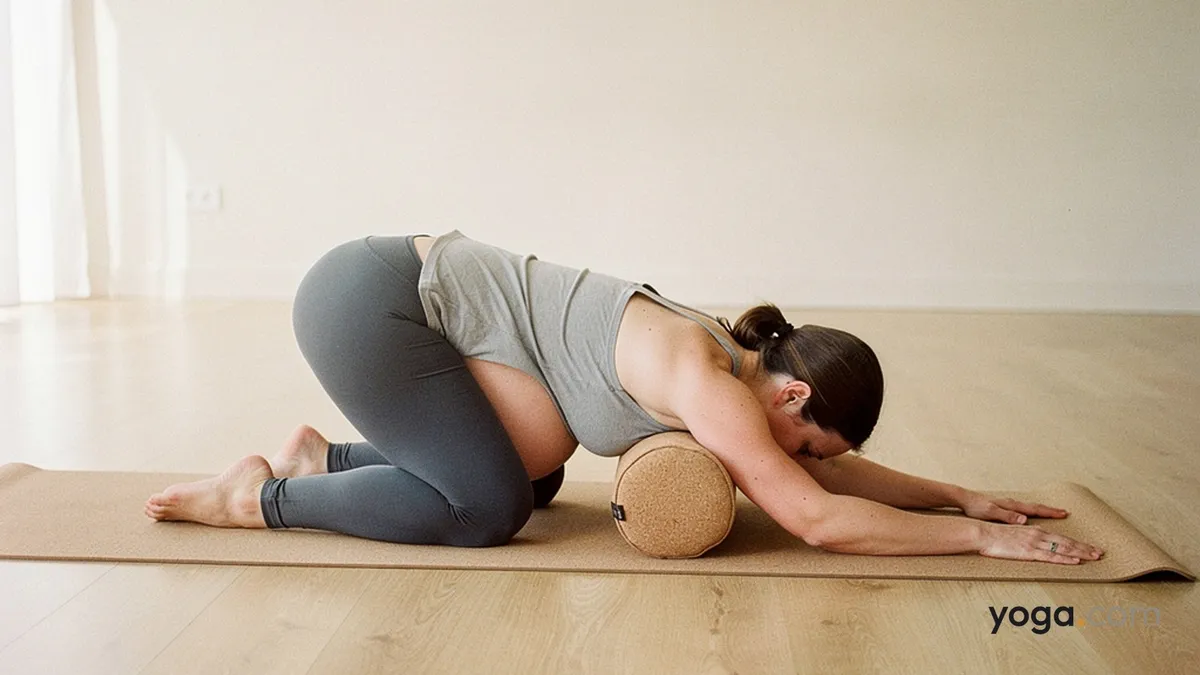
Mountain Pose — the foundation for this pose; establishes the standing alignment you carry into the bend.Mountain Pose with Upward Stretch — the direct preparation: arms overhead in a neutral spine before the lateral bend is introduced.Right Triangle Pose — a natural progression that adds a wider stance and deeper lateral reach to the same side-body work.Child's Pose — a quiet counter-pose to decompress the spine and release the lower back after standing lateral work.This pose fits well into a flowing standing sequence — see A Gentle Yoga Routine for Tired, Low-Energy Days or try the seated version in A 10-Move Chair Yoga Sequence for a Midday Reset.