"Am I supposed to breathe through my nose the whole class?" Students usually ask this right after their mouth has fallen open in Downward Dog (Adho Mukha Svanasana), which happens to almost everyone. The short answer: nasal breathing shapes what your practice does to your body and mind, sometimes more than the poses themselves. This guide covers what the science says, what traditional pranayama teaches, and how to build the habit from scratch.
Why Your Nose Was Made for Breathing
Your nasal passages filter, warm, and humidify air before it reaches your lungs. Your mouth can't do that. The nose also creates a gentle resistance to airflow - and that resistance matters.
Traditional yoga has always taught nose-only breathing (in and out) for most practices. This isn't arbitrary - it's a design choice with real physiological reasoning that modern research is beginning to confirm.
What Nasal Breathing Does to Your Nervous System
Slow nasal breathing naturally lengthens the breath cycle, giving your nervous system time to move away from a stressed state. The cardiovascular effects show up quickly. Eighteen minutes of alternate-nostril yoga breathing in 15 healthy volunteers lowered systolic blood pressure by about 4 mmHg (122.3 to 118.2 mmHg) as an immediate effect. Systolic blood pressure, mean arterial blood pressure, and the time taken to complete a digit vigilance test all decreased significantly in that single session.
Important note: These were healthy volunteers in a controlled study. If you have cardiovascular concerns, speak with your doctor before making significant changes to your breathing practice.
How Different Nostrils Do Different Things
Traditional pranayama has long distinguished between right-nostril and left-nostril breathing - and research is starting to map onto those distinctions.
- Right nostril breathing (Surya Bhedana): Some researchers have proposed that right-nostril breathing may increase activity in the opposite (left) cerebral hemisphere - the side associated with language and analytical thinking. Traditionally, Surya Bhedana is said to stimulate the brain and increase body heat.
- Left nostril breathing (Chandra Bhedana): Chandra Bhedana is assumed to have effects opposite to Surya Bhedana - it quiets the brain and cools the body. Research supports the calming direction: practicing left nostril breathing significantly lowered all seven component scores and the global Pittsburgh Sleep Quality Index score in medical students who practiced it in a graduated way over four weeks.
Alternate Nostril Breathing (Nadi Shodhana): The Practice to Learn First
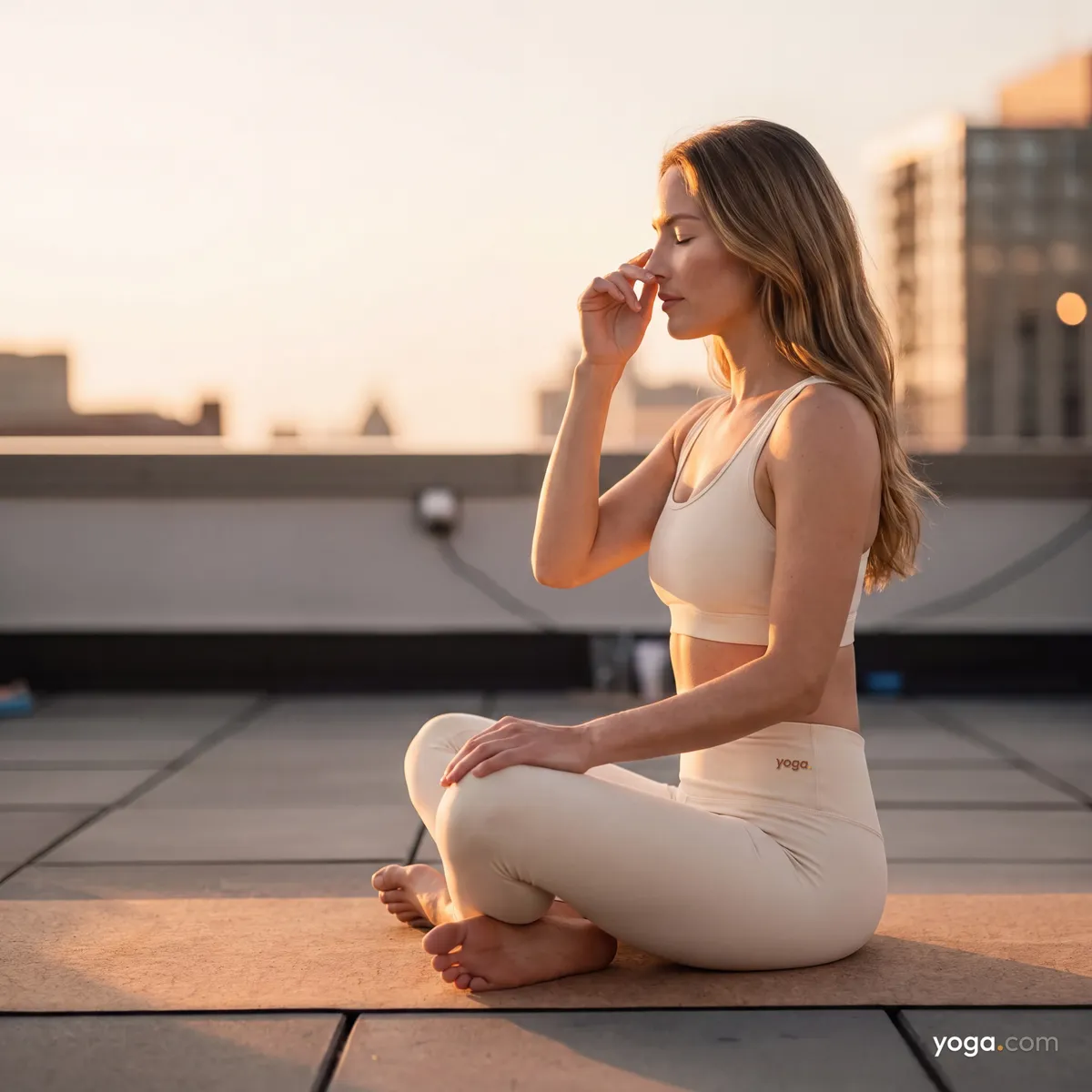
Alternate nostril breathing, or Nadi Shodhana Pranayama, is the most widely studied pranayama technique. You use your fingers to close one nostril at a time, alternating with each breath cycle. A study of 25 healthy male students found that 15 minutes of alternate nostril breathing daily over 6 weeks produced statistically significant increases in the exhale-to-inhale (E:I) ratio. A longer exhale relative to the inhale is a recognized marker of a calmer, more regulated nervous system.
How to Try It (Beginner Version)
- Sit comfortably - on a cushion, folded blanket, or chair - with your spine tall.
- Rest your left hand on your left knee. Bring your right hand to your face.
- Use your right thumb to close your right nostril. Inhale slowly through your left nostril.
- Close both nostrils briefly at the top of the inhale. If you are pregnant or have uncontrolled high blood pressure, skip breath-holding (retention) and any forceful breathing such as Kapalabhati, and check with your doctor before starting.
- Release your right nostril and exhale fully through the right side.
- Inhale through the right nostril, close both, then exhale through the left.
- That's one complete cycle. Aim for 5-10 rounds to start.
Learning this in person from a qualified yoga teacher makes a real difference. The technique is subtle, and a good teacher will help you get the hand position and rhythm right from the start.
Common Mistakes (and How to Avoid Them)
- Giving up the nose when poses get harder. That's exactly when the practice builds. Try holding nasal breathing through one extra challenging pose each session.
- Thinking nasal breathing is only for slow or restorative poses. You can maintain it through vigorous movement - it just takes practice to get there.
- Not telling your teacher you're working on it. A simple heads-up means they can give you cues that help you maintain the habit in flows where you'd normally drop it.
When Nasal Breathing Is Difficult or Not Appropriate
Nasal congestion, allergies, a deviated septum, or other structural issues can make nose-only breathing genuinely hard. On those days, forcing it creates tension - which is the opposite of the point. Breathing through your mouth is better than straining.
Some techniques also intentionally use the mouth. Kapalabhati involves forceful exhales through the nose. Lion's Breath (Simhasana) uses a wide-open mouth exhale. These are not errors - they're specific tools. Know which technique you're doing and why.
If you have any respiratory, cardiovascular, or other health conditions, check with a doctor or qualified health professional before significantly changing your breathing habits.
A Simple Way to Start Today
If you're exploring nasal breathing in yoga and wondering where to start, the practical entry point is simpler than most people expect.
- Right now: is your mouth open or closed?
- In your next yoga session, check your breath at the start of each pose.
- Begin with the easiest poses - Child's Pose (Balasana), a gentle seated fold, Corpse Pose (Savasana) - and keep your mouth closed, breathing slowly through your nose.
- As it becomes second nature in easier poses, bring it into more active ones.
- When you're ready, add 5-10 minutes of Nadi Shodhana before or after your asana practice.
Consistency matters far more than duration. Fifteen minutes a day, practiced regularly, can produce measurable shifts over weeks.
One Last Thing
Nasal breathing influences your nervous system, blood pressure, brain activity, and sleep. Most studies have used small or specific populations, so take any single finding with appropriate perspective - but the direction is clear and consistent: breathing through your nose, slowly and intentionally, changes what yoga does to you. Start small, stay curious, and let the breath lead.
Sources
- PMC / National Library of Medicine - Effects of alternate nostril breathing on cardiovascular functions
- PMC / National Library of Medicine - Effect of left nostril breathing on sleep quality
- Yoga Journal - Single Nostril Breath: Surya and Chandra Bhedana
- PMC / National Library of Medicine - Immediate effect of alternate nostril breathing on blood pressure and cognitive function