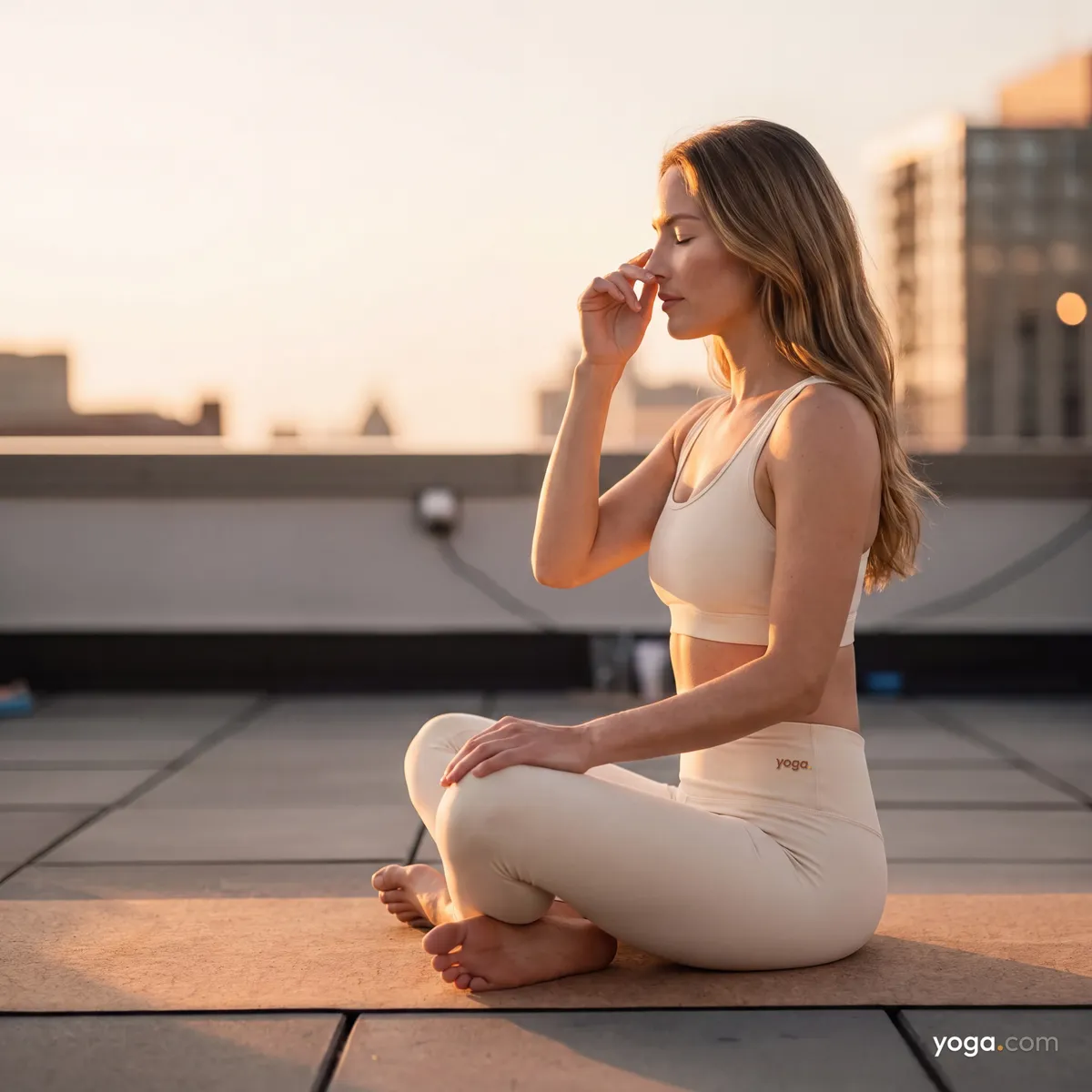
You've probably noticed it already - that instinctive deep sigh you let out after a tense moment, the slow breath you take before a difficult conversation. Your body already knows something science is now confirming: the exhale is where the calm lives. Learning to make it longer, on purpose, is one of the most accessible tools you have for managing stress right now, today, with nothing but your own breath.
Why the Exhale - Not the Inhale - Does the Calming Work
Your breath is directly wired to your autonomic nervous system. The inhale nudges your heart rate up slightly; the exhale brings it back down. So when your exhale is longer than your inhale, your heart has more time to slow - and your whole body tends to follow.
The mechanism behind this comes down to the vagus nerve. Making the exhale longer than the inhale helps to activate the vagus nerve and bring on the parasympathetic nervous system - the branch responsible for rest, digestion, and recovery. Think of it as your body's built-in off switch.
Breathing techniques with low respiration rate and long exhalations are considered integral to contemplative activities - and prime candidates for explaining their benefits to health and mental health. This isn't a new idea. Yoga has honored it for centuries. Yoga Sutra II.50 describes the breath during practice as "long" (dirgha) and "subtle" or "smooth" (suksmaḥ) - qualities that map directly onto what researchers are now measuring in labs.
What "Slow Breathing" Actually Means
Here's something most people don't realize: researchers have a precise definition. Slow breathing is defined in research as a respiratory rate of fewer than 10 breaths per minute. Most of us breathe 15 or more times a minute without thinking about it. Dropping below 10 is a genuine shift - not a small one.
You don't need to count breaths obsessively. A simple starting ratio - inhale for 4 counts, exhale for 6 or 8 - naturally moves you into that slower range. The exhale being noticeably longer is the point.
What the Research Actually Shows
The evidence is growing. A rigorous systematic review found that 54 out of 72 breathing interventions studied were effective for stress and anxiety reduction. That's a strong signal.
The same review identified what made practices work: effective breath practices avoided fast-only breath paces and sessions under 5 minutes, while including human-guided training, multiple sessions, and long-term practice. In other words, consistency matters more than perfection.
And slow breathing holds up in clinical settings, too. In a 12-week randomized trial among 100 participants, regular slow breathing practice significantly reduced psychological stress as measured by a standard anxiety scale. Twelve weeks sounds like a commitment - but it's also a realistic picture of how habits actually take root.
The Yoga Tradition: Pranayama and the Long Exhale
One classical technique worth knowing by name is the Long Exhale practice - a 1:2 breathing ratio. This practice involves gradually increasing your exhalation until it is twice the length of your inhalation, and may help reduce insomnia, sleep disturbances, and anxiety. You build toward it slowly; you don't force it on day one.
Another anchor practice from yoga is diaphragmatic breathing. Diaphragmatic breathing is slow and deep, and affects the brain and the cardiovascular, respiratory, and gastrointestinal systems through modulation of autonomic nervous functions. Breathing from your belly - not your chest - is the foundation everything else builds on.
How to Practice: A Simple Starting Point
You don't need a studio, a mat, or any equipment. Just a quiet place to sit or lie down for five to ten minutes.
- Find a comfortable position. Sit upright with a relaxed spine, or lie on your back with your knees bent.
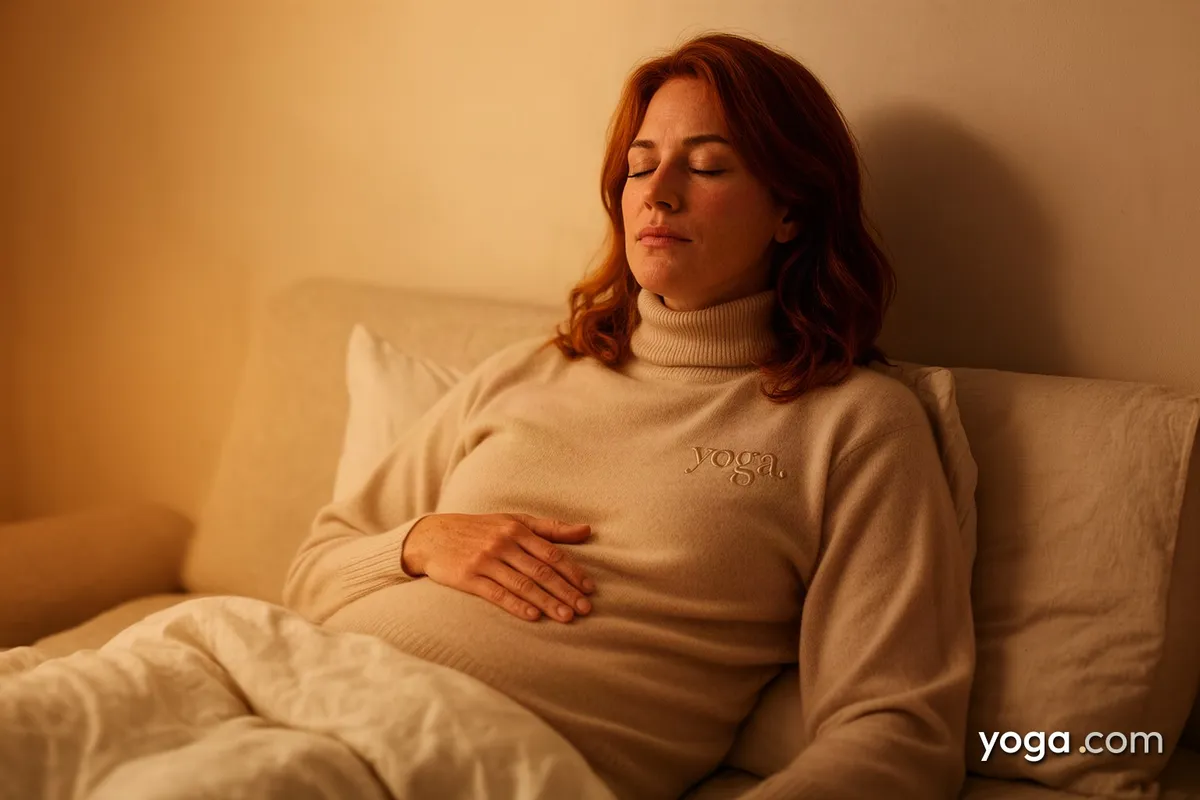
- Place one hand on your belly. Feel it rise on the inhale, fall on the exhale. This anchors diaphragmatic breathing from the start.
- Inhale through your nose for a count of 4. Easy, unhurried.
- Exhale through your nose (or softly through your mouth) for a count of 6 to 8. Let it be a release - not a squeeze.
- Repeat for 5-10 minutes. That's your session. Done.
If a count of 6 feels strained, shorten it to 5. The exhale should feel like a sigh of relief, never like an effort. Strain is the opposite of what you're after - it keeps the nervous system alert. Ease is what allows it to settle.
One Common Mistake to Avoid
Don't try to extend your exhale too aggressively too soon. Creep up by one count every few sessions. And if you find that focusing closely on your breath increases your anxiety rather than easing it, that's worth mentioning to a mental health professional - not every technique suits every person.
When to Practice for the Most Benefit
Morning practice can set a calmer baseline for the day. Evening practice - especially just before bed - supports the body's natural wind-down. Adults need 7 or more hours of sleep per night, and a short long-exhale practice before bed is a low-effort way to help get there.
Whenever you practice, try to do it when you're already relatively calm rather than in the middle of a spike of stress. Building the skill in calm moments means it's actually accessible when you need it most.
Honest Limits Worth Knowing
Breathing practices are a genuine support for stress - but they're not a substitute for medical or mental health treatment. Long-term, chronic stress can lead to worsening health problems, and if you're dealing with a serious anxiety disorder, heart condition, or sleep disorder, please talk with your healthcare provider before starting a new breath practice.
These techniques are tools, not cures. Used consistently, they can meaningfully support your wellbeing. Used once and abandoned, they can't do much at all.
Breathe Out, Settle In
The long exhale isn't a trend or a hack. It's one of the oldest, most well-researched stress-management tools available - and it's always with you. Start small: five minutes, a 4-count in, a 6-count out. Do it several days in a row. Notice what shifts. Your nervous system is listening.
Sources
- PMC / National Institutes of Health - The Role of Contemplative Practices in Health and Mental Health
- PMC / National Institutes of Health - Systematic Review of Breathing-Based Interventions for Stress and Anxiety
- American Heart Association - It's Not Just Inspiration: Careful Breathing Can Help Your Health
- PMC / National Institutes of Health - Slow Breathing and Psychological Stress: A Randomized Trial
- Yoga Journal - Healing Breath: The Long Exhale
- CDC - Living with Mental Health Conditions
- PMC / National Institutes of Health - Diaphragmatic Breathing and Its Effects on the Autonomic Nervous System
- Yoga Journal - How to Slow Your Breath