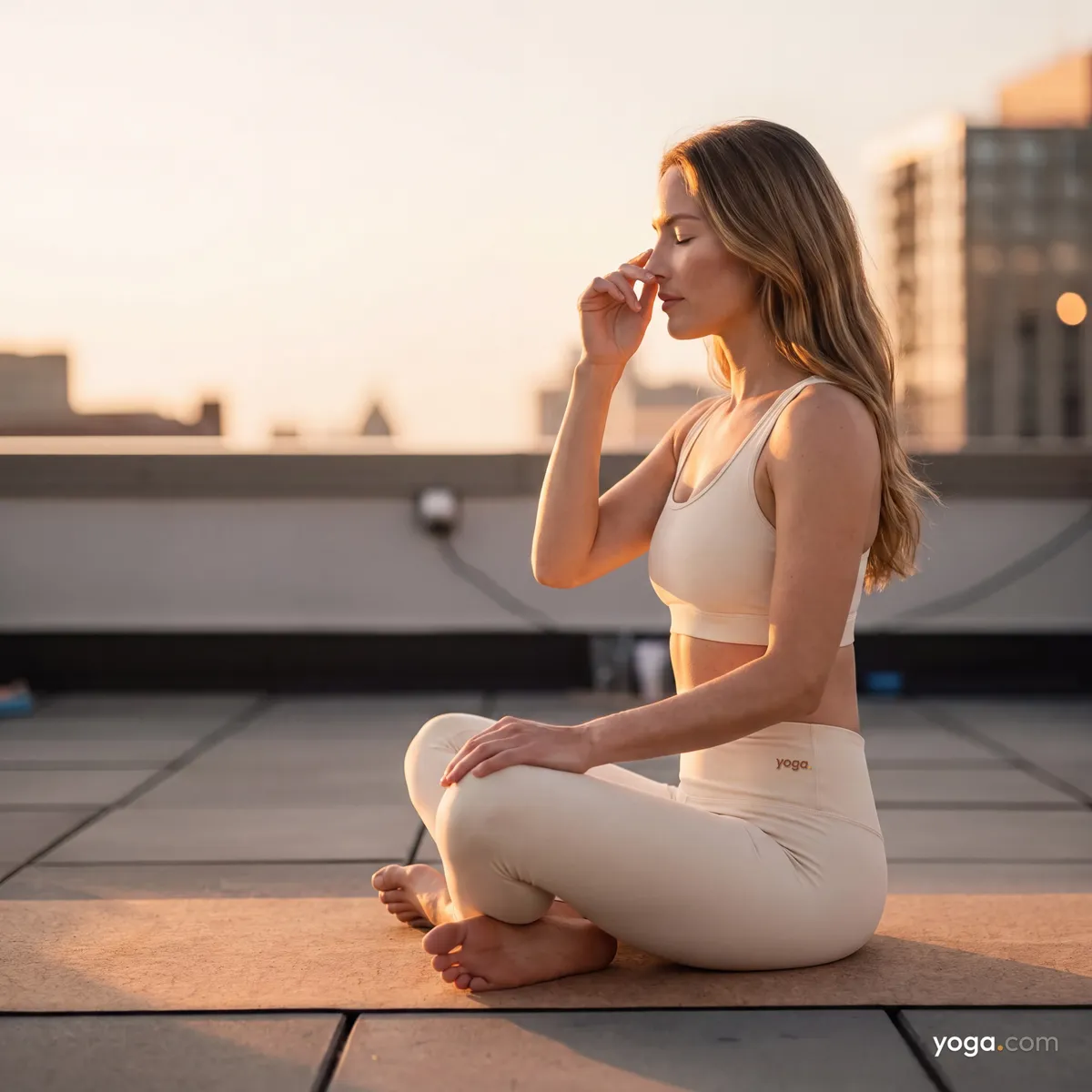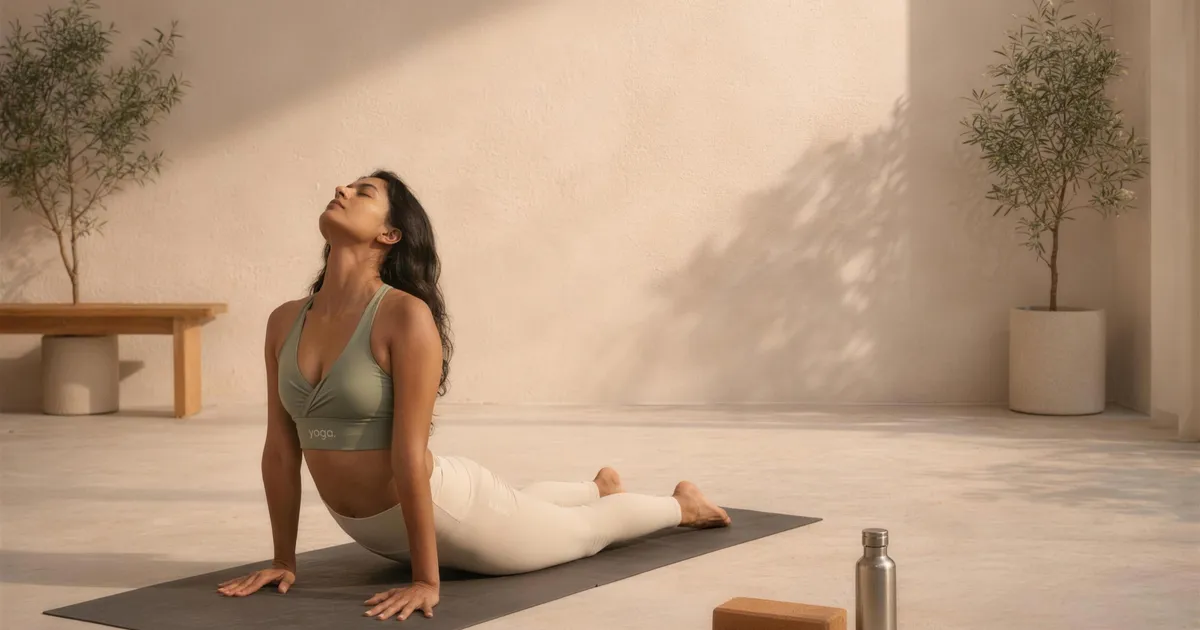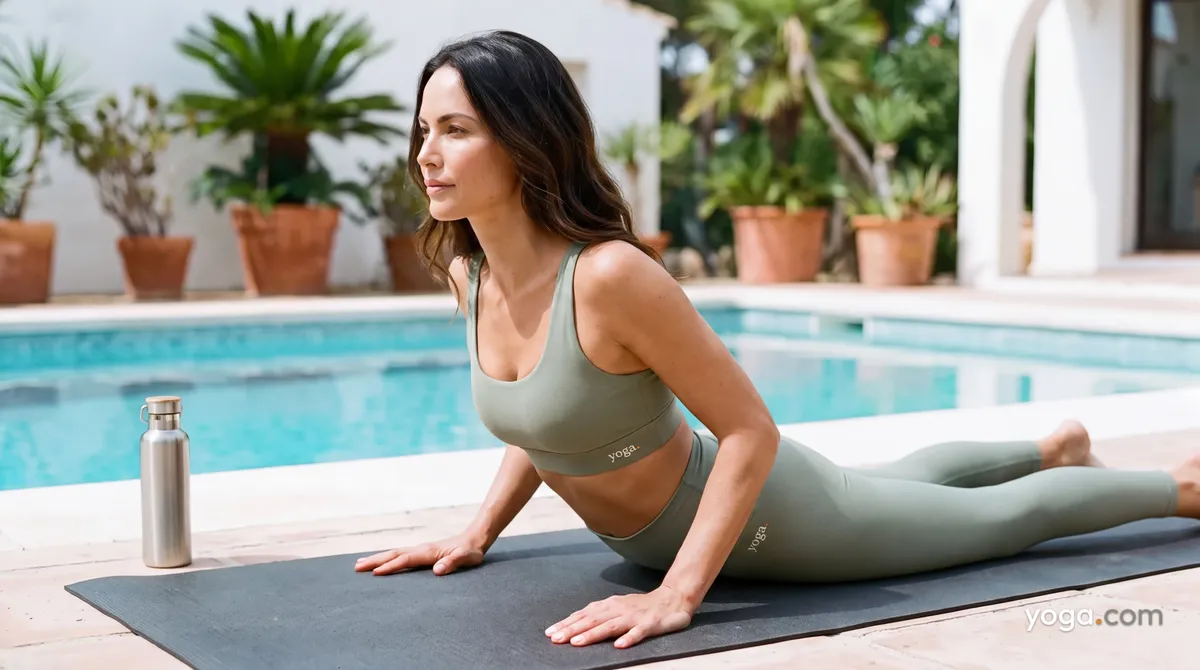
Notice how you're sitting right now. Are your shoulders rounded forward, your chin drifting toward the screen? That position isn't just a comfort habit - it's actively changing the quality of every breath you take. The link between breath and posture is one of the most practical, actionable things you can understand about your own body, and it costs nothing to start paying attention to it.
Why Your Body Position Changes How Well You Breathe
Your diaphragm - the dome-shaped muscle just below your lungs - is the engine of your breathing. It needs room to drop down and expand on each inhale. When you slump forward, that space disappears.
A slumped position with a rounded spine and jutting head causes your lower ribs to dig back and in toward the spine, compressing the diaphragm and upper belly. The result? Shallower breaths, less oxygen per inhale, and a body that quietly works harder than it should all day long.
The research backs this up clearly. A 2018 systematic review of 43 studies found that key lung function measurements - including forced expiratory volume, vital capacity, and respiratory muscle pressure - were higher in more upright positions across healthy people and those with lung, heart, or neuromuscular conditions. Sit taller, breathe better. It's that direct.
What Forward Head Posture Does to Your Breath
Forward head posture - where your head sits in front of your shoulders rather than directly above them - is one of the most common alignment issues around, especially for anyone who spends hours at a screen.
It doesn't just strain your neck. It measurably weakens your ability to inhale. A 2018 study found that inspiratory muscle strength dropped significantly when participants sat with forward head posture compared to upright sitting - a meaningful difference measured by sniff nasal inspiratory pressure (SNIP) scores.
The downstream effects compound quickly. When tight upper abdominals restrict the breath, the sternocleidomastoid muscles at the front of the neck and the upper trapezius at the back are forced to compensate - which can contribute to chronic neck pain and headaches. Poor posture and poor breathing create a feedback loop that keeps tightening.
Slouching vs. Sitting Upright: The Numbers
You might assume the difference between slouching and sitting tall is minor. It is not minor at all.
A 2018 study of adult males found a significant difference in inspiratory muscle strength between upright and slouched sitting - a mean difference of 8.7 cmH₂O. That same study found meaningful correlations between upright sitting posture and lung function scores. Keep in mind that posture and lung function move together, and so your sitting position has a real and direct effect on how well your lungs can actually work.
And if you are wondering whether this matters for your anxiety as well as your energy: a 2024 study found that difficulty performing deep abdominal breathing was associated with elevated anxiety scores and decreased physical stability. On top of that, breathing shallow is not just a physical issue because shallow breathing also affects how calm and grounded you feel in your daily life. When your posture suffers, your breathing suffers, and your breathing affects both your body and your mental state.
Three Alignment Shifts That Open Up Your Breath
You don't need a yoga class to start making changes. These small, consistent habits create real difference over time.
- Stack your spine. Whether you're sitting or standing, think of lengthening from the base of your pelvis through the crown of your head. Your lower back should have a gentle natural curve - not flattened, not exaggerated.
- Bring your ears over your shoulders. Gently draw your chin back so your head sits directly above your neck, not in front of it. This one adjustment alone can open up the upper chest and ease the strain on your neck muscles.
- Let your belly breathe first. Place one hand on your lower belly. On your inhale, let it rise before your chest does. This diaphragmatic pattern is more efficient, calmer, and exactly what an upright spine makes possible. Research links abdominal breathing with increased stability and reduced anxiety in males - and the principle applies broadly.
Yoga Poses That Teach Breath and Posture Together
Yoga is one of the most practical tools for retraining both alignment and breathing at the same time. Yoga works on both your posture and your breathing together, which is exactly why it is so useful for people who want real results. These poses are beginner-friendly and genuinely effective.
Child's Pose (Balasana)
Kneel and fold forward, arms extended or resting alongside your body. In this position, your back body expands with every inhale and so you get a direct experience of breath moving into the posterior ribs because the position forces the breath to go exactly where it needs to go. Child's Pose is restorative and grounding, and Child's Pose is a good starting point if you have never paid attention to how your back body moves when you breathe.
Cat-Cow Pose (Marjaryasana-Bitilasana)
On all fours, move between a rounded spine (Cat) and an arched spine (Cow) in sync with your breath. Keep in mind that this is one of the clearest ways to feel how spinal shape and breath volume are connected. The exhale naturally deepens as you round your spine, and the inhale expands as you lift your spine, so your body starts to learn this connection on its own.
Mountain Pose (Tadasana)
Standing with feet hip-width apart, ground through all four corners of each foot, gently engage your thighs, and lift through the crown of your head. This pose is a masterclass in neutral alignment. On top of that, Mountain Pose gives you a clear chance to test your breathing because when your alignment is neutral, deep inhalation becomes noticeably easier. Take five slow, full breaths here and notice how much easier deep inhalation feels.
Seated Twist (Parivrtta Sukhasana)
Sit cross-legged, lengthen your spine on an inhale, and gently rotate to one side on the exhale. Twists decompress the spine and encourage mobility in the thoracic region, which is the part of your back most prone to stiffening from prolonged sitting. Adding a Seated Twist to your routine gives your thoracic spine the mobility it needs so your breathing can improve along with your posture.
Build a Simple Daily Check-In
Awareness is the starting point, and most people never check in with their own body during the workday. Set a reminder on your phone once an hour - just a single breath check. Ask yourself:
- Is my spine long or collapsed?
- Are my shoulders creeping toward my ears?
- Is my head stacked over my body or drifting forward?
- Is my breath reaching my belly, or is it stuck in my chest?
You do not need to overhaul your entire workday to see real results. Keep in mind that a gentle reset - sit tall, take one full belly breath - can shift your nervous system and your posture in just a few seconds, and this kind of small reset is something you can do at any point during the day. On top of that, you do not need anything special to do this check-in because the check-in only asks you to pause and pay attention. Do the check-in enough times and the good posture habits become your default, so your body starts to hold a better position even when you are not thinking about it.
When to See a Professional
If you're dealing with persistent neck pain, back pain, shoulder tension, or any breathing difficulties, please consult a doctor, physical therapist, or respiratory specialist. The patterns described here are well-supported at a general level, but your body is individual - and a qualified practitioner can assess your specific situation in ways a general article cannot.
Where Alignment Meets Breath
Breath and posture are not two separate concerns. They are the same conversation, and they work together so closely because one always affects the other. When you sit taller, your lungs have more room to work. When you breathe more fully, your nervous system settles, your muscles relax, and your posture naturally improves as a result. Keep in mind that breath and posture are connected in both directions, so improving one will help the other. Start with one conscious breath in an upright position. That one small moment of awareness is a real and genuine place to begin, and it is something you can do right now.
Sources
- PMC / BMC Pulmonary Medicine - The effect of body position on pulmonary function: a systematic review
- PMC / Journal of Physical Therapy Science - Effect of forward head posture on respiratory muscle strength
- PMC - Inspiratory muscle strength in upright vs. slouched sitting positions
- PMC / Frontiers in Bioengineering and Biotechnology - Abdominal breathing, stability, and anxiety
- Yoga Journal - Take a Deep Breath: Posture and the Diaphragm