
Stress and breath are close companions. The way breathing changes during stress - quicker, higher in the chest, harder to settle - is one of the body's oldest responses, and noticing it is often the first step toward softening it.
Before we go further, a plain note: this article is general information, not medical advice. It describes everyday experience rather than diagnosis or treatment. If breathing difficulties, panic, or ongoing anxiety are part of your life, a doctor or physical therapist is the right person to talk with. Our health and safety disclaimer explains more.
An Old Alarm, Still on Duty
The stress response is often described as fight-or-flight, and the name fits. When the body senses pressure - a deadline, an argument, a near miss in traffic - it prepares to act. The heart speeds up, muscles brace, and breathing shifts along with everything else. None of this asks permission. It happens automatically, whether the pressure is a genuine emergency or an overflowing inbox.
That automatic quality matters. People sometimes feel embarrassed that their breath goes ragged in a tense meeting, as though calm were simply a decision. It is kinder, and more accurate, to see the shift as old machinery doing its job a little too eagerly in a world with fewer tigers and more email.
What Most People Notice
The change tends to follow a familiar shape. Breaths get faster and shallower. They move up into the chest instead of the belly. Shoulders creep toward the ears. Some people describe a tight band across the ribs, or the odd sense of never quite catching a full breath even though air is clearly moving.
Fast, shallow breathing can also feel unsettling in itself - slightly dizzy, slightly urgent - and that feeling can convince the body that things are worse than they are. The breath speeds up, the alarm rises, the breath speeds up again. Many people know this loop well, even if they have never named it. Simply recognizing it as a loop, and a common one, takes away some of its power.
When a Busy Season Becomes a Habit
One hard afternoon is one thing. A long stretch of pressure is another. After months of running on alert, the body can settle into upper-chest breathing as its default, so the pattern shows up even on quiet days, long after the busy season has passed.
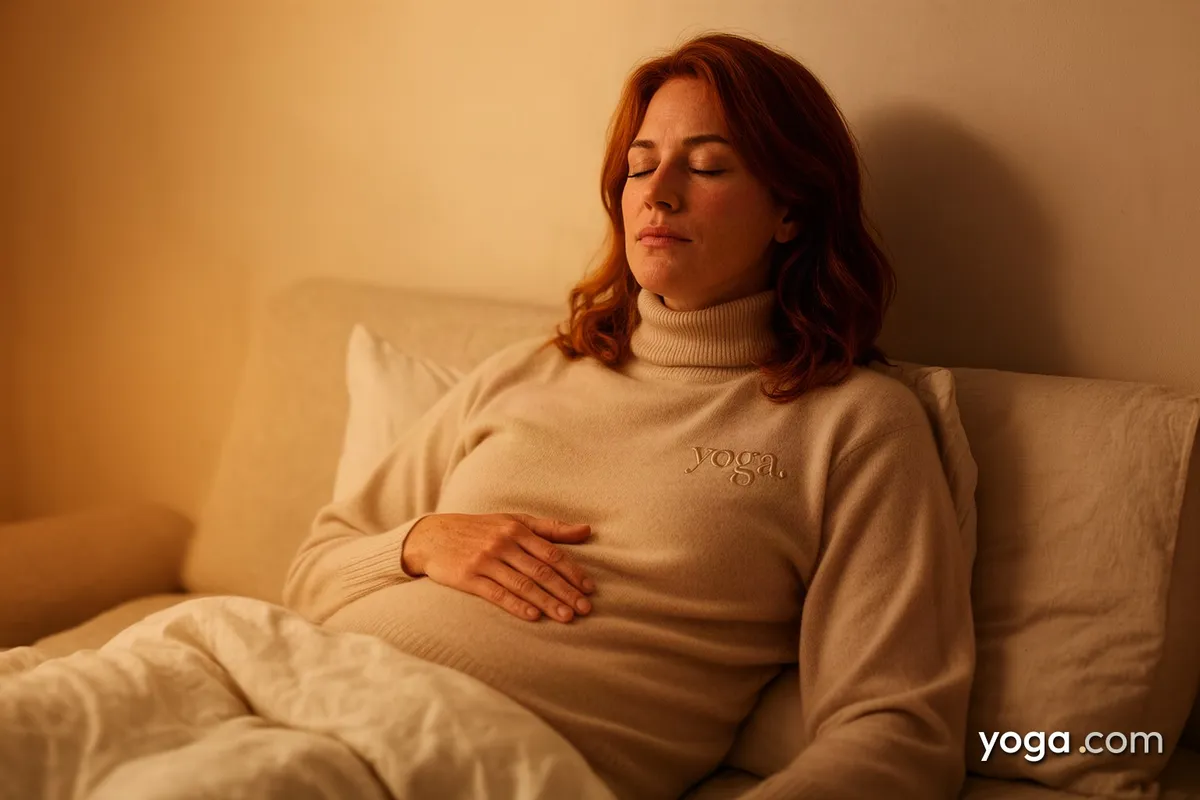
A gentle way to check: sit comfortably, rest one hand on your chest and one on your belly, and take an ordinary breath without trying to improve it. Notice which hand moves first. There is no test to pass here. It is simply information about where your breath likes to live at the moment, and awareness of that is useful all by itself.
Why People Bring Their Breath to Yoga
Yoga has paid attention to breathing for a very long time. Classes pair movement with breath, teachers cue a slower rhythm, and the tradition includes quiet seated practices - alternate nostril breathing among them - built around simply spending time with the breath. Many people leave a gentle class feeling steadier, and that experience is a big part of why breathwork keeps drawing people in during stressful seasons.
It helps to hold that experience honestly. A calmer feeling after slow breathing is real and worth having. It is also just that: a pleasant, settling experience, and no substitute for care when something more is going on. Yoga sits most comfortably alongside regular checkups and honest conversations with your doctor, as one gentle part of a well-tended life.
Letting the Belly Back In
If you want to explore, start small and comfortable. Sit or lie somewhere you can relax, let the breath slow a little, and see whether the belly can join in. Many people find that letting the exhale grow slightly longer than the inhale feels settling. There is no count to hit and no correct amount of time. A few unhurried minutes is plenty.
Keep everything easy. If a practice leaves you strained, dizzy, or more anxious, stop and let your breathing return to ordinary. Struggle is a signal to back off, and in breathwork, comfort is a better teacher than effort.
When to Ask a Professional
Some things belong with a professional, full stop. Breathlessness that arrives out of nowhere, chest tightness that worries you, panic that keeps returning, or any breathing change connected to a health condition - these are conversations for a doctor or physical therapist, who can look at your particular situation rather than speak in generalities the way an article must. Bringing questions like that to a professional is a sign of good judgment, and it is exactly what they are there for.
A Steadier Relationship With Your Breath
Stress changes breathing quickly, and that is normal. Noticing the shift without judging it already loosens its grip a little. Gentle, comfortable practice can make the noticing easier, and a good doctor can handle anything beyond the everyday. Between the two, your breath gets to be what it has always been: a steady companion, not an alarm bell.