You sit down after a long day, shoulders tight, mind still racing - and someone tells you to "just breathe." It sounds too simple. But alternate nostril breathing (Nadi Shodhana Pranayama) is one of yoga's most studied breathwork techniques, and it takes less than five minutes to try. Here's everything you need to get started safely today.
What Is Alternate Nostril Breathing?
Alternate nostril breathing comes straight from the yoga tradition. In Sanskrit it is called Nadi Shodhana Pranayama - roughly translated as "channel-cleansing breath.The concept is very simple: you close one nostril at a time, breathe slowly through the other nostril, and then you alternate sides in a steady, even rhythm and you keep doing this in a controlled way so that both nostrils get equal attention.
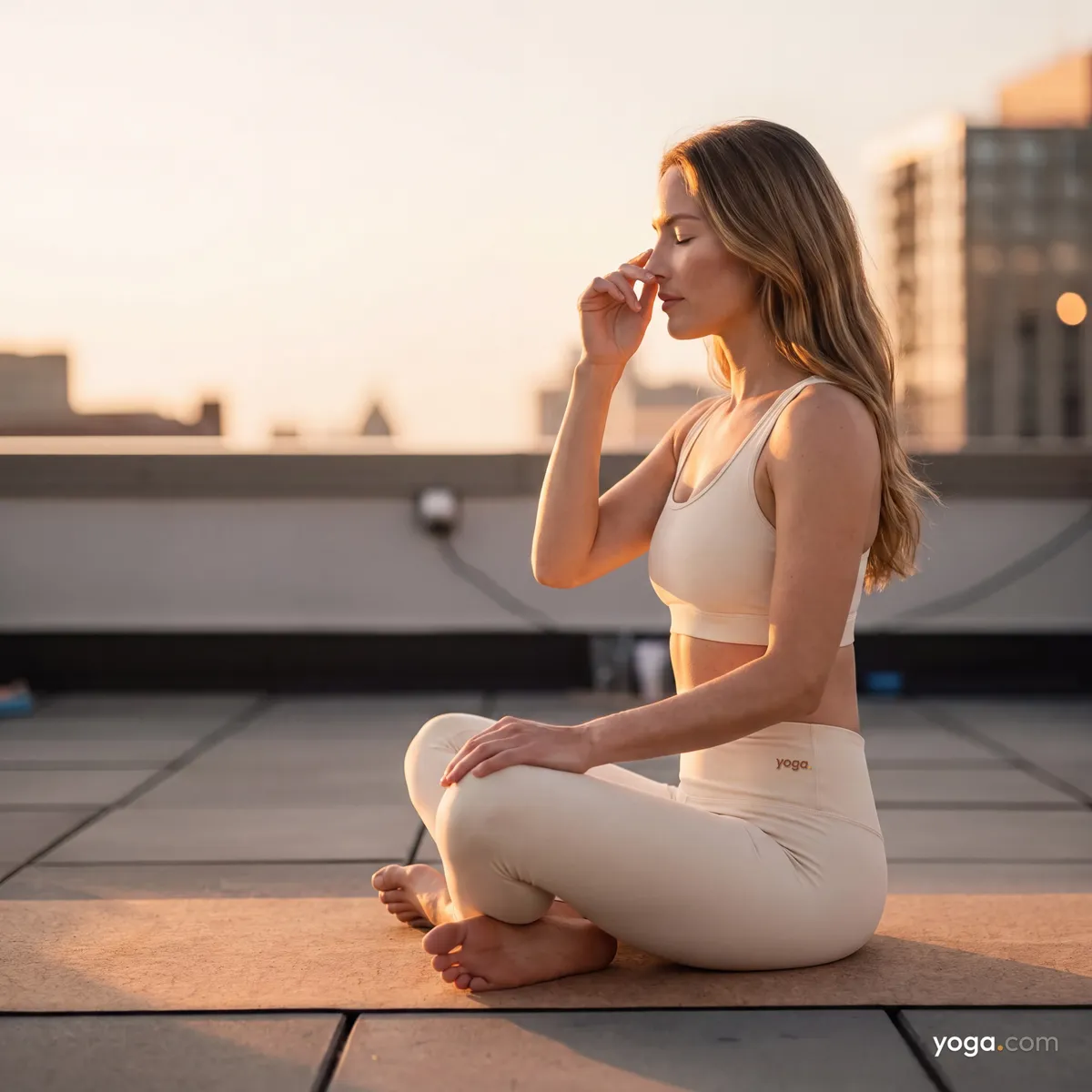
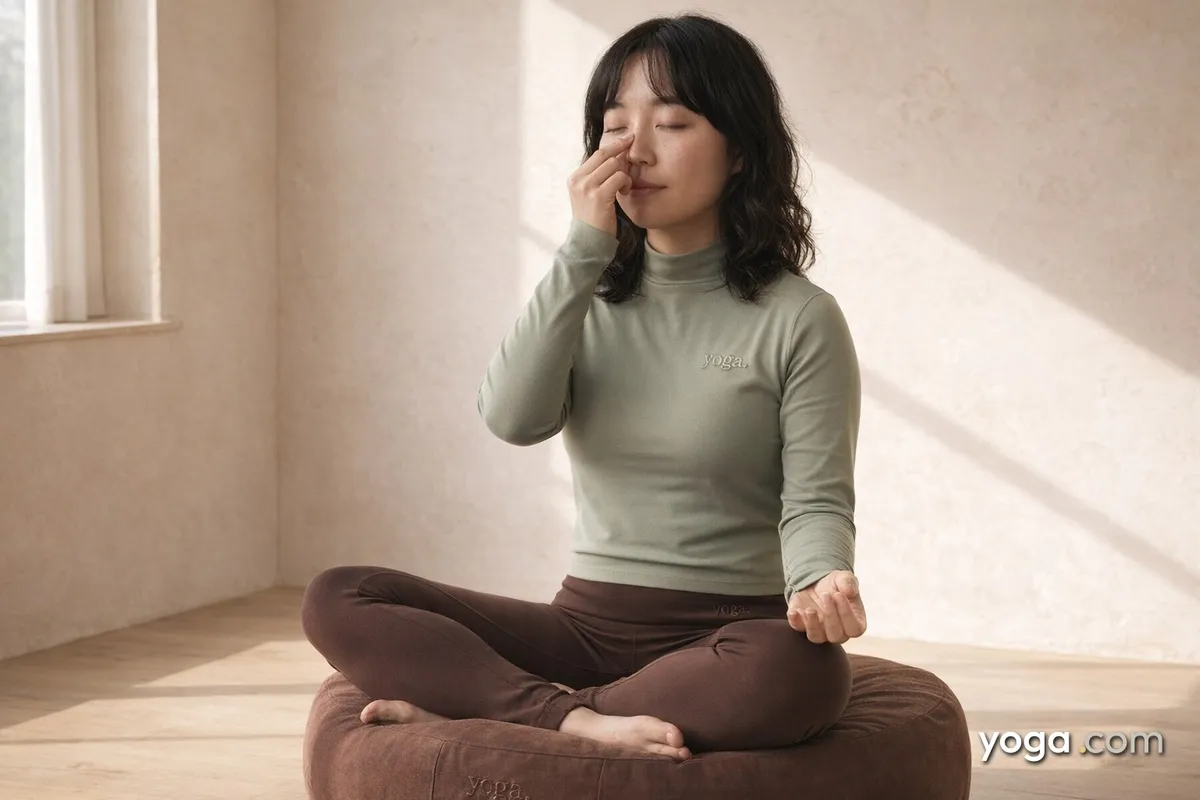
You use one hand - typically the right hand - to control the nostrils. The right thumb closes the right nostril and the ring finger closes the left nostril. Keep in mind that some teachers use slightly different finger placements depending on their lineage, but the one-nostril-at-a-time principle stays the same no matter which teacher you follow.
What the Research Actually Shows
Breathing exercises have a real evidence base - not just ancient tradition behind them. Here's what the science says about this specific practice.
It may calm your nervous system
Research published in a peer-reviewed journal found that Nadi Shodhana Pranayama can decrease systolic blood pressure, diastolic blood pressure, and heart rate - effects researchers attribute to its stress-reducing properties. In the same body of research, just 10 minutes of daily practice over six weeks (preceded by two minutes of yogic deep abdominal breathing) reduced blood pressure and improved heart rate variability in participants already on medication for hypertension.
These results are encouraging, but they don't mean this practice replaces medical treatment. If you have a cardiovascular condition, please speak with your doctor first.
It may support cardiorespiratory health
A randomized study of 100 first-year college students found significant improvement in cardiorespiratory function after just four weeks of alternate nostril breathing - with meaningful results in both male and female participants. Cleveland Clinic also notes that the practice has been shown to improve the way your heart and lungs work together to deliver oxygen.
Breathing practices broadly reduce stress and anxiety
A large systematic review screened thousands of studies on breathwork. Of 58 studies that met the inclusion criteria, 54 of the 72 breathing interventions studied were effective at reducing stress and anxiety. The review also found that effective practices avoided very fast breath paces and sessions under five minutes, and benefited most from human-guided instruction and consistent, long-term practice.
It influences brain activity
A 2025 high-density EEG study found that alternate nostril breathing suppressed alpha/mu oscillations - brain wave patterns associated with an idle or inward mental state - more than left nostril breathing alone. Translated into plain language: it appears to shift your brain toward a more alert, engaged state.
Step-by-Step: How to Practice Alternate Nostril Breathing
A yoga mat, special clothing, or a quiet studio is not required. A chair works perfectly. Here's how to begin.
- Sit comfortably. Find a chair or a cushion on the floor. Lengthen your spine gently - no need to force a perfect posture. Let your shoulders relax.
- Rest your left hand on your thigh. Bring your right hand up into Vishnu Mudra: fold your index and middle fingers toward your palm, leaving your thumb, ring finger, and pinky free.
- Lower your elbow. This is the tip most beginners miss. Keep your right elbow close to your ribs. A raised, tense elbow is the number-one reason people tire out in the first minute.
- Close your right nostril with your right thumb. Inhale slowly through the left nostril for a count of four.
- Close both nostrils briefly, then release the thumb and close the left nostril with your ring finger. Exhale slowly through the right nostril for a count of four.
- Inhale through the right nostril for a count of four.
- Close both nostrils briefly, then release the ring finger. Exhale through the left nostril for a count of four.
- That's one complete cycle. Repeat for three to five cycles to start.
One more thing worth knowing: it's completely normal for one nostril to feel more open than the other. Your body naturally alternates the dominant nostril throughout the day. Don't worry about it - the slow, even breath does its job regardless.
How Long and How Often Should You Practice?
Cleveland Clinic recommends starting with five minutes at a time, and aiming for five minutes daily to feel the benefits. Five minutes is a very achievable goal for most people, so you should not feel like you need a long session to get results. A short morning session before coffee or a wind-down before bed can work well for your schedule.
Keep your count slow and consistent because a slow and consistent count is what keeps your breath even and your practice effective. Beginners almost always speed up without noticing, and so a count of four beats in and four beats out is a good way to keep your breathing steady. Keep in mind that you should only work up to longer sessions gradually, and only when the shorter sessions feel easy and natural to you.
Common Beginner Mistakes to Avoid
- Doing too much too soon. Three to five cycles is a real starting point. Twenty minutes on day one helps no one.
- Tensing the arm and shoulder. Drop that elbow. Your hand should do almost no work.
- Rushing the breath. Use a slow count. The moment you notice you're speeding up, that's your cue to slow down.
- Forcing through discomfort. If you feel dizzy, lightheaded, or short of breath at any point, stop and return to normal breathing.
Who Should Check With a Doctor First
Alternate nostril breathing is gentle, but it is not for everyone, and you should have a conversation with a healthcare provider before you start. Keep in mind that some health conditions make it important to get medical advice first. Please consult your doctor before starting if you:
- Have a heart condition or high blood pressure currently being treated
- Have asthma, COPD, or another respiratory condition
- Are pregnant
- Experience frequent dizziness or lightheadedness
On top of that, it is worth repeating that this practice is a complement to professional medical care and not a replacement for it, so you should always keep working with your doctor and not use this breathing practice as a substitute for the medical treatment your doctor has recommended for you.
Want to Go Further?
Reading instructions is a solid start and it is a good way to begin your practice. But working with a qualified yoga teacher or certified breathwork instructor makes a real difference because a qualified instructor can see what you cannot feel yet, correct your hand position, and help you progress safely. Keep in mind that a real human teacher offers something that reading alone simply cannot give you. Research confirms that human-guided training produces better outcomes than self-directed practice alone. If you are serious about your breathwork progress, finding a certified instructor is one of the best steps you can take for yourself.
Begin Your Breathing Practice
Alternate nostril breathing is free, requires no equipment, and takes minutes to learn. The research backing it is genuinely encouraging - from reduced blood pressure to measurable shifts in brain activity. Start with five slow cycles, keep your elbow low, and don't rush. That's it. Give it a week of consistent short sessions and notice how you feel. Your breath has been with you all along - this is just learning to use it with intention.
Sources
- PMC / National Library of Medicine - Nadi Shodhan Pranayama and Blood Pressure
- PMC / National Library of Medicine - Systematic Review: Breathing Practices for Stress and Anxiety Reduction
- PMC / National Library of Medicine - Alternate Nostril Breathing and Cardiorespiratory Function in Students
- Cleveland Clinic - Alternate Nostril Breathing
- PMC / National Library of Medicine - High-Density EEG Study of Nostril Breathing and Brain Oscillations (2025)