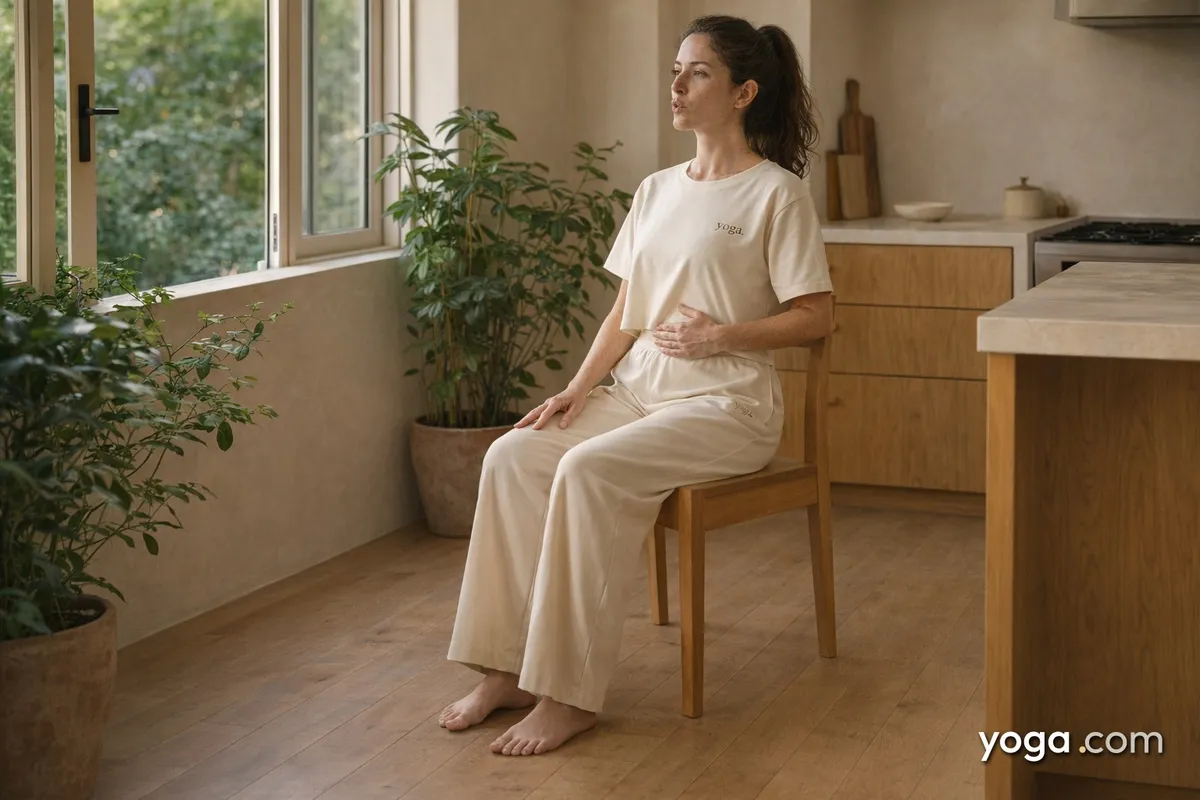
Pursed-lip breathing is about as simple as a breathing practice gets: a quiet inhale through the nose, then a slow exhale through softly pursed lips, as if cooling a spoonful of soup. That is the whole technique.
One thing before the details. This page is general information about a breathing practice, not medical advice. If you live with a lung condition or any other health concern, your doctor or physical therapist is the right guide for breathing work - please read our health and safety disclaimer, and bring anything condition-specific to them first.
A technique with two homes
Pursed-lip breathing lives a double life. Breathing specialists teach a version of it in clinical settings, as part of care plans built around a particular person and their history. Yoga, meanwhile, has prized the long, unhurried exhale for centuries as one of the most reliably settling things a person can do while sitting still.
That double life draws a useful boundary. The clinical version belongs to professionals who know you. The yoga-adjacent version - the one this page is about - is a gentle way to downshift before or after practice, or in any quiet moment that could use some slowing down. If you first heard of the technique in connection with a diagnosis, let your care team guide you there. An article, this one included, cannot.
Trying it gently
Here is the everyday version, in four easy steps:
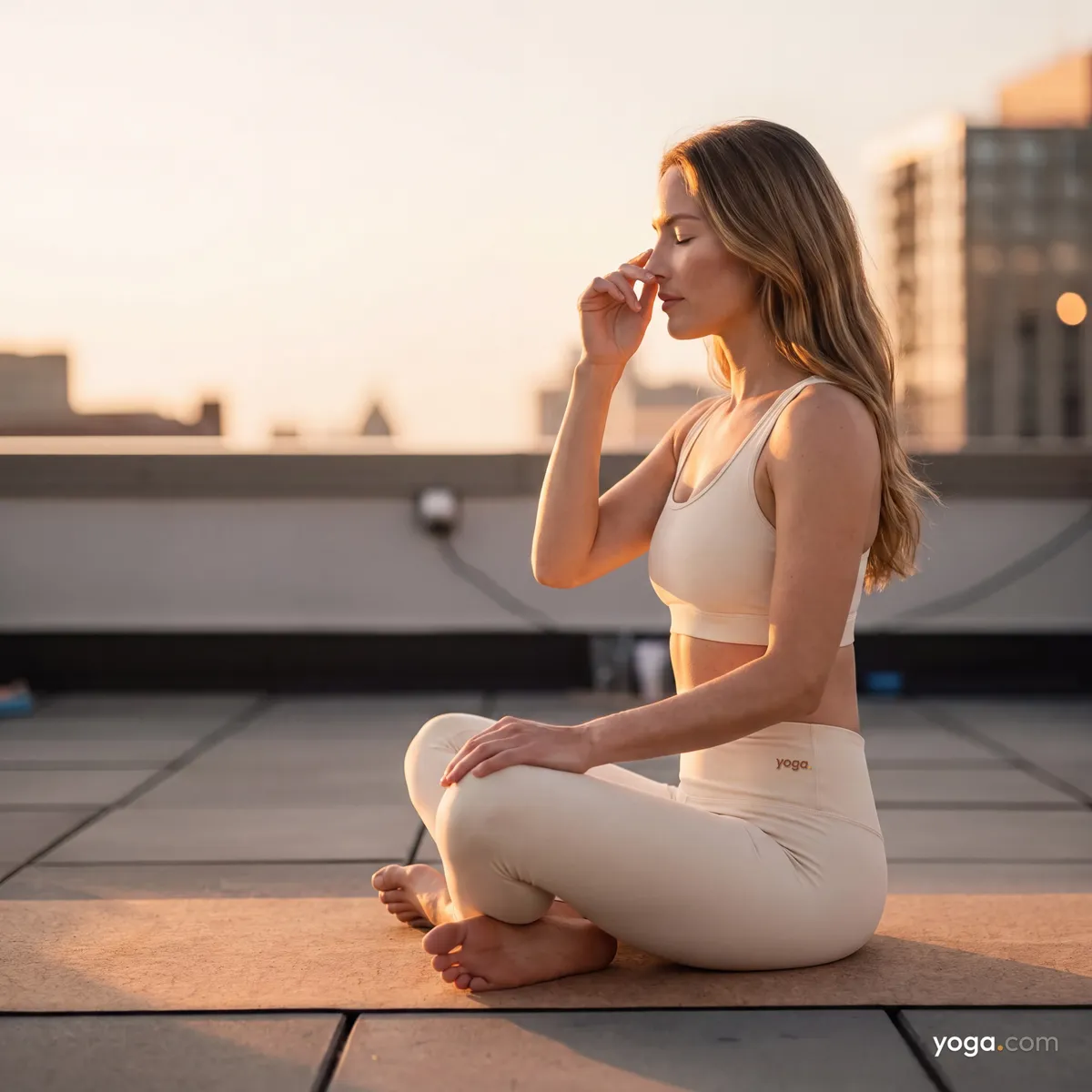
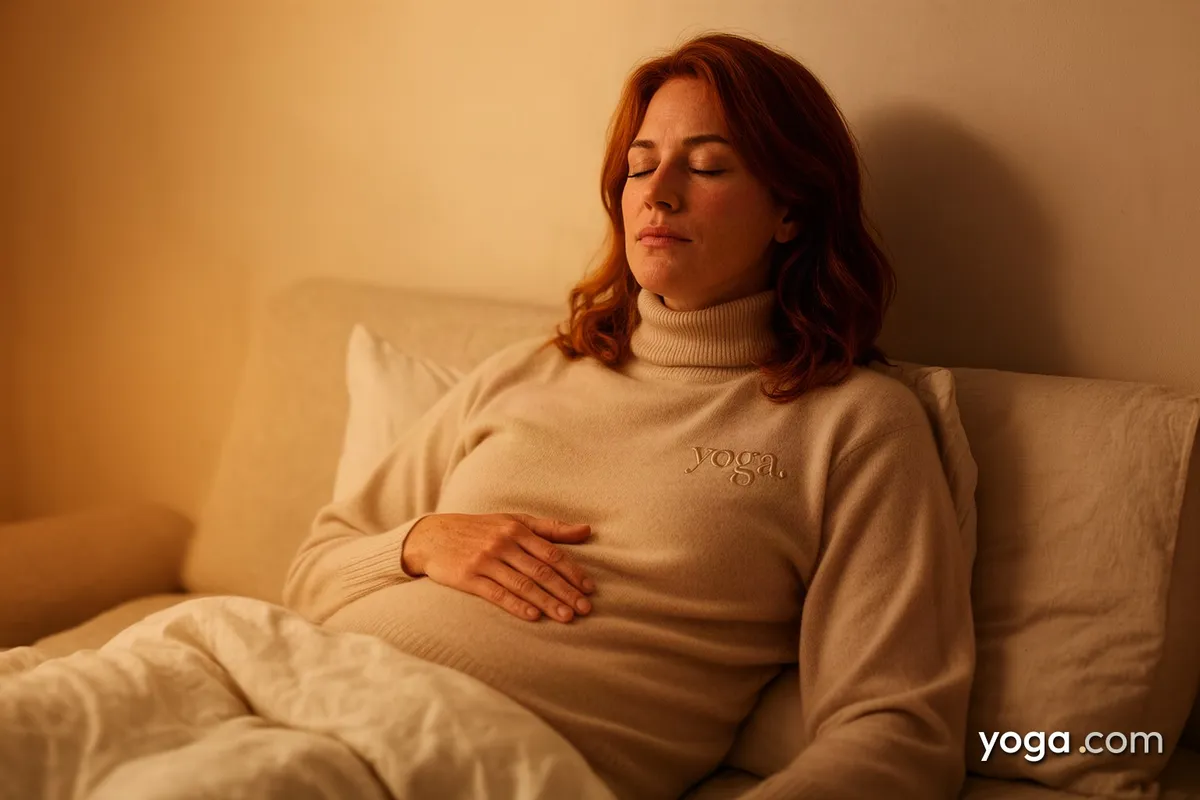
- Settle in. Sit comfortably upright, let the shoulders drop, unclench the jaw. Some people rest a hand on the belly to feel the breath moving down low instead of up in the chest.
- Inhale quietly through the nose. An ordinary breath. No gulping - over-filling only makes the slow exhale harder to enjoy.
- Purse the lips softly. The shape you would use to whistle, or to cool a hot drink without spilling it.
- Let the air out slowly. Steady and unforced, like a controlled leak. Many people find an exhale somewhere around twice the length of the inhale comfortable, and comfort should set the count. The moment it stops feeling easy, stop.
A few relaxed breaths at a time is plenty. Follow each small round with ordinary breathing, and let the whole thing stay unambitious.
Small adjustments that help
- Hold the back of your hand a few inches from your mouth. A thin stream of air should reach it. If nothing does, the lips have sealed shut rather than pursed.
- Ballooning cheeks mean air is pooling in the mouth. Firm them slightly and keep the narrowing at the lips.
- Light-headedness is the signal to shrink everything - a softer inhale, a lazier exhale, or a full pause to breathe normally.
- A loud whistle means the opening is too tight. Aim for a soft, barely audible stream.
- Shoulders creeping toward the ears mean the breath is riding high. Reset the posture and let the belly do the moving.
Why the slow exhale feels good
Ask around a yoga class and you will hear the same report in different words: a long exhale feels like setting something down. Slow breathing feels calming to many people, and the pursed lips act as a gentle brake that makes slow feel achievable - the narrowed opening meters the air out, so the exhale lengthens on its own without any straining.
That is also why the shape of the lips matters more than any count. The technique works when it feels like ease. Chasing a number, forcing the exhale, or treating the whole thing as a performance turns a calming practice into work, and work was never the point.
Folding it into a yoga practice
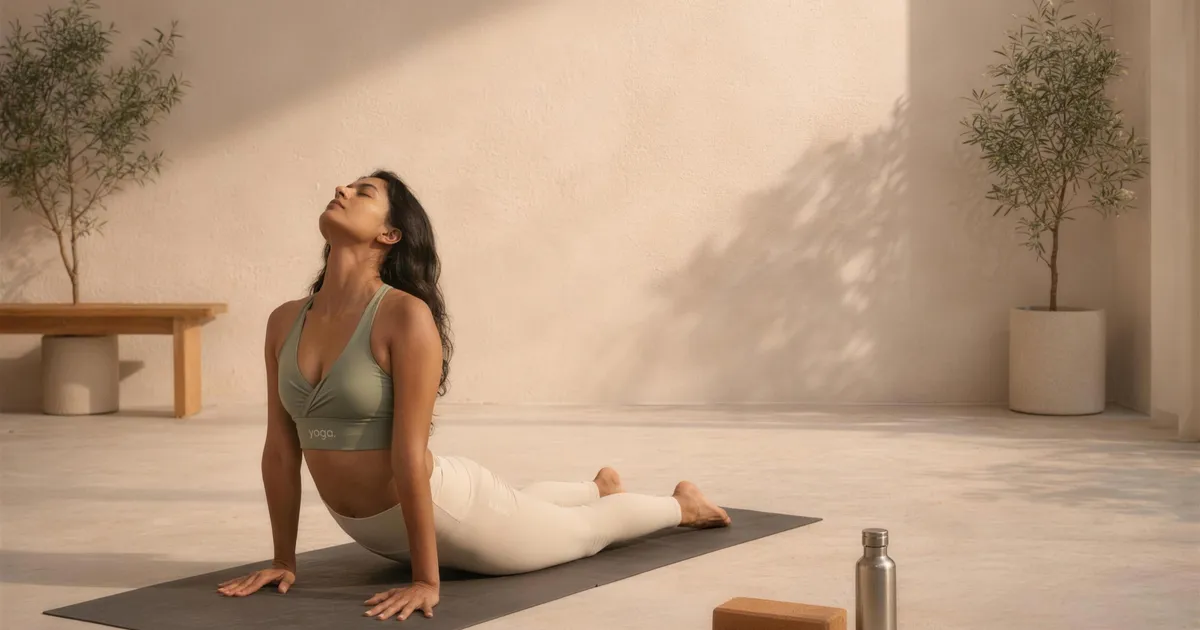
The natural homes for this rhythm are the quiet edges of a session: a few soft rounds seated before you begin, or lying down at the end while everything settles. It also pairs well with restorative shapes and gentle stretching, where nothing is competing for your breath.
Keep it out of strenuous sequences, at least while it is new. And leave breath retention and forceful breathing exercises alone unless a professional who knows your health has said they suit you. A slow, comfortable exhale is the entire assignment here, and it asks nothing of you beyond patience.
Where practice ends and care begins
A breathing technique is a comfort, and comforts have limits worth respecting. If breathing ever feels harder than usual, if everyday tasks start leaving you more winded than they used to, or if you notice your breathing changing on its own at rest, take that to a doctor promptly. Changes like those deserve professional attention, and no technique from any article is the right response to them.
The same goes for named conditions of every kind. Whether a breathing practice suits your situation - and how, and how much - is a question your doctor or physical therapist can answer well because they know you. Gentle practice can sit happily alongside proper care. It does not replace a single minute of it.
What the first weeks feel like
Most people describe a small, predictable arc. For the first few days, counting feels fussy and the exhale feels endless. After a week or two of short, relaxed rounds, the counting fades and the rhythm starts running on feel. Eventually the slow exhale may show up uninvited in a tense moment - a pleasant surprise, and a sign the pattern has settled in.
And if it never clicks, nothing has gone wrong. Some people take to long exhales immediately; others settle better through movement, or humming, or a walk around the block. A practice earns its place by feeling good. If this one does not, thank it for the visit and let it go.