You nail the alignment, you hold the pose - and then you realize you've been holding your breath for the last ten seconds. Sound familiar? Breathing and moving together is one of the most transformative skills in yoga, and it's also the one that gets the least attention in most beginner classes. This guide breaks down exactly how to breathe during yoga poses, so the breath becomes your anchor rather than an afterthought.
Why the Breath Is the Real Practice
Every movement in yoga is designed to pair with either an inhale or an exhale. Inhales tend to accompany expansion - rising, lengthening, opening. Exhales tend to accompany contraction - folding, settling, releasing. When you disconnect from that rhythm, you are working against the practice itself, and your body does not get the full benefit that the practice is meant to give you.
Keep in mind that the benefits of breathing well in yoga go beyond the mat. Yogic breathing practices known as pranayama are known to induce meditative states, reduce stress, and increase lung capacity. On top of that, breathing is something you are already doing around 20,000 times a day and so the return you get from breathing with intention during your yoga practice is very meaningful because you are simply improving something your body is already doing all the time.
Start Here: Diaphragmatic Breathing
Before you work on breathing during poses, practice this foundational technique on its own. It's the bedrock of every breath cue your teacher gives you.
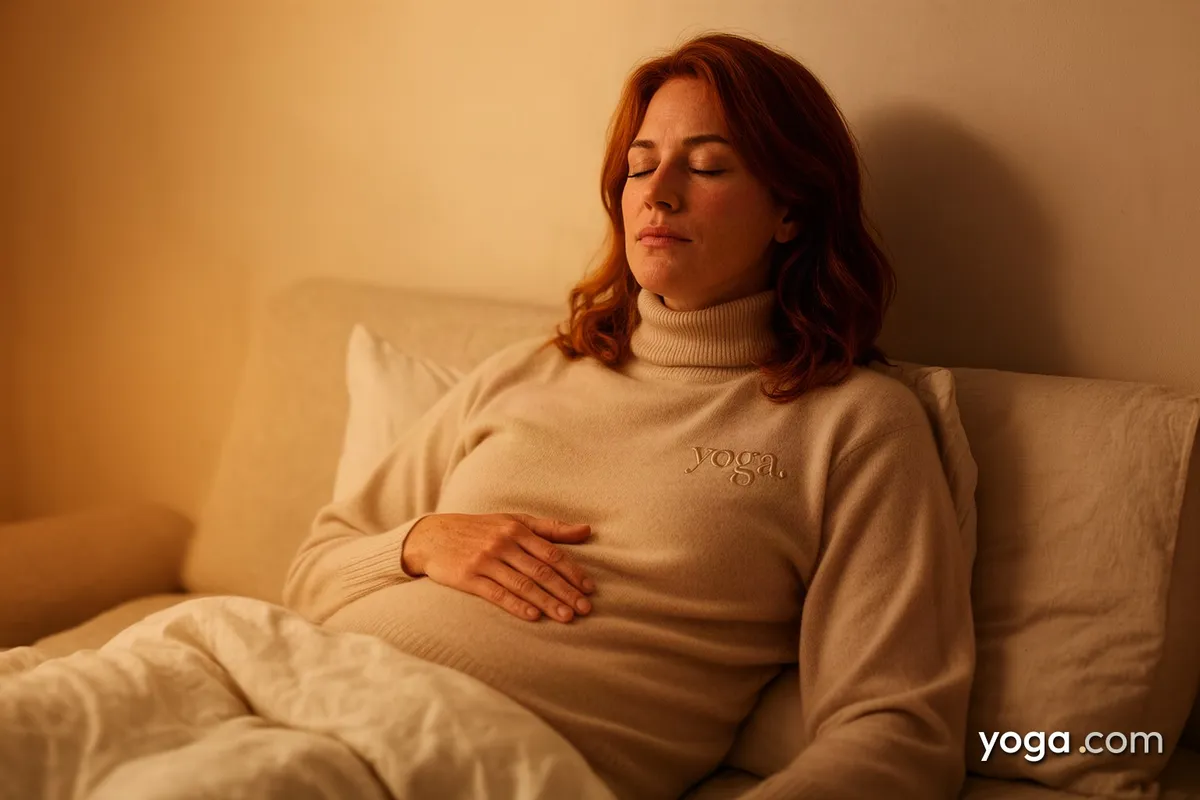
- Lie on your back. Place one hand on your chest and one hand on your belly.
- Inhale slowly through your nose. Your belly hand should rise. Your chest hand should stay mostly still.
- Exhale fully through your nose. Feel your belly soften downward.
- Aim for a slow, steady rhythm - think around six counts in, six counts out.
If your chest is rising more than your belly, you're relying on shallow chest breathing. That's extremely common, especially under physical effort. The fix is practice - ideally a few minutes before class, not mid-Warrior sequence.
Four weeks of supervised diaphragmatic breathing training improved the six-minute walk distance by a mean difference of 34.7 meters in one study - a meaningful marker of functional improvement. Consistent practice compounds.
Always Breathe Through Your Nose
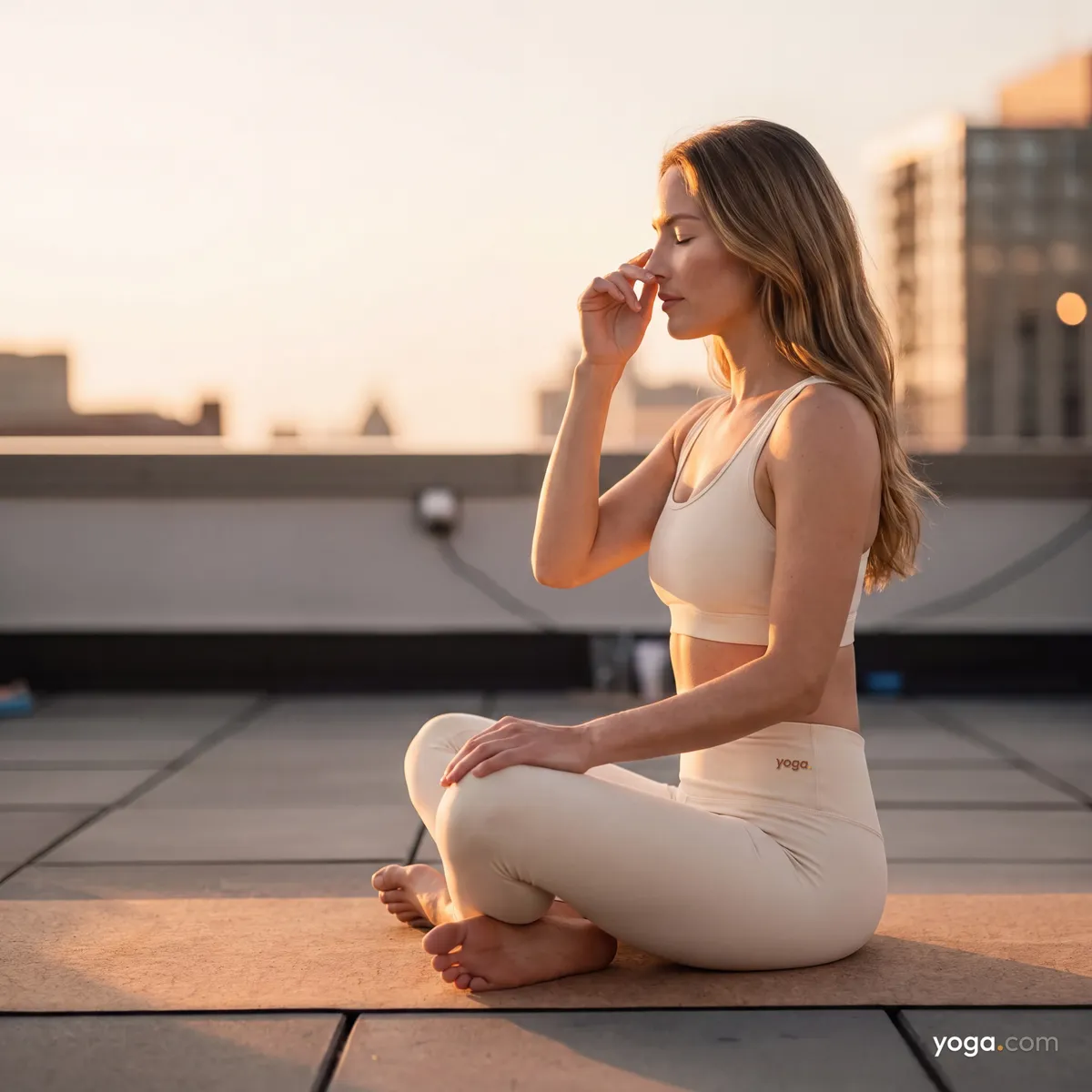
Nasal breathing in yoga isn't just tradition - it has a real neurological basis. Nasal breathing generates phase-locked oscillations in the piriform cortex, amygdala, and hippocampus; mouth breathing does not produce the same pattern of neural synchronization. In plain terms: breathing through your nose keeps your brain more coherently engaged with what you're doing.
Keep your mouth gently closed throughout your practice. In active poses - think fast-paced vinyasa - this can feel challenging at first. If you genuinely cannot maintain nasal breathing in a pose, that's useful information: the pose may be too intense for where you are right now. Back off, rather than gasping through your mouth to muscle through it.
Matching the Breath to Movement: The Core Rule
Inhale to expand. Exhale to fold or release. That one rule covers the majority of what you'll encounter in a beginner or intermediate class.
Common poses - and when to breathe
- Mountain Pose (Tadasana) / arms sweeping overhead: Inhale as the arms rise.
- Standing Forward Fold (Uttanasana): Exhale as you hinge at the hips and fold down. Inhale as you rise back up.
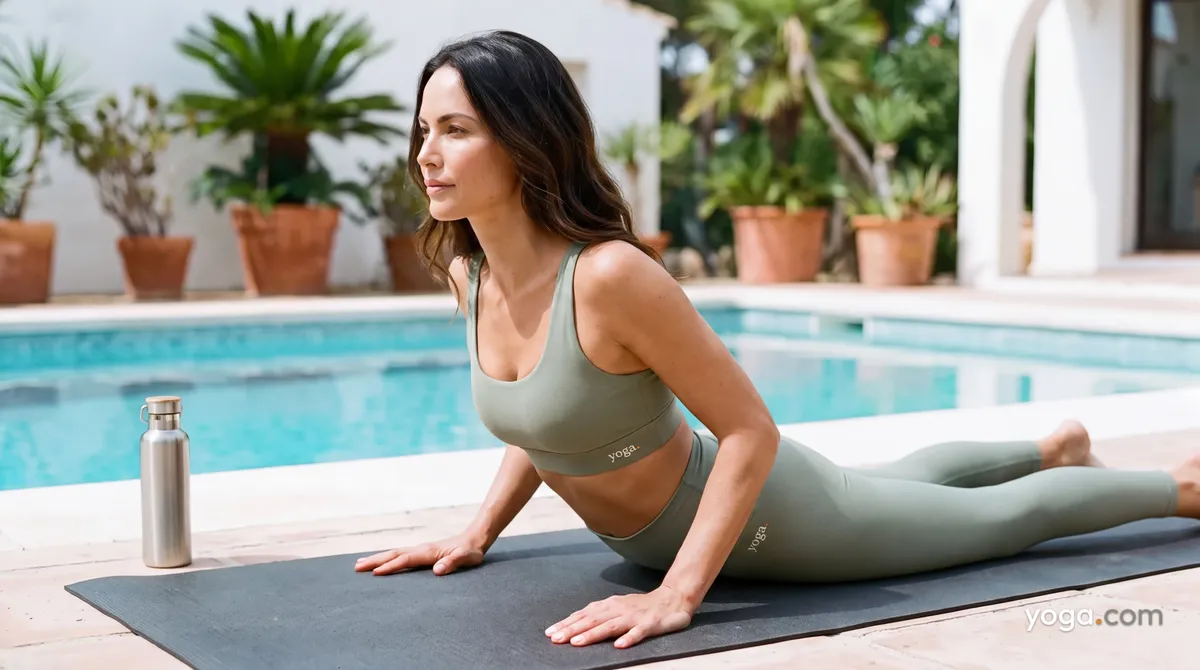
- Downward-Facing Dog (Adho Mukha Svanasana): Exhale fully before pressing into the hands. Let the inhale naturally lift your sitting bones. The breath should feel expansive across the back ribs - not tight in the chest. If you have wrist pain or carpal tunnel syndrome, modify by coming onto fists or forearms, and always take a full breath before bearing weight.
- Seated Forward Fold (Paschimottanasana): Inhale to lengthen the spine tall. Exhale to let the torso settle a little further forward. The exhale does the work - you don't force the stretch.
- Warrior I (Virabhadrasana I): Inhale as you sweep the arms overhead and open the chest.
- Child's Pose (Balasana): Let the exhale soften you deeper into the floor. Use it as a reset breath whenever needed.
An Introduction to Pranayama
Pranayama is the formal yogic practice of breath control, which means you are consciously timing the inhale, the exhale, and any pauses between them. A 2020 systematic review analyzing 14 studies found that yogic breathing techniques measurably impact emotional and cognitive performance. This is not abstract at all, because it is your nervous system directly responding to the rhythm of your breath, and so the effects are very real.
Two accessible techniques to try:
- Sama Vritti (Equal Breath): Inhale for a count of four. Exhale for a count of four. This technique is simple and stabilizing, and it is a great starting point for anyone new to pranayama.
- Extended exhale (1:2 ratio): Inhale for four counts, exhale for six to eight. Keep in mind that a longer exhale tends to down-regulate your nervous system and so this technique can be especially useful when you feel tense. Never strain for the count, because a smooth four-count exhale beats a strained eight-count exhale every time.
A 2021 study found that participants who practiced Sudarshan Kriya Yoga breathwork reported less stress, anxiety, and depression, and had improved sleep. On top of that, breathwork at the end of class is not filler at all, because breathwork is often where the deepest shift happens for your mind and body.
Three Mistakes Beginners Make (and How to Fix Them)
1. Holding the breath entirely
When a pose gets hard, the breath is often the first thing to go. The body tenses, everything locks up, and breathing stops. If you notice you've been holding, simply exhale slowly and let the breath restart. You don't need to catch up - just return.
2. Shallow, rapid breathing
Gasping in quick sips whenever you remember to breathe is not the same as conscious breath. Shallow, rapid breathing can actually increase muscle tension rather than release it. Increases in respiration rate are synchronized to amygdala activation during anxiety and fear - meaning fast breathing can amplify stress signals rather than quiet them. Slower is almost always better.
3. Trying to match your teacher's exact count
Your teacher may have years of breath training behind them. If they cue a five-count inhale and four is your honest maximum right now, breathe for four. A strained five-count is worse than a smooth three-count. The quality of the breath matters far more than hitting a number.
When Your Breath Tells You to Back Off
Your breath is one of the most reliable signals your body gives you. If you're gasping, if the breath feels short and tight, or if you simply cannot maintain a nasal rhythm - the pose is asking more than your body can give at this moment. Ease off. Use a modification. Return to Child's Pose (Balasana) and reset.
This isn't failure. This is exactly how intelligent practice works.
If you have a respiratory condition, cardiovascular concern, or are new to physical exercise, please consult your healthcare provider before beginning a pranayama or yoga practice.
Breathe Right From Here
The poses are visible. The breath is invisible. But in yoga, the breath is the whole point - it's what turns physical movement into something that genuinely shifts how you feel. Start with diaphragmatic breathing before class. Keep your mouth gently closed. Inhale to expand, exhale to fold. And whenever you feel yourself holding - just exhale, and begin again.