One idea sits at the center of Iyengar yoga: how you hold a pose matters as much as which pose you're in. It isn't a flow class, and it isn't about moving quickly. If you've seen the name on a studio schedule and wondered what sets it apart, the answer starts with that core idea.
Before you begin: If you're recovering from an injury, managing a chronic condition, or have uncontrolled blood pressure or eye conditions, check with your doctor or physical therapist before your first class. This article is educational and isn't a substitute for individual medical advice.
What Makes Iyengar Yoga Different
Iyengar yoga is a tradition developed by B.K.S. Iyengar to ensure that all individuals - including those with medical complications and pain - have access to postures, breath work, and meditative practices. That inclusive mission shapes everything about how a class feels.
The defining feature is stillness with intention. Practitioners hold specific body poses for varying amounts of time, rather than moving rapidly in and out of poses the way a flow class does. That holding isn't passive rest - you stay in the pose, refine it, and notice what it's doing in your body. The quality of your attention in each pose matters more than how many poses you complete.
The Man Behind the Method
B.K.S. Iyengar spent more than 70 years in disciplined, daily practice, through which he molded the way we think about alignment and developed anatomically precise language to convey it.
His landmark book, Light on Yoga, was first published in 1966 and became a classic reference manual of asana practice - still used by teachers and students worldwide. He pioneered the use of props as genuine learning tools, not beginner shortcuts, and continuously refined his teachings, improving his use of props, therapeutic work, and alignment throughout his lifetime.
Why Props Are Central - Not Optional
Blocks, straps, bolsters, blankets, chairs. In an Iyengar class, these aren't signs that you're behind - they're the method. Props allow your body to find the correct shape of a pose before your flexibility or strength is fully there, so you build from good alignment on day one rather than working toward it someday.
If you can't reach the floor in a forward fold, a block brings the floor to you. If a strap holds your leg at the right angle, the strap is doing intelligent work. The prop makes precision possible.
One detail most beginners miss: a foam block has three usable heights depending on which side you stand it on. If the tallest setting feels unstable, rotate the block - that single adjustment can make a pose click into place.
What an Iyengar Class Actually Looks Like
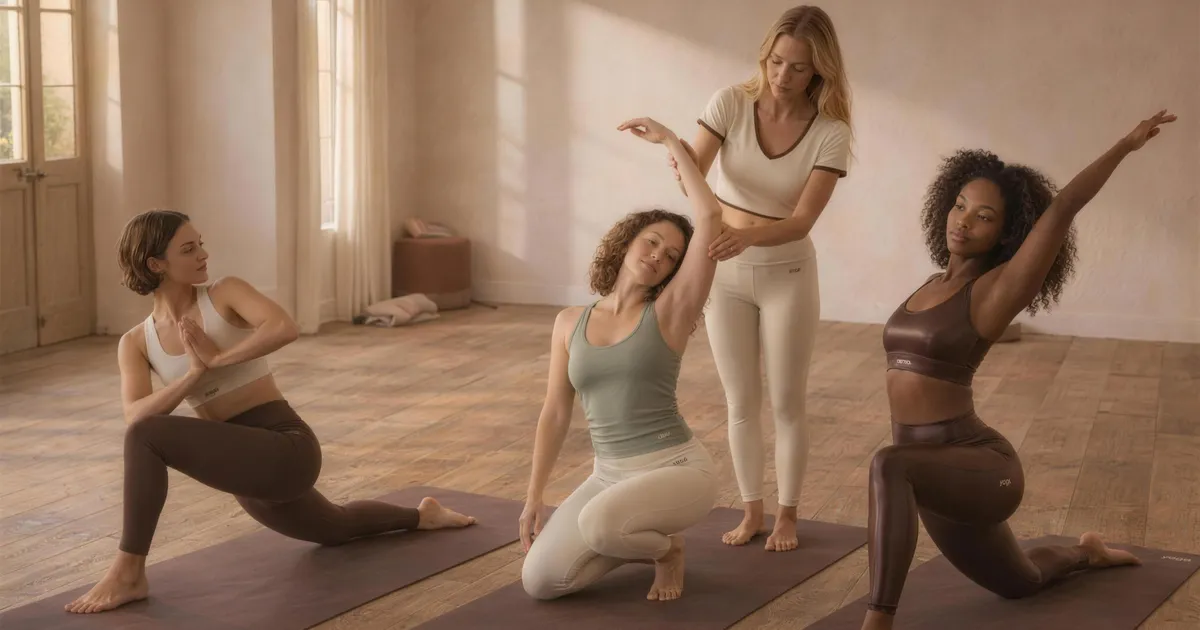
Your teacher will give specific, detailed instructions and will correct your positioning often. That hands-on guidance is how alignment is learned, so expect corrections - they're the point.
Sequences are deliberately ordered for different purposes: general practice, back care, restorative recovery, and more. Learning to sequence well takes years, which is part of why teacher certification in this tradition is rigorous and multi-leveled.
Common Poses You'll Encounter
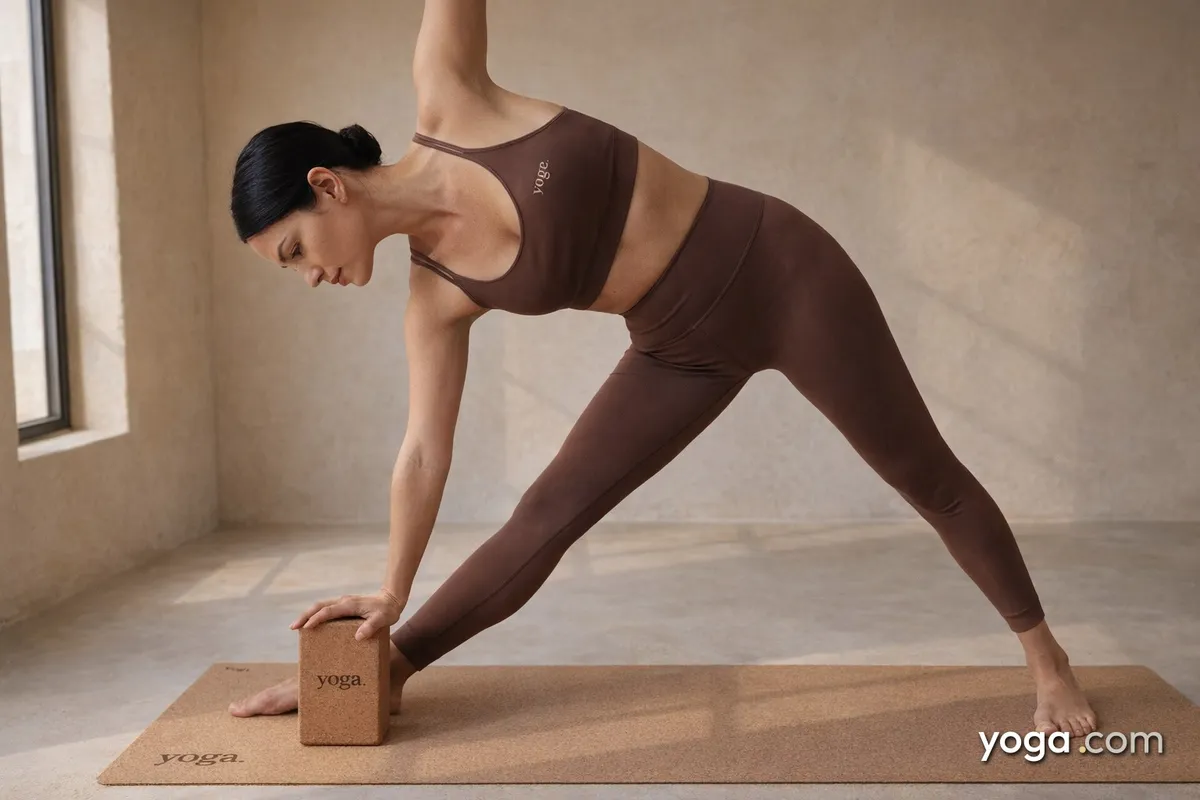
- Triangle Pose (Trikonasana) - Works the lateral trunk, outer hip, hamstrings, and inner thigh. A block under the lower hand keeps your spine long; resist the urge to collapse the upper body forward.
- Warrior I (Virabhadrasana I) - Targets the hip flexors, front-leg quadriceps, and thoracic spine. Ground your back heel and square your hips forward before you think about the arms.
- Child's Pose (Balasana) - A resting pose used frequently. A folded blanket under your knees or a bolster under your torso makes it genuinely restorative rather than something to endure.
- Supported Corpse Pose (Savasana) - Always at the end of class. An eye pillow and a blanket over your body deepen the release.
Who Iyengar Yoga Is Built For
Almost everyone. Because the method was designed specifically for people with medical conditions and physical limitations, it tends to be especially welcoming for beginners, older adults, and anyone recovering from injury or managing chronic pain. If you fall into any of those categories, check with your doctor or physical therapist before starting - and see the safety notes below.
Early research is encouraging, though limited. One very small qualitative study (five participants) followed young adults with rheumatoid arthritis who attended Iyengar yoga classes twice a week for six weeks, with each session lasting 90 minutes and taught by a teacher qualified in therapeutics. Participants reported improved range of motion, energy, sleep, and mood, and the prop-supported format was adaptable to their abilities.
Iyengar yoga is one of the most prevalent styles taught in the US and Europe, which means finding a qualified class near you is realistic.
The Potential Mental Health Benefits
In one three-month randomized controlled trial, women in yoga groups showed significant improvements in perceived stress, anxiety, depression, psychological quality of life, mood, and bodily complaints compared to a control group. That trial used Iyengar yoga specifically - 72 distressed women practicing once or twice weekly for three months - so its slower, held-pose format is exactly the practice the results describe.
If you're managing stress, anxiety, or low mood, yoga can be a meaningful part of your self-care - but speak with a healthcare provider about any clinical concerns. Yoga supports wellbeing; it isn't a substitute for professional care.
Safety Notes Before You Go
- Knee concerns: In Warrior I (Virabhadrasana I), keep the front knee tracking over the ankle. If you have knee replacements or significant osteoarthritis, tell your teacher before class - they'll guide you to the right depth.
- Shoulder injuries: Overhead arm positions can load a healing rotator cuff. Keeping hands at hip height is a safe modification until you're cleared.
- Inversions: Poses like Shoulderstand (Sarvangasana) and Headstand (Sirsasana) are contraindicated for glaucoma, detached retina, or uncontrolled high blood pressure. A qualified Iyengar teacher will ask about these conditions - but bring them up proactively at your first class.
What to Look for in a Teacher
Iyengar yoga has its own multi-level certification system, separate from general yoga teacher training. Teachers must demonstrate both personal practice and teaching skill at each level before advancing - a general training program is not enough to earn this credential.
Look for a teacher certified through your national Iyengar yoga association (in the US, that's IYNAUS). The credential is your sign that the teacher has met real, specific standards.
A Final Word
Iyengar yoga rewards slowness and attention. Because it was designed from the ground up to meet students where they are - props, modifications, careful sequencing - it can work for bodies at almost every stage of life and health. Find a certified teacher, bring an open mind, and let the props do their job.
Sources
- PMC / National Library of Medicine - Iyengar Yoga accessibility and methodology
- Yoga Journal - Light on Iyengar
- Yoga Journal - Teaching guide: B.K.S. Iyengar's evolving practice
- PMC / National Library of Medicine - Yoga for distressed women: randomized controlled trial
- PMC / National Library of Medicine - Iyengar yoga for young adults with rheumatoid arthritis
- NCCIH / National Institutes of Health - Yoga: What You Need to Know (safety and contraindications)