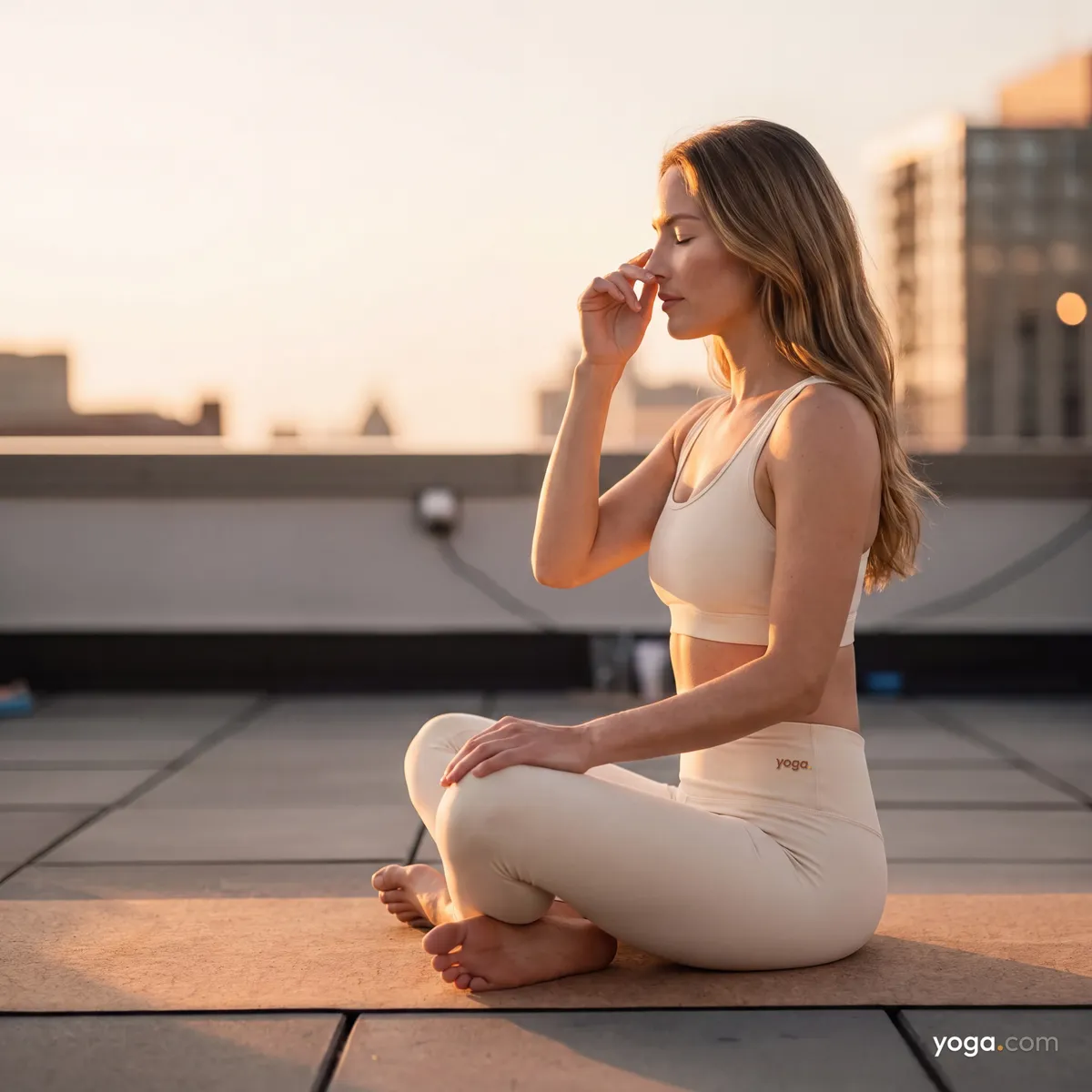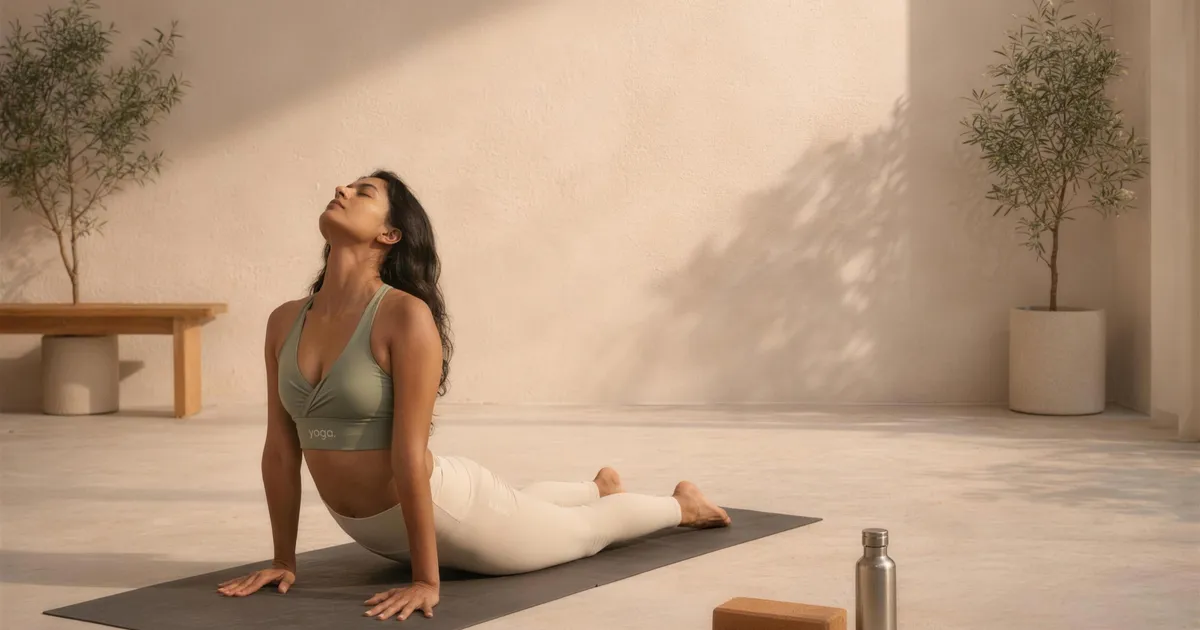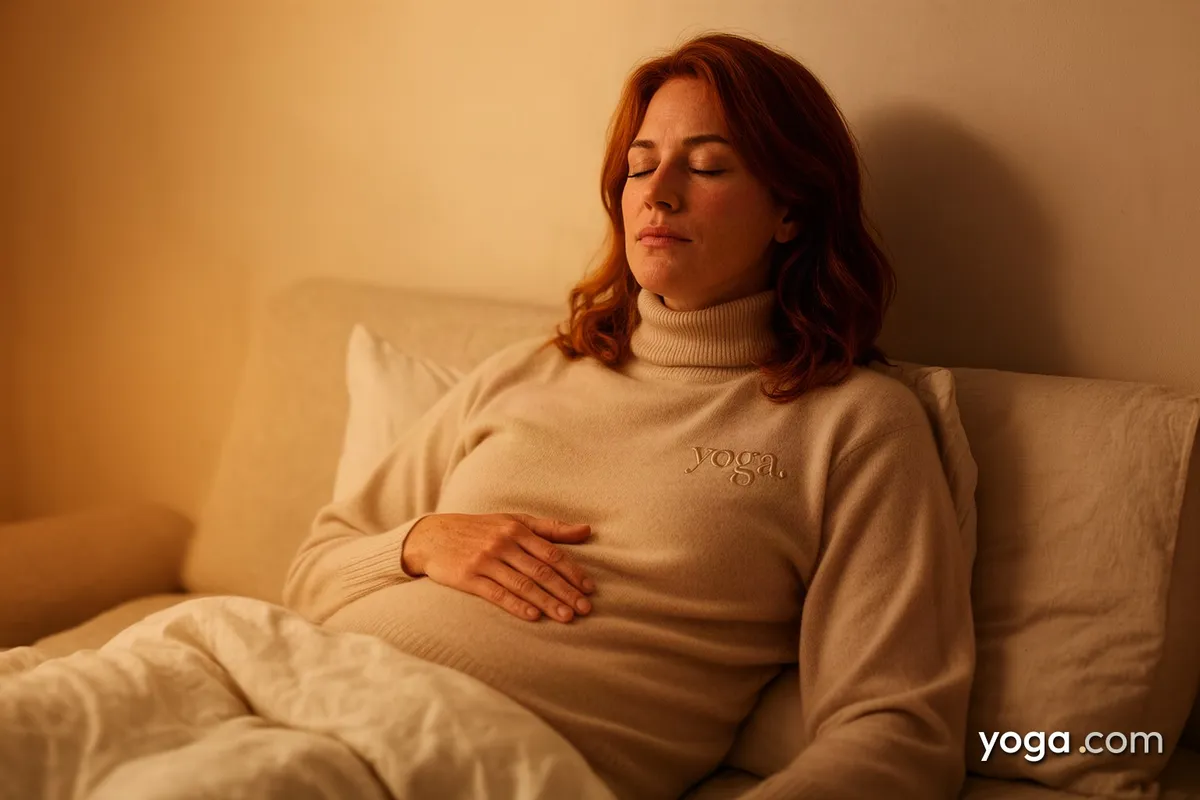
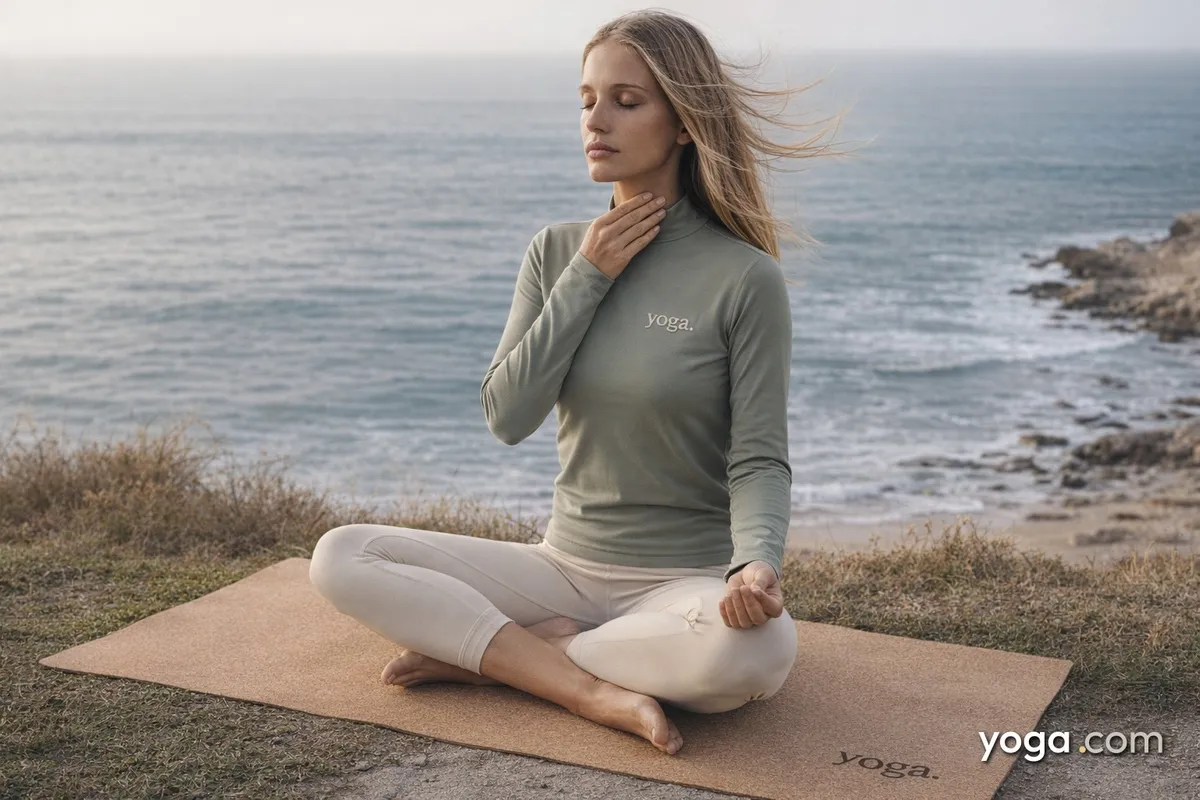
It's easy to assume ujjayi breath is just yoga-class background noise, a cue you nod along to without really knowing what it means. The reality is different: once you feel it, you'll never forget it. This guide breaks down exactly what ujjayi breath is, how to find it, why it changes the quality of your practice, and how to carry it into movement.
Before you begin: if you have asthma or another respiratory condition, high blood pressure or heart disease, or you are pregnant, check with your doctor or a qualified prenatal yoga teacher before trying ujjayi - the airway resistance it creates is not right for everyone. This article is educational and isn't a substitute for individual medical advice.
Pranayama, Plainly - a six-chapter series · series homeHow Breathing Actually WorksDiaphragmatic Breathing for BeginnersCalm on Demand: Extended Exhale, Box Breathing & 4-7-8Ujjayi: Breathing Through Your Practice (you are here)Nadi Shodhana & Bhramari: The Quiet PracticesThe Strong Breaths - and Who Should Skip Them
What Is Ujjayi Breath?
Ujjayi (oo-JAH-yee) is often translated from Sanskrit as "victorious breath," though many teachers call it "ocean breath" - named for the soft, wave-like sound created when air moves through a gently constricted glottis (your vocal cords). Think of the quiet whoosh of the sea pulling back over pebbles. That's your target.
The glottis is the opening at the back of your throat. When you partially close it, the breath slows and that characteristic sound appears. The sound isn't a side effect - it's your signal that the technique is working.
According to the Hatha Yoga Pradipika, a fifteenth-century text, ujjayi is achieved through contraction of the epiglottis. Ancient teachers were onto something that modern research is only now catching up with.
How to Actually Do It: Step by Step
- Find the throat shape first. Open your mouth and exhale a soft "haaa" sound, as if fogging up a mirror. Feel that gentle constriction at the back of your throat.
- Close your mouth. Hold that same gentle narrowing with your lips sealed. Exhale through your nose and you should hear a soft, whispery sound.
- Try it on the inhale. Once the exhale feels natural, apply the same constriction on the way in. Both directions should carry that ocean-like quality.
- Keep it quiet. Your ujjayi breath should be audible to you but not clearly audible across the room. If it's very loud, ease off - you're working too hard.
- Start short. Begin with 5 to 8 minutes of practice, then gradually increase to 10 to 15 minutes as the practice becomes familiar.
If your throat feels tight or strained at any point, back off. The constriction should always feel gentle, never forced.
What Happens in Your Body When You Breathe This Way
Constricting the throat in ujjayi activates vagal nerve endings in the neck region, turning on the parasympathetic nervous system - your body's rest-and-digest mode, the direct opposite of fight-or-flight.
Slowing the breath deepens this effect. Ujjayi shifts your respiratory rate from the typical 12 to 16 breaths per minute down to six to eight breaths. Research shows that a reduced rate around 5 to 6 breaths per minute can increase vagal activation, and that slow breathing increases cardiac-vagal baroreflex sensitivity, improves oxygen saturation, and lowers blood pressure; separate reviews of breathing practices also report reductions in anxiety.32
One study found that the maximal increase in baroreflex sensitivity and the greatest decrease in blood pressure occurred with slow breathing using equal inspiration and expiration. In that study - 17 yoga-naive participants across different breathing patterns - the largest gains came from slow, equal-ratio breathing without throat constriction; adding ujjayi on both inhale and exhale did not further increase baroreflex sensitivity. Ujjayi's value here is mainly in slowing and pacing the breath rather than the constriction itself.
A note on evidence: ujjayi has little dedicated clinical evidence of its own; its specific traditional claims rest more on experience than on strong trials. Treat it as a reliable pacing-and-focus tool rather than a proven remedy.
Why the Breath-Anxiety Connection Is Real
If you've ever felt genuinely calmer after a practice that emphasized the breath, that's not placebo. A large systematic review found that 54 of 72 breathing interventions across 58 studies were effective for stress and anxiety reduction.
Controlled breathing practices are increasingly recognized as accessible, low-risk tools for managing anxiety - and ujjayi is, as Yoga Journal notes, the beginner-friendly springboard for all other formal pranayama.
Where Ujjayi Fits in Your Practice
Ujjayi is the backbone breath of vinyasa and Ashtanga yoga, but it works in slower, quieter styles too. The steady sound gives your mind something to return to when attention drifts - which it will, and that's fine.
The breath also acts as a natural metronome: exhale into folds and twists, inhale to expand. A smooth, unbroken breath is the single best real-time gauge of overreaching - when it turns ragged, gets held, or disappears, ease back until it flows again. In Sun Salutation (Surya Namaskar), each movement anchors to one ujjayi breath, creating a meditative rhythm even in a physically demanding sequence.
You can also use ujjayi off the mat - sitting in traffic, before a difficult conversation, or any moment you need to downshift quickly.
Carrying It Into Movement: A Simple Progression
Learn ujjayi seated first. Finding the throat sound is fiddly for a few days, and the common first-week mistake is overdoing the constriction so the breath rasps and the throat feels strained - aim for soft, not loud, more gentle hum than rasp. Once the breath feels stable sitting still, carry it into simple movements: lift your arms on an inhale, lower them on an exhale; bend to one side on an exhale, come back upright on an inhale. As the breath smooths, it will naturally slow and lengthen, and the movements will follow.
You'll feel the lungs open on the inhale and the ribs softly close on the exhale. If a move is too fast, too hard, or too complex, the breath turns ragged, held, or lost - that's ujjayi working as your honest coach. While it stays smooth, your effort is safe. When it goes ragged, the pose has crossed from useful into strain.
When you catch the breath, you find the pose. When you lose the breath, you find your limit.
Before practice, you may optionally prepare with a short careful round of kapalabhati or bhastrika (only if they are safe for you - see the strong-breath safety chapter) or a few minutes of nadi shodhana; if those feel like too much, simple diaphragmatic breathing is always a safe warm-up. Use ujjayi itself for the length of your practice, start to finish.
Common Mistakes to Avoid
- Making it too loud. A booming ujjayi usually means too much throat effort. Soften the constriction.
- Breathing through the mouth. Both inhale and exhale travel through the nose in ujjayi.
- Straining to maintain it. If you're holding complex poses and the breath disappears, rest or back off the pose - don't force the breath.
- Skipping it as "advanced." Ujjayi is the entry point into pranayama, not the destination.
Who Should Be Cautious
Ujjayi adds mild resistance to the airway, which is part of why it works - but that same resistance means certain people should check with a doctor first:
- Anyone with asthma, laryngitis, or any active throat or respiratory condition
- Anyone with a cardiovascular condition or high blood pressure
- Pregnant women, who should consult a qualified prenatal yoga teacher or their healthcare provider
When in doubt, talk to your healthcare provider before beginning any pranayama practice. General yoga breathing is not a substitute for medical treatment. Never strain, and if you feel dizzy, lightheaded, breathless, or anxious, stop and let the breath return to normal.
One More Benefit Worth Knowing
A small study found that 80% of participants - all female teachers - rated ujjayi pranayama as useful in preparing their voice for vocal loading tasks. If you're a teacher, a singer, or anyone who uses their voice professionally, that's a bonus worth noting.
Putting It All Together
Ujjayi breath is simple, accessible, and genuinely powerful - not because of mysticism, but because of what a slowed, conscious, throat-constricted breath does to your nervous system. Start with the exhale. Find the sound. Keep it soft. Build from seated stillness into simple arm lifts and side bends before taking it into full flow. Give yourself a few weeks of consistent 5-to-10-minute sessions and notice what shifts - in your practice, and in how you feel when you step off the mat.
Sources
- PMC - Slow Breathing, Baroreflex Sensitivity, and Vagal Activation
- PMC - Physiological Effects of Slow Breathing in the Healthy Human
- PMC - Breathing Practices for Stress and Anxiety Reduction: Systematic Review
- Yoga Journal - Conqueror Breath (Ujjayi Pranayama)
- Yoga Journal - Ujjayi Breath Cues
- Yoga Journal - How to Practice Ujjayi Breath
- PMC - Ujjayi Pranayama and Vocal Loading in Female Teachers
- Yoga Basics - Ujjayi Breath Benefits
← Calm on Demand: Extended Exhale, Box Breathing & 4-7-8
Nadi Shodhana & Bhramari: The Quiet Practices →