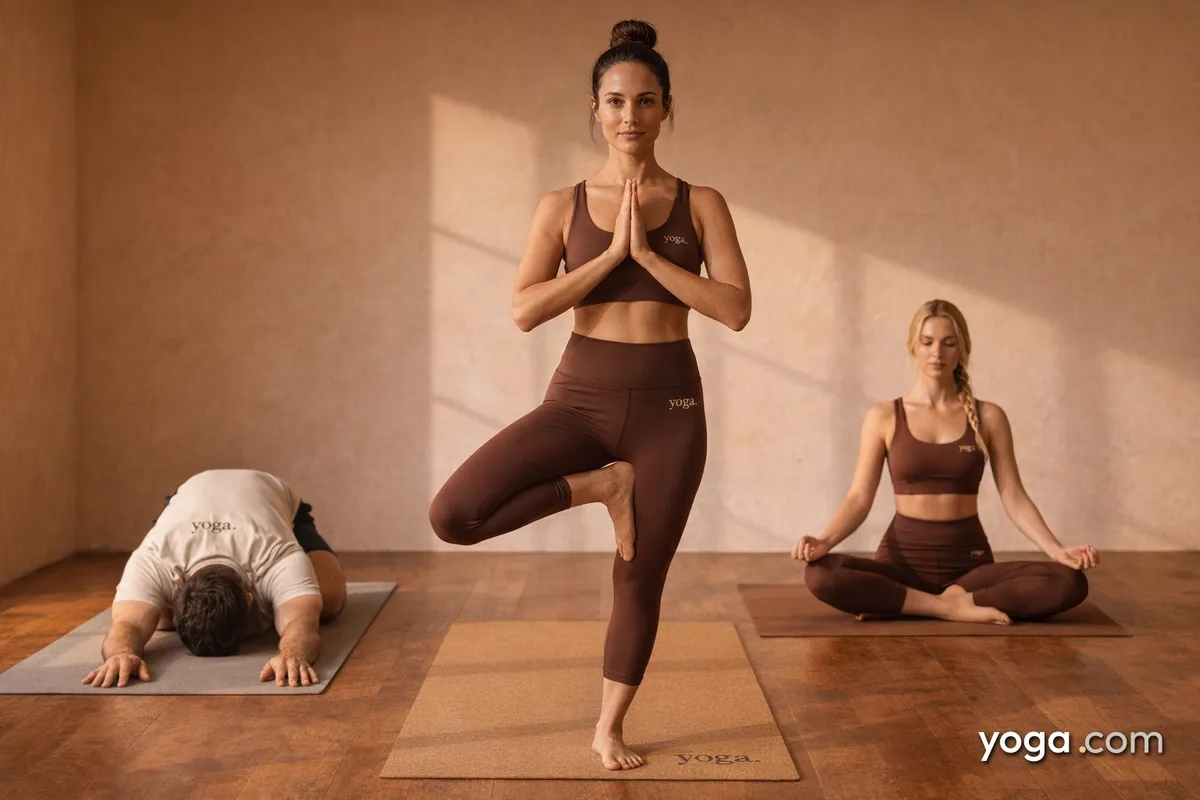
"Which type of yoga is actually right for me, right now?" If you've just opened a studio schedule and found Vinyasa, Yin, Ashtanga, Kundalini, and six other options staring back at you, that question is exactly where to start. This guide compares all 11 major types of yoga with an honest portrait of each style, a quick-pick table, and a clear way to choose based on your energy, body, and temperament.
Quick-Pick Table: All 11 Styles at a Glance
Style Pace Intensity Best For Hatha Slow - moderate Low - medium Beginners, building foundations Vinyasa Moderate - fast Medium - high Variety-lovers, cardio seekers Ashtanga Fast, set sequence High Disciplined, athletic practitioners Power Fast High Fitness-focused, gym crossovers Hot/Bikram Moderate, set sequence Medium - high Heat-lovers, detox-focused Iyengar Slow, deliberate Low - medium Alignment geeks, injury recovery Yin Very slow Low Flexibility, stress relief, deep tissue Restorative Still Very low Burnout, illness recovery, nervous system reset Kundalini Varied Medium Spiritual seekers, breathwork enthusiasts Chair Slow - moderate Very low Limited mobility, seniors, desk workers Yoga Nidra Completely still None Insomnia, anxiety, deep rest
The Dynamic Styles: Move, Sweat, Build Strength
Hatha Yoga
Think of Hatha as the parent of most modern yoga styles. Hatha classes move at a gentle-to-moderate pace, holding poses long enough that you can actually feel what you are doing. The room is typically unheated and the atmosphere is unhurried and calm. It is where a huge proportion of teachers began - a 2022 UK survey of 407 yoga providers found Hatha was the most commonly taught style at 28%.
If you are brand new to yoga, or returning after a long break, Hatha is almost always the right starting point and the right place to begin because you will learn the foundational poses, understand alignment basics, and leave feeling calm rather than wrecked. Hatha gives you a solid base before you move on to anything harder.
Vinyasa Yoga
Vinyasa links breath to movement in a continuous flow - inhale to lift, exhale to fold, never quite stopping. No two Vinyasa classes are the same, which suits anyone who gets bored easily. The pace can range from mellow to genuinely athletic depending on the teacher, and the room is usually unheated, though some studios run warm Vinyasa classes.
Vinyasa is a great fit if you want a moderate cardiovascular challenge alongside your flexibility work and so you get to build endurance as well as stretch. Keep in mind that you should expect music, creative sequencing, and a good sweat in most Vinyasa classes.
Ashtanga Yoga
Ashtanga is the most structured of the dynamic styles, with the same six series of poses practiced in the same order each time. A traditional "Mysore-style" class means you practice at your own pace while a teacher circulates and adjusts you, and a "led" class means everyone moves together on the teacher's count.
This style rewards commitment and consistency above all else. Ashtanga is genuinely demanding, and if you are looking for a rigorous physical practice with a clear progression then Ashtanga delivers that very well. On top of that, if you want variety or a softer entry point, Ashtanga might not be your match because the structure never changes.
Power Yoga
Power Yoga grew out of Ashtanga in the 1990s as a more gym-friendly, sequence-flexible alternative. Power Yoga classes are fast, strength-focused, and often choreographed to upbeat music. Instructors are not bound to a set sequence, so the experience varies widely by teacher and so your experience can differ a lot from one class to the next.
If you are coming from a fitness background and you want yoga to feel like a real workout, Power Yoga bridges that gap comfortably. Power Yoga is less concerned with philosophy and more focused on building a strong, mobile body for you.
Hot Yoga / Bikram
Bikram Yoga - the original hot yoga - was introduced to the United States in 1971 by Bikram Choudhury and consists of 26 poses practiced in a room heated to roughly 40°C (105°F) with 40% humidity. The sequence in Bikram never changes. "Hot yoga" more broadly refers to any style practiced in a heated room, so keep in mind that not all hot yoga follows the Bikram sequence.
The heat intensifies everything for you - your stretch, your effort, and your sweat. Some people love this and some people find it overwhelming. If you have cardiovascular concerns or you are pregnant, check with your doctor before stepping into a heated room because the heat places extra demand on your body. Always hydrate well beforehand.
The Precise Style: Alignment Above All
Iyengar Yoga
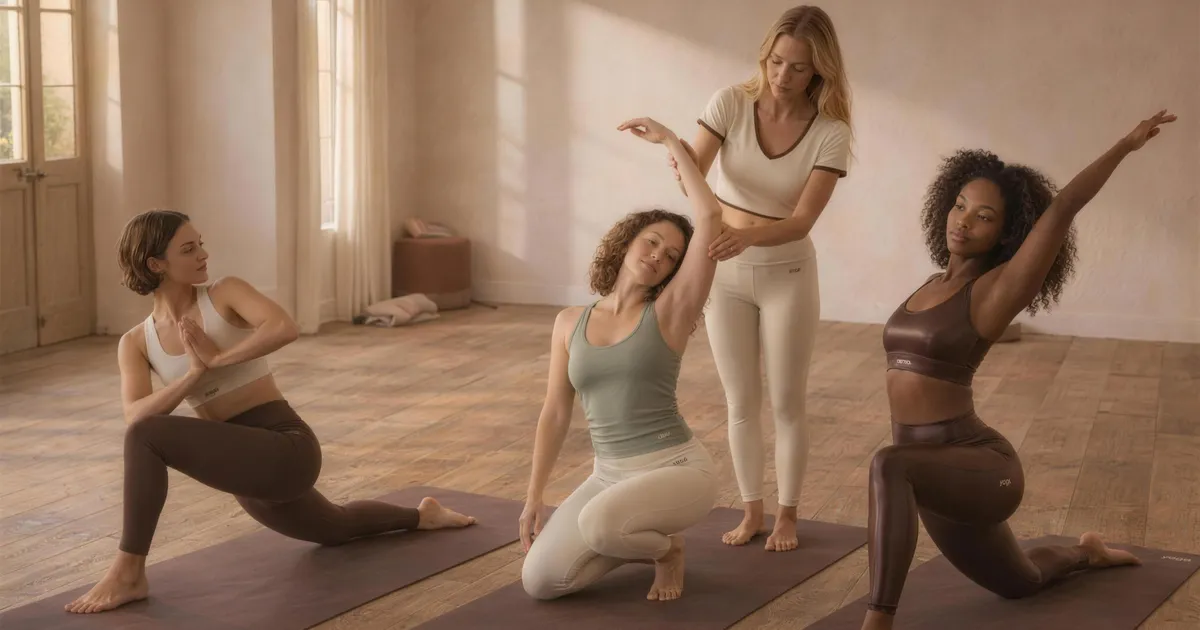
Developed by B.K.S. Iyengar, this style is defined by meticulous attention to alignment and the generous use of props - blocks, blankets, straps, bolsters - to help every body find the correct position safely. Classes move slowly, and you might spend 10 minutes on a single pose so that your body can really settle into the correct position. In the same 2022 UK survey, Iyengar was the second most taught style at 26%, reflecting how deeply Iyengar yoga is woven into British yoga culture.
Iyengar yoga is an excellent choice if you are recovering from injury, managing a chronic condition, or simply want to understand poses deeply rather than rush through them. Keep in mind that Iyengar teachers complete rigorous multi-year training, and so the quality of instruction you receive is typically very high. On top of that, because the training is so thorough, you can generally trust that your Iyengar teacher knows how to guide your alignment safely and correctly.
The Gentle Styles: Slow Down, Open Up, Restore
Yin Yoga
In Yin, poses are held for three to five minutes - sometimes longer. You are typically on the floor, supported by props, and the practice targets the connective tissue (fascia, ligaments, joints) rather than the muscles and so it feels very different from a regular movement class. The room is quiet and usually unheated. Yin yoga looks passive from the outside and can feel surprisingly intense from the inside, and that is something many beginners do not expect.
Yin yoga is ideal if you are very active in other areas of life and need a genuine counterbalance, or if you want to improve your flexibility and joint mobility without a high-energy class. Keep in mind that Yin yoga pairs beautifully with more dynamic styles, so it works well as a complement to whatever else you already do.
Restorative Yoga
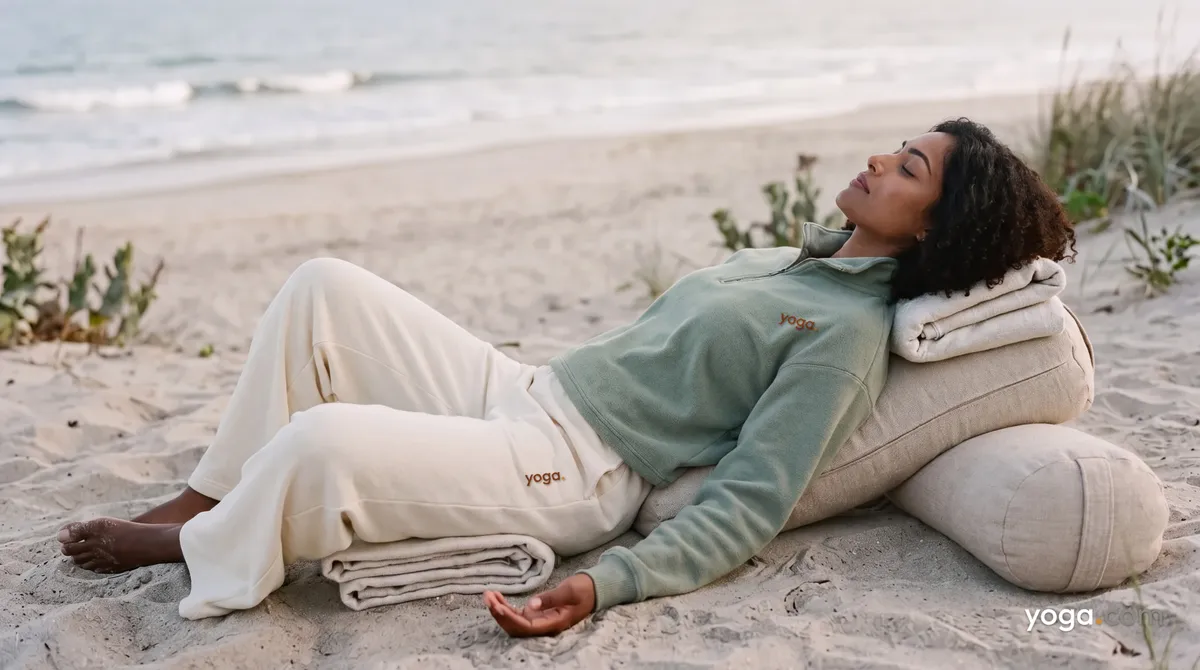
Restorative yoga uses props to support the body completely so that every muscle can fully release. You might hold just four or five poses in an entire 60-minute class. The goal of restorative yoga is not stretching; it is activating the parasympathetic nervous system, which is the body's rest-and-digest mode. A 2022 UK survey found that 73% of yoga providers reported attendees disclosed health conditions, most commonly mental health issues (41%) - which speaks to why gentle, therapeutic styles like Restorative yoga have become so important.
If you are exhausted, recovering from illness, dealing with chronic stress, or just need permission to fully stop, Restorative yoga can feel genuinely transformative. On top of that, Restorative yoga is also appropriate in pregnancy (with teacher guidance) and during injury recovery, so the range of people who can benefit from restorative yoga is quite wide.
Chair Yoga
Every pose in Chair Yoga is performed seated in or standing beside a sturdy chair, and this makes Chair Yoga accessible to people who cannot easily get up and down from the floor. The pace of Chair Yoga is gentle, the intensity is low, and the benefits - improved circulation, joint mobility, reduced tension - are very real and should not be underestimated.
Chair Yoga suits older adults, people with limited mobility, anyone recovering from surgery, and desk workers who want a midday reset. Keep in mind that the accessibility of Chair Yoga should not fool you into thinking Chair Yoga is not worthwhile - it absolutely is, and many people find it genuinely helpful over time.
The Meditative Styles: Breath, Energy, and Deep Rest
Kundalini Yoga
Kundalini is unlike any other style on this list. Classes weave together repetitive movement sets (called kriyas), intensive breathwork (pranayama), chanting, and meditation. The style was founded in the United States in 1969 by Yogi Bhajan, and it retains strong spiritual and devotional elements. A 2023 international survey found that chanting was included by 68.3% of traditional yoga teachers - a practice central to Kundalini classes.
This style can feel unfamiliar or even emotionally intense the first few times. Go in with curiosity rather than expectation, and read our full explainer for thoughtful context before your first class.
Yoga Nidra
Yoga Nidra - often called "yogic sleep" - is a guided meditation practiced lying down. You don't move. The teacher leads you through body scans, visualizations, and breath awareness into a state between wakefulness and sleep. A single session can feel as restorative as several hours of ordinary rest, though research is still evolving on specific claims.
If anxiety, insomnia, or a racing mind is your primary challenge, Yoga Nidra is worth trying. It requires no physical ability whatsoever - just the willingness to lie still and listen. In 2022, 57.4% of yoga practitioners incorporated meditation as part of their practice, and Yoga Nidra is one of the most accessible entry points into that world.
How to Actually Choose: Match a Style to You
The honest answer? Your starting point matters less than you think. Most people land in the right place when they match their style to three simple things:
Your energy right now
Are you wired and restless, or depleted and foggy? High energy days call for Vinyasa, Power, or Ashtanga. Low energy days - or weeks - call for Yin, Restorative, or Yoga Nidra. Our energy-matching guide walks you through this in detail.
Your body's needs
- Injury or chronic pain: Iyengar, Chair Yoga, or Restorative - and always tell your teacher before class.
- Tight hips or stiff connective tissue: Yin Yoga is specifically designed for this.
- Building overall strength and mobility: Hatha or Vinyasa to start.
- Limited mobility or balance concerns: Chair Yoga without question.
Your temperament
- You love structure and routine: Ashtanga or Bikram/Hot.
- You crave variety and creativity: Vinyasa or Power.
- You're drawn to the spiritual or philosophical side: Kundalini or a traditional Hatha class.
- You want to manage stress above all: Restorative, Yin, or Yoga Nidra.
- You're brand new and a little nervous: A beginner Hatha class is your safest, warmest entry point.
Understanding the different types of yoga also helps you plan a weekly routine - for instance, pairing a dynamic style with a restorative one - so that your practice supports both fitness and recovery. One more thing worth knowing: a 2023 international survey found that breath techniques were included by 95.2% of traditional yoga teachers and 88.6% of exercise-based teachers. Whatever style you choose, breathwork is almost certainly part of it - and learning to use your breath is one of the fastest ways to feel yoga working.
If You Take One Thing From This
There's no single "best" type of yoga - there's only the best type for you, today, in this season of your life. Start with what sounds genuinely appealing, not what sounds most impressive. Try a beginner class, talk to the teacher afterward, and give yourself permission to switch styles as you grow. The practice is wide enough to hold all of it.