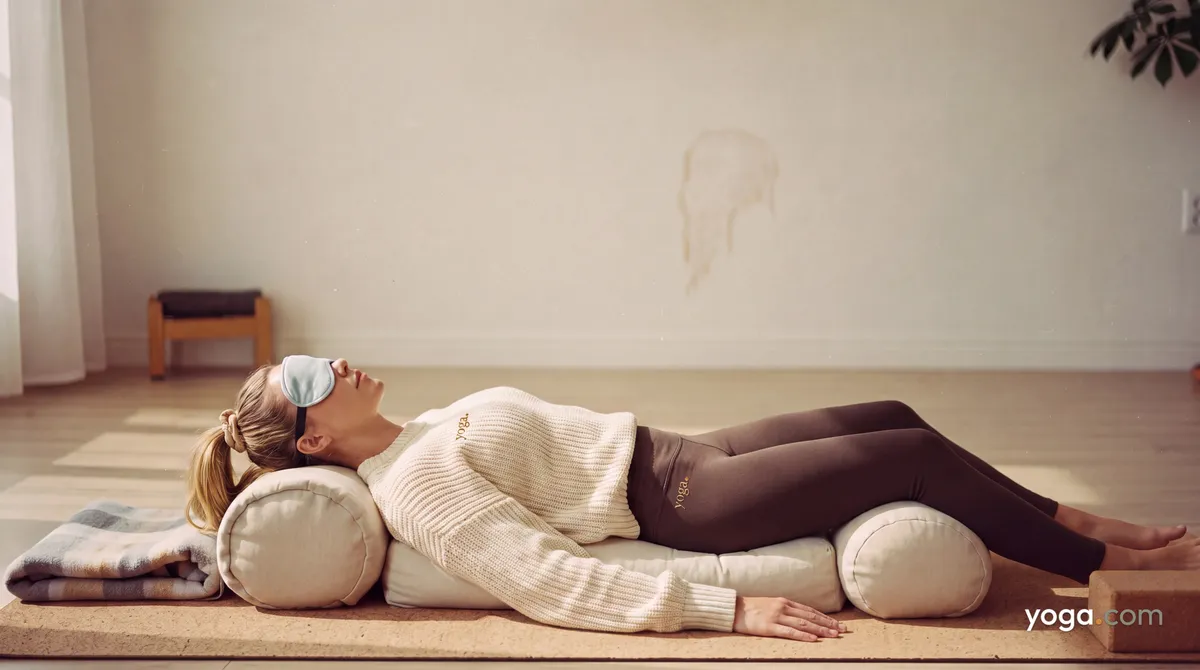
Restorative yoga is not a workout, not a stretch session, and not a nap with props. It's the practice of doing nothing on purpose - deceptively simple on paper, genuinely challenging in reality, because staying still while your mind hands you a to-do list is a skill most of us have never learned. This guide covers exactly what it is, how it differs from similar practices, and whether it might be what your body is quietly asking for.
What Restorative Yoga Actually Is
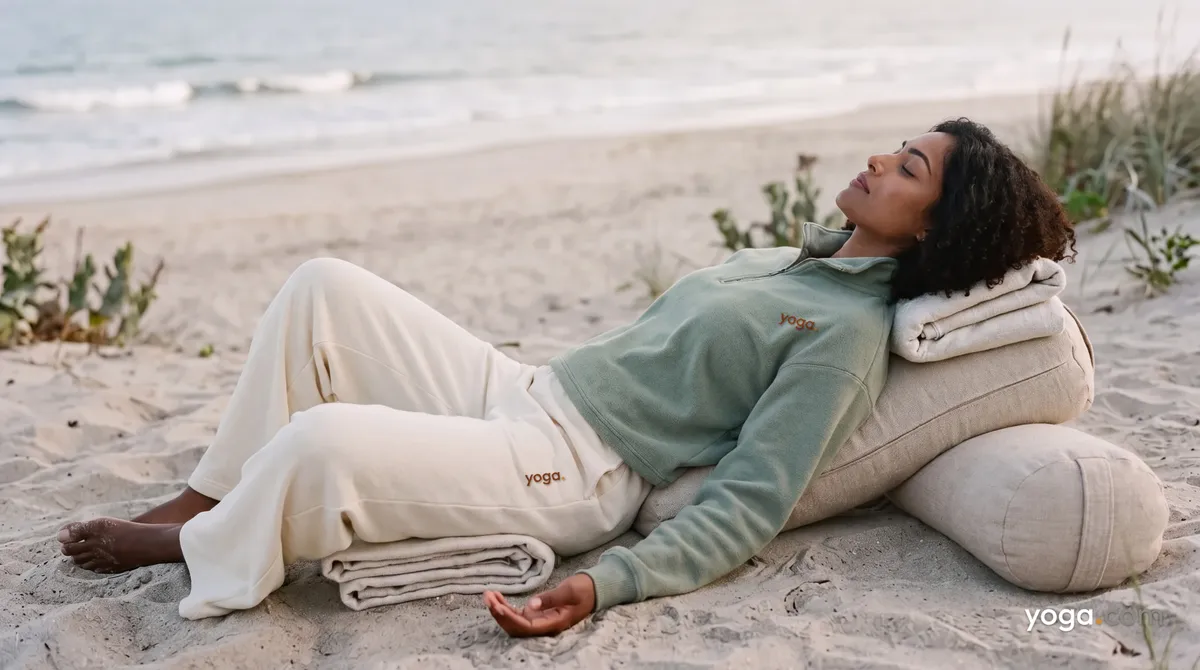
Restorative yoga is a prop-supported practice built around long, passive holds - typically five to six poses in a 60-75 minute session. Every pose is fully supported by bolsters, blankets, blocks, or straps so that no muscular effort is required. You're not stretching toward anything. You're simply being held.
The goal is to remove all muscular effort, reduce stress, and induce deep relaxation by triggering quieting reflexes - through inverted postures, sustained mild passive weight, and even the simple act of covering your eyes. Each pose is held for five to twenty minutes. You might do only five or six the entire class.
This is a practice rooted in the broader yoga tradition, and while it looks effortless from the outside, the internal work - staying present, letting the nervous system settle - is real.
How It Differs From Yin Yoga (This Matters)
Yin yoga and restorative yoga look similar - both involve long holds, stillness, and props. But they have genuinely different intentions, and mixing them up can lead you to the wrong class. Knowing the difference helps you choose the practice that is right for what your body actually needs.
If yin is a gentle pull, restorative is a full release. Both practices are valuable because both practices serve a real purpose - they are just doing different things, and your body benefits from understanding which one you are doing.
How It Differs From Yoga Nidra
Yoga Nidra is a guided meditation practice typically done lying flat in Corpse Pose (Savasana). You follow a teacher's voice through layers of awareness - body scan, breath, sensation, visualization. It's a practice of the mind.
Restorative yoga is a practice of the body being supported in specific shapes. You move between poses (slowly, with help from props). The nervous system shift is triggered partly by the physical position itself - an inverted or reclined pose that signals safety to the body - not only by guided attention.
They complement each other beautifully, but they're not the same thing.
What Happens in Your Nervous System
Most of us spend our days in sympathetic nervous system dominance - the "fight or flight" state that keeps us alert, reactive, and wired. Restorative yoga is a deliberate invitation to shift toward parasympathetic activity: the "rest and digest" state where repair, recovery, and genuine rest can happen. Your body needs this shift and it needs it regularly.
Restorative poses activate the parasympathetic nervous system through lengthening exhalations and steady breathing. When you are fully supported and breathing slowly, your body starts to believe at a physiological level that it is safe to soften and so the nervous system begins to do its repair work because the right conditions are finally in place. Your breathing pattern is a direct signal to your nervous system, and your nervous system is always listening.
This is not mystical. This is your nervous system doing exactly what your nervous system is designed to do when the conditions are right. Your body knows how to rest - you just have to give your body the opportunity to do it.
What a Session Actually Feels Like
Expect a slow, quiet room. Props will be set up before you arrive or handed to you at the start. A typical session might move through poses like these:
Each shape is held long enough for your nervous system to stop bracing - which is why shorter holds don't have the same effect. Five minutes feels like a long time at first. By minute four, it usually doesn't.
It Can Feel Confronting - Let's Be Honest About That
If you're someone who struggles to slow down, restorative yoga might feel uncomfortable before it feels good. Being still with no task to complete can surface restlessness, emotion, or an almost irresistible urge to check your phone.
That's not a sign it isn't working. It's often a sign it is. The stillness is revealing how much activation you're carrying around as a baseline.
Most practitioners find that after a few sessions, the discomfort softens. The nervous system learns to trust the stillness. But give yourself permission to find the first few classes genuinely awkward - that's normal, and it passes.
Who It's Especially Well Suited For
Restorative yoga is worth exploring if any of these sound like you:
Broader yogic practices have been associated with reduced stress, anxiety, depression, and chronic pain, as well as improved sleep patterns and overall well-being. Restorative yoga, with its specific focus on nervous system downregulation, is one of the more targeted tools within that tradition for exactly these concerns.
Research has also explored restorative yoga's effects beyond relaxation. The PRYSMS randomized trial, conducted across UC San Francisco and UC San Diego between 2009 and 2012, compared restorative yoga directly against stretching in adults with metabolic syndrome - and found meaningful differences in outcomes at twelve months. It's early-stage evidence, but it points toward effects that go beyond simply feeling calmer.
What You'll Need to Get Started
You don't need to own props to try restorative yoga. Most studios provide everything. But if you're practicing at home, even household items work well to start:
Wear something genuinely comfortable. Your body temperature will drop as you become still, so have an extra layer nearby.
The Short Version
Restorative yoga asks very little of your body and a great deal of your patience, at least at first. It is not stretching. It is not yin. It is not meditation, though restorative yoga does have meditative qualities. Restorative yoga is the practice of creating the physical conditions for your nervous system to genuinely rest, supported by props, held in stillness, for longer than feels comfortable. This is the core idea, and it is worth restating plainly: you are not pushing your body, you are giving your body permission to stop.
For many people, restorative yoga becomes the most important practice they do all week, and this is not because restorative yoga is dramatic or intense. Real rest is rarer than most of us think, and so the body tends to forget how to find that rest on its own because modern life does not give your nervous system many chances to fully let go. When you give your body the right invitation through stillness and support, your body does remember how to rest.