There's a physical difference between a day that fits you and a day you have to force - one leaves you tired but settled, the other just tired. Dharma, the word you've heard in yoga class, in passing conversation, maybe printed on a tote bag, points at exactly that difference - and it runs far deeper than a trendy print. It's one of the oldest and most layered ideas in human thought, and once you grasp it, you start to see it everywhere: in your choices, your roles, the life that feels right versus the one that just feels busy. What follows is what it actually means, where it comes from, and how to bring it into your day.
The Word Itself: Ancient Roots, Many Meanings
Dharma comes from the Sanskrit root dhri, meaning "to hold," "to sustain," or "to uphold." It points to whatever maintains order - in the cosmos, in society, in your own life. That's why no single English word captures it fully; depending on the context, dharma can mean duty, righteousness, natural law, or truth.
The word appears at least fifty-six times in the hymns of the Rigveda, the oldest of the sacred Hindu texts, written in approximately 1500 BCE. That's how far back this conversation goes.
The concept traveled across languages and empires, too. In the 3rd century BCE, the Mauryan Emperor Ashoka translated dharma into Greek as eusebeia - meaning piety, spiritual maturity, or godliness - in an inscription that dates to 258 BCE and was found in present-day Afghanistan. Even then, translators struggled to find a perfect equivalent. They still do.
Dharma in Hinduism, Buddhism, and Yoga
In Hinduism
In Hindu thought, dharma is one of four essential aims of human life. According to the Vedas, a balanced and meaningful existence calls for the holistic pursuit of right action (dharma), material security (artha), material happiness (kama), and spiritual liberation (moksha). Dharma comes first in this framework - it is the foundation everything else rests on, and without it the other three aims have very little solid ground to stand on.
The Mahabharata, written around the fourth century BCE, wrestles with dharma on nearly every page. The famous Bhagavad Gita - a dialogue within that epic - is essentially a sustained meditation on what right action looks like when life gets impossibly complicated, making it one of the most important texts for anyone who wants to understand what dharma really means in practice.
In Buddhism
Buddhism was founded in the sixth century BCE by Siddhartha Gautama, and dharma (or dhamma in Pali) is one of the Three Jewels of Buddhist practice. In Buddhism, dharma refers specifically to the Buddha's teachings - the truth of how things are and the path toward awakening. The teachings only become meaningful when you actually put them into use.
The meaning of dharma shifts across traditions, but the spirit is consistent: dharma is always about alignment with what is real and true.
In Yoga
In your yoga practice, dharma shows up as the question beneath every pose and every breath: Am I living in accordance with my deepest nature? Dharma in yoga is less about rigid rules and more about honest self-inquiry - on the mat and off it.
Dharma as Natural Law: The Fire Example
One of the clearest ways to understand dharma is through the natural world. The nature of fire is to burn and to give off heat and light - so the dharma of fire is to provide warmth, illumination, and the ability to burn. Fire isn't choosing to be fire. It simply is what it is, fully.
Your dharma works the same way. It's not something imposed from outside. It's what you are when you're most fully yourself - your nature, your gifts, your purpose expressed in action.
What Dharma Is Not
This is where things get a little muddled in modern usage. The word dharma has been misused for roughly 1,500 to 2,000 years in India, as people began equating it with religion or sect - a much narrower meaning than the original intended.
Dharma is not:
- A religion (though every major Dharmic tradition explores it)
- A rigid set of rules handed down from authority
- An excuse for staying stuck ("this is just my dharma")
- A trendy synonym for "life purpose" stripped of its depth
Think of it less as a checklist and more as a compass - one that requires you to keep checking in with your own truth.
Everyday Examples of Dharma in Action
Dharma is not reserved for monks or philosophers - it lives in the ordinary choices you make each day. Here are a few concrete ways it shows up for regular people:
- As a parent: Showing up consistently, patiently, and honestly - not because it is easy, but because that role is yours right now.
- At work: Choosing integrity over a shortcut, even when no one is watching.
- On the mat: Listening to your body and respecting its limits, rather than chasing a pose your neighbor is doing.
- In relationships: Telling a difficult truth with kindness, because honesty is part of who you are.
- In creative work: Persisting with what genuinely lights you up, even when that path is harder.
None of these examples are glamorous - and that is the whole point. Dharma is mostly ordinary: the small, consistent choices made day after day that add up to a life lived in real alignment. It doesn't ask you to be dramatic. It asks you to be honest and present in whatever role you are in right now.
How to Start Exploring Your Own Dharma
You do not need to overhaul your life to begin. Starting with a few honest questions is enough:
- What comes naturally to you - and what do others consistently thank you for?
- What feels like friction versus what feels like flow? (Both matter - one might signal resistance, the other alignment.)
- Where are you acting from obligation versus genuine calling?
- What would you do even if no one praised you for it?
Journaling on these questions after a yoga or meditation session can be surprisingly clarifying, when mental noise has settled and answers come more naturally. These questions are worth sitting with more than once - your dharma is not something you discover in a single sitting, and rushing the process usually means missing the deeper answers.
Dharma and Your Yoga Practice
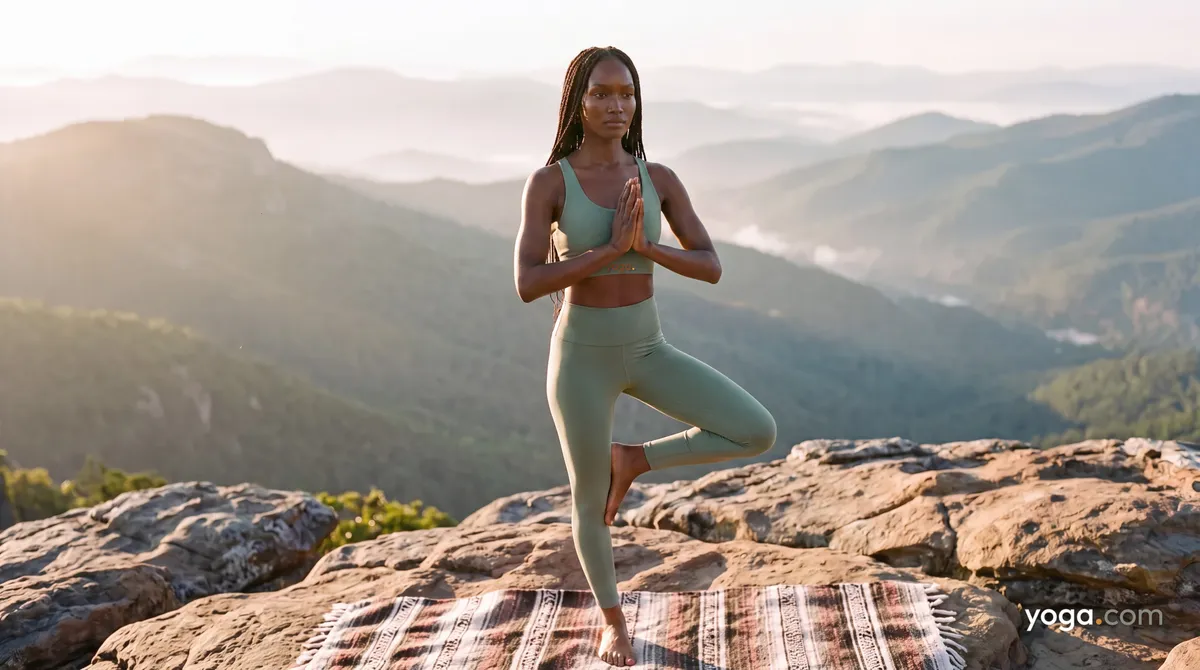
Your mat is one of the best places to practice dharmic awareness, because yoga gives you immediate feedback. When you move with integrity - honoring where your body actually is today - you are practicing dharma. When you push past your real edge to impress someone or perform a pose your body is not ready for, you are not. The mat does not lie, and neither does your body.
Try this in your next practice: Before you begin, set an intention to act in accordance with your truest self - on the mat and afterward - and notice what that intention shifts in the way you move and breathe. Mountain Pose (Tadasana) is a good anchor for this, because there is nowhere to hide in it; everything about the pose asks you to be exactly, fully present. Returning to it during your practice can remind you of the intention you set at the beginning.
Before You Go
Dharma is one of those ideas that rewards a lifetime of sitting with, and you don't need to wait a lifetime to let it be useful. Start simply: act with integrity, honor your own nature, and show up fully in the roles that are genuinely yours. Dharma does not ask you to be perfect or flashy, or to have everything figured out before you begin. It only asks you to be true to who you are and what you are here to do.