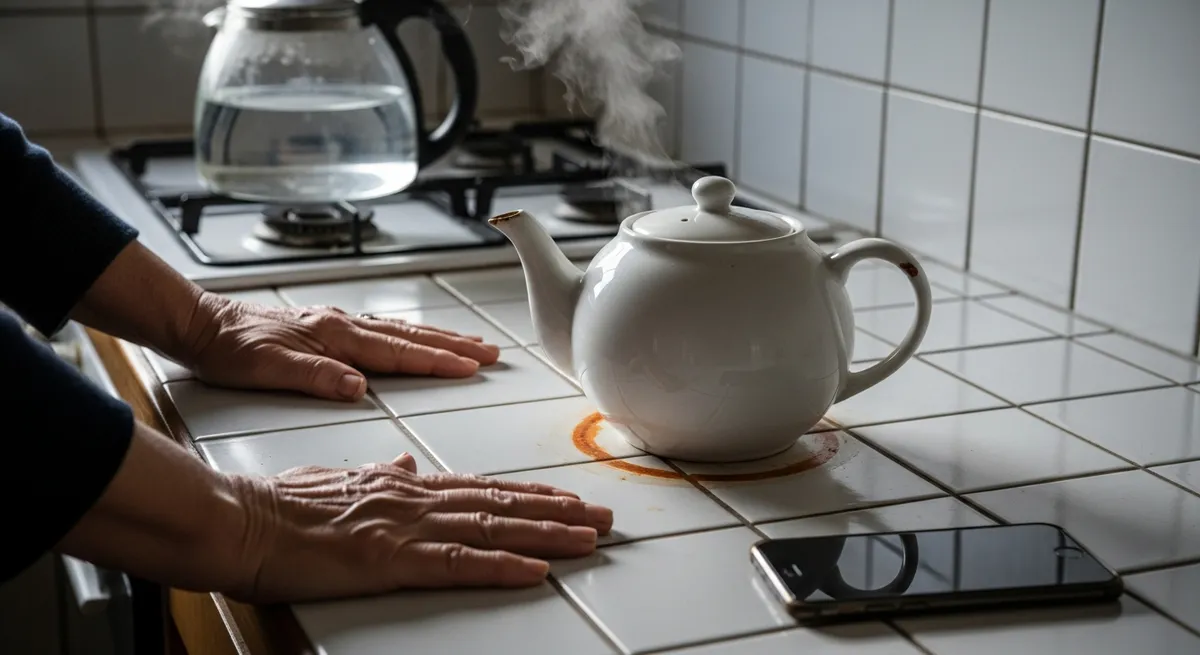
The teapot had a chip on the spout that my grandmother had covered with a piece of electrical tape, and when she died I kept it not because it was beautiful but because of what it meant to watch her fill it — slowly, deliberately, like nothing else in the world required her attention. That quality of presence is exactly what a tea ritual offers you. Not perfection. Just a pause.
Why "ritual" matters more than the tea itself
There's a difference between gulping something hot over your laptop and actually making tea as a practice. The ritual — the warming of the cup, the measured scoop, the waiting — is where the real shift happens.
Research backs this up. A small study on a simplified tea ceremony found that mean state anxiety scores dropped measurably after just a 20-minute session, and 9 out of 10 participants described sensory calmness as a key theme in their feedback. Twenty minutes. That's shorter than most lunch breaks.
You don't need a Japanese tea house or a flawless ceramic set. You need intention and a little time.
The health case for drinking tea daily
Before we talk ritual, it is worth knowing that the cup itself carries real benefits and so you should understand these benefits because they give you a good reason to make tea a daily habit — when you drink tea consistently and mindfully.
Most of these benefits appear with two to four daily cups of green, black, or oolong tea. So you should aim for two to four cups of tea each day to get the most benefit from your tea habit. One important caveat: drinking tea at temperatures above 55–60°C has been associated with higher risks of esophageal and gastric cancer, and so you should let your cup cool for a few minutes before sipping because hot tea can be harmful to your body. Always speak with your doctor if you have specific health concerns.
How to build your own tea ritual (step by step)
You don't have to follow the Japanese chado tradition to the letter. What matters is creating a container — a small, reliable sequence that tells your nervous system: this is a pause.
Pairing your tea ritual with a short yoga or breathwork practice
The ritual does not have to live in isolation. The simple fact is that many practitioners find that a few minutes of gentle movement before or after tea deepens the sense of arrival and helps your mind truly settle into the moment. Keep in mind that you do not need a full yoga session to feel this benefit — even a small movement practice can make a real difference.
Before you brew
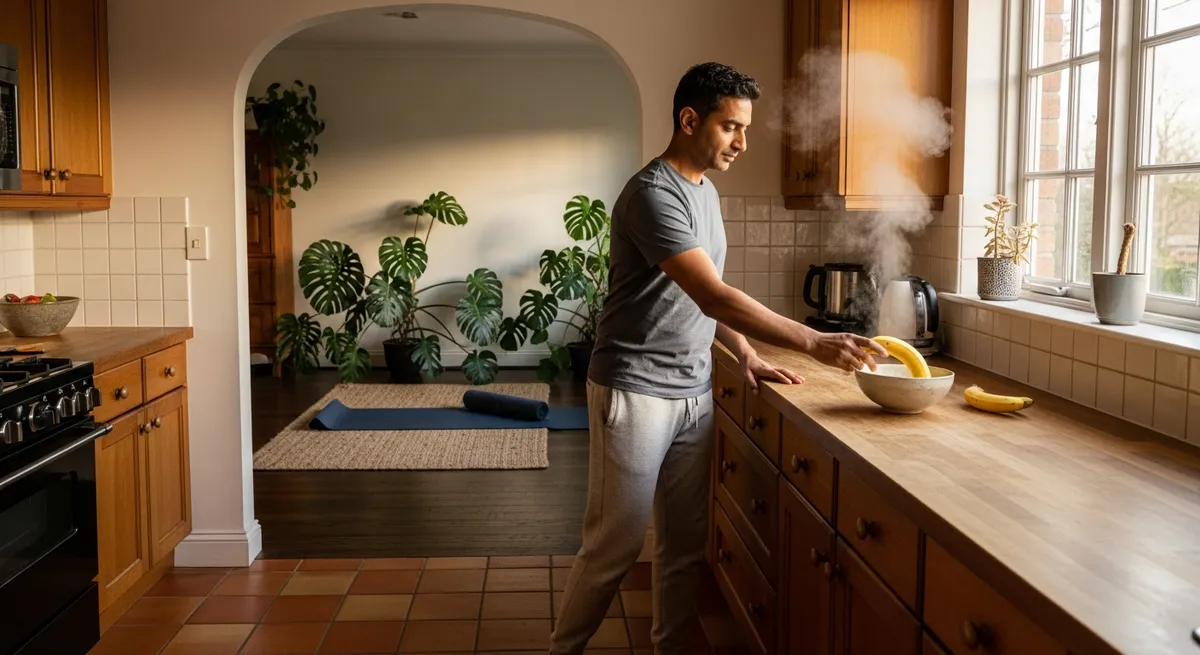
Try two or three rounds of Cat-Cow (Marjaryasana-Bitilasana) at the kitchen counter, or simply stand in Mountain Pose (Tadasana) for five breaths with your eyes closed. You are not doing a full practice — you are transitioning. The purpose of this short movement is to help your body shift out of whatever you were doing before and so your mind becomes more ready to be present with your tea.
While you wait for the steep
Sit in Easy Pose (Sukhasana) on a cushion, with your hands resting on your knees. Practice box breathing: inhale for four counts, hold for four, exhale for four, hold for four. Repeat this pattern three times. On top of that, because you are pairing the breathwork with the waiting time, you are not adding anything extra to your routine and so by the time your timer goes off, you will already feel quieter.
After your last sip
End with two minutes in Child's Pose (Balasana) — forehead to the floor, arms extended or resting by your sides. Let the warmth of the tea and the stillness of the pose settle together. Keep in mind that this final step is the integration, and the integration is the point. Your body and your mind both need this short moment to absorb what the ritual has given you.
A note on matcha and the L-theanine myth
You have probably heard that matcha's L-theanine delivers calm focus. Matcha does contain the compound, but it is worth being honest about the dose. A standard bowl of matcha contains roughly 20–40mg of L-theanine, substantially lower than the 200–400mg doses used in clinical trials that showed anxiolytic effects. The simple fact is that the L-theanine amount in your cup is much smaller than the amount researchers actually tested.
Keep in mind that this does not mean matcha is not worth drinking. What it means is that the ritual around matcha likely contributes as much to how you feel as the chemistry inside the matcha does, and so you should embrace both the habit and the enjoyment because both things matter. Just do not let supplement-marketing language oversell the cup to you.
What to do when the ritual falls apart
You'll miss days. You'll rush the steep. You'll drink it cold while answering emails. That's life, and it doesn't mean you've failed at slowing down.
The practice isn't about perfect execution. It's about returning — to the kettle, to the breath, to the chipped teapot passed down from someone you loved. Come back whenever you can. The ritual will be there.
The bottom line
A tea ritual won't solve a stressful week, but it can give you one reliable moment of presence inside it. The research on both the calming effects of the ceremony and the long-term health benefits of daily tea drinking points in the same encouraging direction: this small, ancient practice is worth your time. Start today — one cup, one breath, five minutes of actually being where you are.