
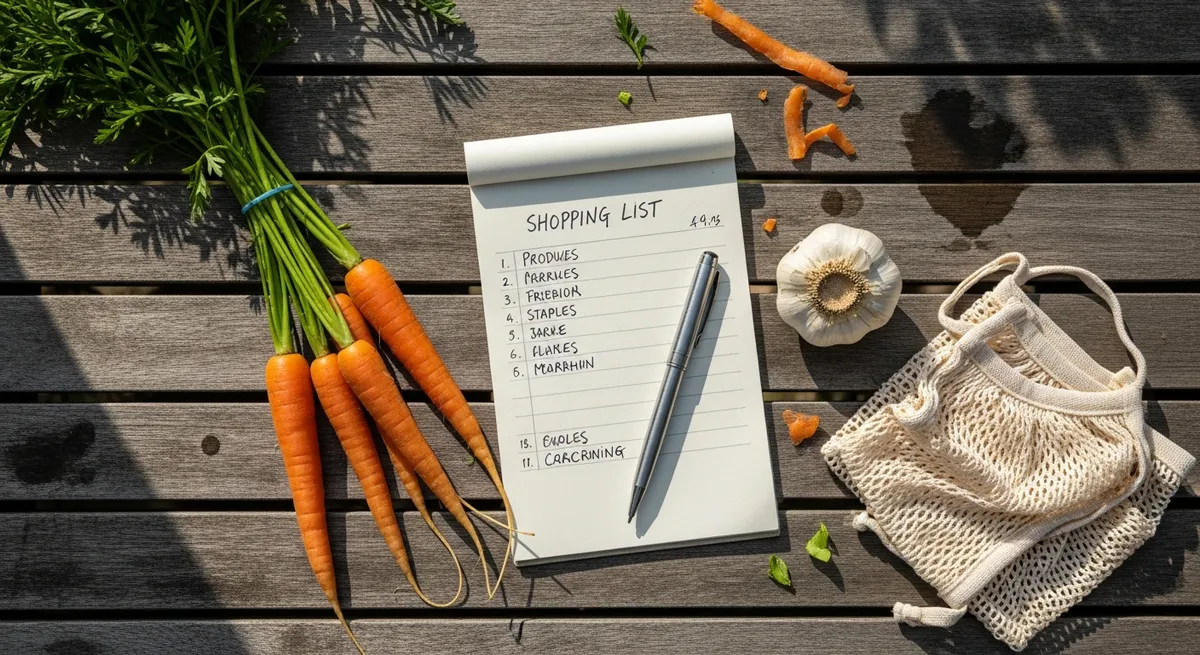
You've done it — walked into the store for three things and walked out with thirty. It happens to almost everyone, and it costs real money, fills your fridge with food you won't finish, and leaves you feeling vaguely defeated at checkout. Mindful grocery shopping is the practice of bringing intention to the entire process — from writing your list at home to reading labels in the aisle — so that what lands in your cart actually serves you.
Why This Matters More Than You Might Think
Impulse buying is baked into the store experience. Endcaps, sale signs, and strategic product placement are all engineered to pull things into your cart. Research backs this up: impulse purchases account for between 40 and 80 percent of all buying decisions, and 40 percent of consumers spend more than planned in physical stores, compared to 25 percent when shopping online.
The ripple effect goes beyond your wallet. Food waste in the United States is estimated at 30–40 percent of the entire food supply, and consumers contribute to that loss when they buy or cook more than they need and throw out the extras. Shopping with more awareness is one of the most direct things you can do about both problems.
Before You Leave the House: Build a Real Plan
This is where mindful grocery shopping actually begins — not in the store, but in your kitchen. The simple fact is that your plan should start at home, before you ever walk through the store doors. Walk through your fridge, freezer, and pantry first. Note what is already there, what is close to expiring, and what gaps genuinely need filling.
Then write your list. Not as a vague memo, but as a meal-by-meal plan for the week and so your list becomes more than just a memory aid because it is a real commitment to what you actually need. Keep in mind that a written list keeps you focused and helps you avoid picking up things you do not really need.
Eat First, Shop Second
This one is simple and genuinely powerful. The simple fact is that shopping hungry makes everything look appealing and it especially makes the things that were not on your list look very appealing, so you end up putting items in your cart that you never planned to buy. A small meal or snack before you go keeps your decisions grounded in what you need, not what your stomach is shouting at you in the chip aisle. Keep in mind that eating before you shop is one of the easiest ways to protect your budget and your list at the same time.
It is not a complicated strategy. The strategy just works, every time, because your brain makes better shopping decisions when your hunger is not in control of your choices.
In the Store: How to Stay Intentional
Stick to Your List (With One Exception)
Your list is your anchor. When something tempts you off-plan, pause and ask: Does this fit a meal I'm actually making this week? If the answer is no, put it back. The simple fact is, your list exists to protect your budget and your goals, so you should respect it. The one exception worth making is fresh produce that looks exceptional and can substitute for something on your list — a ripe mango instead of the berries you planned on, for example.
Slow Down in Front of Labels
Packaged food labels reward a few seconds of attention. Here's a quick sequence that works:
Comparing two similar products side by side takes about fifteen seconds and often reveals a clear winner. Keep in mind that this habit of comparing products is a simple and practical thing you can do every time you shop and so it is worth making it a regular part of your routine.
Watch for Hidden Added Sugars
Added sugars appear under many names on ingredient lists — agave nectar, cane crystals, dextrose, malt syrup, invert sugar, crystalline fructose, and more. When several of these names appear in the first five ingredients, the product is heavily sweetened regardless of what the front of the package claims. The simple fact is, a product can look healthy on the outside and still be full of added sugar, so you need to check the ingredient list yourself.
Don't Skip Produce and Frozen Sections
Whole foods — vegetables, fruit, plain grains, legumes — rarely have ingredient lists at all, which is rather the point. Frozen vegetables are harvested and frozen quickly, locking in nutrients, and frozen vegetables won't wilt in your crisper drawer by Thursday. A bag of frozen spinach, a can of plain black beans, and a piece of fresh fruit together cost less than most processed snack items and deliver far more nutritional value. On top of that, buying whole foods and frozen vegetables is one of the easiest ways to get more nutrition for your money.
Mindful shopping doesn't mean buying expensive health food or going organic across the board. Mindful shopping means making better choices with the money you were already spending.
Rethink the "Deal"
A sale price is not a reason to buy food you won't eat. If it's not on your list and it doesn't fit your week's meals, a discount just means you're wasting money more efficiently. Food loss at the retail and consumer level corresponded to approximately 133 billion pounds and $161 billion worth of food in 2010. Uneaten "deals" are a real part of that number.
Buy what you'll use. That's the whole calculation.
After the Store: Close the Loop
Mindful grocery shopping extends five minutes past checkout. The simple fact is that what you do when you get home matters just as much as what you do in the store. When you get home:
This loop is how the habit actually improves over time and each week gets a little more efficient and a little less wasteful because you are always learning from the week before. Keep in mind that repeating this process consistently is what makes the difference. On top of that, the loop gives you a real chance to notice your patterns and so your list gets better and better the more you pay attention to what you actually use. Each week you do this, your grocery shopping becomes a little more careful and a little more effective.
A Note on Online vs. In-Store Shopping
Online grocery ordering has grown a lot — especially since 2020, when 72 percent of survey participants had to alter their grocery shopping habits due to the COVID-19 pandemic. And 63 percent of those consumers said the changes would stick long-term. The simple fact is that online shopping does reduce some impulse buying, but the same mindful principles still apply and you should keep them in mind no matter where you shop. Keep in mind that you need to shop from a list, review labels where available, and not add items just because the items are promoted on the homepage. On top of that, online stores use their own version of product placement and so you can still end up spending more than you planned if you are not careful.
Whether you are shopping in-store or shopping online, intentionality is the practice and intentionality is what keeps your grocery habits on track.
Wrapping It Up
Mindful grocery shopping is genuinely one of the most practical wellness habits you can build and it happens every single week and so its effects compound over time because small actions repeated consistently add up to real change. The simple fact is that a list, a full stomach, a few seconds on a nutrition label, and an honest look at what you are actually buying are all it takes. Keep in mind that these steps are small and repeatable, and that is exactly what makes mindful grocery shopping so powerful. Your wallet, your pantry, and your overall wellbeing will all feel the difference when you make mindful grocery shopping a regular habit.
If you have specific health conditions that affect your dietary needs, consult a registered dietitian or your healthcare provider for personalized guidance.