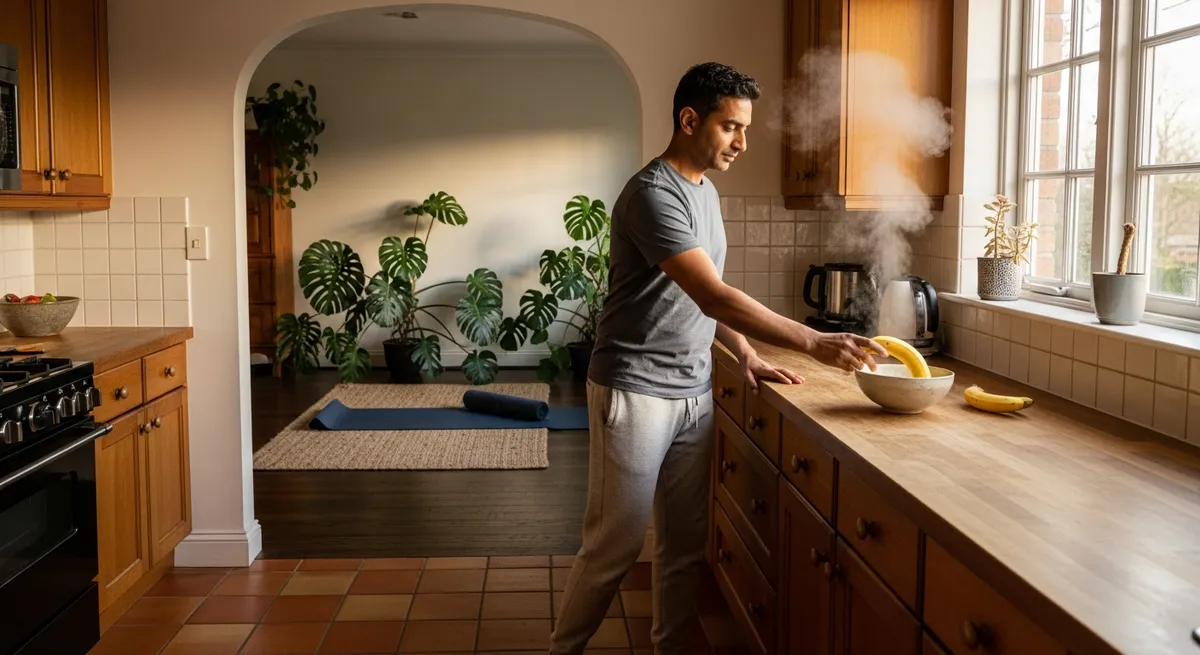
You walk through the door after a long day, open the fridge, and feel your shoulders tense up before you've even touched a pan. Sound familiar? The kitchen doesn't have to feel like that. With a few intentional habits — many of which will feel instantly recognizable if you practice yoga — you can turn cooking from a daily obligation into something that actually restores you.
Why the Kitchen Deserves the Same Intention as Your Mat
In yoga philosophy, the concept of sattva — roughly, clarity and purity — extends beyond your practice space and into how you nourish yourself. A sattvic approach to cooking means bringing the same calm attention to your cutting board that you'd bring to a meditation cushion.
That's not just philosophy. Research highlighted by Greater Good at Berkeley found that people experienced genuine flow states while cooking during lockdown — and a study of 412 professional cooks confirmed that flow, when it shows up in the kitchen, is genuinely good for well-being. Flow isn't reserved for the mat. It's available at the stove, too.
Set Up Your Space Before You Start
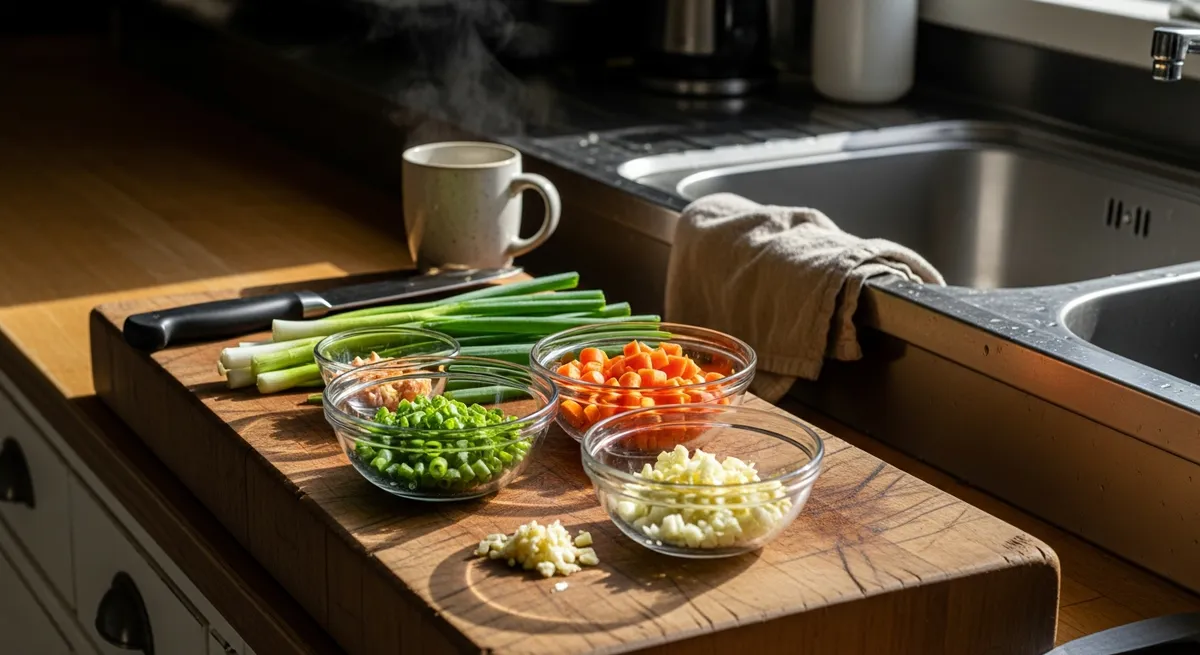
Professional kitchens run on a principle called mise en place — French for "everything in its place." Before the heat goes on, everything is chopped, measured, and within reach. Nothing is hunted for mid-cook.
You can bring this home right now. Before you turn on the burner:
This is the cooking equivalent of laying out your mat and setting your props before a session. The preparation is the practice. Once everything is in front of you, you're no longer scrambling — you're simply cooking.
Choose Recipes That Match Where You Are Right Now
Kitchen stress often comes from attempting something that is genuinely above your current skill level and then you feel frustrated when it does not go smoothly because the challenge is simply too far ahead of where you are right now. The simple fact is that this is not a character flaw. It is a mismatch between the challenge and the skill.
Cooking ability spans several areas: planning, perceptual judgment, technique, and timing. You do not need to be strong in all of these areas at once. Start with recipes that feel almost too easy for you. Build your confidence there first, and keep in mind that confidence is what allows you to move forward to harder recipes later.
If weeknight simplicity is your goal, it helps to know that full, satisfying meals can come together in under an hour with 11 or fewer ingredients and no culinary degree is required for this. On top of that, simple cooking is not a compromise or a lesser option. Simple is a real skill, and simple is something you should take seriously.
Plan Ahead to Protect Your Evening Energy
Opening the fridge at 6 p.m. with no plan is one of the most reliable ways to make cooking feel stressful. The decision fatigue alone is exhausting before you've lifted a knife.
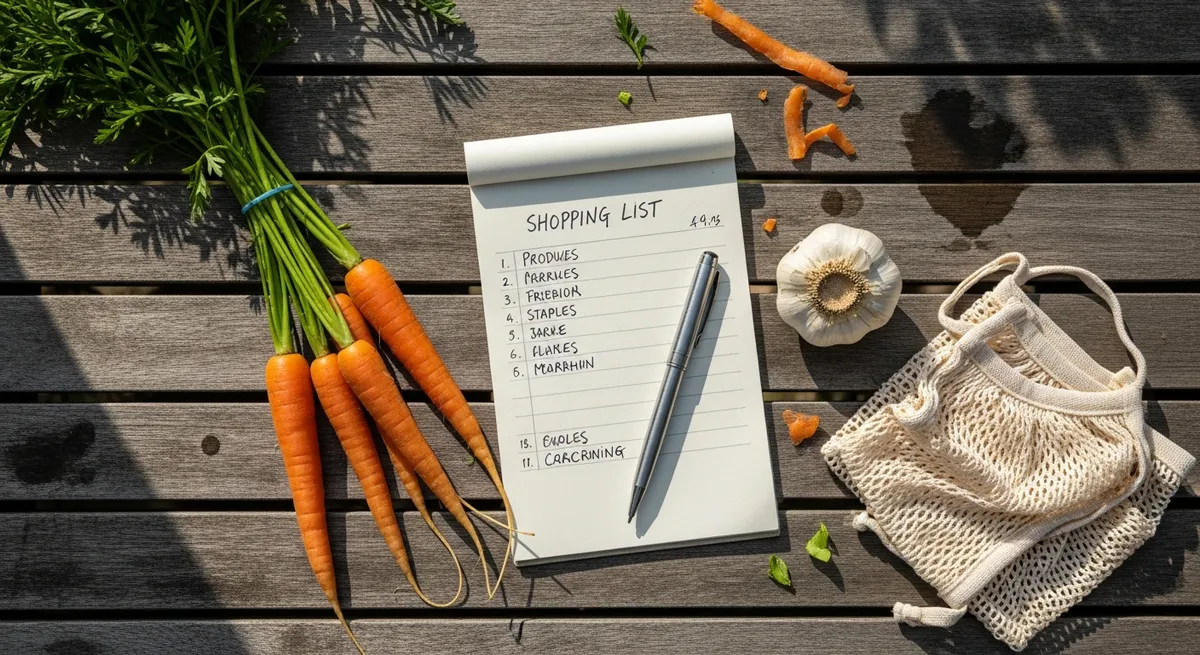
You don't need a color-coded spreadsheet. Even a loose list of five dinners written on Sunday morning removes that daily friction. Americans who cook spend an average of about 53 minutes per day on food preparation — a small, Sunday planning session can make that daily time feel far less draining.
A simple weekly rhythm might look like:
Clean as You Go — Really
A cluttered counter makes the entire cooking experience feel more chaotic than it actually is. The simple fact is that the visual noise is real, and the visual noise compounds whatever stress you walked in with before you even started cooking.
The fix is simple and you can start doing it today. Use pockets of downtime during cooking — while the onions soften, while the pasta water heats — to rinse used bowls, wipe surfaces, and toss packaging and so by the time dinner is plated you are already halfway done with cleanup because you used your time well. Keep in mind that this shift alone changes how the kitchen feels for you and makes the whole experience more manageable.
Let Cooking Be a Connector, Not Just a Task
One thing that makes cooking genuinely meaningful — not just functional — is the sharing. Across 142 countries, people who regularly eat with others report feeling happier, more supported, and less lonely. Cooking for someone, or alongside someone, changes the emotional texture of the whole experience.
If you live alone or eat most meals solo, that's worth acknowledging — one in four Americans ate every meal alone on a single day in 2023, a 53% increase since 2003. Even a phone call during prep, or a shared meal once a week, can shift the kitchen from a place of isolation to one of connection.
Close the Kitchen With a Small Ritual
How you end your time in the kitchen matters as much as how you begin. Leaving dishes in the sink and crumbs on the stove means tomorrow morning starts with yesterday's mess waiting for you.
Build a short end-of-evening ritual:
That last one sounds small. It isn't. It marks the transition — from doing to resting — the same way Savasana (Corpse Pose) closes a physical practice. The kitchen is done for the day. You can let it go.
The Bottom Line
The calm kitchen is not a personality type and it is not a perfectly styled space. The simple fact is, the calm kitchen is a set of small, repeatable habits that you can build over time. Keep in mind that these habits are not complicated at all. The habits are: prepare before you cook, plan ahead, clean as you go, match your recipes to your energy, and close the space with intention. On top of that, these are the same principles of presence and preparation that make a yoga practice sustainable and so they work just as well when you apply them to making dinner. The key point is worth restating in plain words because it matters: you do not need to change your whole personality or your whole kitchen to feel calmer while you cook. You just need to start with one habit and let the rest follow naturally from there.