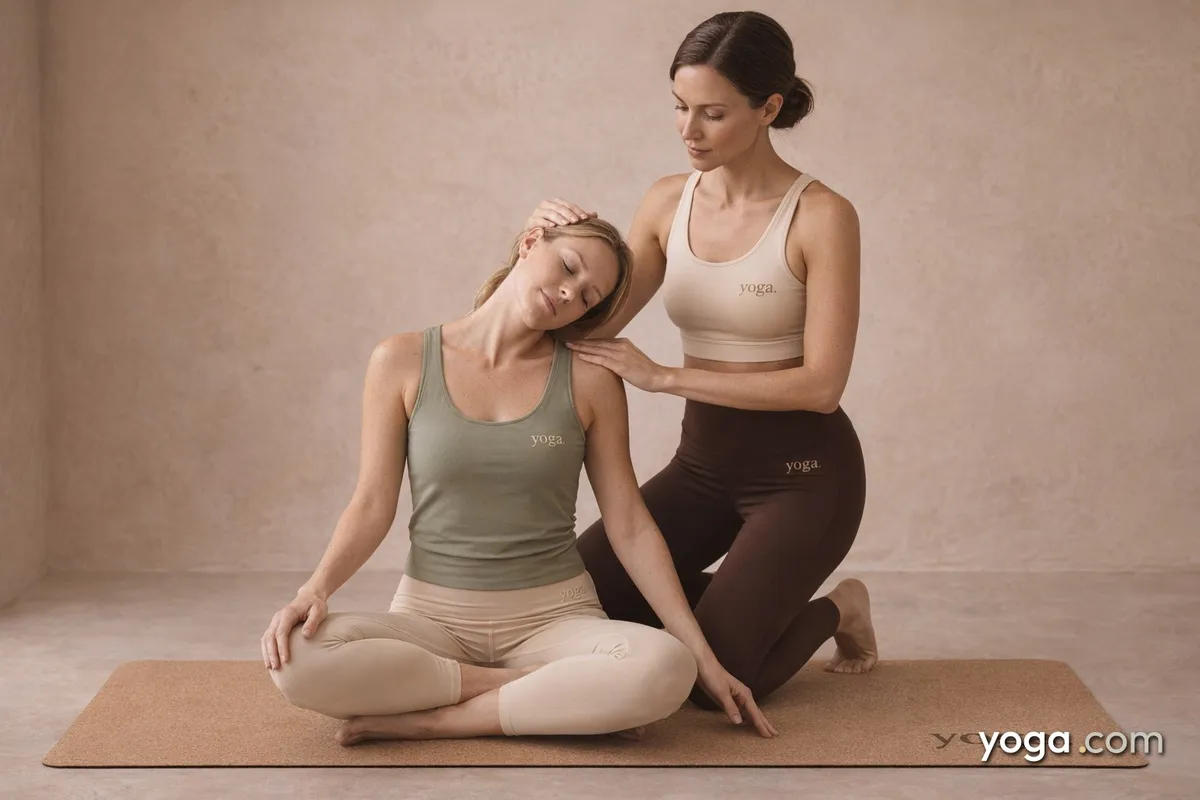
Yoga for neck and shoulder tension is exactly what it sounds like: simple poses and breath work aimed at the tight, achy muscles between the base of your skull and your shoulder blades. That stiffness is one of the most common reasons people unroll a mat for the first time, and with good reason. A consistent, thoughtful practice can do more than offer temporary relief. It can help retrain how your body holds itself, day after day.
Safety First: Read This Before You Begin
Talk to your doctor or physical therapist before starting this practice if you have a diagnosed cervical disc herniation, cervical stenosis, a history of neck injury or surgery, shoulder impingement, rotator cuff damage, osteoporosis, or any condition that causes numbness, tingling, or weakness in your arms or hands.
Stop immediately and seek medical advice if you feel sharp or shooting pain, tingling or numbness radiating down your arm, sudden intense headache, dizziness, or nausea during any pose. These are not sensations to push through.
General wellness yoga is not a substitute for professional medical treatment. If you're unsure whether this practice is appropriate for you, check with a qualified healthcare provider first.
Why Your Neck and Shoulders Hold So Much Tension
Two big culprits - screen posture and stress - tend to work together. When you hunch over a laptop or phone, the muscles at the back of your neck have to work overtime to support a head that can weigh 10-12 pounds. Add psychological stress into the mix, and your body's threat-response system kicks in: shoulders rise, jaw tightens, breath shallows.
There's real physiology behind that pattern. Research suggests yoga may help relieve pain by downregulating the hypothalamic - pituitary - adrenal axis and the sympathetic nervous system - the very systems that keep your body in a low-level stress brace. That's part of why yoga's combination of movement, breathwork, and relaxation can feel so different from simply stretching at your desk.
What the Evidence Actually Says
The research is genuinely encouraging - with some honest caveats worth knowing.
- A 2019 meta-analysis of 10 randomized controlled trials (686 participants) found that yoga was associated with significant improvements in neck pain intensity, functional disability, cervical range of motion, quality of life, and mood compared to control groups.
- A 2016 systematic review of three randomized controlled trials found that neck pain intensity and functional disability were significantly lower in yoga groups than in control groups - though the combined sample was modest at 184 participants.
- A systematic review of six RCTs (570 patients) found strong evidence for the short-term effectiveness of Iyengar yoga for neck pain, but little evidence for long-term effectiveness - a reminder that consistency matters.
- A 2023 single-blind RCT with 80 office workers found statistically significant decreases in pain and improvements in neck muscle flexibility after just four weeks of yoga, alongside similar gains from other movement interventions.
The takeaway: yoga is associated with meaningful relief - these are not claims of cure. Most studies are short-term and observational in nature. Movement and gentle strengthening together appear to outperform passive stretching alone, which is reflected in the sequence below.
A Starter Sequence for Neck and Shoulder Relief
Practice this sequence 3-5 times per week for best results. Move slowly, breathe steadily, and never force range of motion. A mild sensation of stretch is fine; pain is not.
1. Gentle Neck Rotations
Sit tall in a chair or cross-legged on the floor. On an exhale, slowly drop your right ear toward your right shoulder - just to your natural end range, no forcing. Inhale back to center, then exhale left. Follow with slow half-circles: chin down to chest, roll to one side, back to center. Never roll the head backward in a full circle; this compresses the cervical spine.
2. Thread-the-Needle (Parsva Balasana)
Begin on hands and knees in Table Top (Bharmanasana). On an exhale, slide your right arm along the floor under your left arm, letting your right shoulder and temple rest on the mat. Your left hand can stay on the floor or reach long overhead. Hold 5-8 breaths, feeling the upper back and shoulder open. Press through your left palm to come back up, then switch sides.
3. Eagle Arms (Garudasana Arms)
Sit or stand tall. Extend both arms forward, then cross your right arm under your left at the elbow. Bend both elbows and either wrap the forearms together or bring the backs of the hands to touch. Lift the elbows to shoulder height and gently draw them away from your face - you'll feel the space between your shoulder blades widen. Hold 5 breaths, then switch which arm is on top. This is one of the most effective poses for releasing rhomboid and trapezius tension.
4. Supported Fish (Matsyasana, supported variation)
Place a folded blanket or a yoga block on its lowest setting between your shoulder blades (horizontally, at mid-back level). Lie back over it with your legs extended or knees bent, arms resting at your sides, palms up. Let gravity do the work - there's no muscular effort here. Stay 1-3 minutes and breathe fully into the chest. This gentle backbend counteracts the forward-rounding that strains your neck all day. If you feel any pinching or sharp sensation in your neck, lower the prop or remove it entirely.
The Case for Strengthening - Not Just Stretching
Passive stretching feels good in the moment, but without building strength in the deep neck flexors, mid-back, and shoulder stabilizers, tension often returns within hours. Think of it this way: a muscle that's chronically overworked needs both release and resilience.
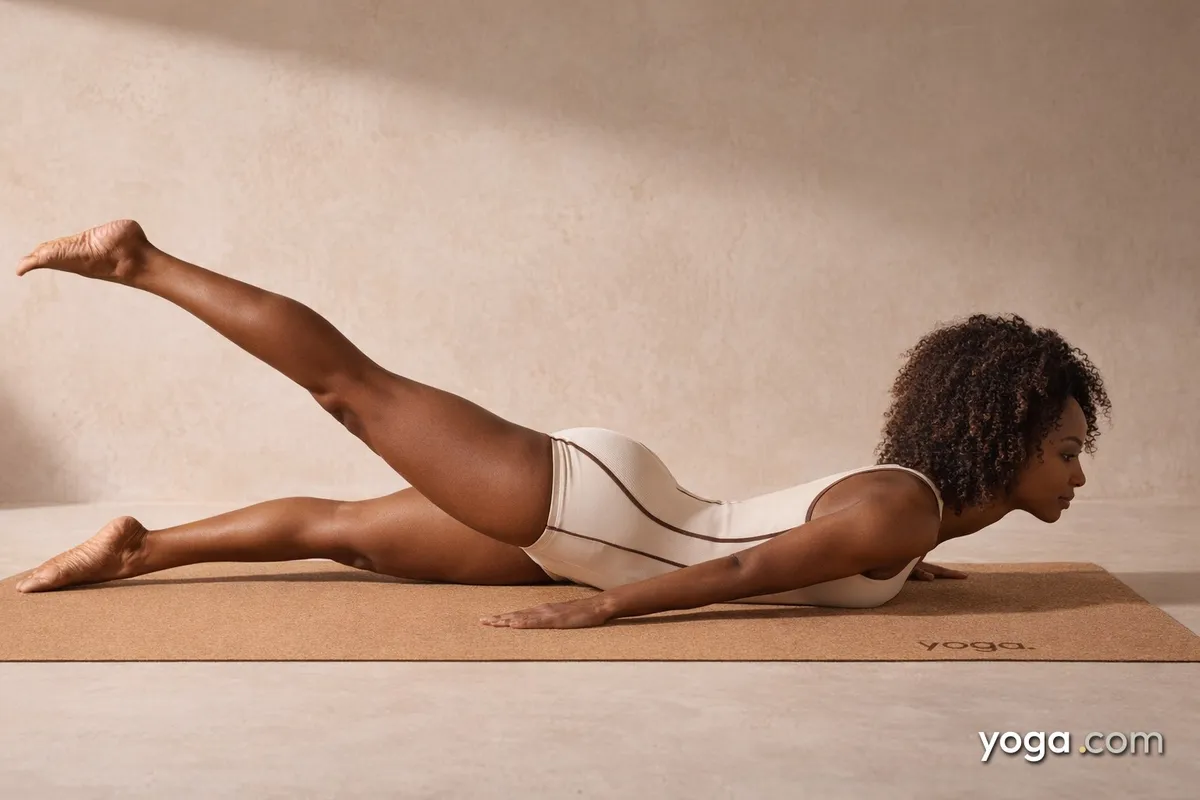
Poses like Eagle Arms and even a well-held Thread-the-Needle engage the muscles around the shoulder girdle. As your practice deepens, adding poses that load the upper back gently - like Locust Pose (Salabhasana) with soft arms - builds the endurance that keeps your posture honest between sessions.
What to Avoid (Contraindications)
- Deep neck circles or full cervical hyperextension - compresses vertebrae and can aggravate disc issues.
- Plow Pose (Halasana) and Shoulderstand (Sarvangasana) - extreme cervical flexion under load; avoid these entirely if you have any neck condition until cleared by a professional.
- High-volume Chaturanga Dandasana (Four-Limbed Staff Pose) - repeated lowering with poor alignment creates significant shoulder impingement risk. If you're working through shoulder pain, substitute Knees-Chest-Chin (Ashtanga Namaskara) or simply lower all the way to the floor.
- Any pose that reproduces tingling, numbness, or electric sensations down the arm - this can indicate nerve root irritation. Back off immediately.
Headache Red Flags: When to Stop and Seek Help Now
Some neck tension headaches are familiar and benign. Others are not. Stop your practice and seek emergency care if you experience a sudden "thunderclap" headache (worst of your life, onset in seconds), headache with fever and stiff neck, headache with vision changes or confusion, or any neurological symptom you've never had before.
Persistent headaches that worsen with yoga - rather than improve - are worth discussing with your doctor before continuing.
When to See a Professional
Yoga is a wonderful complement to care, but it's not a diagnosis. See a doctor, physical therapist, or orthopedic specialist if:
- You have tingling, numbness, or weakness in one or both arms - this may indicate nerve involvement.
- Your pain is severe, worsening, or has lasted more than six weeks without improvement.
- You've had a recent injury, fall, or accident involving your neck or shoulder.
- Pain disrupts your sleep consistently.
- You're unsure of the underlying cause of your pain.
A physical therapist can also help you identify specific muscle imbalances and give you a targeted program to work alongside your yoga for neck and shoulders.
Building a Practice That Sticks
Start with just 10-15 minutes a day. The four-pose sequence above can be done at a desk break, before bed, or first thing in the morning. Consistency over intensity is the rule here, and gentle daily movement will serve your neck and shoulders far better than an ambitious one-off session, so you do not need to push hard to see real results.
Notice what makes tension worse between sessions: extended phone-scrolling with your chin dropped, stress-holding your breath, sleeping without neck support. Keep in mind that small environmental changes stack up and these small changes can make a bigger difference than you might expect. On top of that, yoga teaches you to notice these habits, and that awareness alone is therapeutic. The more you pay attention to your own patterns, the better you can protect your neck and shoulders day to day.
Keeping the Relief Going
Neck and shoulder tension rarely has a single cause, and neck and shoulder tension rarely has a single fix. Yoga offers a layered approach that releases tight tissue, builds supporting strength, calms the nervous system, and perhaps most valuably helps you tune in to your body before tension becomes pain and so you can catch small problems before they grow into bigger ones. Keep in mind that starting gently and staying consistent are both very important, because your body needs time to respond and adapt to new movement patterns. On top of that, do not hesitate to bring in a professional whenever you feel you need one. Your neck will thank you for the patience, and your patience will make the whole process work better for you.