Mid-afternoon, an office worker catches her reflection in a window: shoulders rounded, chin jutting forward, back curved like a question mark. She straightens up, then slumps again by the next email. Yoga for better posture is a genuinely effective way out of that loop - as long as you treat it as a strengthening practice first, not just a stretching session.
This guide cuts through the noise on what actually changes your carriage, which poses earn their place in a posture-focused routine, and what to skip or modify if you're dealing with pain or injury.
Safety first - please read this before you begin.
If you have a diagnosed spinal condition (herniated disc, spinal stenosis, spondylolisthesis, osteoporosis), recent back or neck surgery, sciatica, hypermobility syndrome, or any injury that causes radiating pain, numbness, or tingling -
talk to your doctor or physical therapist before starting any yoga practice
. The guidance here is general and educational, not a substitute for individual medical advice.
Why "Perfect Posture" Is a Myth
There is no single correct position your body must hold all day. Research increasingly supports the idea that postural variability - moving regularly between different positions - matters more than achieving any fixed ideal. "Sit up straight" is well-intentioned but incomplete advice.
What does create real problems is spending hours locked in one position, especially one that loads certain muscles and joints heavily. A large metropolitan survey found that among nearly 1,430 employees, 42% reported head or neck pain and 34% reported lower back pain in the past 12 months - patterns closely associated with sustained static postures at work. That association isn't proof of cause and effect, but it's a compelling reason to take postural habits seriously.
The goal of a posture-focused yoga practice isn't to freeze yourself into a perfect shape. It's to build the strength, mobility, and body awareness to move well - and to recover easily when you inevitably slump.
What Actually Changes Your Carriage
Three things move the needle on posture. Stretching alone addresses only one of them.
1. Back-body strengthening
Your erector spinae, rhomboids, lower trapezius, and glutes have to work against gravity all day. When they're weak, everything caves forward. Poses that ask you to actively lift and hold - rather than just fold - are the ones building that capacity.
2. Thoracic extension
The mid-back (thoracic spine) is the region most prone to rounding. Most of us get plenty of thoracic flexion just by existing with phones and laptops. What's missing is the opposite: extension and rotation through that segment. Backbend-family poses directly address this.
3. Hip flexor length and hip mobility
Tight hip flexors tilt the pelvis forward, which increases lumbar lordosis and makes it nearly impossible to find a neutral lower back. Lengthening the front of the hip is genuinely useful - it just shouldn't be your whole strategy. For a deeper dive on what neutral means in practice, see our guide to neutral spine in yoga.
What the Evidence Actually Says
A 2018 review by the Agency for Healthcare Research and Quality evaluated eight clinical trials involving 1,466 participants and found that yoga improved pain and function in people with low-back pain in both the short term (1-6 months) and intermediate term (6-12 months). These results are meaningful and real, and it is important to understand that the improvement the review found was specifically about pain and function in your back, not about posture aesthetics or how you look.
Yoga is also recognized by the National Institutes of Health as a Complementary and Alternative Medicine practice associated with enhanced muscular strength and flexibility, reduced chronic pain, and improved overall well-being. Keep in mind that the phrase "associated with" is the correct framing here, because observational research shows a connection between yoga and these benefits and so it does not promise guaranteed outcomes for every individual person who practices yoga.
On the evidence, yoga for posture-related discomfort and the pain that comes with it is a reasonable and well-supported tool. On top of that, yoga is not a guaranteed fix on its own, and yoga works best when you combine yoga alongside general movement and professional guidance where your situation needs it, and - per ACSM position guidelines - at least two days per week of resistance training for your major muscle groups.
A Starter Routine: Strength First, Then Lengthen
Do this sequence in order. The strengthening poses come first, while your nervous system is fresh. Holds are suggestions - adjust for your body.
- Cat-Cow (Marjaryasana-Bitilasana) - 8-10 slow breath cycles. Warms the spine and establishes the connection between breath and movement. Never force range; find what feels like gentle traction.
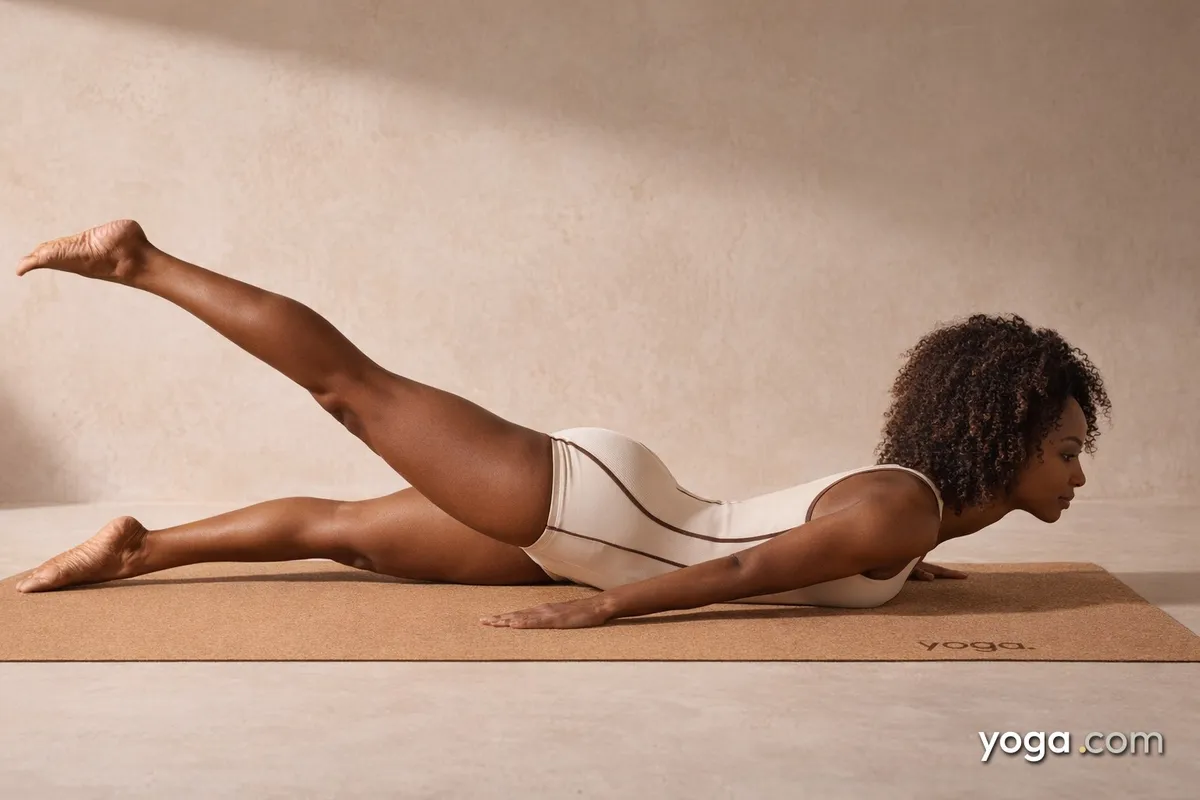
- Locust Pose (Salabhasana) - 3 holds of 5 breaths each. This is your primary back-body strengthener. Lie on your belly, and on an inhale lift your chest, arms, and legs. Keep your gaze down to protect the neck.
- Bridge Pose (Setu Bandha Sarvangasana) - 5 breaths, 3 rounds. Glutes, hamstrings, and spinal extensors all fire here. Press evenly through both feet; avoid gripping your jaw or neck.
- Thread the Needle (Parsva Balasana) - 5 breaths per side. Provides gentle thoracic rotation and opens the backs of the shoulders without demanding lumbar flexibility.
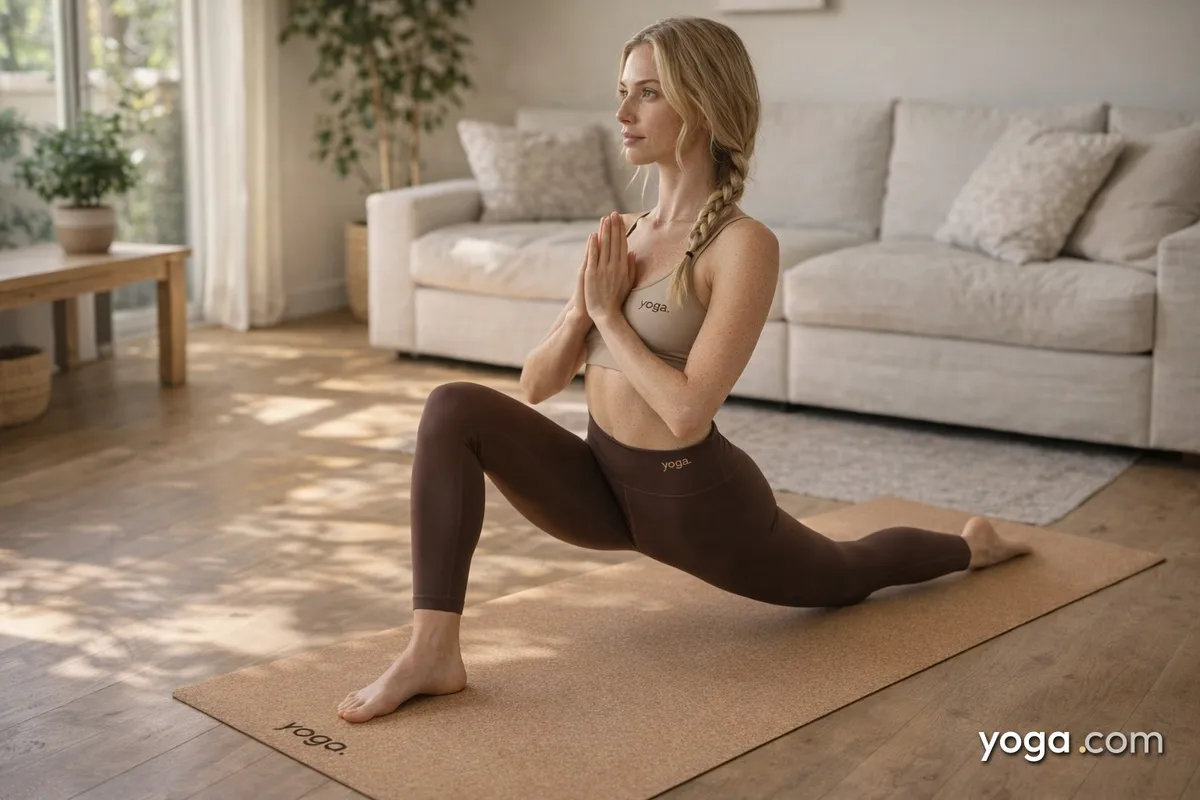
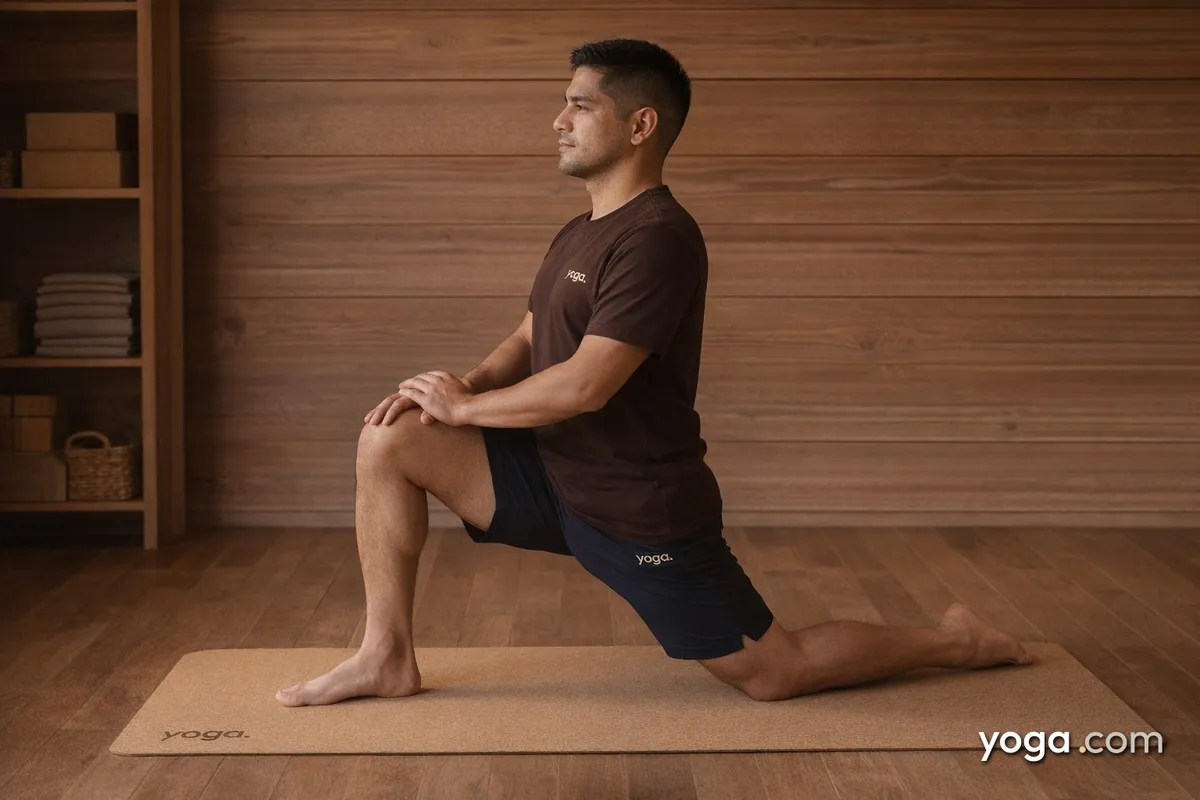
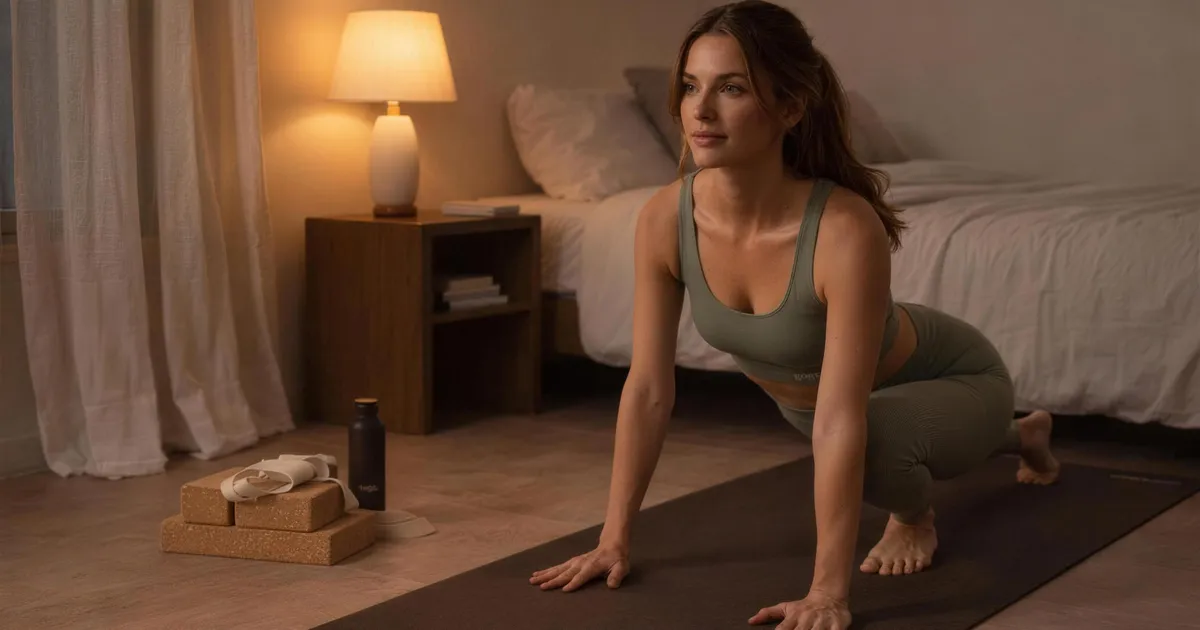
- Low Lunge (Anjaneyasana) - 8 breaths per side. The hip flexor lengthener. Keep your front knee stacked over your ankle and actively draw your lower belly up rather than letting the low back collapse.
- Supported Fish Pose (Matsyasana variation) - place a rolled blanket or bolster under your mid-back, let your arms relax wide, and stay 1-2 minutes. Passively opens the chest and thoracic spine. Let gravity do the work.
- Mountain Pose (Tadasana) - 10 slow breaths to close. Feel the effects of the practice. Notice what has shifted in how you're standing.
If you spend most of your day at a desk, we have a dedicated short practice worth bookmarking: yoga for desk workers.
Contraindications: When to Modify or Skip
Performing asanas incorrectly can lead to severe pain and chronic problems - so knowing your limits isn't timid, it's smart.
- Herniated or bulging disc: Avoid deep backbends and any pose that increases radiating leg or arm pain. Locust Pose may be contraindicated - check with your PT first.
- Osteoporosis: Avoid deep forward folds and twists that load a flexed spine. Bridge Pose and supported fish are often fine; get individual guidance.
- Sacroiliac joint dysfunction: Be cautious with asymmetrical hip poses like Low Lunge. Keep the pelvis as level as possible.
- Pregnancy: Avoid lying prone (face-down) after the first trimester. Modify Bridge with support under the hips if needed. Always work with a prenatal-qualified teacher.
- Hypermobility (EDS or general): Focus on muscular engagement rather than range of motion. Never push into end range just because you can get there.
Stop immediately if you feel:
- Sharp, shooting, or electric pain anywhere
- Numbness or tingling in the arms, hands, legs, or feet
- Sudden dizziness, chest tightness, or shortness of breath
- Pain that worsens as you continue (discomfort that fades is different from pain that grows)
When to See a Professional
Yoga is a complement to care, not a replacement for it. Reach out to your doctor or a physical therapist if:
- You have pain that has lasted more than a few weeks and isn't improving
- Your pain is accompanied by numbness, weakness, or bladder/bowel changes
- You've had a recent injury, surgery, or fracture
- You're unsure whether a specific pose is safe for your body
A good yoga teacher who has training in anatomy can also be invaluable - especially one who will give you personalised adjustments rather than just verbal cues from the front of the room.
How Often Is Enough?
Consistency beats intensity. Two to three focused sessions per week, done well, will serve you far better than daily heroics. ACSM guidelines recommend flexibility work for major muscle-tendon groups on at least two days per week, with a total of 60 seconds per exercise as a reasonable target. Your yoga practice can fulfill that - as long as the strengthening component is there too.
Between sessions, the single most effective "posture exercise" is simply to change positions regularly. Set a timer. Stand, walk, stretch. No app required.
The Real Goal
Better posture is not a fixed endpoint. Better posture is an ongoing relationship with how you inhabit your body, and you have to keep working at it because the body is always changing and so your awareness has to change with it. Yoga gives you the tools: strength to hold yourself up, mobility to move without restriction, and enough body awareness to notice when you have drifted and gently come back. That is worth far more than any perfect silhouette in a mirror.
Start with the routine above, and stay honest about what your body needs, and give your body enough time to actually adapt because good carriage is built slowly and not something you simply strike once and keep forever. Keep in mind that the routine only works if you come back to it consistently.
Sources
- PMC / NIH - Effects of Yoga on Mental and Physical Health
- NCCIH - Yoga for Health: What the Science Says
- PMC - Posture Knowledge, Attitudes and Practices in a Metropolitan Population
- PMC - Yoga Pose Detection and Classification
- PubMed / ACSM - Quantity and Quality of Exercise for Developing and Maintaining Cardiorespiratory, Musculoskeletal, and Neuromotor Fitness in Apparently Healthy Adults