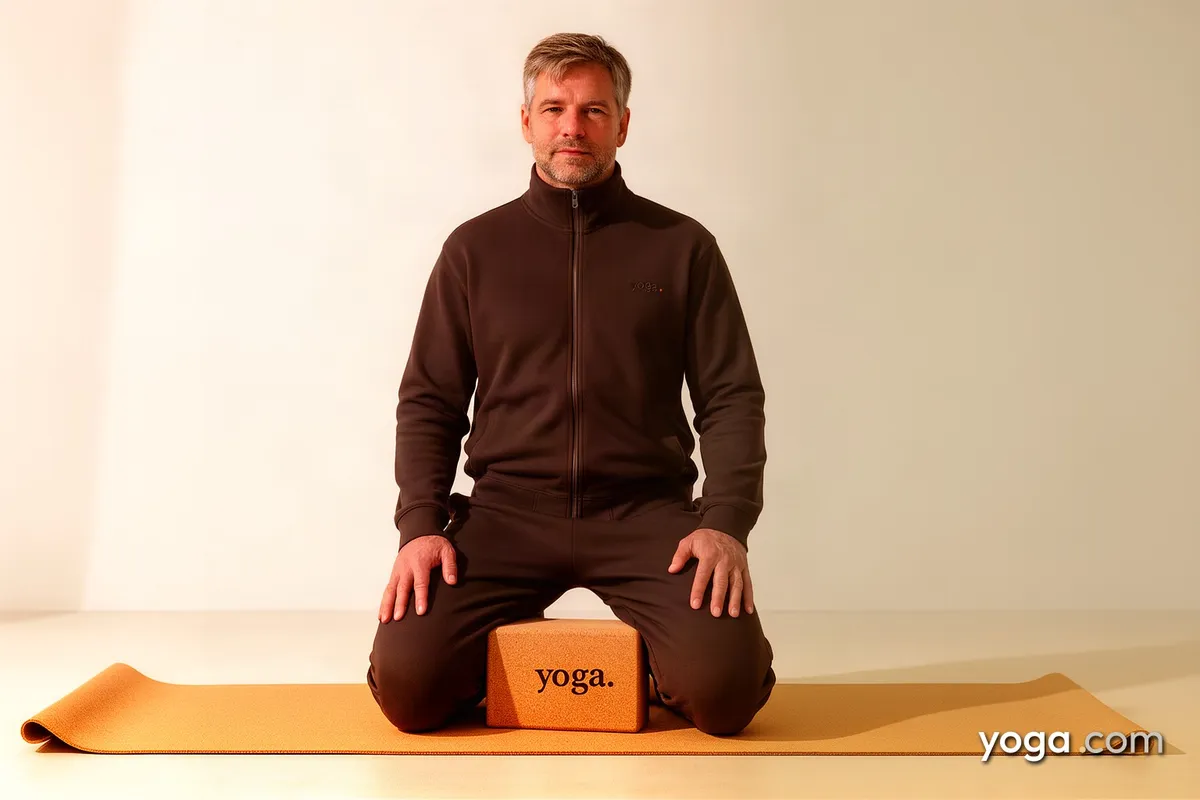
Your knees ache when you climb stairs, stiffen up after a long sit, or quietly protest through your morning walk. You've heard yoga might help — but you're not sure which poses are safe, which ones to skip, and whether any of this is actually backed by evidence. This guide answers all three questions, clearly and honestly.

Before You Begin: An Important Safety Note

If you have a diagnosed knee condition — including osteoarthritis, a ligament injury, meniscus damage, or post-surgical recovery — please talk to your doctor or physical therapist before starting a yoga practice. The guidance here is general and educational, not a substitute for personalized medical advice.

Even if your knees feel "just a bit sore," it's worth a quick check-in with a professional if your pain is new, getting worse, or accompanied by swelling, locking, or instability.

Why Knees Deserve Your Attention

Knee pain is extraordinarily common. Research shows knee pain is second only to back pain as the most commonly reported pain site, with an overall prevalence of 46.2%. That's nearly half of people experiencing it at some point.

For older adults, the picture gets more specific. An estimated 25% of Americans over 55 report constant knee pain, and up to one in five people over 50 reports severe difficulty with physical function due to knee pain, even without a formal osteoarthritis diagnosis. The knees carry you through your whole life. They're worth protecting — and strengthening.

Does Yoga Actually Help? What the Evidence Says

The honest answer is yes, yoga shows real promise for knee pain — especially for knee osteoarthritis (OA). But yoga is not magic, and the research has limitations that are worth knowing about before you start.

A small 8-week study of women with knee OA found that 60-minute Hatha yoga sessions three times a week were associated with significantly decreased pain and symptoms, and improved scores for daily activities, sports, and quality of life compared to a control group. The yoga group was small (11 completers), so you should treat this as encouraging evidence, not definitive proof. Keep in mind that a small sample size means the results need to be confirmed by larger studies.

Larger and more recent evidence is compelling. A 2025 randomized clinical trial published in JAMA Network Open found that yoga was noninferior to strengthening exercises for managing knee osteoarthritis over 12 weeks — meaning yoga worked just as well as the standard exercise therapy recommendation. The trial included 117 participants with a mean age of 62.5 years and moderate baseline knee pain, and so this trial gives you a much stronger basis for confidence in yoga as a real option.

At 24 weeks, the yoga group showed modestly greater improvements in WOMAC pain, function, and stiffness scores compared to the strengthening exercise group. The simple fact is that yoga also produced benefits beyond the knee itself. The yoga group showed modestly greater improvement in depression scores at 12 weeks and quality of life at 24 weeks. On top of that, these differences were modest and you should interpret them cautiously, but the differences are real and they are meaningful for people who are living with daily pain.

The takeaway is that yoga, done thoughtfully, appears to be a legitimate movement therapy for knee OA and so yoga is not a replacement for medical care but it is a powerful complement to your existing treatment. For more on practicing safely around joints, see our guide to joint-friendly yoga principles.

What Actually Hurts Knees in Yoga (Contraindications)

Not all yoga is knee-friendly. Some poses and transitions load the knee joint in ways that can aggravate pain or cause injury — especially under certain conditions.

A 2025 analysis of 89 yoga practitioners with knee injuries identified frequent forward-bending postures, high BMI, low self-protection awareness, and insufficient sports medicine knowledge among instructors as independent risk factors for knee injury. The same study found that prioritizing safety when choosing a yoga practice was a protective factor against knee injury. In other words: how you practice matters as much as what you practice.

Poses and patterns to approach with caution (or avoid):

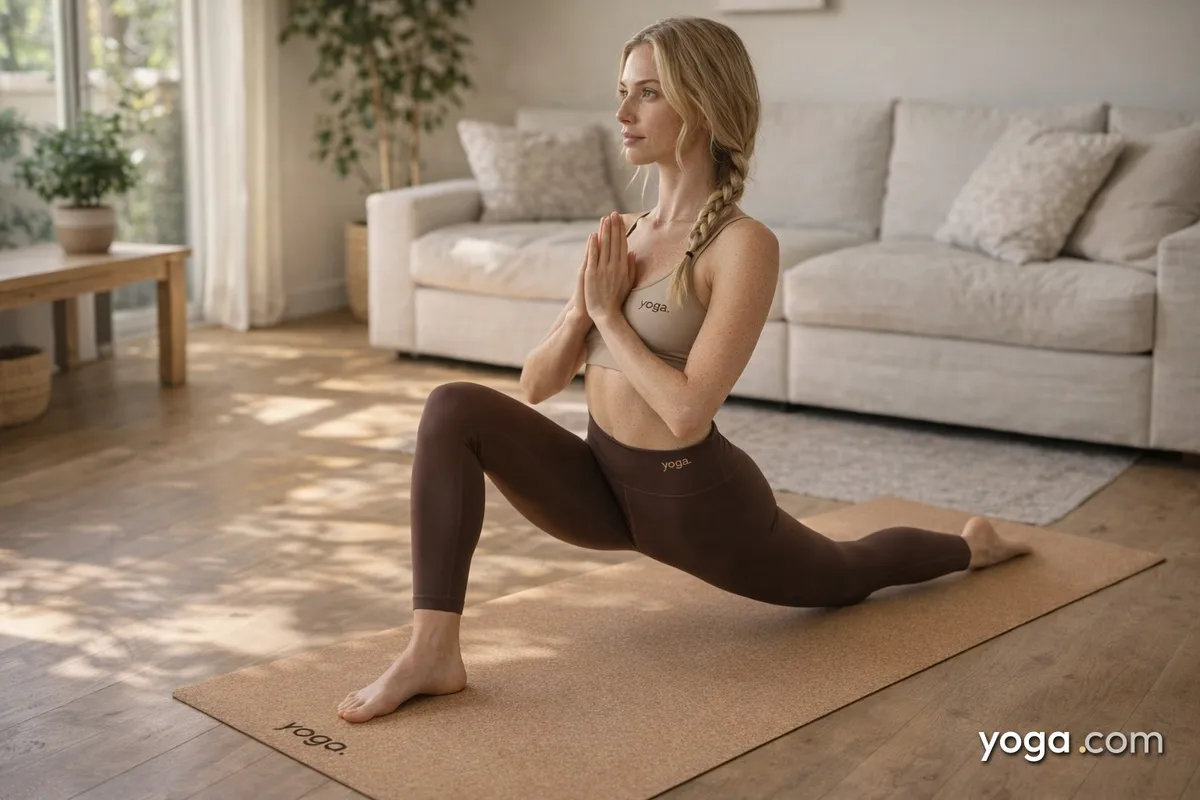
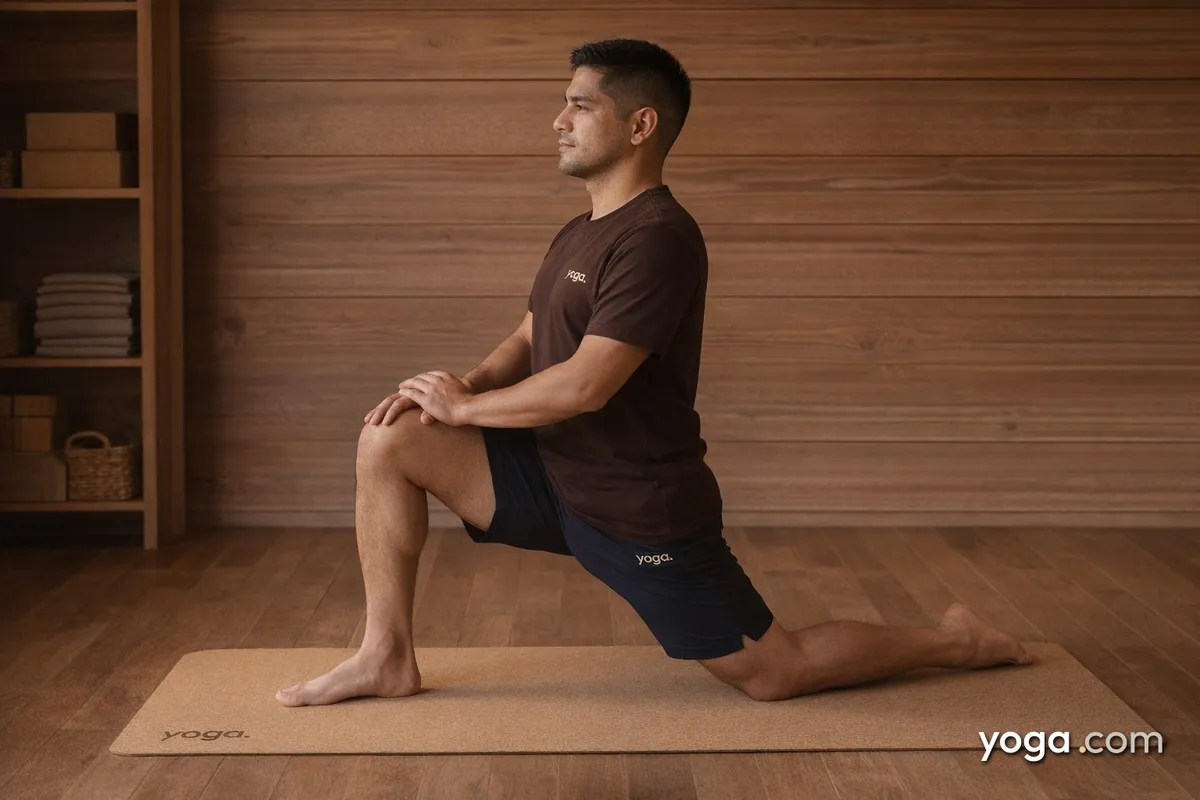
  • Deep knee flexion under load — full squats, deep lunges where the shin angles far forward, or poses that compress the back of the knee. These dramatically increase patellofemoral pressure.
  • Hero Pose (Virasana) — sitting between the heels puts significant torque on the medial knee structures. If you have knee OA, ligament issues, or meniscus concerns, skip it or use a very tall block between your thighs and calves.
  • Lotus Pose (Padmasana) and half-lotus variations — these externally rotate the hip, but if the hip is tight, the rotation transfers to the knee. Never force this shape.
  • Lotus Pose — step-by-step demonstration
    Lotus Pose — step-by-step demonstration
  • Jumping transitions — jumping back to Plank or jumping through to seated (common in Ashtanga-style practice) lands significant impact through the knees. Step instead.
  • Unsupported kneeling for long holds — without padding, sustained kneeling can aggravate the bursa and joint surface.
  • Stop immediately if you feel:

  • Sharp, shooting, or electric pain in the knee
  • Pain that gets worse as you hold a pose (rather than easing)
  • A clicking or locking sensation
  • Swelling, heat, or increased puffiness after class
  • Pain that persists for more than 24 hours after practice
  • A mild sense of muscular effort or gentle stretch around the knee is normal. Pain is not.

    What Supports the Knees: Alignment-Aware Poses That Help

    The goal is to strengthen the muscles that support the knee — especially the quadriceps, hamstrings, glutes, and calves — while keeping the joint itself safe. The quadriceps are the primary stabilizers of the kneecap (patella), and building them is considered first-line management for knee OA in clinical guidelines.

    Standing poses with wall support

    Wall-supported standing poses let you build leg strength without balance demands that tempt the knee into poor tracking. Try these:

  • Chair Pose (Utkatasana) against the wall — back flat to the wall, knees tracking directly over the second toe, thighs working toward parallel. Hold 5–10 breaths.
  • Chair Pose — step-by-step demonstration
    Chair Pose — step-by-step demonstration
  • Warrior II (Virabhadrasana II) — front knee bent to roughly 90°, tracking over the ankle (not caving inward). The back leg is straight and energized. This builds quad and glute strength simultaneously.
  • Triangle Pose (Trikonasana) — both legs are straight and active, making this one of the most joint-friendly standing poses. Focus on engaging the thigh muscles firmly.
  • Mountain Pose (Tadasana) — yes, really. Actively lift the kneecaps by firming the quads. This trains the neuromuscular pattern you need in every other pose.
  • Mountain Pose — step-by-step demonstration
    Mountain Pose — step-by-step demonstration

    Supine (lying down) strengtheners

  • Bridge Pose (Setu Bandha Sarvangasana) — strengthens the glutes and hamstrings, unloading the knee. Press all four corners of both feet evenly into the mat.
  • Bridge Pose — step-by-step demonstration
    Bridge Pose — step-by-step demonstration
  • Reclined Hand-to-Big-Toe Pose (Supta Padangusthasana) — using a strap, this gently lengthens the hamstrings without compressing the knee joint.
  • Legs-Up-the-Wall (Viparita Karani) — passive, restorative, and genuinely helpful for reducing swelling and fatigue in the lower limbs.
  • Gentle floor work

  • Child's Pose (Balasana) — if deep knee flexion is comfortable, this is deeply restorative. If it's not, place a folded blanket behind the knees to reduce the bend angle.
  • Cat-Cow (Marjaryasana-Bitilasana) — on hands and knees with a folded blanket under them, this mobilizes the spine without loading the knees significantly.
  • Kneecap Tracking: The Cue That Changes Everything

    Poor kneecap (patellar) tracking — where the kneecap drifts inward as you bend the knee — is one of the most common sources of yoga-related knee pain. The fix is simple to learn, even if it takes practice to ingrain.

    In any bent-knee pose, check that your knee points toward your second or third toe. If it dives inward, actively press it outward using your glutes and outer thigh. In standing poses, a block held lightly between the thighs can remind your inner thighs to stay engaged without collapsing in.

    Props That Protect: How to Modify for Kneeling Poses

    Props aren't training wheels — they're precision tools. Use them confidently.

  • Folded blanket under the knees in any kneeling pose. Even a thin fold makes a meaningful difference in pressure on the joint.
  • Foam wedge or rolled blanket behind the knee in bent-knee poses where full flexion is uncomfortable. Placing the roll in the crease behind the knee physically prevents full compression.
  • Block under the sit bones in seated poses — reduces the demand on knee extension.
  • Strap around the thigh and calf in poses like Hero's Pose variants (if your teacher specifically suggests a modified version for your situation) to limit how far the knee bends.
  • When to See a Professional

    Yoga is not a diagnostic tool or a replacement for medical evaluation. See your doctor or a physical therapist if:

  • Your knee pain is new, sudden, or followed a specific injury
  • You have significant swelling, warmth, or redness in the joint
  • Your knee feels unstable, gives way, or locks
  • Pain disrupts your sleep or daily activities
  • You've been practicing for 4–6 weeks without any improvement
  • You're recovering from surgery or a significant procedure
  • A physical therapist can assess your specific mechanics and give you a program tailored to what your knees actually need. Yoga works best as part of that bigger picture — not instead of it.

    Your Next Step

    Healthy, supported knees aren't built in a single session — they're built through consistency, smart alignment, and the willingness to use a blanket and slow down. The evidence suggests yoga can genuinely help, especially if you're living with knee osteoarthritis. Start with the supine and wall-supported poses, honor every signal your knees send you, and if something hurts, stop and seek guidance. Your practice should feel like care — because it is.

    Sources

  • PMC — Knee Pain: Epidemiology, Pathophysiology and Treatment Options
  • PMC — Effects of Yoga on Knee Osteoarthritis (8-week RCT)
  • PubMed / JAMA Network Open — Yoga vs. Strengthening Exercises for Knee OA (2025 RCT)
  • PMC — Yoga Noninferior to Strengthening for Knee OA: 24-Week Outcomes (2025)
  • PMC — Risk Factors for Knee Injury in Yoga Practitioners: A Medical Big Data Analysis (2025)