Modern yoga does some of its quietest work off the mat, as preparation for other sports. Hiking is a case in point: these yoga poses for hiking build the strength, balance, and flexibility that turn a grueling climb into an empowering one, and help keep you injury-free along the way. It's the piece of trail prep most hikers overlook.
Why Yoga and Hiking Are a Natural Pair
Hiking calls on your gluteal muscles, quadriceps, hamstrings, and calves - and demands sturdiness from your ankles, feet, hips, and knees all at once. That's a long list of moving parts, and when one link in the chain is weak or tight, the rest compensates.
A survey of studies published in Wilderness Environmental Medicine Journal found that yoga and stretching were associated with fewer injuries for hikers. In other words, rolling out your mat before the trailhead matters.
What Hiking Actually Does to Your Body
Repetitive forward motion - whether running, walking, or ascending a steep grade - creates patterns of tension that build up over time. Tight quads and hip flexors are a known risk factor for knee injuries. And if you spend most of your weekdays at a desk, weakened glutes and hip muscles add even more pressure to your knees when you finally do hit the trail.
Two common culprits are worth knowing:
- Tight hip flexors - they shorten your stride and force your glutes to overwork, leading to fatigue much faster than necessary.
- Tight hamstrings - when your knee can't extend properly, your gait suffers and knee, hip, or back pain often follows.
Yoga addresses both - with strength and flexibility working together, not separately.
Essential Yoga Poses for Hikers
Work these poses into your routine two or three times a week, and especially in the days before a big hike. Hold each pose for at least five deep breaths; longer holds (one to three minutes) build even more release in stubborn areas.
1. Chair Pose (Utkatasana) - for quad and glute strength
Sink into Chair Pose and feel your thighs burn - in the best way. Chair Pose rivals almost any squat or lunge for building strength in the quads and glutes, the two muscle groups that power you uphill. Keep your knees tracking over your toes and your chest lifted.
2. Warrior I (Virabhadrasana I) - for hips, legs, and stability
This standing pose opens the hip flexors of your back leg while strengthening the quad and glute of your front leg - essentially training both sides of the hiking equation simultaneously. Ground down through both feet and breathe into the stretch across the front of your back hip.
3. Lizard Pose (Utthan Pristhasana) - for hip flexors and low back
Lizard Pose releases tension in the hip flexors and delivers a deep quadriceps stretch - both of which can help long-distance hikers ease lower back pain. Come into a low lunge, then walk your front foot to the outer edge of your mat. You can stay on your hands, or lower to your forearms for a deeper release.
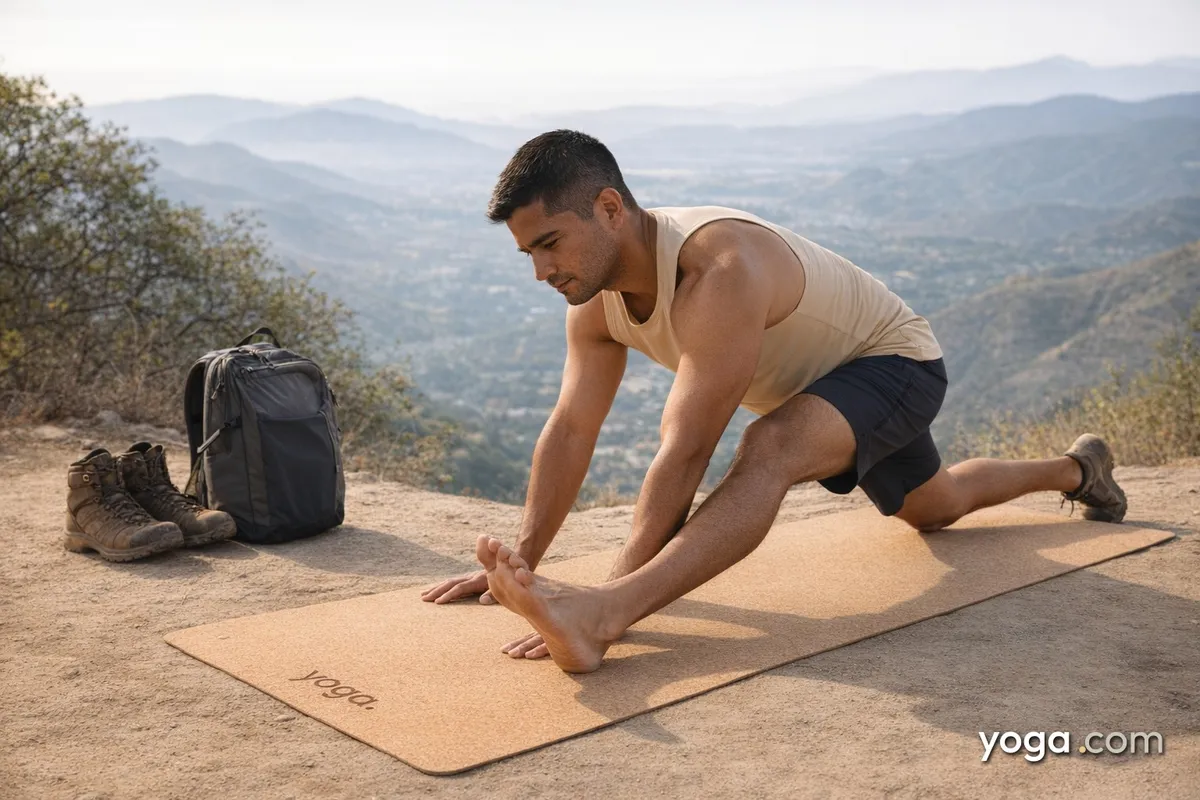
4. Standing Forward Fold (Uttanasana) - for hamstrings and calves
Simple and deeply effective. Hinging from your hips with a long spine, let gravity do the work on your hamstrings. Bend your knees generously if you need to - the goal is length in the back of the legs, not touching the floor. Flex your feet slightly to draw the stretch into your calves.
5. Hero's Pose / Reclined Hero's Pose (Virasana / Supta Virasana) - a full-body reset
Restorative Hero's Pose (Supta Virasana) releases tension in the quads, ankles, hip flexors, and the sacral-lumbar arch of the low back all at once - making it one of the most efficient post-hike poses you can do. Start seated in Hero's Pose (Virasana); if that feels comfortable, slowly recline back onto your hands, then forearms, then the floor (or a bolster). Never force this one - protect your knees and come out slowly.
6. Tree Pose (Vrksasana) - for ankle stability and balance
Trail terrain is unpredictable. Single-leg balance poses train exactly the small stabilizing muscles you'll need. Balancing poses strengthen the small stabilizing muscles in the ankles and hips, which is crucial for optimizing balance on uneven terrain. Fix your gaze on a still point, root down through your standing foot, and breathe steadily.
7. Toe Squat - for foot health and plantar fascia
This humble pose packs a powerful punch. Come to a kneeling position, tuck all ten toes under, and gently sit back onto your heels. Releasing tension in the plantar fascia through Toe Squats can decrease your risk of hike-ending plantar fasciitis. Start with just one minute - it's more intense than it looks.
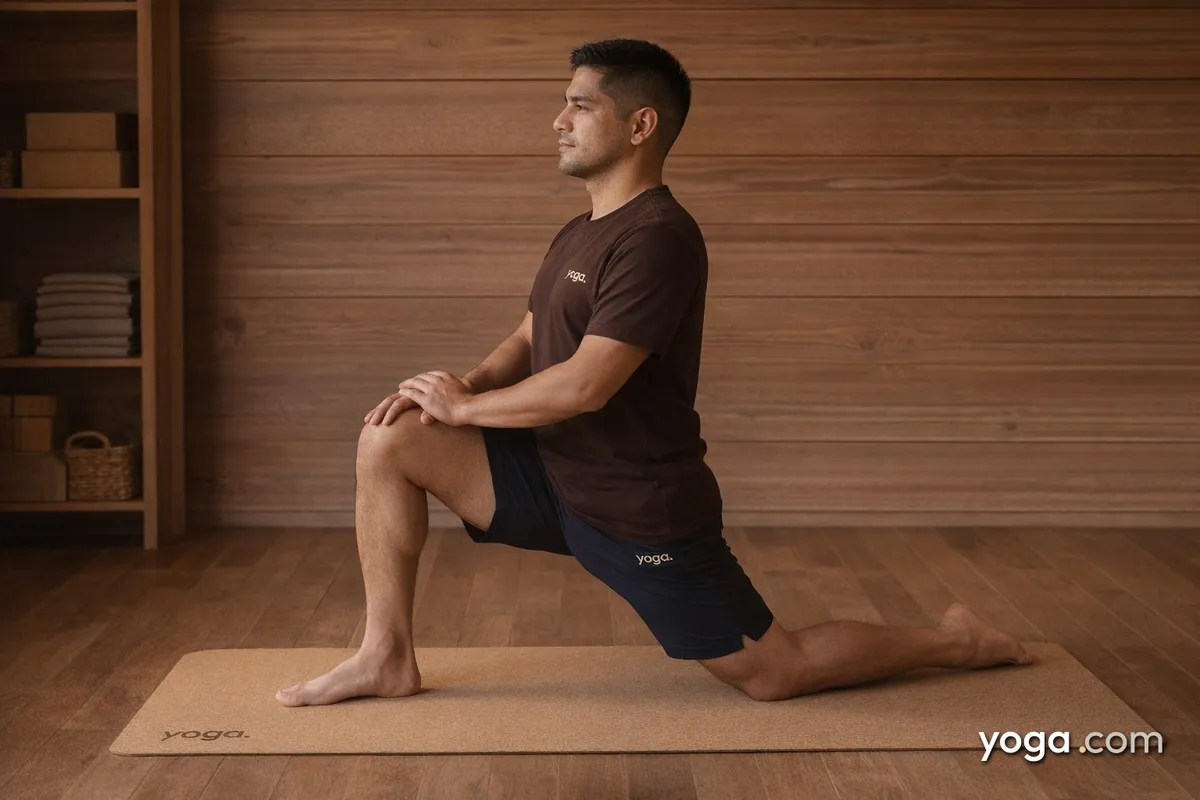
8. Low Lunge (Anjaneyasana) - for hip flexors and core
Drop your back knee to the mat, square your hips forward, and breathe length into the front of your back hip. This pose directly counteracts the hip flexor tightening that hours of uphill hiking (or desk sitting) creates. For an added challenge, lift your arms overhead and engage your core.
Don't Forget Your Core
Strong legs carry you up the mountain - but your core keeps you upright and stable the whole way. The core includes the obliques, the deep transversus abdominis (which wraps your torso like a corset), the erector spinae, the multifidus, the pelvic floor, and the diaphragm. Poses like Plank (Phalakasana) and Side Plank (Vasisthasana) build functional core strength that translates directly to the trail.
Should You Try Yin Yoga Before a Big Hike?
If you tend to carry deep muscular tension - especially after long miles - consider adding a yin practice to your routine. Yin yoga targets muscular tension through long, comfortable-but-challenging holds that lengthen tight muscles and release pressure points from repetitive trail movement. It's a slow practice, but the payoff for hikers is real.
As Patanjali's Yoga Sutras put it: Sthira sukham asanam - "Every posture should cultivate steadiness and ease." That balance of strength and softness is exactly what the essential yoga poses you use to strengthen and prepare for hiking should deliver.
A Note on Safety
If you have existing knee, hip, or back concerns, check in with your healthcare provider or a qualified yoga teacher before diving in. These poses are a complement to - not a replacement for - professional medical guidance.
Take It to the Trail
You don't need a perfect practice or a two-hour session. Even twenty minutes of targeted yoga two or three times a week can meaningfully change how your body feels on the trail. Start with the poses that address your tightest areas, build from there, and enjoy the view from the top - knowing your body was ready for it.