
There's a particular flutter in the stomach that shows up the night before a first yoga class - somewhere between excitement and am I going to do something embarrassing? It's completely normal. The unwritten rules of a yoga studio aren't posted on the wall, but they're easy to learn. This guide covers yoga etiquette for beginners from the ground up - everything worth knowing before your mat ever touches the floor, whether you're heading to a studio or logging on from your living room.
Why These "Soft Rules" Actually Matter
Yoga is a shared experience. When you're in a room or a Zoom session with other people who came to breathe, move, and decompress, small acts of consideration make a real difference. Good etiquette isn't about being perfect - it's about creating the kind of space where everyone, including you, can actually relax.
These habits also signal respect for your teacher. Some yoga and fitness instructors complete 200 to 500 hours of certified training before they ever lead a class. That level of preparation deserves a room that honors it.
Arrive Early - Not "On Time"
Most studios, gyms, and community centers ask you to arrive at least 10 minutes before class starts to complete any necessary paperwork, and yoga teachers generally recommend arriving no more than five minutes late - ideally not late at all.
A yoga class is built as an arc: warm-up, peak, wind-down. Walking in mid-sequence disrupts that flow for everyone and means you miss the foundation the teacher has already set. Use those early minutes well:
- Introduce yourself to the teacher and mention you're a beginner.
- Mention any injuries or physical limitations - one quiet sentence at the door does more for your safety than anything else.
- Choose your spot, unroll your mat, and settle in before the room fills up.
Set Up Your Space Thoughtfully
Your mat is your personal bubble for the next hour. A common beginner mistake is scattering a bag, water bottle, extra layers, and phone around the mat's edges - which quietly squeezes out the people next to you.
The fix: Keep belongings minimal and tucked neatly at the top or side of your mat. Silence your phone completely. Not vibrate. Silent.
Talk to Your Teacher Before Class Starts
Telling your teacher you're a beginner before class means they can offer easier variations when poses get challenging and watch your alignment without singling you out mid-class.
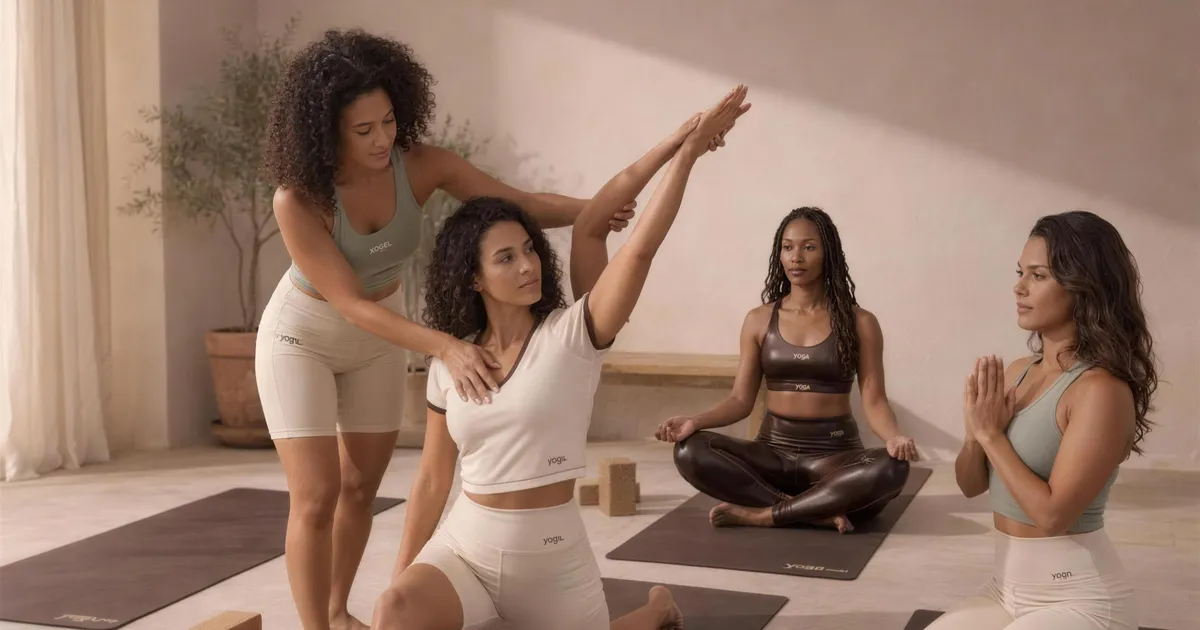
This is also the right moment to ask about hands-on adjustments. Many teachers will gently guide a student's hips or shoulders into better alignment during class - worth knowing before it happens. You have every right to opt out. Most studios provide a consent card you place at the top of your mat: one side signals "adjustments welcome," the other says "please don't." If your studio doesn't use one, a simple "I'd rather not be touched today" before class is completely fine, and a good teacher will respect that without hesitation.
During Class: The Quiet Courtesies
- Don't chat unless the teacher opens a discussion. Even a whisper carries in a quiet studio.
- Stay for the whole class when you can. Leaving mid-session - especially during final rest, Corpse Pose (Savasana) - breaks the stillness for everyone.
- If you might need to leave early, take water or a bathroom stop before class begins and set up near the door so your exit is as quiet as possible.
- Rest when you need to. Dropping into Child's Pose (Balasana) is always appropriate. Resting is good practice, not giving up.
Hygiene: Small Details, Big Impact
Yoga is a close-quarters practice. A few habits protect everyone's comfort:
- Skip heavy fragrance. Perfume and cologne can be overwhelming - and sometimes physically distressing - for people with sensitivities in a small, warm room.
- Bring your own mat when possible. Yoga mats range in price from $19 to $169, so there's an option at every budget.
- If you borrow a studio mat, wipe it down before and after use. Most studios keep spray bottles and cloths near the mat rack for exactly this reason.
- Bring a small towel. Even a gentle class can make you sweat more than you expect.
Online Classes Have Their Own Rules
Virtual yoga runs on the same principles - consideration and presence - but the mechanics look different on a screen. Beginner yoga etiquette for studios and online classes follows the same core values; what new students need to follow simply shifts slightly depending on the format.
Before the class starts
- Test your camera and microphone ahead of time.
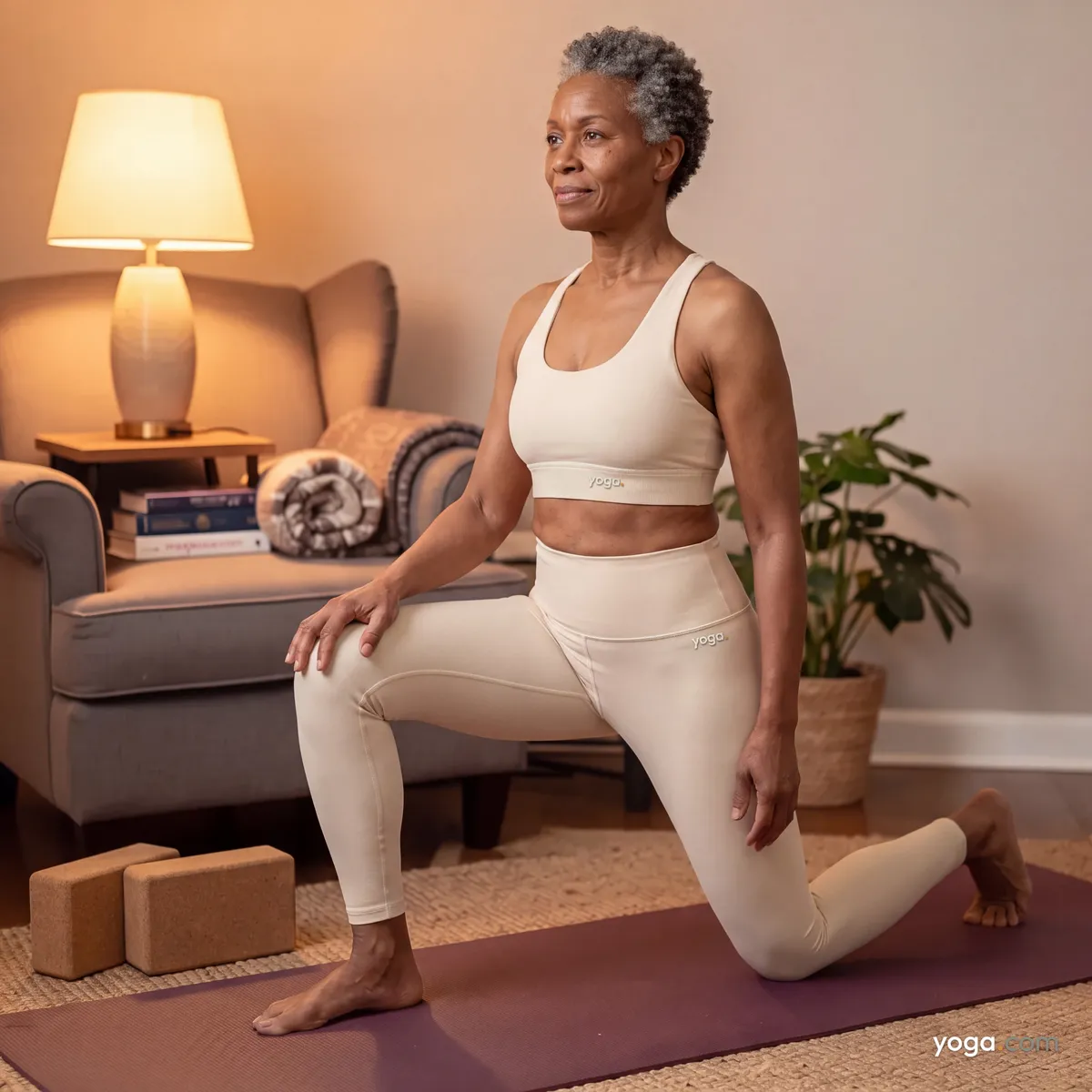
- Position your camera so the teacher can see most of your body, both standing and on the floor. If they can't see you, they can't help you correct your form.
- Clear enough floor space around your mat to move freely in all directions.
During the class
- Mute your microphone when you're not speaking - which is most of the class. Background noise travels directly into everyone else's ears.
- Keep your camera on if the teacher requests it. It lets them offer personalized cues and keeps the energy of a shared class alive.
- Treat the start time as you would in a studio. Logging on five minutes early to troubleshoot tech spares everyone a mid-class interruption.
A Quick Pre-Class Checklist
- Arrive 10-15 minutes early (studio) or log on 5 minutes early (online).
- Let the teacher know you're a beginner and mention any injuries.
- Clarify your preference on hands-on adjustments.
- Silence your phone completely.
- Keep your mat area tidy and go scent-free.
- Wipe down any borrowed equipment before and after use.
- Mute your mic in virtual classes unless speaking.
If You Take One Thing From This
Yoga etiquette is the practice of showing up with the same care you bring to your poses - aware of yourself, considerate of others, willing to learn. Every regular student in that room was a beginner once. Arrive a little early, say hello to your teacher, bring an open mind. Everything else follows.