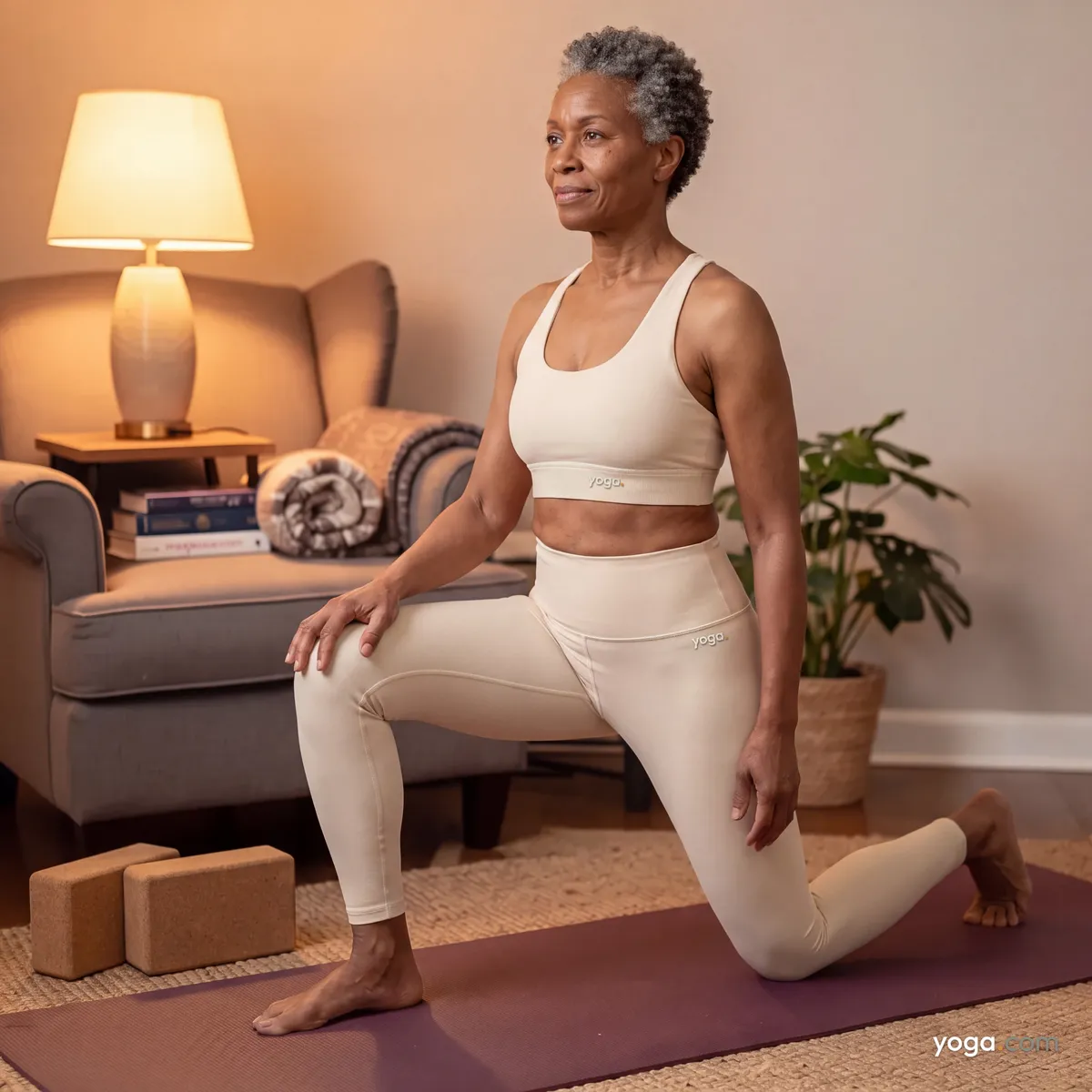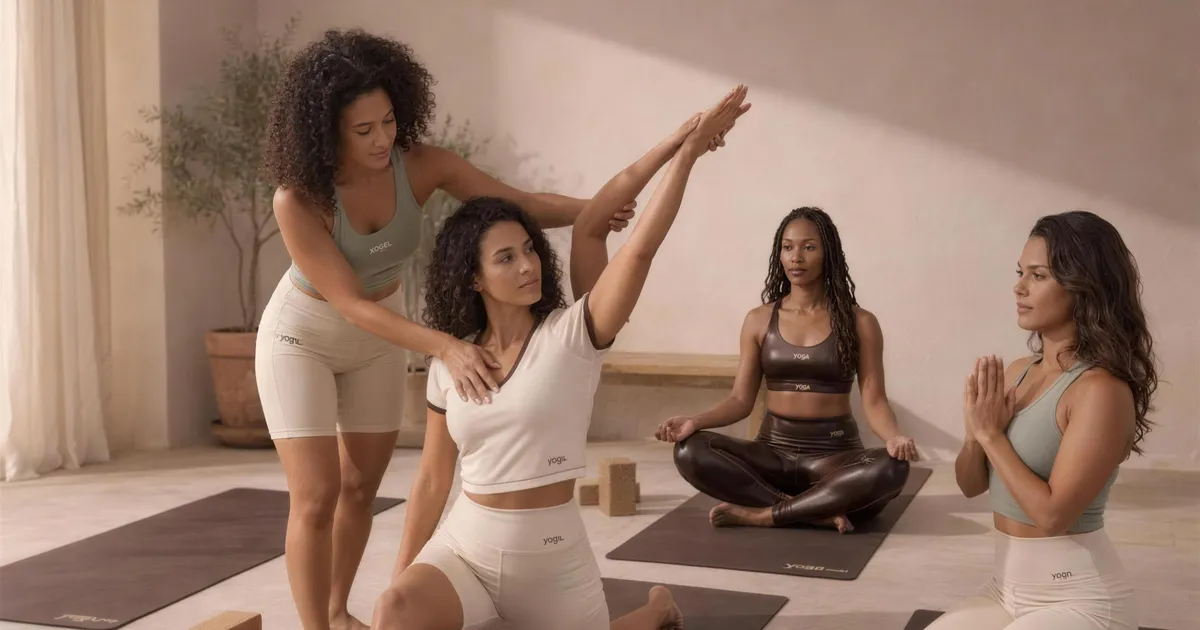

This article walks you through ways to measure yoga progress that have nothing to do with the person on the next mat. That mid-class glance at someone deeply folded and effortlessly balanced can make a whole session feel like it wasn't enough, but it says nothing accurate about your progress. Tracking your own markers is the smarter, kinder way to understand how far you've come.
Why Comparison Is the Wrong Measuring Stick
The person beside you started somewhere completely different. They have different joints, a different history in their body, different years on the mat. Stacking your practice against theirs tells you nothing true about your own growth.
Comparing yourself to the person next to you in class will do more harm than good, and your brain makes it worse: we have a conditional bias toward negative thoughts over positive ones, so it highlights every gap and overlooks every gain.
The fix isn't to try harder to ignore other people. It's to give yourself something better to measure.
Start a Practice Journal (It Doesn't Have to Be Fancy)
A simple notebook or notes app is one of the most honest tracking tools you have. Consistency matters more than detail - even a few lines after each practice builds a clear picture over time.
After each practice, jot down:
"My left hip felt more open today" or "I didn't lose my balance in Warrior III (Virabhadrasana III) once" - those are real data points. Progress in yoga often isn't a dramatic leap into a harder pose; it looks like slower breath, less pain, a little more ease. Your memory alone won't catch those shifts. Your journal will.
Track Your Breath - It's More Measurable Than You Think
Breath is a core pillar of yoga and one of the easiest things to quantify. Try this check-in:
Over weeks of consistent practice, most people find their breath slows - fewer, fuller cycles per minute. A slowing breath rate is a tangible shift you produced through your own practice, visible in your own notebook, with no outside reference needed.
Notice How Your Body Feels Off the Mat
Some of the clearest signs of progress happen in everyday life, not in class. Pay attention to:
These shifts are worth writing down just as much as any pose milestone. Among yoga practitioners, wellness is the most prevalent motivation for practicing - cited by 94% of people. If feeling better in your body and mind is your goal, feeling better in your body and mind is your progress marker.
Use Your Own Photos or Short Videos
This one feels awkward at first. Do it anyway.
Taking a short video or a single photo of yourself in a key pose - say, Downward-Facing Dog (Adho Mukha Svanasana) or a standing balance - every four to six weeks gives you something concrete to compare against your own earlier self. Keep these private; this is purely a reference for you.
Looking at a photo from three months ago next to one from today, you'll often see things you couldn't feel from the inside: a longer spine, steadier arms, hips that have shifted even a small degree. Those changes belong entirely to your story.
Set Goals That Belong Only to You
Vague intentions fade. Specific, personal goals stick. Try framing yours like this:
A single-leg balance test is a simple way to track yoga progress without comparing yourself to anyone around you. Stand near a wall for safety, lift one foot, start a timer, and note how many seconds you hold steady. Test again every few weeks. The number is yours alone.
Consistency Matters More Than Frequency
You don't need to practice every day to make meaningful progress. Committing to at least twice a week is a solid foundation. On average, yoga practitioners engage four days per week, with only 17% practicing daily - most people making real progress are not on the mat every morning.
What matters is showing up regularly enough that your body has a chance to adapt and your nervous system learns to settle. Two or three honest sessions a week, tracked consistently, will show far more growth over six months than sporadic intense bursts followed by long breaks.
A Note on Social Media and Comparison
Scrolling through yoga feeds can feel inspiring - and sometimes genuinely is. But it can also quietly erode your sense of where you stand. Fitness social media use significantly predicts both exercise intention and exercise behavior, which means it can motivate you - but only if you're consuming it intentionally.
If a particular account leaves you feeling behind rather than encouraged, unfollow it without guilt. Your feed should function like a good teacher: supportive, not shame-inducing.
What Real Progress Actually Looks Like
Progress in yoga is rarely linear. Some weeks you'll feel stronger and more open; others you'll feel stiff or scattered. What you're building over months is a relationship with your own body, and that takes patience.
Watch for these genuine signs you are moving forward:
If you are dealing with pain, injury, or a specific health condition, consult your doctor or a qualified healthcare provider before starting or intensifying your practice. Your teacher is also a resource - share what you're going through so they can support your progress.
Where This Leaves You
Your yoga practice is not a competition - not with the person on the next mat, not with the version of yourself you saw on Instagram, and not with who you were six months ago. It's a conversation between you and your own body. Track that conversation: in a journal, in your breath, in how you feel on a Tuesday afternoon. When you measure yourself against yourself, the progress becomes impossible to miss.