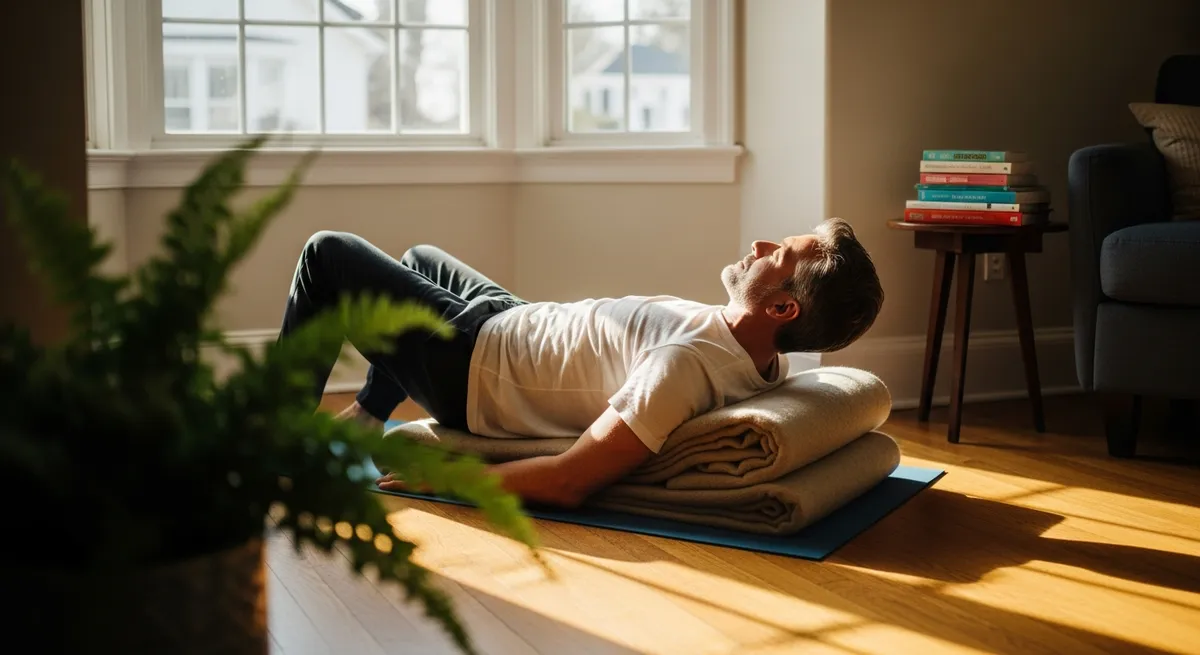
You know that feeling — the alarm goes off, the day stretches ahead, and your body just isn't cooperating. You want to move, but a full energetic practice sounds impossible. That's exactly when a slow flow sequence for low-energy days earns its place. It's not about pushing through; it's about meeting yourself exactly where you are.
Why Moving Slowly Still Works
Slow doesn't mean nothing. Even gentle, floor-based movement creates real change in your body — and the research backs this up.
One finding that may surprise you: sedentary people who regularly complain of fatigue can increase their energy levels by 20% and decrease their fatigue by 65% through regular, low-intensity exercise. Not high-intensity. Low. That's the kind of effort a slow yoga flow asks of you.
Even more telling: the low-intensity group had a greater reduction in fatigue than the moderate-intensity group — 65% compared to 49%. Doing less, on purpose, may actually serve you better on tired days.
Consistency matters too. After eight weeks of practicing yoga at least twice a week for a total of 180 minutes, participants showed greater muscle strength and endurance, flexibility, and cardio-respiratory fitness. Short sessions, done regularly, add up.
How to Begin When Your Energy Is Low
Start on the floor. Not standing, not sitting upright — lying down. Let your body feel supported before you ask it to do anything.
You don't need special equipment. A mat, a folded blanket, maybe a pillow. That's it. The goal is to lower the barrier to entry so low that you can't talk yourself out of it.
The Slow Flow Sequence: Pose by Pose
This sequence stays close to the floor throughout. Your heart doesn't have to work hard, and you never have to stand up if you'd rather not.
1. Knees-to-Chest Pose (Apanasana) — 10 breaths
Lie on your back and draw both knees gently into your chest. Rock side to side if it feels good. This softly massages the lower back and signals your nervous system that it's safe to slow down.
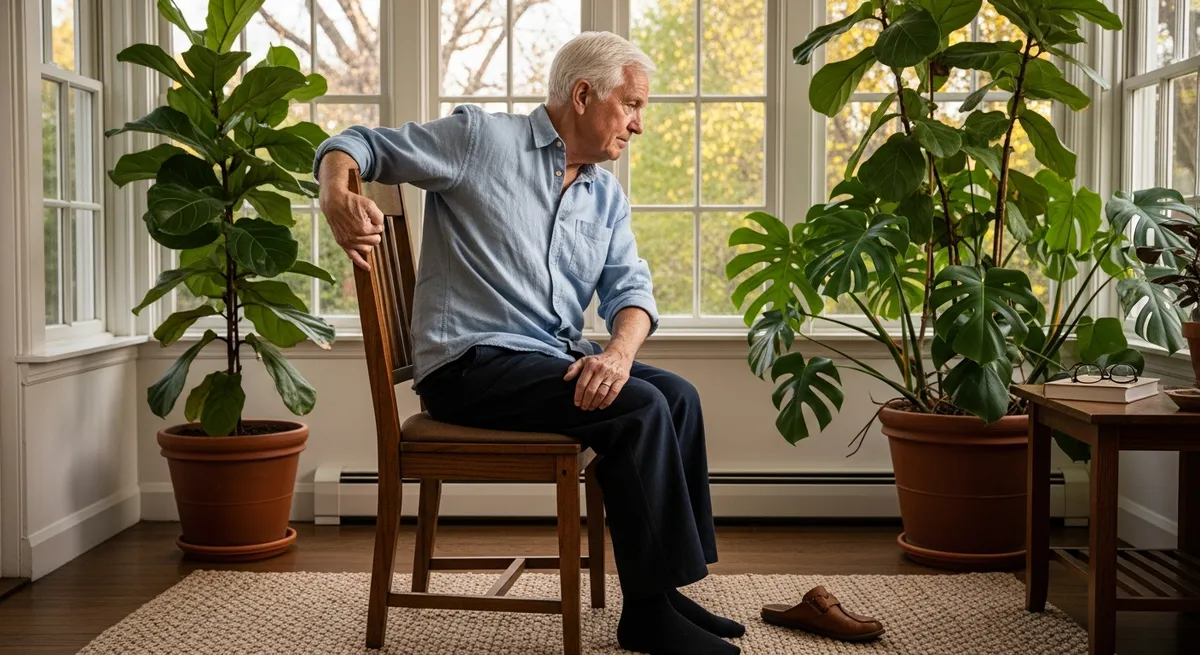
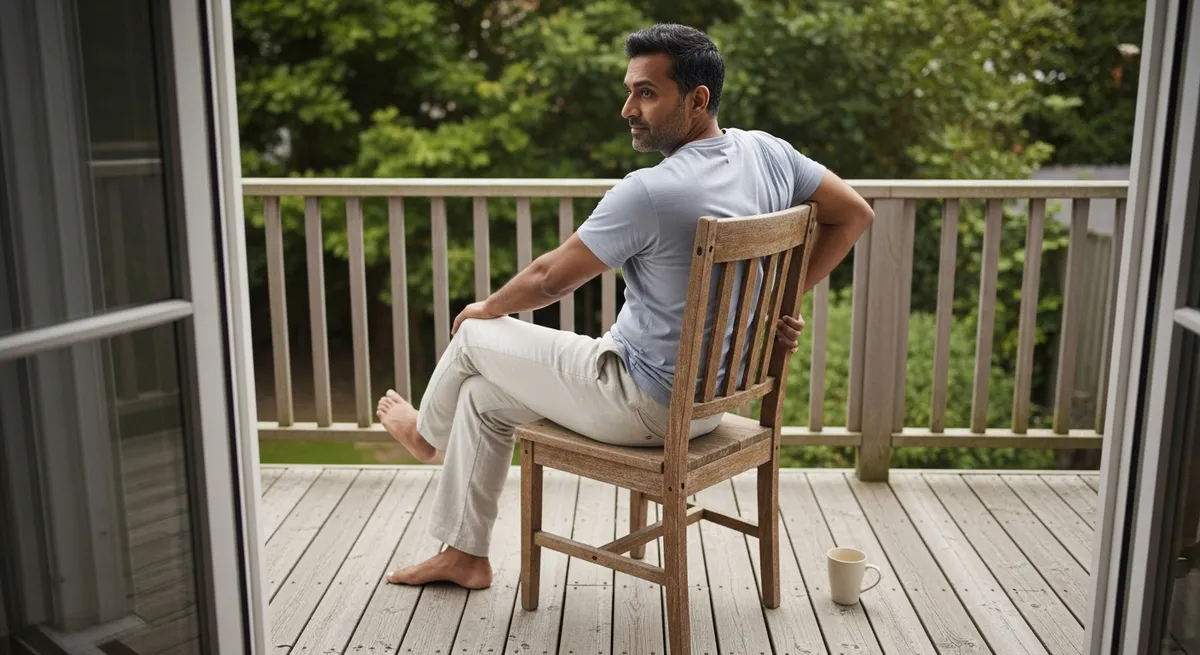
2. Supine Spinal Twist (Supta Matsyendrasana) — 8–10 breaths per side
From Apanasana, drop both knees to one side and extend your arms wide. Keep your shoulders as grounded as possible — even if your knees don't reach the floor, that's fine. The spinal benefit comes from the shoulder-to-knee opposition, not from depth. Hold, breathe, then switch sides.
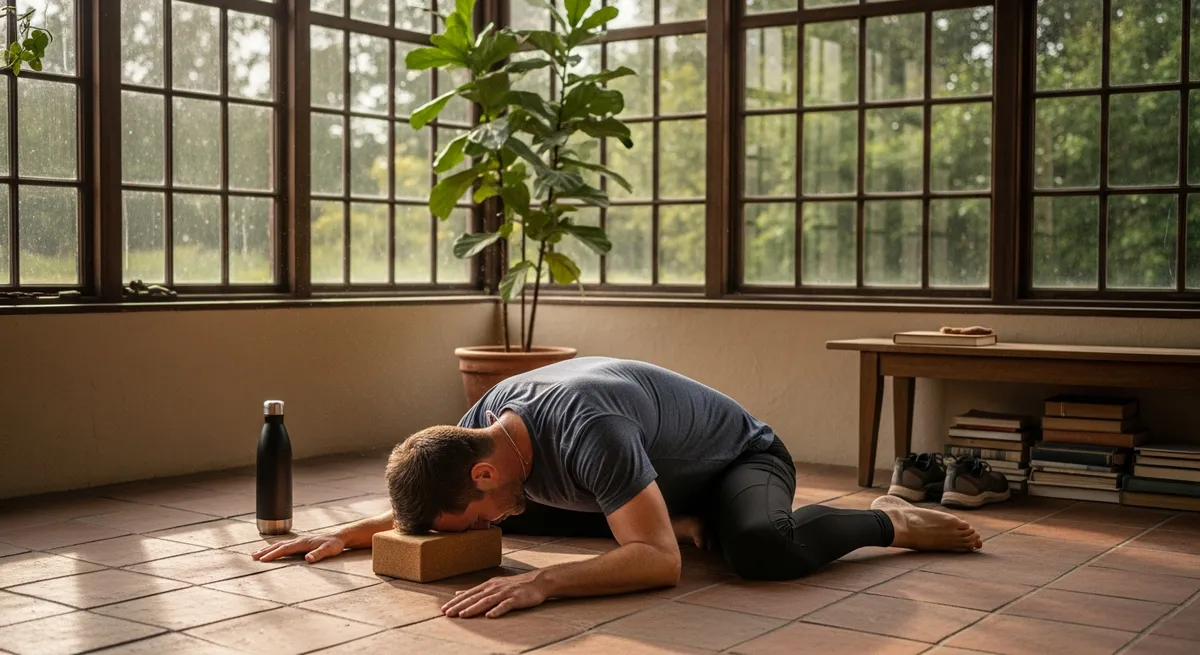
3. Supported Child's Pose (Salamba Balasana) — 15–20 breaths
Come to hands and knees, then sink your hips back toward your heels and rest your forehead on the mat or a folded blanket. Arms can reach forward or rest alongside your body. This is the most restorative pose in the sequence — stay here as long as you like.
4. Seated Forward Fold (Paschimottanasana) — 10 breaths
Sit with your legs extended. Don't chase the stretch. Hinge forward from your hips only as far as your body wants to go, and let your spine round softly. Rest your hands on your shins, ankles, or the floor beside your feet. Close your eyes.
5. Legs-Up-the-Wall Pose (Viparita Karani) — 5–10 minutes
Scoot your hips close to a wall and extend your legs up it. If the backs of your legs are tight, move a foot or two away from the wall — a slight bend in the knee is a perfectly valid version of this pose. Rest your arms by your sides, palms up. Stay here. Breathe. This pose reverses the pooling that builds up from sitting all day, and it asks nothing of your muscles to do it.
6. Corpse Pose (Savasana) — 5 minutes
Lie flat on your back, arms slightly away from your body, palms facing up. Let everything go. This isn't optional — Savasana is where your nervous system integrates everything the sequence just did.
What to Watch for in a Slow Practice
Slow does not mean sloppy. Keep in mind that because you hold each pose longer, a small alignment issue gets held longer too and so the effects of that issue build up over time. The simple fact is that you actually have more time to feel what is happening in your body — and so you should use that time carefully. Use it to check in with yourself and notice what your body is doing.
A Note on Safety
A gentle slow flow is appropriate for most people on most days. Keep in mind that if your low energy is persistent or comes with pain, you should check in with your doctor or a qualified health professional before you start any new movement practice and this is especially true if your low energy has an underlying medical cause because a professional can help you figure out what is safe for your body. The simple fact is that yoga is a wonderful complement to medical care and yoga is not a replacement for medical care. So please make sure you talk to your doctor first if you have any concerns about your health.
The Bottom Line
A slow flow sequence for low-energy days is not a compromise at all. The simple fact is, a slow flow sequence is a smart, body-honoring choice and you should feel confident making that choice whenever your body needs it. You do not have to earn your practice by suffering through it. Keep in mind that a quiet 20 minutes on the floor — breathing, moving gently, and landing in stillness — is a real practice, and it is a real practice because your body gets exactly what your body needs. Your body will thank you for it, and you will thank yourself too.