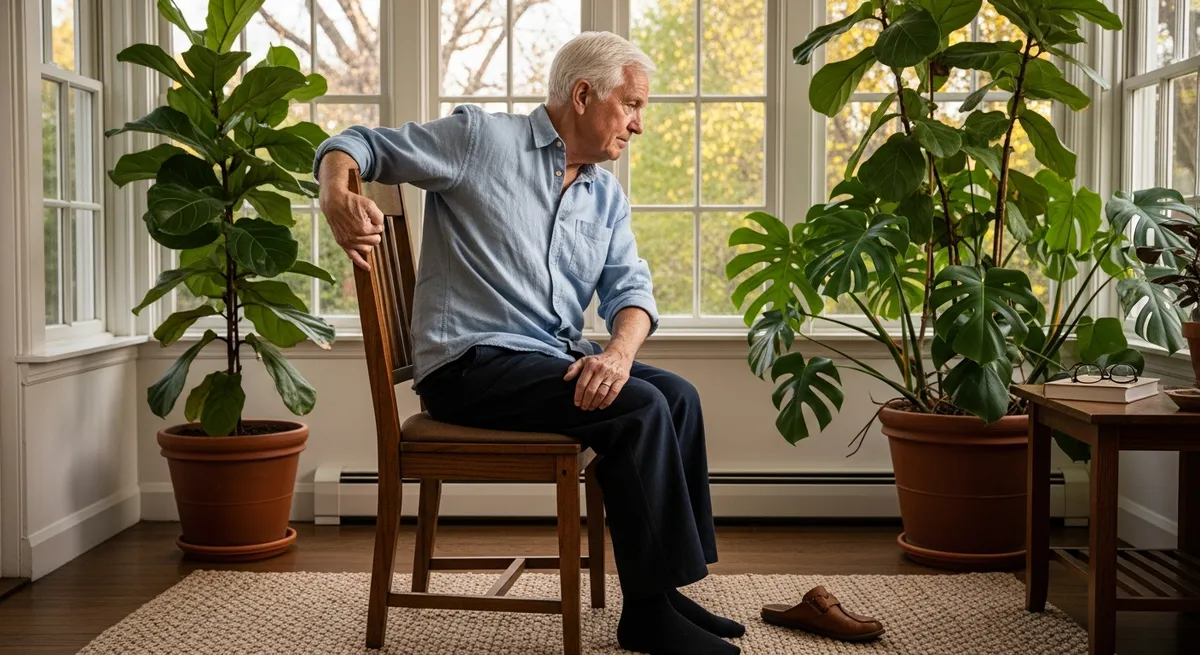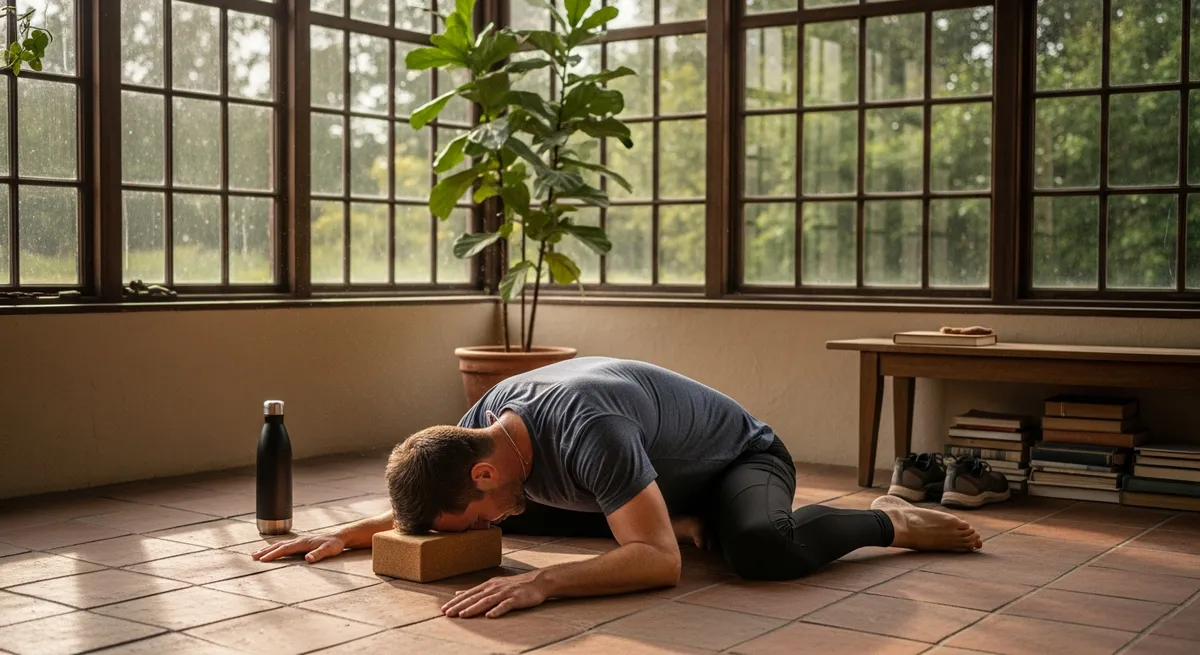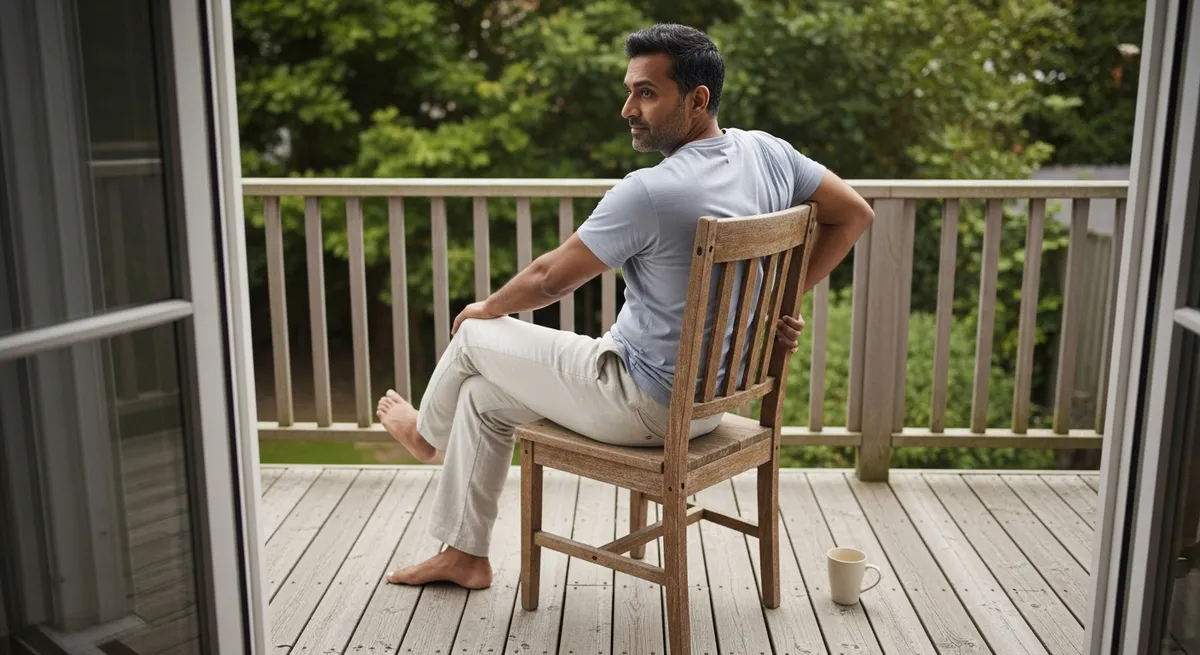
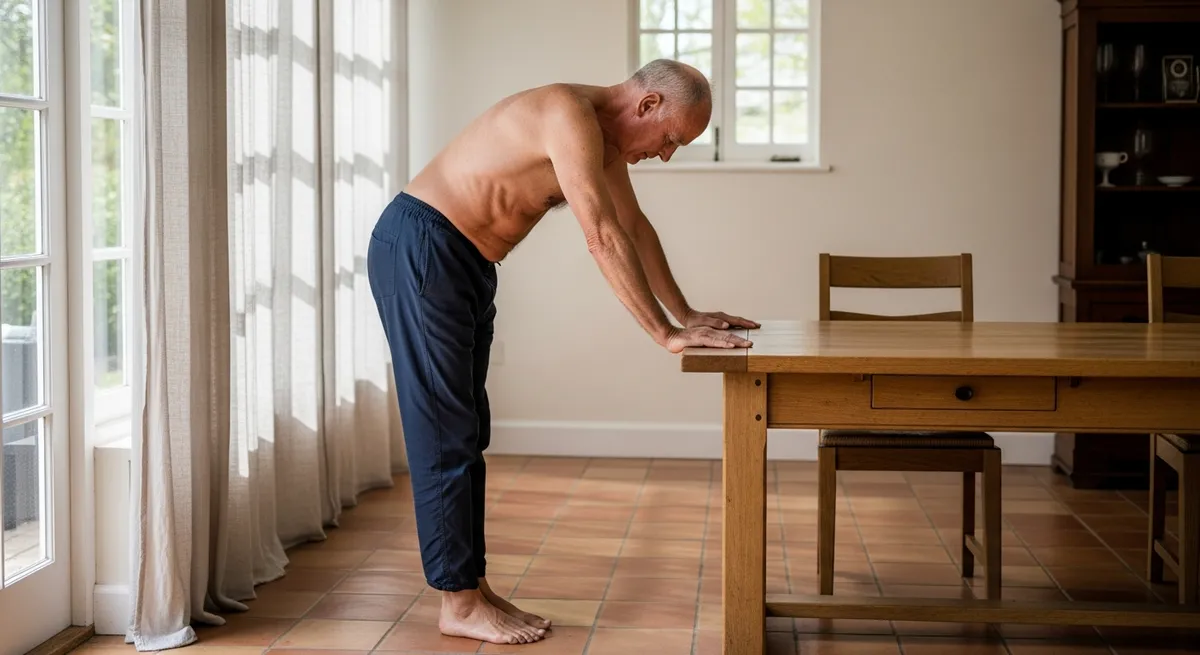
You sit down at your desk, stand up a few hours later, and feel it immediately — that pull behind the knees, the stiffness creeping up the back of the thighs, the low-grade ache across your lower back. Sound familiar? The good news: a consistent, well-structured yoga practice can gently unwind all of it. Here's exactly how to do it.
Why Your Hamstrings and Back Body Get So Tight
The culprit is almost always the chair. Americans average 9.5 hours a day sitting — at work, on the commute, on the couch. That sustained, static position shortens the muscles along your entire back body over time.
Hours of sitting tighten the hip flexors and hamstrings and stiffen the joints themselves — and that tightness doesn't stay isolated. Tight hip flexors and hamstrings may contribute to lower back pain and knee stiffness, two complaints that yoga teachers hear constantly.
It's not just desk workers, either. Hip flexor and hamstring tightness also affects frequent travelers, runners, cyclists, and gym-goers — basically anyone whose body spends a lot of time in one repeated pattern.
Warm Up First — Always
Cold muscles strain. This is the number-one rule before any hamstring-focused practice. Give yourself five minutes of gentle movement before you ask your back body to lengthen.
Good warm-up options
Forcing a straight-leg forward fold on a cold body is one of the most common ways people strain the hamstrings or irritate the lower back. Warm first, then lengthen.
The Core Poses for the Back Body
Downward-Facing Dog (Adho Mukha Svanasana)
This is the workhorse of the sequence and it stretches the calves, hamstrings, glutes, and the entire back of the spine in one single shape, so it is one of the most useful poses you can do. Press your heels toward the floor, but do not force your heels down if your hamstrings resist. Keep in mind that a soft bend in the knees is completely fine and still effective for your stretch.
Standing Forward Fold (Uttanasana)
A slight bend in the knees is not cheating at all — the simple fact is, it is smart. Bending your knees protects your lower back and actually allows your hamstrings to release more fully, so you get a better result than forcing straight legs. Stand at the top of your mat, hinge forward from the hips, and hold for 6–10 breaths. On top of that, your nervous system needs several breaths of sustained hold before your body releases further, so do not rush this pose.
Reclining Hand-to-Big-Toe Pose (Supta Padangusthasana)
This pose is one of the safest ways to isolate the hamstrings without loading the lower back, and this makes the pose especially useful if you are already a little sore back there. Lie flat, lift one leg, and hold behind the thigh or calf of that leg (use a strap if needed). Press the back of the grounded leg firmly into the floor because letting the grounded leg lift off reduces your stretch significantly.
Important caution: If you feel sharp pain right at the sitting bone, ease off immediately. That location is a common site for proximal hamstring tendinopathy, and deep stretching can aggravate it. Check with a physiotherapist before continuing.
Add Some Eccentric Strength Work
Stretching alone isn't the whole picture. The simple fact is, your hamstrings also need to be strong in their lengthened state — that's called eccentric loading, and eccentric loading is what prevents injury and re-injury over time. In yoga, this happens naturally in a few key poses and so you get both length and strength at the same time.
These poses aren't just stretches. On top of that, these poses are building resilience in the hamstrings while lengthening them — and that is a meaningful difference for your long-term hamstring health.
How Often Should You Practice?
Two to three times a week is the sweet spot for most people. The simple fact is that once a week will keep things from getting worse, but once a week is unlikely to create any lasting change in your flexibility. Hamstring and back-body tissue responds to consistency over weeks and months and so you need to show up regularly because a single session will not be enough to produce real results.
Be patient with yourself and keep in mind that progress takes time. If you couldn't touch your toes before you started, you probably won't be able to touch your toes after session one. That is completely normal and expected. What you will notice, fairly quickly, is less stiffness when you stand up from your desk, and that small improvement is a sign that your practice is working.
Know the Difference Between a Stretch and Pain
A productive hamstring stretch feels like a pulling sensation that is noticeable and perhaps mildly intense, but not sharp. The simple fact is that a good stretch should never feel sharp or alarming. You should be able to breathe through it, and if you cannot breathe through it then the stretch is too much for your body right now.
Stop if you feel:
Keep in mind that sharp pain and a strong stretch are two very different things, and your body is very good at telling you which one you are feeling. On top of that, if you are dealing with chronic lower back pain or a suspected hamstring injury, the hamstring injury or back pain means you should consult a healthcare professional before beginning this or any new movement practice.
Putting It All Together
Here's a simple sequence to follow, 3–4 times a week:
The Bottom Line
Tight hamstrings and a stiff back body are not a life sentence. The simple fact is, tight hamstrings and a stiff back body are a signal that your body is ready for more movement. This sequence meets you where you are because it is safe, progressive, and genuinely effective when you practice it consistently. Keep in mind that rolling out your mat just a few times a week and moving with intention is enough to make a real difference, and the more consistently you do this the more your back body will respond and thank you for the effort.