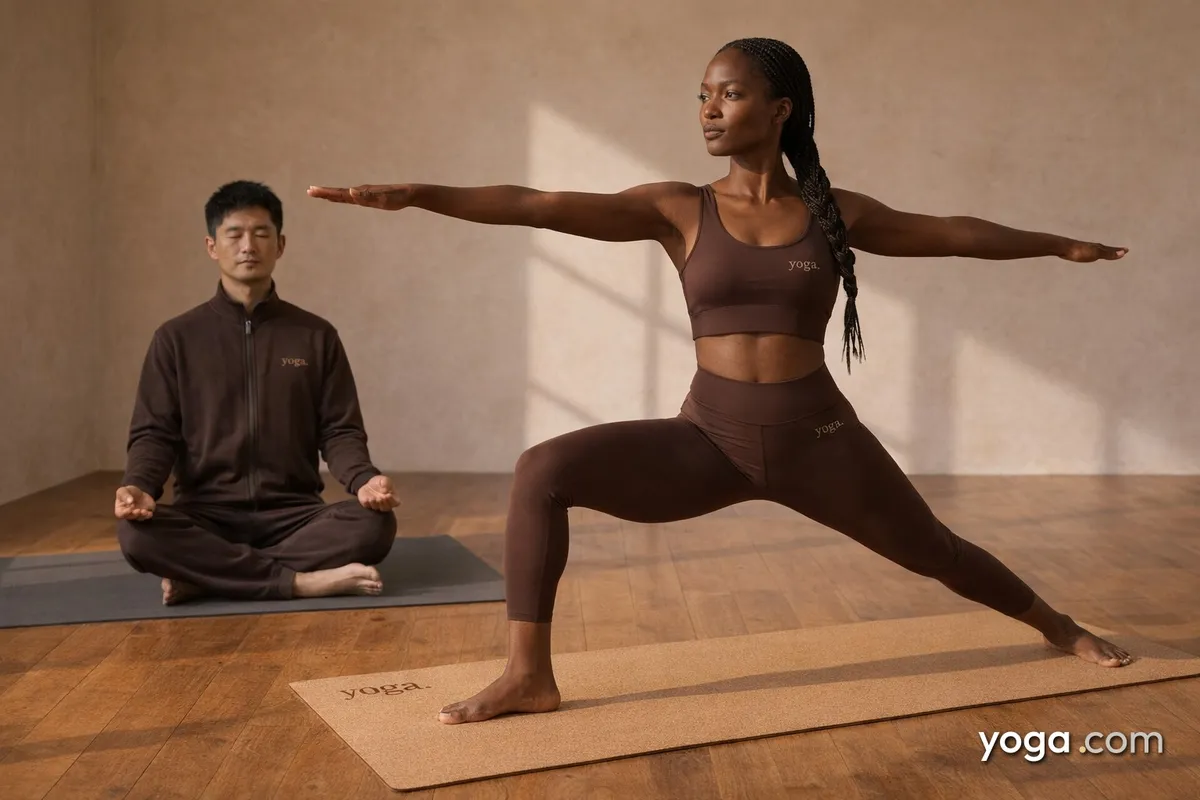
Most studio schedules read like they were written for people who already practice: Vinyasa, Iyengar, Kundalini, Hatha, and hot yoga listed back to back, with no explanation of what any of them actually mean. Once you understand what each style offers, choosing your first class goes from stressful to genuinely exciting. What follows is a clear breakdown.
Why Your Style Choice Actually Matters
Not every yoga class feels the same. Some are slow and restorative; others are sweaty and fast-paced. Walking into the wrong class for your fitness level or temperament is one of the fastest ways to convince yourself that "yoga just isn't for me" - when really, it was just the wrong style.
The research behind yoga's benefits is strong. A 2020 review of 12 studies involving 672 participants found beneficial effects of yoga on perceived stress in all of the studies.. And a 2018 report evaluating 8 trials of yoga for low-back pain found improvements in both the short and intermediate term. But getting those benefits starts with showing up to a class you'll actually return to.
Hatha Yoga - The Best Starting Point for Most Beginners
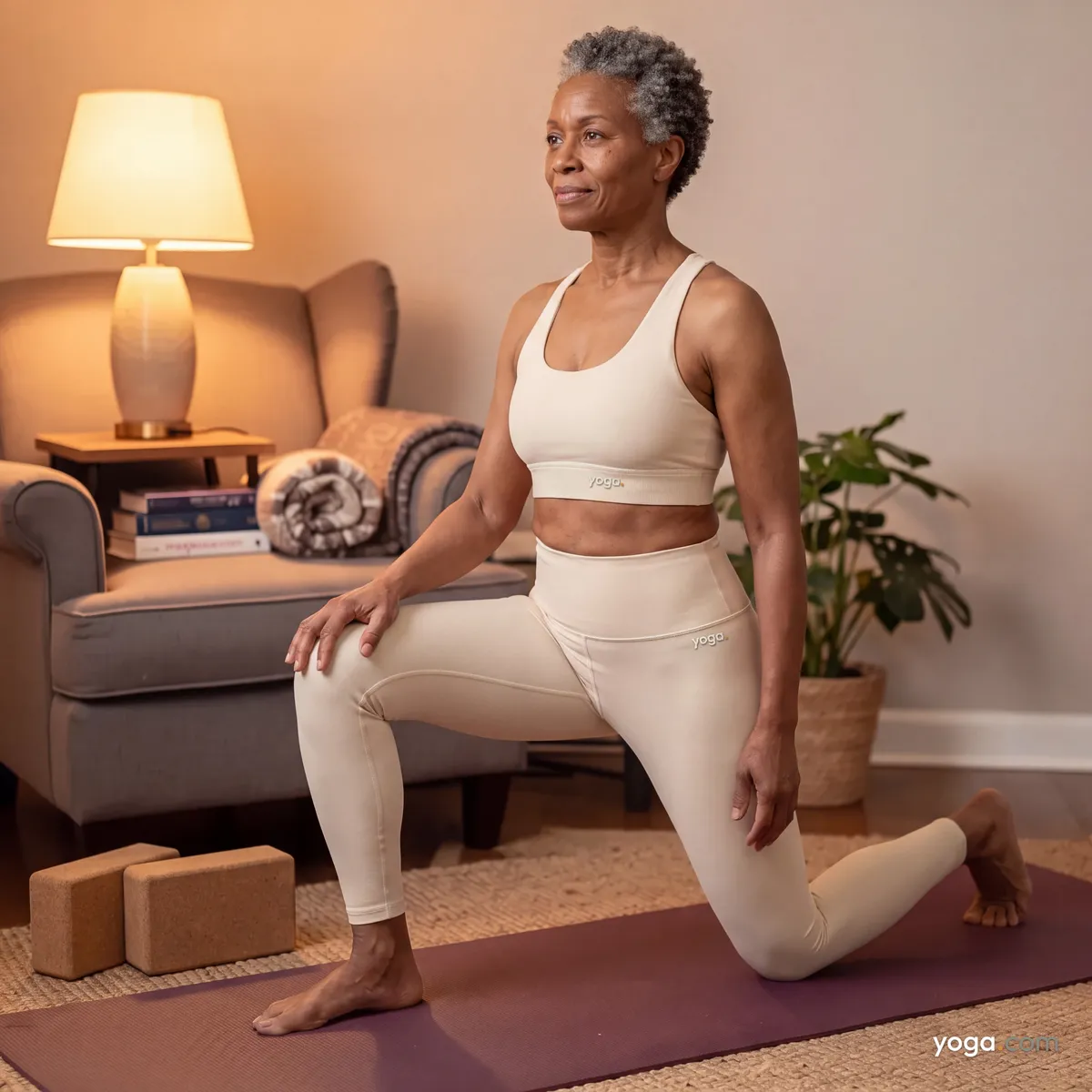
"Hatha" is technically an umbrella term for most physical yoga styles, but in a studio schedule it almost always signals a slower, foundational class. Poses - called asanas - are held longer, cued carefully, and explained step by step. You have time to think about what your body is doing.
If you're brand new, start here. The pace lets you build the pose vocabulary you'll need for every other style.
Common beginner mistake in Hatha
Trying to straighten your legs completely in Standing Forward Fold (Uttanasana) before your hamstrings are ready. A generous bend in the knees with a flat back teaches the right movement pattern far better than locked-out knees with a rounded spine. Your teacher will tell you the same thing - trust them. If you have disc-related or flexion-sensitive low-back pain, skip deep forward folds for now - keep the spine long, hinge only as far as a neutral back allows, and clear the pose with your doctor or physical therapist first.
Vinyasa - For When You Want to Move and Breathe Together
Vinyasa links poses into a continuous flowing sequence, each movement matched to an inhale or exhale. The pace is faster than Hatha, the heart rate climbs, and no two classes look exactly alike - the sequence changes with every teacher.
This style rewards some prior pose familiarity. If you walk in cold, the transitions can feel like a blur. A few Hatha classes first makes Vinyasa dramatically more accessible.
Common beginner mistake in Vinyasa
Collapsing the lower back during the transition from Plank Pose (Phalakasana) to Low Plank (Chaturanga Dandasana). Keep your core firm and let your elbows track straight back along your ribs - don't let them wing out to the sides. When in doubt, drop your knees. Seriously. Everyone does it at first.
Iyengar Yoga - Precision, Props, and Deep Alignment
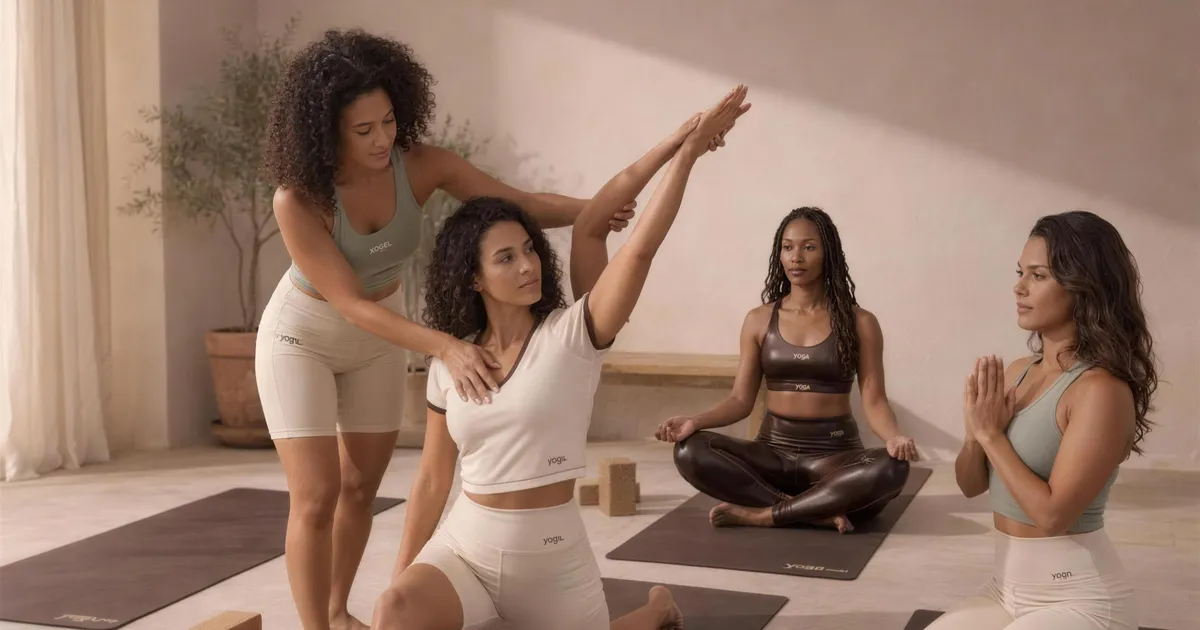
Iyengar yoga is built around one core idea: every body can do every pose - with the right support. Blocks, straps, bolsters, and blankets are not shortcuts or signs of weakness; they are the actual method of this style. Teachers give detailed, specific instructions, and classes move slowly enough for you to really act on them.
This style is particularly well-suited to people managing joint concerns, older adults, or anyone recovering from injury (always consult your doctor first). A national survey of 1,045 yoga practitioners from 15 U.S. Iyengar studios found that participants reported yoga improved their energy (84.5%), happiness (86.5%), and sleep (68.5%). These are self-reported perceptions from a survey, not a controlled trial - but they suggest many dedicated practitioners feel alignment-focused practice benefits their daily life.
Common beginner mistake in Iyengar
Grabbing the lowest prop height out of pride when a taller block would give you better alignment. Using props correctly is the practice. Your teacher placed them on the mat for a reason - use the height that actually helps your body.
Kundalini Yoga - For the Mind as Much as the Body
Kundalini weaves physical poses together with pranayama (breathing exercises), mantra chanting, and meditation. The spiritual dimension is front and center here, and you should know that going in - this is unlike anything you'll find in a conventional fitness class.
A 2019 review of 38 studies involving 2,295 participants found that yoga had a substantial beneficial effect on anxiety symptoms. Kundalini specifically has been studied too: a 2021 NCCIH-supported study found that Kundalini yoga improved generalized anxiety disorder symptoms - though it was less effective than cognitive behavioral therapy. Kundalini yoga is not a replacement for professional mental health care. If anxiety is a serious concern, talk to a qualified professional alongside exploring yoga as a practice.
Is Kundalini right for you?
- You're drawn to the mental and spiritual side of yoga, not just the physical workout.
- You're open to chanting, breathwork, and meditation in a group setting.
- You want a practice that feels distinct from a fitness class.
- Note: some Kundalini breathing techniques involve rapid breathing or breath retention. If you are pregnant, have high blood pressure or a heart condition, or are prone to panic symptoms, talk to your doctor first and tell the teacher - gentler alternatives exist for every exercise.
Hot Yoga - High Demand, Real Rewards, Real Risks
Hot yoga is practiced in a room heated to roughly 35-40°C (95-104°F). The most recognized format is Bikram yoga, a fixed sequence of 26 poses performed in the same order every class. The heat increases sweat, raises cardiovascular demand, and makes muscles feel more pliable.
That last point is the thing most beginners misunderstand.
The heat-flexibility trap
Your range of motion in a heated room is temporarily expanded - but that extra range doesn't belong to you yet. Instructors widely caution that pushing to your absolute limit in the heat is a common way beginners overstretch. Deliberately hold back about 10 percent from your end range. You'll progress more safely and more steadily that way.
Hot yoga may not be suitable if you:
- Have heart conditions or low blood pressure
- Are pregnant
- Are prone to dizziness or heat intolerance
- Are very new to exercise in general
If any of these apply, speak with your doctor before booking a class. This is a style where that caution genuinely matters.
A Quick-Reference Guide to Finding Your Match
- Total beginner, low fitness level: Start with Hatha.
- Beginner who wants a workout: Try a beginner-labeled Vinyasa after a few Hatha classes.
- Managing joint issues or recovering from injury: Iyengar (with your doctor's sign-off).
- Stressed, anxious, or curious about the spiritual side: Kundalini.
- Comfortable with yoga basics and want intensity: Hot yoga - with care.
One More Thing Worth Knowing
Your first choice doesn't have to be permanent. A national survey found that the mean years of yoga practice among regular practitioners was 11.4 years, with participants ranging in age from 19 to 87. Most long-term yogis have explored several styles. Think of your first class as an introduction, not a commitment.
Putting It All Together
The best type of yoga is the one you'll show up to consistently. Match the style to where you are right now - your fitness level, your goals, your comfort with the unfamiliar - and give it a genuine try for a few weeks. The poses, the breath, the community: it all compounds over time in ways that are hard to predict from the outside. Start somewhere. The rest follows.