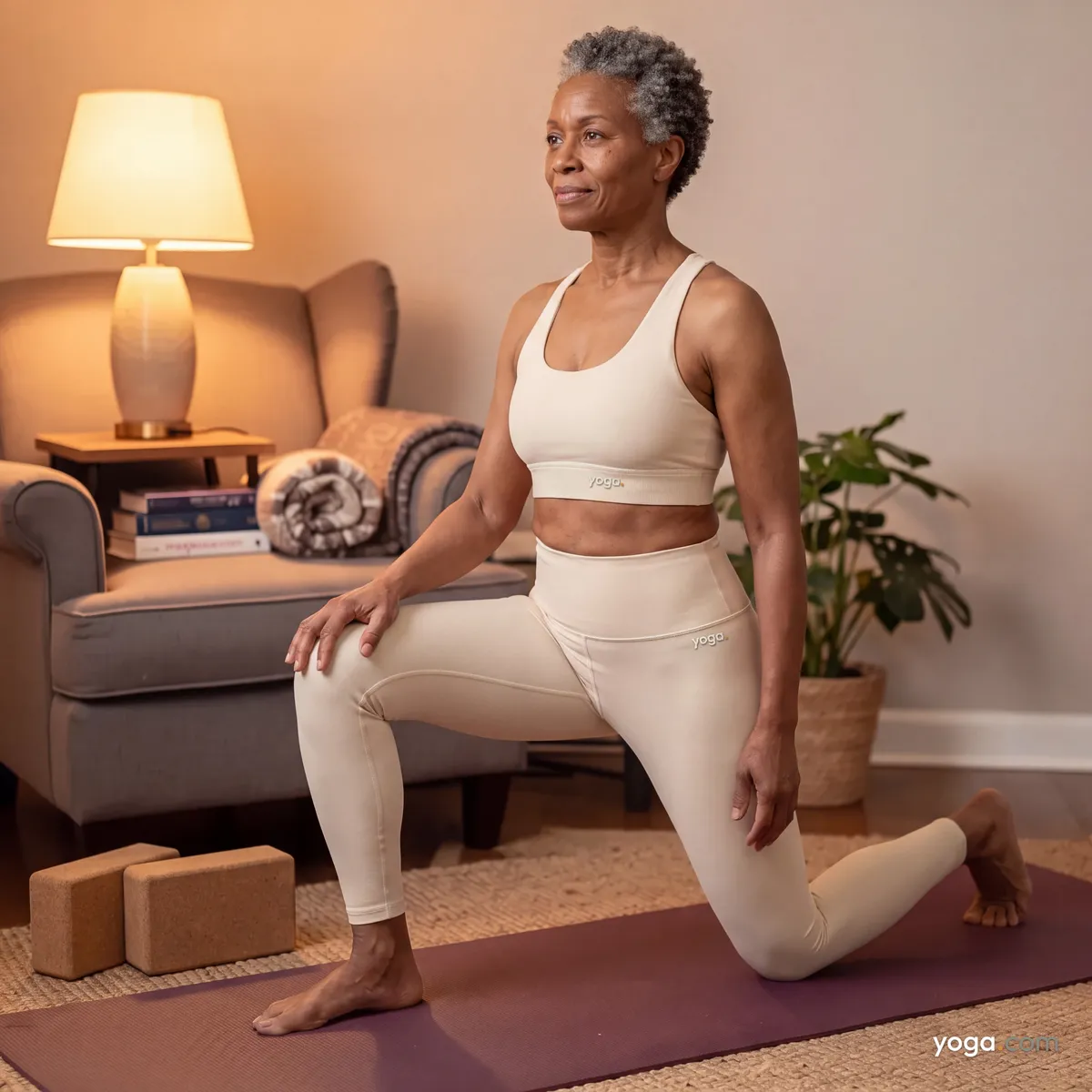
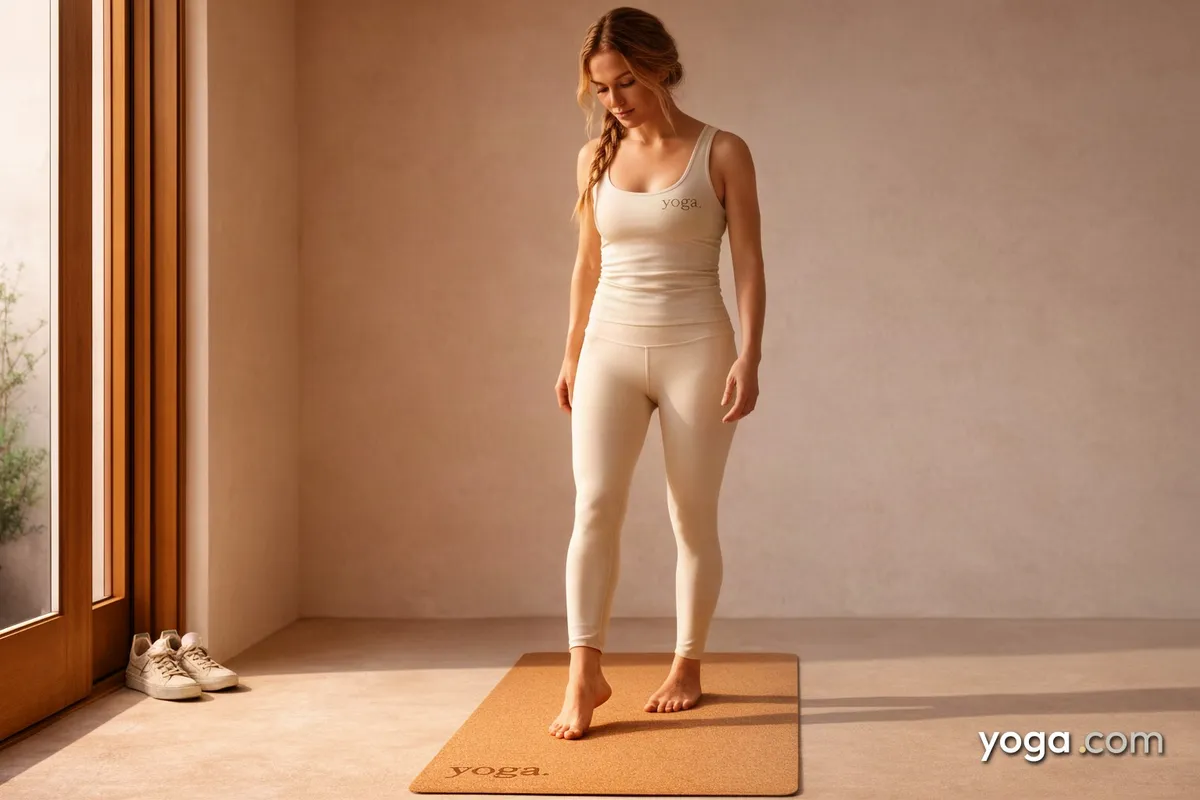
Bare feet in yoga can look like plain studio etiquette - a house rule, nothing more. They're not. Practicing barefoot is one of the tradition's oldest and most purposeful choices, and the reasons run much deeper than keeping the floor clean.
A Tradition That Has Always Been Shoe-Free
Yoga is a 3,000-year-old tradition rooted in a holistic philosophy of body, breath, and mind. From the very beginning, practitioners moved on bare earth, stone temple floors, and woven mats and they never wore shoes and this was not an accident. Practicing without shoes was always done on purpose. It was an intentional choice, not something that was overlooked.
Removing your shoes is an act of respect and presence. Keep in mind that in many cultures, going barefoot before entering a sacred space is a way of signaling that you are leaving the outside world behind and so your mat becomes that same kind of space the moment your bare feet touch it. The act of taking off your shoes tells your mind and your body that something different is about to begin. Your mat is your space, and bare feet are how you enter it.
What Happens to Your Feet (and Your Whole Body) When You Go Bare
Your feet are extraordinary. Each foot contains 26 bones, 33 joints, and more than 100 muscles, tendons, and ligaments. Shoes - even good ones - limit how all of that works together. Yoga gives those structures room to breathe, engage, and strengthen. Your feet are doing serious work, and shoes can get in the way of that work.
A review of seven studies involving 213 participants found that barefoot and minimalist footwear training led to significant improvements in intrinsic and extrinsic foot muscle volume, medial arch function, toe flexor strength, and neuromuscular control. In plain terms: going without shoes builds stronger, more functional feet. Keep in mind that stronger feet are not just a foot benefit - stronger feet support your whole body from the ground up.
Better balance and body awareness
When your soles are in direct contact with the mat, your nervous system gets constant, real-time feedback about where your body is in space and because your nervous system gets that feedback so directly, your nervous system can help you find steadiness in Tree Pose (Vrksasana) or feel your weight shift in Warrior II (Virabhadrasana II). Shoes dull that signal. Bare feet amplify it. On top of that, the more you practice with bare feet, the better your body awareness tends to become over time.
Grip you can actually trust
Socks slide. Shoes have rigid soles that can't spread or splay across the mat and so your feet never get the chance to grip the mat the way your feet are actually able to grip. Your bare feet, especially as your feet grow stronger, can grip the mat actively - spreading the toes, pressing through the heel, lifting the arch. That active engagement is the foundation of almost every standing pose, and your standing poses will feel more stable because of it.
The Ground Beneath You: A Note on Earthing
Take your barefoot practice outside on grass, sand, or soil and something else may come into play. Grounding, or earthing, refers to direct skin contact with the surface of the Earth, such as with bare feet or hands. Early research in this area is intriguing and worth knowing about, though the research is still developing and earthing should not replace medical advice for you or anyone else.
If you would like to explore barefoot outdoor practice intentionally, options exist across the country and you have more choices than you might expect. The Barefoot Trail in Flagstaff, Arizona - considered the only grounding park in the country - is open from May through October for $14. Keep in mind that you can also go for something more immersive if a simple trail does not feel like enough. A guided hiking and yoga experience in Zion National Park includes a 2.5-mile hike followed by a one-hour yoga and meditation practice for $189. On top of that, you can keep your barefoot practice simple and coastal because beach-front full moon yoga classes in Pompano Beach, Florida have been led by yoga teacher Juliana Trejo for more than a decade, at just $20 a class. These beach-front classes are a very accessible way for you to combine barefoot movement with the outdoor environment.
The Whole-Body Benefits of a Regular Practice
The barefoot element is one piece of a much larger picture. Yoga as a whole - movement, breath, stillness - offers a wide range of benefits that researchers have begun to map in detail. Yogic practices enhance muscular strength and body flexibility, promote respiratory and cardiovascular function, reduce stress, anxiety, depression, and chronic pain, improve sleep, and enhance overall well-being.
If stress is your main motivation for showing up to the mat, the evidence is specific: A 2020 review of 12 studies with 672 total participants found beneficial effects of yoga on perceived stress in all of the studies.
How to Set Up Your Barefoot Practice for Success
Going barefoot is simple, but a few small habits make a real difference - especially if your feet aren't used to this kind of engagement.
- Clean your mat regularly. A barefoot practice means your mat collects more skin contact. Wipe it down after each session with a mat-safe spray.
- Warm up your feet first. Before class, curl and spread your toes, roll each foot over a block or tennis ball, and circle your ankles. Thirty seconds each side is enough.
- Learn to spread your toes actively. In every standing pose, consciously lift and spread all five toes, then lower them one by one. This wakes up the small muscles that shoes have been doing the work for.
- Press through all four corners of each foot. Think: big toe mound, little toe mound, inner heel, outer heel. This is your foundation in virtually every pose.
- Go slowly if your feet are new to this. Barefoot strength builds gradually. If the balls of your feet ache in your first few sessions, that's normal - it passes.
When Shoes (or Grip Socks) Might Make Sense
There are genuine exceptions. If you have a foot condition - plantar fasciitis, neuropathy, or a wound that needs to stay covered - talk to your healthcare provider before ditching footwear entirely. Your doctor or physical therapist can guide what's safest for your situation.
Grip socks are a reasonable middle ground for practitioners who need some coverage. They offer traction and protect sensitive skin while still allowing much more foot articulation than a shoe. Just know that they do reduce sensory feedback compared to fully bare feet.
Simple Poses That Highlight Why Bare Feet Matter
Try these back-to-back in your next practice and notice how much more connected you feel underfoot:
- Mountain Pose (Tadasana) - the blueprint for every standing pose. Feel all four corners of each foot pressing equally into the mat.
- Tree Pose (Vrksasana) - balance becomes dramatically more accessible when your standing foot can grip and respond freely.
- Warrior III (Virabhadrasana III) - your toes actively engage to keep you stable as you hinge forward.
- Chair Pose (Utkatasana) - notice how your weight shifts toward your heels; bare feet help you find that without guessing.
- Child's Pose (Balasana) - even here, the tops of your feet resting on the mat creates a gentle stretch through the ankle and instep that shoes block entirely.
One Last Thing
The barefoot practice isn't a quirk or a rule for its own sake. It's the foundation - literally. Removing your shoes connects you to the mat, wakes up muscles that footwear keeps dormant, sharpens your balance, and honors a tradition that has been refining these movements for thousands of years. Take them off, feel the floor, and let your feet do what they were designed to do.
Sources
- PMC / National Institutes of Health - Effects of Yoga on Mental and Physical Health
- PMC / National Institutes of Health - Earthing: Health Implications of Reconnecting the Human Body to the Earth's Surface Electrons
- PMC / National Institutes of Health - Effects of Barefoot and Minimalist Footwear on Foot Muscle Structure and Function
- Yoga Journal - The Barefoot Trail
- National Center for Complementary and Integrative Health - Yoga: Effectiveness and Safety