You sit down to dinner, someone says something small and true, and then a phone lights up on the counter — and the moment dissolves. Living mindfully with technology at home isn't about willpower or being anti-screen. It's about designing your space and routines so presence becomes the path of least resistance.
Why This Is Harder Than It Looks
Most of us want to be more present. The simple fact is that the gap is not about intention — it is about design. Social media platforms are built around variable reward schedules, infinite scrolling, and perfectly timed notifications and so the pull you feel to check your phone is not a personal failing because it is an engineered outcome. Keep in mind that the pull you feel is the result of systems that were carefully designed to keep you coming back.
And it is not just you. More than 20 percent of Americans say they feel overwhelmed by the volume of digital information they receive each day, according to Pew Research. That overwhelm tends to spill into every room of your home, and that overwhelm can affect your relationships, your focus, and your overall sense of calm. The simple fact is that when digital overload follows you into your home, your home stops feeling like a place of rest.
What Heavy Screen Time Actually Does to a Household
The effects ripple across age groups and across every person living in the home. For teenagers specifically, the data is clear: teens with higher non-schoolwork screen use were more likely to experience depression symptoms, anxiety, insufficient peer support, and irregular sleep. Researchers defined high daily screen time as four or more hours of non-schoolwork use per day and so even a few extra hours can push your teenager into that higher-risk group.
Heart health is part of the picture, too. The simple fact is that only 29% of American youth ages 2–19 had favorable cardiometabolic health, based on national survey data, and screen time was a contributing factor in those outcomes. Keep in mind that this means most young people in your home may already be affected.
Adults are not off the hook either. The device sitting on the table — even face-down, even silent — takes a quiet toll on every conversation happening next to it because your brain still knows the device is there and so your attention is never fully present. Knowing the device is there costs something real, and that cost adds up over every meal and every conversation you have with the people around you.
The Case for a Physical Boundary (Not Just a Mental One)
A "no phones at dinner" rule that lives only in your head will lose to a notification every time. The simple fact is that physical friction works better than a mental rule. When your phone is in another room, you cannot half-attend to it, and so your attention stays where it belongs.
A small bowl by the front door — for keys, yes, but also for phones — is a low-tech, high-impact solution. The phone lands in the bowl when you walk in. The phone waits there. Your hands are free for whatever happens next, and your mind is not pulled back to a screen sitting on the table.
This isn't abstract. Keep in mind that limiting social media to just 30 minutes per day for three weeks was linked to decreased loneliness and depression, according to a 2018 study in the Journal of Social and Clinical Psychology. Less screen time doesn't just free your attention — less screen time can genuinely shift your mood, and that is a meaningful difference for your daily life.
Boundaries That Actually Hold: A Room-by-Room Plan
The Kitchen and Dining Room
Bedrooms and Sleep
Living Spaces
How to Bring Kids Along (Without a Power Struggle)
Rules handed down from above rarely stick. Boundaries built together do. Four in five parents are actively looking for well-being and mindfulness content for their children, according to Google research — the appetite is there. The simple fact is that the key is making the process collaborative, not punitive, and when you make it collaborative your kids are far more likely to actually follow through because the boundary feels like their own idea and not a rule imposed on them from outside.
A Yoga Practice That Reinforces the Boundary
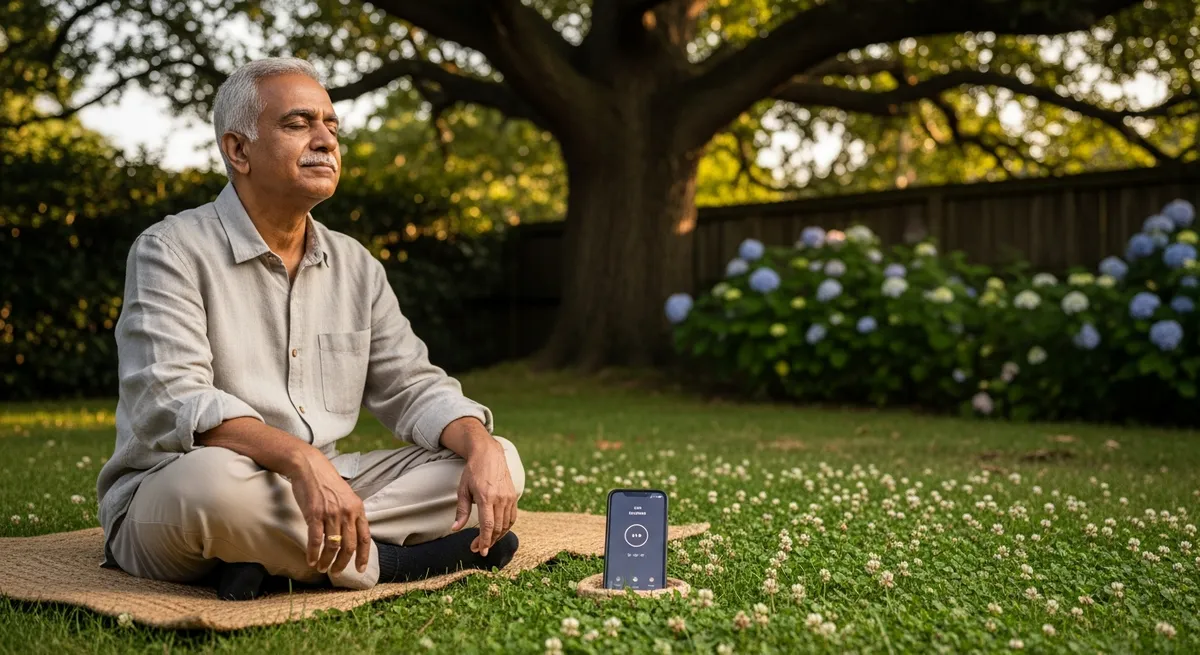
Your mat can be a natural phone-free anchor in the day and it can serve this purpose even if you only have a short amount of time to spare. Even a short home practice — 15 minutes of Child's Pose (Balasana), Cat-Cow (Marjaryasana-Bitilasana), and Legs-Up-the-Wall (Viparita Karani) before bed — creates a ritual that signals the transition from screen time to rest. The simple fact is that your brain needs a clear signal that the screen time is over, and a consistent yoga practice gives your brain exactly that signal.
The breath is the original notification. Keep in mind that when you practice returning to your breath on the mat, returning to your breath at dinner becomes easier, too. On top of that, the more you repeat this habit on your mat, the more natural the habit feels away from your mat because your body starts to remember what calm actually feels like.
One Honest Caveat
Mindfulness practices aren't a magic fix, and pushing too hard into any wellness habit can backfire. If anxiety, sleep disruption, or mood concerns feel significant in your household, please talk to a qualified healthcare provider. These boundaries support wellbeing — they don't replace professional care.
The Bottom Line
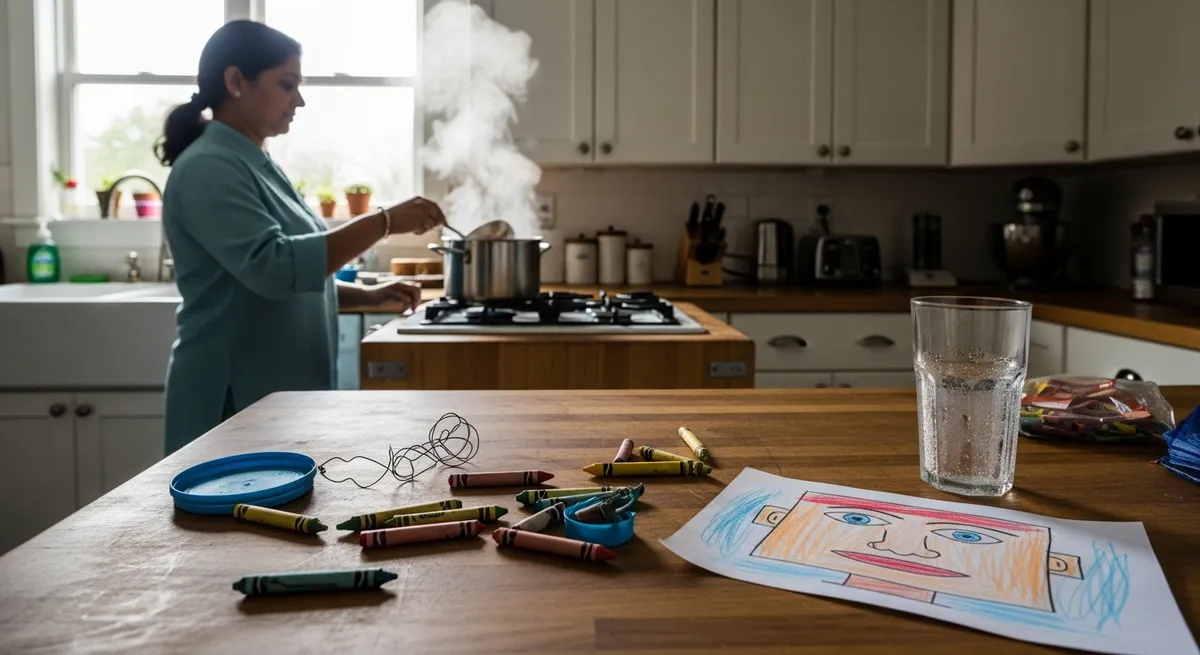
Mindful technology at home isn't about perfection or going offline. It's about making the moments that matter — a drawing slid across the table, a school concert, dinner with nothing on the counter but a blue lid — easier to actually catch. Small, physical changes to your home environment do more than willpower alone. Start with one room. Start with one bowl. See what fills it.