You probably already go for a walk most days - to clear your head, walk the dog, or just get outside for a few minutes. What if that same walk could also sharpen your focus, ease stress, and leave you genuinely calmer? That's the promise of mindful walking, and it requires no extra time, no gear, and no experience with meditation.
What Mindful Walking Actually Is
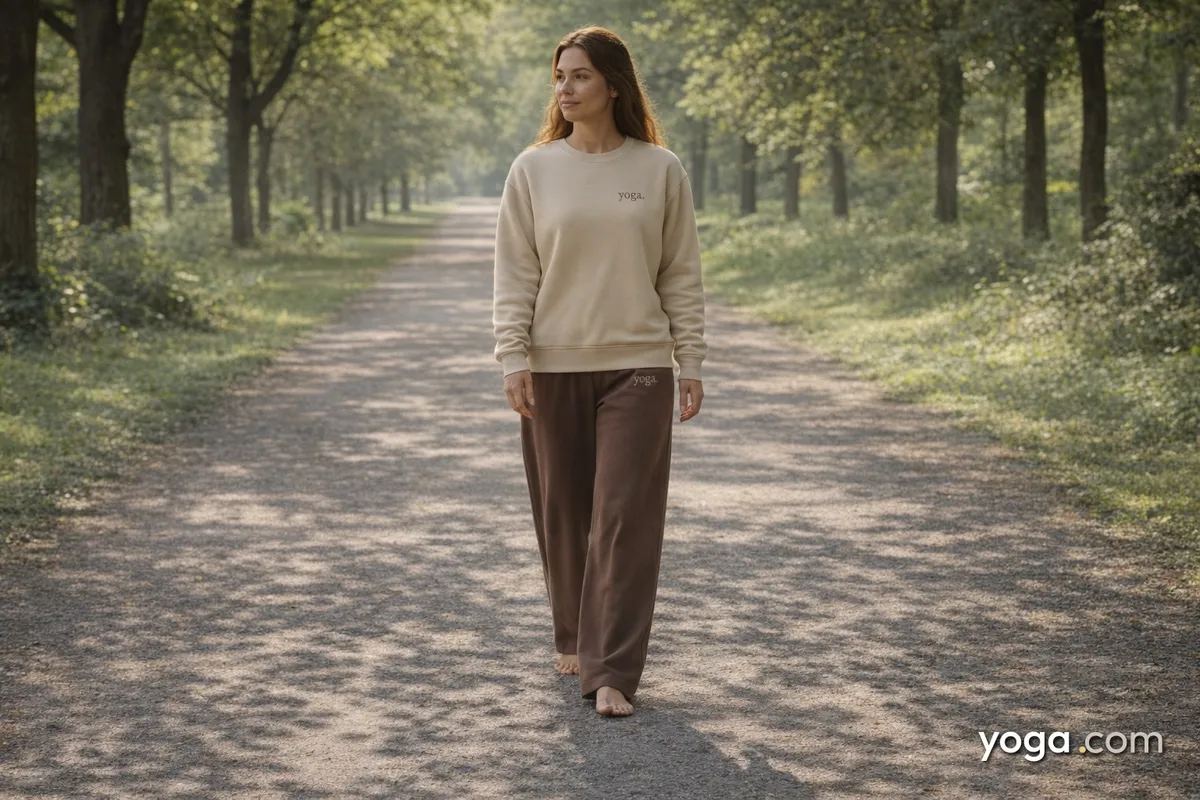
Mindful walking isn't about walking faster or farther. Mindful walking is about paying deliberate attention while you move - to your feet on the ground, your breath, the sounds around you, the way your body feels with each step. That is really the whole point of mindful walking.
Most of us walk while mentally rehearsing tomorrow's meeting or scrolling through worries. Mindful walking asks you to do the opposite: bring your attention to this step, this breath, this moment. And when your mind wanders - because your mind will wander - you gently bring your attention back. Keep in mind that returning your attention is not a failure. Returning your attention is literally the practice, and this is important to understand because many beginners think drifting thoughts mean they are doing something wrong.
Think of mindful walking as moving meditation. On top of that, mindful walking follows the same basic principle as sitting meditation, just with your feet doing something useful at the same time.
Why It's Worth Doing: What the Research Shows
The evidence behind mindful walking is genuinely encouraging, especially for stress and mood. The research gives you real reasons to take this practice seriously.
- A 2013 randomized controlled trial found that participants in an 8-session mindful walking program showed dramatically greater reductions in perceived stress than a control group - a difference that was statistically significant (P < 0.001).
- A 2019 pilot study of adults with low physical activity found that a 4-week mindful walking intervention produced significantly greater reductions in perceived stress than the control group (p = .025) and so this study adds more support to the idea that mindful walking is a practical tool for your stress levels.
- A 2018 study found that even a single 10-minute bout of brisk walking significantly decreased fatigue and inertia scores in young adults compared to sitting quietly - a quick, accessible mood boost that you can get without a long time commitment.
- A 2022 randomized control study of 104 university students found that a daily 35-minute mindful walk for 7 days led to significant improvements in trait mindfulness, sleep quality, and mood - whether the walks happened in nature or an urban setting, and this means your environment does not have to be perfect for you to benefit.
Keep in mind that these are not sweeping cure-all claims. But taken together, the studies point to something real: walking with intention, done consistently, does more for your mind than the same walk done on autopilot. On top of that, the research shows again and again that the mindful part of the walking is what makes the walking more effective for your mood and stress.
How to Do It: A Step-by-Step Guide for Beginners
Before you start
- Put your phone in your pocket - or leave it behind entirely.
- Choose a familiar route so navigation does not compete for your attention.
- Start with just 10-15 minutes. A short and present walk beats a long and distracted one.
During the walk
- Anchor to your feet first. Notice the heel making contact with the ground, the weight rolling forward through the arch, the toes pushing off. Repeat this simple movement. This simple rhythm gives your attention somewhere steady to land, and that is exactly what you need as a beginner.
- Layer in the breath. Once your feet feel natural, also notice your inhale and exhale. You are not trying to change the breath at all - just observe the breath moving in and out of your body.
- Open to sounds and senses. What do you hear around you? What does the air feel like on your skin? Keep in mind that you are not analyzing anything - you are just noticing what is already there.
- When the mind wanders, return. Your mind will drift into planning, replaying, or worrying, and that is completely normal because that is simply what minds do. The moment you notice your mind has wandered, gently redirect your attention back to your feet or your breath. Each return counts, so do not treat any return as too small.
Rotating your focus (for when one anchor gets dull)
If staying with one point of attention starts to feel flat or boring, try cycling through different anchors - a few minutes on your feet, then your breath, then the sounds around you. This rotating approach is used in formal mindfulness programs and works especially well for beginners who find a single focus too repetitive.
Where and When to Practice
Here's the good news: location doesn't have to be special. The 2022 study cited above found meaningful improvements in mindfulness, mood, and sleep whether students walked in nature or in an urban environment. Your neighborhood sidewalk is enough.
The best time to practice is whenever you're already walking. Walking to the coffee shop, walking the dog, walking to your car - these are all opportunities. You're not adding time to your day; you're changing the quality of attention you bring to time you already have.
Common Mistakes to Avoid
- Confusing a pleasant walk with a mindful one. Feeling calmer after a walk doesn't automatically mean you were practicing. The key ingredient is the repeated, intentional redirect - noticing where the mind went and bringing it back.
- Starting with too long a walk. A 45-minute walk is harder to stay present for when you're new to this. Build the skill in shorter sessions first.
- Expecting a quiet mind. Mind-wandering isn't a sign you're doing it wrong. It's simply what minds do. The practice lives in the returning, not in achieving some perfect stillness.
- Skipping it when life gets busy. That's precisely when it matters most. Even 10 minutes counts.
When Mindful Walking Is Especially Useful
Feeling anxious or overwhelmed? A mindful walk can sometimes be easier than sitting still to meditate. Movement gives the nervous system something productive to do, and the attentional focus keeps the walk from spiraling into a loop of worried thinking.
Struggling with sleep? The 2022 study found that a consistent daily mindful walk improved sleep quality for participants over just one week. A 35-minute walk at the same time each day is a simple format to try.
That said - mindful walking is a wellness tool, not a clinical treatment. If anxiety, depression, sleep disorders, or other mental health concerns are significantly affecting your daily life, please speak with a qualified healthcare professional about what's right for your situation.
Building the Habit So It Actually Sticks
New habits form most reliably when you attach them to something you already do. Identify one walk in your existing routine - the lunch break loop, the evening dog walk, the commute - and make that your mindful walking slot. Same walk, same time, just with your phone in your pocket and your attention on your feet.
One week of consistent practice is all it takes to start noticing a difference. Not a dramatic transformation. A small, real one. Small differences compound.
Every Step, a Practice
Mindful walking is one of the most accessible practices there is. No mat, no studio, no special schedule - just you, your feet, and the willingness to pay attention. Start with 10 minutes today. Notice the ground beneath you. When your mind wanders, bring it back. Do it again tomorrow. That's the whole thing - and it's more powerful than it sounds.
Sources
- PMC / NCBI - Randomized Controlled Trial of Mindful Walking (2013)
- PubMed - Pilot Study of Mindful Walking Intervention in Older Adults (2019)
- PMC / NCBI - Effects of Brisk Walking and Meditation on Mood in Young Adults (2018)
- PMC / NCBI - Mindful Walking in Nature and Urban Environments: RCT in University Students (2022)