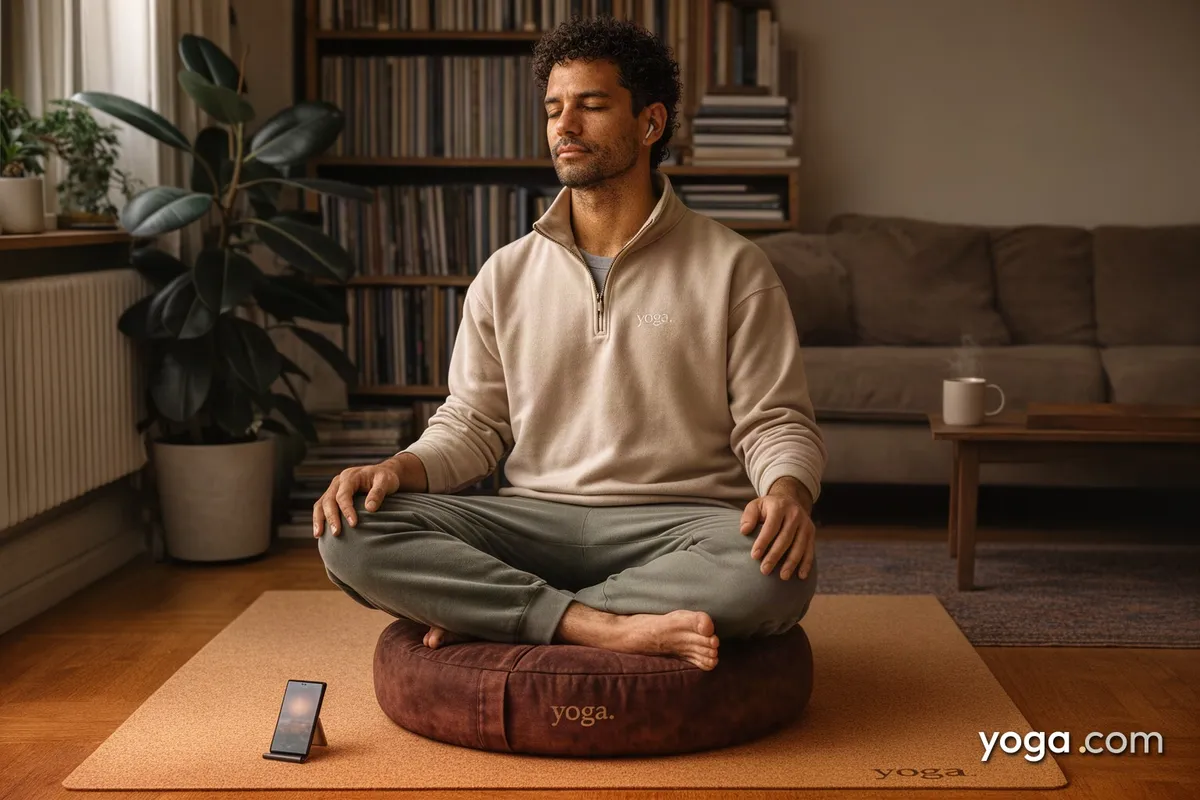
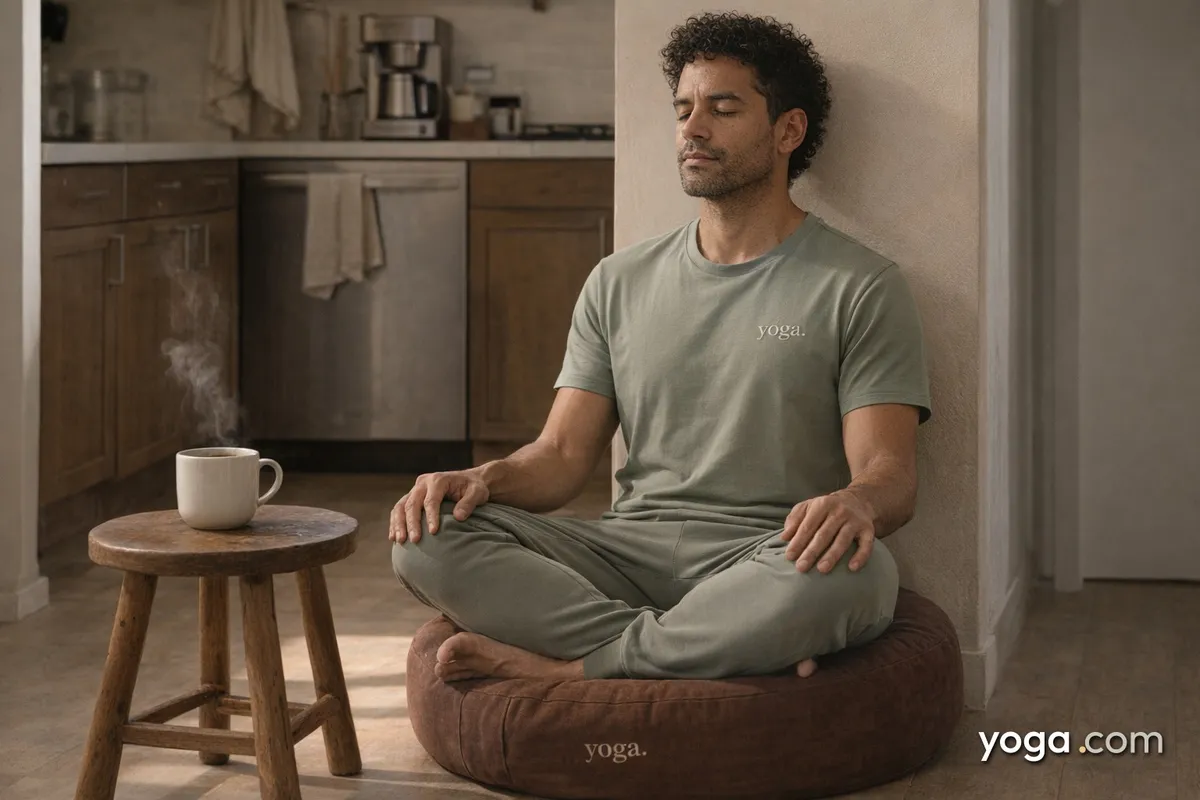
You sit down, close your eyes, last five minutes, and feel like you did it wrong. A week later the cushion is collecting dust. Sound familiar? Building a real daily meditation practice isn't about willpower or perfect technique - it's about understanding what actually makes a habit form, and setting yourself up so the practice is almost impossible to skip.
Why Most Meditation Habits Fall Apart Early
The gap between intention and follow-through is very real. Dropout rates in meditation app interventions typically range from 21 to 54 percent - and that is among people who actually paid for access. Motivation alone will not carry you through. What does help you stay consistent? Consistency of context: the same time, the same place, day after day and so your brain starts to connect the environment with the habit because repetition of context is what really builds the routine.
Keep in mind that you should not panic if your practice does not feel automatic after three weeks. The popular "21-day habit" idea has no real research behind it, and the idea is repeated a lot but it is not supported by evidence. Habit formation timelines vary enormously from person to person - some people need just a few weeks, and other people need several months. Early repetitions do the heaviest lifting, though. That means the first few weeks of your daily practice matter most, even when those first few weeks feel awkward or unremarkable. On top of that, the early sessions you complete are building the foundation that the rest of your habit will rest on, so it is worth pushing through even when your meditation sessions feel unimpressive.
The Best Time of Day to Meditate (Yes, It Matters)
Morning has a real edge over other times of day - and not just because the house is quieter. A 2023 study analyzing nearly 900,000 meditation app sessions found that morning meditators showed the smallest drop-off in practice over 180 days, and that a greater proportion of morning meditation was significantly linked to better short-term engagement and long-term use. Late-night sessions, by contrast, were associated with worse short-term engagement and lower long-term use.
That said: an evening session you actually do beats a morning session you keep skipping. Pick a time that genuinely fits your life. Then protect it.
Anchor Your Practice to Something You Already Do
Habit stacking is one of the most effective tools you have. Instead of scheduling meditation as a stand-alone event you have to remember, attach it directly to an existing routine.
- Right after your morning coffee or tea
- Immediately after brushing your teeth
- Before you open your phone in the morning
- Just after you sit down at your desk to start work
Research backs this up. A 2023 observational study found that meditating after an existing routine was associated with a significantly lower risk of abandoning the practice - for both pre-pandemic and pandemic-era subscribers. When the habit has something solid to lean on, it holds.
Start Embarrassingly Small
The single biggest mistake beginners make is starting too long. Thirty minutes on day one almost always leads to frustration and quitting. Your brain needs repetition far more than it needs duration - at least in the beginning, and so starting small is not a weakness but a smart strategy.
Here's a simple progression to try:
- Weeks 1-2: Five minutes every day. No exceptions.
- Weeks 3-4: Extend to eight to ten minutes if five feels easy.
- Month 2 onward: Build toward fifteen to twenty minutes only when the shorter sessions feel fully automatic.
Keep in mind that short and daily will always outperform long and occasional when you are building a new habit. On top of that, rushing the process is one of the main reasons beginners give up before the habit has time to form, and so you want to resist the urge to jump ahead too quickly. Short daily practice is the real foundation, and short daily practice is what your brain needs most right now. Do not rush the process.
What to Do When You Miss a Day
Missing one day is not the same as quitting. One skipped session does not reset your progress. What derails a habit is missing two or three days in a row - so the rule is simple: never miss twice.
Notice the skip, set no shame spiral in motion, and show up the next day for even five minutes. That's it. The habit is more resilient than it feels in those early weeks.
Why a Daily Practice Is Worth the Effort
The potential benefits of a consistent meditation practice are well-documented - and worth knowing about as you build your motivation to keep going.
Mental health support
A 2018 NCCIH-supported analysis of mindfulness meditation approaches - involving more than 12,000 participants with diagnosed psychiatric disorders - found that mindfulness-based approaches were better than no treatment and worked as well as evidence-based therapies like cognitive behavioral therapy and antidepressant medications. That's a significant finding. It doesn't mean meditation replaces professional care - if you're dealing with serious anxiety or depression, please work with a qualified health professional - but it does suggest that a consistent practice can be a meaningful support.
Sleep quality
A 2019 analysis of 18 studies found that mindfulness meditation practices improved sleep quality more than education-based treatments. If restless nights are part of why you came to meditation, the research is genuinely encouraging.
Blood pressure
A 2020 review of 14 studies found that for people with conditions such as hypertension, diabetes, or cancer, practicing mindfulness-based stress reduction was associated with a significant reduction in blood pressure. Always consult your doctor before changing any approach to managing a health condition.
Pain management
A 2017 analysis of 30 studies found that mindfulness meditation was more effective at decreasing chronic pain than several other forms of treatment. Promising - though not a substitute for medical care.
A Note on Apps and Guided Sessions
If sitting in silence feels impossible at first, guided audio is a perfectly valid starting point. Apps like Headspace, Calm, Insight Timer, and Ten Percent Happier offer sessions tailored to beginners and busy schedules. Use them as a scaffold - something to help you show up consistently - rather than a permanent crutch.
One caveat: daily active use of health apps among paying subscribers is generally less than 4 percent. An app is a tool, not a habit. The habit lives in you.
A Quick-Reference Checklist for Building Your Practice
- ✓ Choose one consistent time of day (morning tends to work best for most people)
- ✓ Attach meditation to an existing daily routine
- ✓ Start with just five minutes - seriously
- ✓ Designate one spot in your home as your meditation space
- ✓ If you miss a day, simply start again tomorrow - no drama
- ✓ Expect benefits to emerge over weeks and months, not days
- ✓ For any serious physical or mental health concerns, speak with a professional
Consistency Changes Everything
A daily meditation habit is built the same way any lasting habit is built: through small, repeated actions anchored to consistent context, not through grand gestures or perfect conditions. Small actions done consistently every day are what create a real habit. Start small. Show up at the same time each day. Stack your meditation onto something you already do every day and so the habit becomes easier to remember because it is attached to an existing routine. Be patient with yourself when you stumble, because you will stumble sometimes, and that is completely normal and it does not mean you have failed. Repeat the noun here: your meditation practice is still your meditation practice even after a missed day. The percentage of U.S. adults who practice meditation more than doubled between 2002 and 2022 - meaning more people than ever are finding their way to a regular practice. Keep in mind that you can find your way to a regular practice too. Five minutes tomorrow morning is all it takes for you to begin.