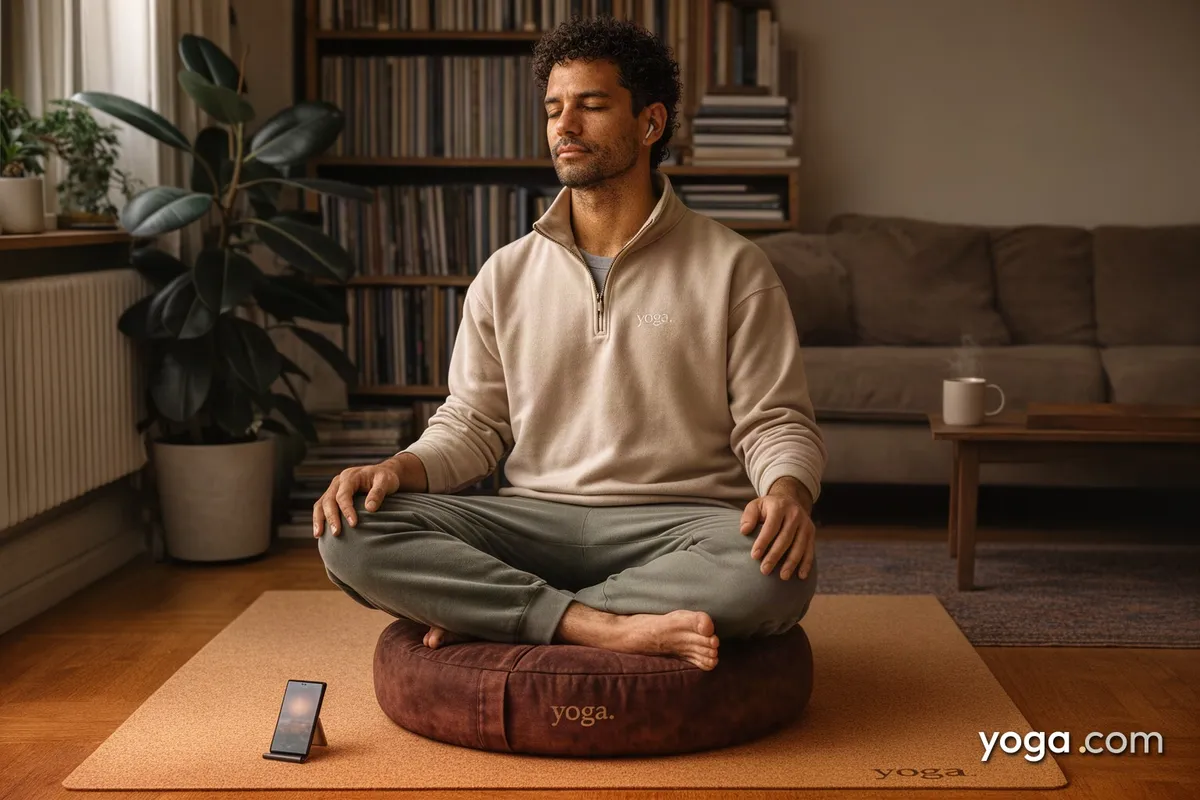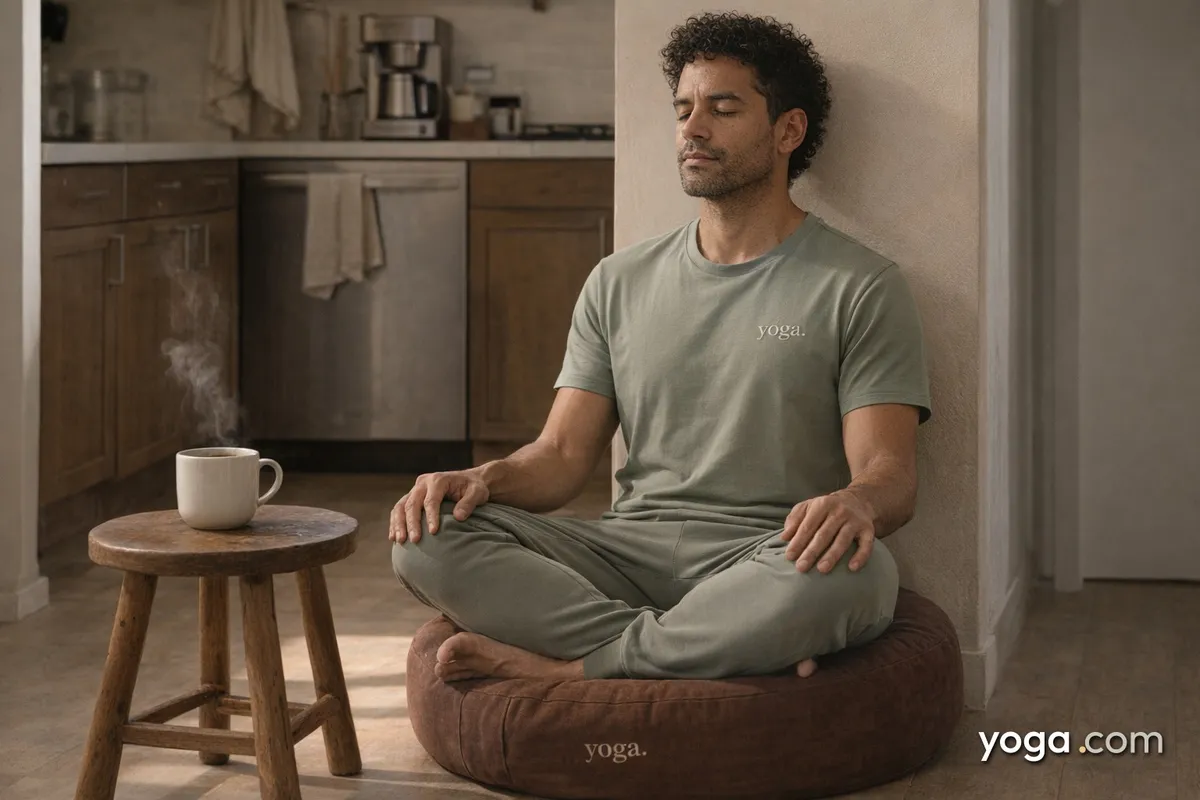
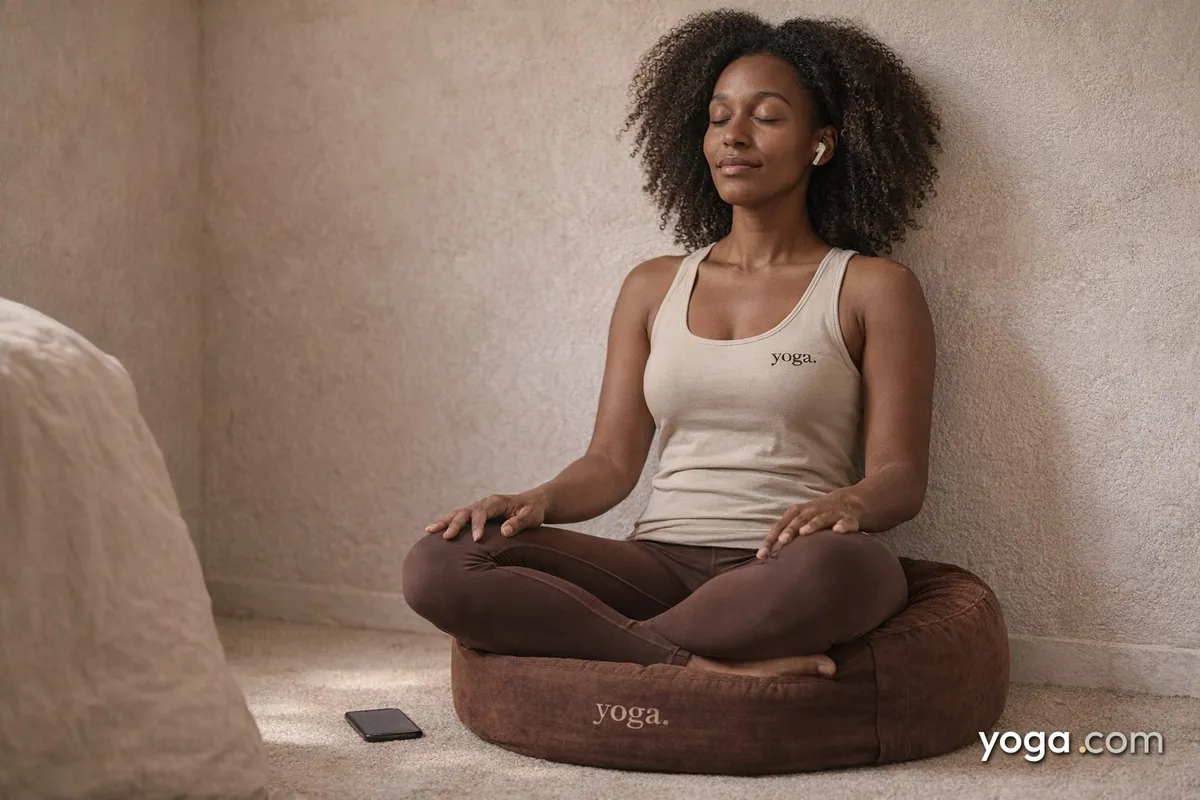
The usual arc with a meditation app is a download, maybe a paid subscription, two or three sessions where something starts to shift - then a busy week, and the icon slips into a folder. That pattern isn't about motivation, and it doesn't mean you're broken. It's about setup. This guide is about getting the setup right, so the practice sticks past the one-month mark.
Why Most People Stop (and Why That's Not Your Fault)
The drop-off is real and it's steep. Only 4.7% of initial users continue using a meditation app after 30 days, and the average lifetime use is just 1-4 sessions. That's not a willpower problem - it's a design problem. Most people open the app without a clear plan for when, how long, or how to make it feel worth returning to.
The good news? The bar for "enough" is lower than you think. Just 10 to 21 minutes of meditation app exercises done three times a week is enough to see measurable results. You don't need an hour of silence at dawn. You need a small, repeatable routine you can actually do.
Start Embarrassingly Small
On day one, ignore most of the app. Don't explore every course, sleep story, or breathwork module. Pick one beginner session - five minutes is perfect - and finish it. A short session you complete beats a long one you abandon halfway through, every time.
Think of your first two weeks as proof-of-concept, not transformation. You're training yourself to open the app and sit down, not to reach enlightenment. Lower the stakes and you lower the resistance.
A simple first-week plan
- Choose one guided session type (breath focus is a solid default)
- Set a session length of 5-10 minutes
- Pick a soft, gentle ending chime - not a jarring alarm
- Do it three times before you change anything
Stack It onto Something You Already Do
This is the single most practical thing you can do to stay consistent. People who stacked their meditation onto an existing routine were much less likely to abandon the app - the research is clear on this. Think of it as piggybacking: morning coffee, brushing your teeth, feeding the cat. The existing habit becomes the trigger for your new one.
You're not finding time. You're attaching to time that already exists in your day.
Give the Habit Time to Become Automatic
Still feels effortful at week three or four? Don't be discouraged. Automaticity develops after an average of 66 days of repeating a self-chosen behavior in a consistent context - not 21 days, as popular myth suggests. So plan on roughly two months of showing up before it starts to feel like second nature. That's longer than most people expect - which is exactly why so many quit early, still trusting the popular 21-day myth.
Miss a day? Fine. One skipped session doesn't break the habit, and it doesn't erase what you've built. What breaks it is deciding that one miss means total failure and stopping entirely - that decision is the real reset. On a hectic day, even a two-minute check-in counts. You didn't quit, and not quitting is what compounds.
Guided Sessions vs. a Plain Timer: Use Both
Guided sessions earn their keep when you're starting out. A wandering mind gets something to follow, and the silence feels less like being lost. Research suggests meditation apps modestly reduce both depression and anxiety relative to doing nothing, and guided audio is often what makes that accessible for beginners. Having a voice to guide you lowers the barrier enough that you actually sit down and do the practice.
But over time, relying on a voice for every session can become a crutch. A plain timer asks more of you - which, once your practice matures, is exactly the point. The goal is to build your own ability to direct your attention, not to depend on an app forever. Try alternating:
- Guided sessions on days when you are anxious, distracted, or new to a technique
- Silent timer on days when you want to practice self-directing your attention
Mix up the session types, too. Alternate inward-focused practices (breath awareness, body scan) with outward-focused ones (loving-kindness, gratitude) - stale is how practices die, and variety keeps you coming back.
Use App Features Wisely - Not Anxiously
Streaks, badges, and progress calendars can be genuinely motivating. Seeing a row of completed days is a small but real nudge to keep going. Use them if they help you.
But if the streak feature makes you feel stressed - if you open a calming app and immediately feel anxious about your numbers - turn it off. The app is a tool for your wellbeing, not a scoreboard. Features should serve your practice, not override it.
A few other settings worth adjusting
- Ending sound: A soft bell or gentle chime, never a phone alarm. You want to surface slowly - a harsh sound can undo the calm you just built.
- Interval bells: Try them once. Some people love a mid-session nudge back to the breath; others find the bell jarring. Neither reaction is wrong.
- Reminder notifications: A single daily nudge at your chosen habit-stack time is useful. Ten notifications a day is just noise.
What Not to Expect (and What You Can)
You probably won't feel dramatically calmer after three sessions. That's not the app failing you - that's how the practice works. Benefits build gradually, and consistency over weeks matters far more than any single long session.
What you can reasonably expect, with regular use over several weeks:
- A small but real reduction in day-to-day anxiety
- A growing ability to notice when your mind has drifted - and bring it back
- Sessions that feel slightly less uncomfortable than they did at first
If you're managing a mental health condition, please work with a qualified professional alongside any app-based practice. Apps can complement care - they're not a replacement for it.
One More Thing: Check What's Actually Free
Meditation apps are businesses, and many limit their best content to paid subscribers. It is easy to build a daily routine around a program that eventually hits a paywall. Before you get attached to a particular course or teacher, spend five minutes understanding what is free, what is behind a subscription, and whether the cost works for your budget. A free app you use consistently beats a premium one you resent paying for. And knowing where the free tier ends spares you the frustration of losing content you'd already come to rely on.
Worth Remembering
The gap between downloading a meditation app and actually benefiting from it comes down to one thing: making it easy and automatic to show up. Start small, remove friction, and give the habit room to form. Stack your meditation onto a habit you already have, so the new habit borrows momentum from the old one. And give it the full two months to click - that's just how long habits take to form. The app is just the container. Your consistency is what fills it, and that part only you can provide.
Sources
- PMC / NCBI - Meditation apps: efficacy, engagement, and dropout (2025)
- PMC / NCBI - Predictors of meditation app abandonment (2023)
- PMC / NCBI - How habits are formed: modelling habit formation in the real world (2012)
- Carnegie Mellon University - Meditation apps deliver real health benefits, research finds (2025)