Osteoporosis is a diagnosis that changes how people think about movement. Bones have become less dense, and every activity - including yoga - gets a second look. That caution is reasonable, and it need not mean giving things up.
The important part comes first: this article is general information, not medical advice. Anything specific about practicing yoga with osteoporosis - which classes suit you, which movements to choose or skip, how often to practice - belongs in a conversation with your doctor or physical therapist, because the right answers depend on your bones, your history, and your treatment plan. You can read more about how we handle health topics in our health and safety disclaimer.
Why This Question Reaches the Mat So Often
Bone loss is common, especially with age, and the news often lands right around the time someone has settled into a form of movement they genuinely enjoy. Yoga tends to be part of that picture for a simple reason: it has a reputation for being gentle, quiet, and adaptable, and doctors routinely encourage people to keep moving in some sensible form.
So the question "can I still practice?" comes up all the time. The honest, general answer is that many people with bone loss do keep practicing, in a shape their care team has helped them choose. A diagnosis rarely takes movement off the table; it mostly raises the value of moving with guidance.
Where a Gentle Practice Fits
Yoga does not treat osteoporosis, and no class should stand in for the care your doctor recommends. It sits most naturally as one pleasant piece of a well-supported life: regular checkups, whatever plan your doctor has set, walks, decent sleep, good food, time with people you like.
Within that picture, a gentle class still has plenty to offer. Many people say practice leaves them feeling calmer and a little steadier on their feet, and a weekly class gives the week a rhythm and a room full of familiar faces. Those are real, everyday benefits, and none of them require ambitious postures.
The Shape of a Sensible Beginner Practice
Whatever style you and your care team land on, the habits of a careful beginner look about the same everywhere:
- Go slowly. There are no prizes for speed in yoga. The slowest person in the room is often the one practicing most carefully.
- Stay in a comfortable range. A pose should feel like a pleasant stretch or a steady effort. Forcing extra depth adds nothing worth having.
- Stop if something hurts. Pain is a signal to ease off, and if it is new or it lingers, it is worth mentioning to your doctor.
- Use props freely. Blocks, straps, chairs, and bolsters exist so a pose can meet you where you are today. Reaching for one is simply good practice.
- Tell the teacher. A quiet word before class about your diagnosis lets an instructor offer you alternatives as the hour unfolds.
These habits serve every beginner, whatever their health picture. Our guide to staying safe in a beginner yoga practice walks through them in more detail.
Good Questions for Your Doctor and Your Teacher
The most useful thing to bring to a medical appointment is a short list of specific questions. A few worth writing down:
- Is a yoga class appropriate for me right now, and if so, what kind?
- Are there movements or positions you would like me to adapt or skip?
- What should I do if something aches during or after a class?
- How does a class fit alongside everything else you have recommended?
A teacher deserves a few questions too. Ask whether they have taught older students or students working around a health condition, whether the class is small enough for individual attention, and how they feel about students who modify. A good teacher will be glad you asked, and a teacher who seems bothered by the questions has answered them anyway.
A Practice That Can Grow Old With You
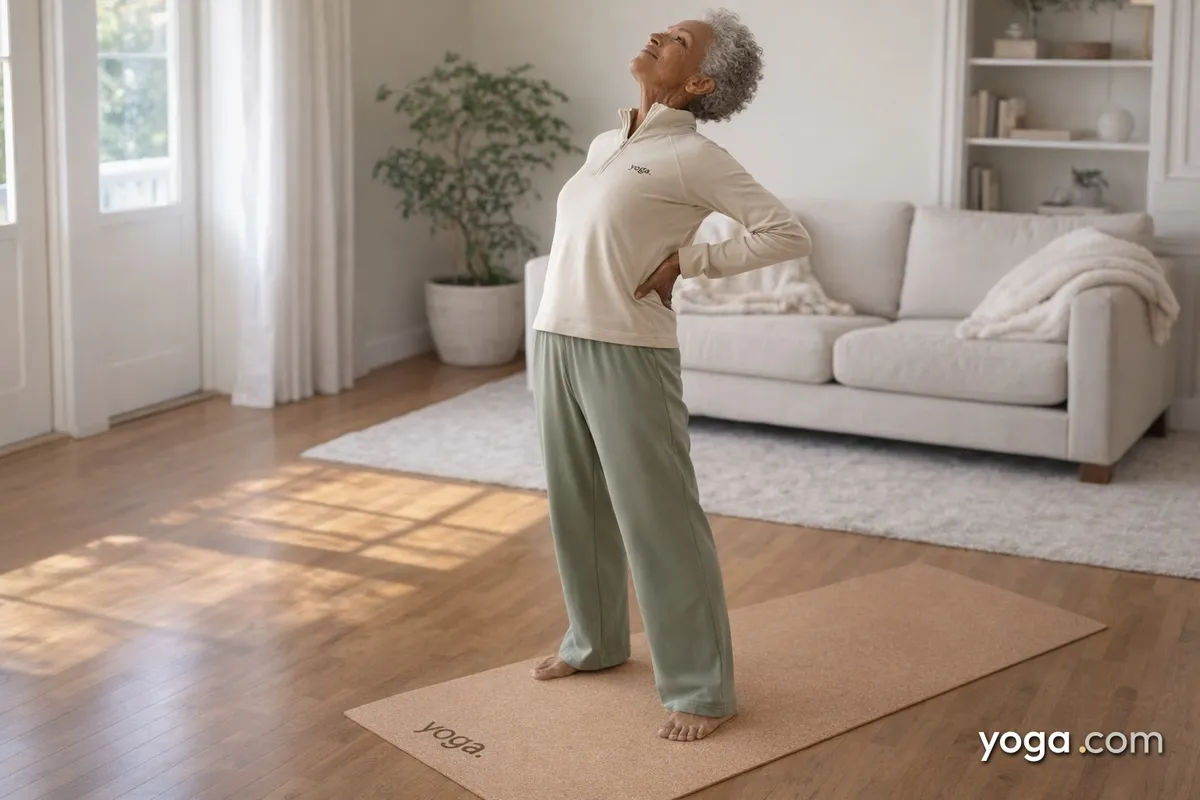
One of the loveliest things about yoga is how far it can bend to fit a life. There are vigorous classes and chair-based ones, long holds and brief ones, big studios and quiet living rooms. Somewhere in that range is a version that suits nearly every body, including one living with bone loss - and your doctor and physical therapist are the right people to help you find yours.
So keep the mat. Let the professionals handle the specifics, let the practice stay easy and unhurried, and let it be the calm, steady hour in your week that drew you to yoga in the first place.