You've maybe looked at a yoga class photo - all those bendy bodies on the floor - and quietly decided it wasn't for you. That moment of self-editing is understandable. But it's also worth challenging, because yoga is one of the most adaptable movement practices in existence. Whether you're recovering from surgery, managing a chronic condition, or simply haven't moved much in years, there is a version of this practice that can meet you exactly where you are.
Why Yoga Is Worth Considering When Movement Is Hard
Sedentary time is a real issue for older adults. Research tracking 350,000 adults age 60 and older across 10 countries found that the average senior spends 9.4 hours a day in sedentary activities. That's a significant amount of sitting - and it compounds over time.
The good news: even gentle, consistent movement helps. A systematic review and meta-analysis of six clinical trials among adults 60 and older found meaningful effects of yoga-based exercise on both balance and physical mobility. An earlier 2016 systematic review also concluded that yoga likely improved mobility and balance in older adults, despite the limited number of studies available at the time.
These aren't dramatic promises. They're modest, real-world improvements - exactly what most people with limited mobility are looking for.
Chair Yoga: A Legitimate Starting Point
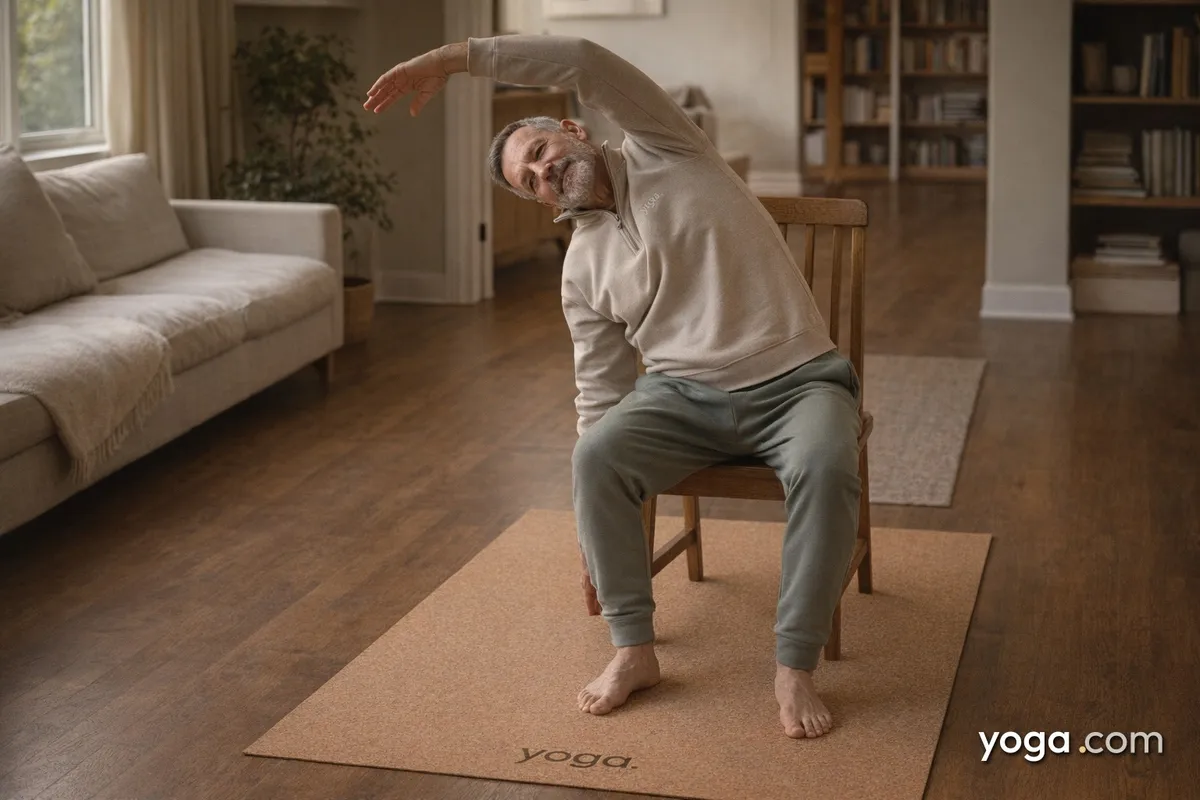
Chair yoga is not a watered-down version of "real" yoga. Chair yoga is actual yoga - seated or supported by a chair - and it is one of the most studied adaptations available for older adults and beginners.
A pilot study assessing an 8-week chair yoga program in 16 elderly participants with a median age of 88 who were at high fall risk found statistically significant improvements in sit-to-stand performance - a direct measure of functional strength. A separate study found that improved functional fitness correlated with participation in a twice-weekly chair yoga program in 31 elderly women over 65 with low physical activity levels.
The takeaway is simple: people who were already deconditioned showed real, measurable gains and so you do not need to be fit to begin. Even participants who were very out of shape made progress, and this fact is important because it means chair yoga is a genuinely accessible starting point for you no matter where your fitness level is right now.
What a Chair Yoga Session Typically Looks Like
The pacing of a chair yoga session is deliberate and steady. Nothing escalates suddenly and so your body has time to adjust to each movement before the next one comes. The gradual structure of a chair yoga session is exactly what makes it safe for you if you are coming back to movement after a long break.
Beginner-Friendly Poses for Limited Mobility
You don't need to stand on a mat to practice yoga. These poses work seated or with support, and so they are genuinely effective for maintaining joint range of motion and circulation. Even a short seated session counts as real yoga practice for your body.
Props Aren't Optional - They're Smart
Using props is not a sign of weakness. Using props is intelligent practice and it is something every serious yoga student should do. Here is what is most useful for you:
You do not need to buy anything to start. A kitchen chair, a rolled towel, and a belt from your closet cover most of what you need, so you can begin your practice today without spending any money at all.
Don't Skip the Breathwork
Breathing exercises require zero physical flexibility. None. You can practice them in bed, in a recliner, or in a car seat.
This matters because breath is where many of yoga's calming, nervous-system benefits originate. Simple techniques like counted breathing (inhale for 4 counts, exhale for 6) or diaphragmatic breathing are accessible to virtually everyone. Build them into your practice from day one - don't treat them as optional filler between poses.
Is Yoga Actually Safe If You Have Limited Mobility?
This is the right question to ask. Yoga, like any physical practice, carries some risk - especially without proper instruction.
A survey of 2,508 yoga participants with chronic diseases found that muscular pain was the most common adverse event at 5.3%, followed by joint pain at 4.9% - and only 1.9% reported outcomes serious enough to discontinue practice. A 2018 pilot randomized controlled trial of 46 older adults reported no serious adverse events in either the yoga or health education groups.
That's reassuring - but it doesn't mean you skip the safety steps.
Before You Begin: Safety Checklist
What the Research Says About Sticking With It
Starting is one thing. Staying with it is another. Here's something genuinely encouraging: in a 2018 feasibility study of sedentary older adults, 82% of yoga participants attended at least 50% of sessions over 10 weeks - and retention at follow-up was 89% for performance measures and 98% for self-report questionnaires.
People showed up. And they kept showing up. That's not a small thing when you're talking about a population that faces real barriers to exercise.
The studies that measured meaningful changes in balance and mobility ran for 8 to 12 weeks. Give yourself that window before you evaluate whether it's working. Two sessions is not enough data.
How Yoga Fits Into Broader Activity Goals
CDC guidelines recommend that adults 65 and older get at least 150 minutes of moderate-intensity aerobic activity per week, plus at least 2 days of muscle-strengthening activity. Yoga - especially a flowing or chair-based class - can contribute to both categories depending on intensity.
It also pairs well with walking, swimming, or physical therapy. Think of it as one piece of a movement life, not the entire answer.
Your Simple Plan to Start This Week
Your Practice Starts Now
Yoga with limited mobility isn't a compromise. It's yoga - adapted thoughtfully so that more bodies can access its benefits. The research is real, the safety profile is encouraging, and the barrier to entry is lower than you probably think. A sturdy chair, a little guidance, and eight consistent weeks might surprise you.
If you have specific medical concerns, please consult your healthcare provider before beginning any new movement practice. A qualified adaptive yoga teacher can help you translate that guidance into a practice that's genuinely yours.