Slow breathing for older adults is one of the simplest practices in yoga: sit somewhere comfortable, let the breath settle into an easy rhythm, and give the body a few quiet minutes. No equipment, no cost, no flexibility required.
One plain note before anything else. This article is general information, not medical advice. If breathlessness, sleep trouble, blood pressure, or any other health concern is part of your life, bring your questions to your doctor or physical therapist first. Our health and safety disclaimer has the full picture.
Why the Breath Draws People In Later in Life
People come to breath work in their sixties, seventies, and beyond for wonderfully ordinary reasons. The stairs feel steeper than they used to. Sleep comes and goes. The days are full and loud, and a few minutes of genuine quiet starts to sound like a small luxury.
Yoga has always treated the breath as the doorway to that quiet. It is a doorway that stays open regardless of what the knees and hips are doing, which makes it a natural fit for anyone whose body has started asking for gentler options.
There is nothing mysterious about the appeal. Most of us have noticed that a long, slow exhale feels settling, the way a deep sigh at the end of a demanding day does. Breathing practices simply take that everyday observation and give it a little structure and regularity.
What a Gentle Session Looks Like
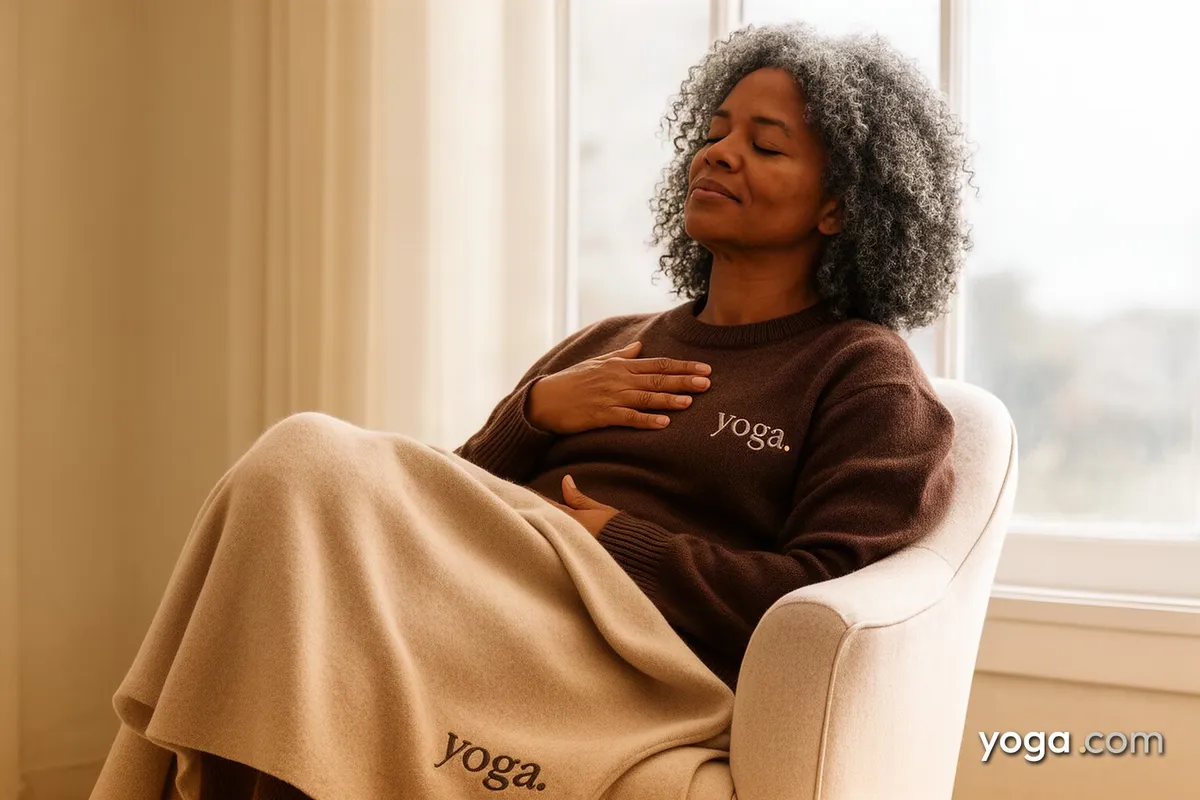
Less than you might expect. A basic practice is just sitting or lying down comfortably, breathing through the nose if that feels natural, and letting each breath become a little slower and softer than ordinary daytime breathing. Some people rest a hand on the belly to feel it rise and fall. Some count quietly to keep their attention from wandering. Some just listen to the sound of the breath itself.
The whole thing can take five minutes. Many longtime practitioners never do more than ten or fifteen, and they treat the practice the way they treat a cup of tea: a small, reliable pleasure, no pressure attached.
A Sensible Way to Begin
If you are new to this, a gentle start protects both your comfort and your enthusiasm:
- Get comfortable first. A supportive chair works as well as any cushion on the floor, and lying down is fine too. Comfort is the foundation of the whole practice.
- Keep the pace easy. The breath should feel unhurried and soft. If you notice yourself working at it, let the breath return to normal for a while and try again more gently.
- Stop on discomfort. Dizziness, tightness, or anything that feels wrong is a signal to return to ordinary breathing and rest. There is always tomorrow.
- Short and regular wins. A few relaxed minutes most days builds the habit far better than one long session once a month.
Nothing about this should hurt, and there is no prize for effort. Gentle is the entire point.
Traditional Practices You May Meet in Class
If you join a yoga class, the teacher may introduce named breathing practices from the tradition, known collectively as pranayama. Three that older students often encounter:
- Alternate nostril breathing (nadi shodhana): breathing through one nostril at a time in a slow, alternating pattern. Practitioners describe it as balancing and quieting.
- Humming bee breath (bhramari): a soft hum on the exhale that creates a gentle vibration. Many people find it immediately soothing.
- Ocean breath (ujjayi): a soft, wave-like sound made at the back of the throat. It naturally slows the breath and anchors the attention.
A good teacher introduces these gradually, adapts them to the person in front of them, and never pushes. If a class leaves you straining, it is moving too fast for you, and it is completely fine to say so.
Where Breath Work Fits Alongside Proper Care
This deserves to be said clearly. Breath work is a companion to good professional care. It sits comfortably alongside doctor visits, physical therapy, medication, and everything else that keeps a person well, and it replaces none of them.
If you live with a heart, lung, or blood pressure condition, or you are being treated for anything at all, your doctor or physical therapist is the right person to ask how a breathing practice fits your particular situation. They know your history. An article, however well-meaning, does not.
The same goes for sleep. Plenty of people say a few slow breaths before bed help them settle, and a wind-down ritual is a lovely thing to have in later life. Persistent sleep trouble, though, deserves a proper conversation with a professional.
A Few Quiet Minutes, Most Days
Slow breathing will never be dramatic, and that is part of its charm. It asks for a chair, a little patience, and a willingness to do less than you think you should. In return it offers something modest and real: a reliable way to find a calmer gear in the middle of an ordinary day.
Start with five minutes. Let the pace come naturally. And keep your doctor in the loop about anything health-related - the breath is a fine companion, and good care is the ground it rests on.