You reach for the top shelf and notice a familiar stiffness. You pause at the bottom of the stairs for just a second longer than you used to. These small moments matter - and they're your body's early invitation to pay attention. The good news: consistent, targeted mobility practices can help you move with more ease, confidence, and independence at every age.
What "Mobility Practices for Everyday Independence" Actually Means
Mobility practices for everyday independence are the regular movement habits that keep you able to do daily tasks - climbing stairs, getting up from a chair, walking to the shops - safely and on your own terms. These habits are not complicated, and most mobility practices do not require a gym or any special equipment at all.
The goal is straightforward: keep your joints, muscles, and balance working well enough that everyday life stays yours to manage. Keep in mind that this means combining aerobic movement, strength work, and balance training, and all three of these things matter, so skipping any one of them leaves a real gap in your overall independence. On top of that, all three areas work together, and because each one supports the others, your routine needs to include every part to be truly effective.
Why This Gets Harder With Age (and Why to Start Now)
Muscle loss is real and it starts earlier than most people expect. Research shows that for people over 50, leg muscle mass drops roughly 1-2% per year and strength declines 1.5-5% per year. This is a slow fade - easy to miss until daily tasks start to feel noticeably harder, and by the time you notice it, the decline has already been going on for years.
By age 70, the impact is significant. A 2023 scoping review published in BMC Geriatrics found that approximately one third of 70-year-olds and most 80-year-olds report restrictions on mobility even within their own apartments and immediate surroundings. Keep in mind that this is not a distant concern - it is a strong argument for building good movement habits now, before limitations set in, and the earlier you start building those habits the better your chances of staying mobile and independent.
Mobility limitations affect approximately 35% of people aged 70 and the majority of those over 85. On top of that, the same research links those limitations to significantly higher healthcare costs and hospitalizations, and so mobility limitations become a real-world consequence that affects your quality of life and your finances because prevention is always less costly than treatment. Starting your movement habits now makes prevention worth prioritizing for your future self.
The Activity Targets Most People Aren't Hitting
Adults 65 and older need at least 150 minutes of moderate-intensity aerobic activity per week - or 75 minutes at vigorous intensity - plus at least 2 days of muscle-strengthening activity and balance work each week, according to CDC guidelines. Keep in mind that these targets apply to most older adults, and the targets are there for a good reason because meeting them makes a real difference to your health.
Here's the gap: fewer than 15% of adults 65 and older meet the Physical Activity Guidelines for Americans, and over 37% do no leisure-time physical activity at all. Most older adults are not hitting these weekly activity targets, and so the majority of older adults are missing out on the benefits that regular movement can bring. These numbers are not shared here to shame you, but to show you that if you have been moving less than you would like, you are far from alone and because so many people are in the same position, there is real room for you to change the picture.
Simple Daily Habits That Support Movement
You don't need to overhaul your life. Small, consistent actions stack up quickly and so you can make real progress without making big changes. Here's where to focus your effort:
Aerobic Movement
- Walking is one of the most effective places to start because walking builds cardiovascular fitness, works the leg muscles, and supports balance all at the same time.
- Break your weekly 150 minutes into manageable chunks - three 15-20 minute walks a day adds up faster than you'd think, and so this approach makes the goal feel much easier to reach.
- Swimming, cycling, and gentle dance classes all count too. Keep in mind that the best choice is the activity you will actually do and stick with.
Strength Training
- Focus on legs, hips, and core because these are the muscles that let you rise from a chair, climb stairs, and carry groceries without help. In other words, these muscles support your everyday independence.
- Bodyweight exercises like squats to a chair, standing calf raises, and wall push-ups are effective and require nothing but space, so you can do these exercises at home with no equipment at all.
- Aim for 2 sessions per week, with a rest day between the sessions.
Balance Work
- Balance work is the component most people skip - and that is a mistake you want to avoid.
- Stand on one foot near a counter for 20-30 seconds per side.
- Practice heel-to-toe walking along a straight line because this simple exercise trains your body's stability in a direct way.
- On top of that, work on balance before a fall happens, not after, because it is much easier to build balance than to rebuild it after an injury.
How Yoga Fits Into a Mobility Practice
Yoga is a genuinely useful mobility tool - it covers aerobic movement, strength, and balance in a single session, with no gym required. A few poses are especially well-suited to building the functional strength and stability that everyday independence depends on:
- Tree Pose (Vrksasana): A single-leg balance pose that trains ankle and hip stability. Practice near a wall if you need it - there's no prize for wobbling without support.
- Warrior I (Virabhadrasana I) and Warrior II (Virabhadrasana II): These standing poses load the hip extensors and quadriceps - the muscles you use to get up from chairs and climb stairs.
- Mountain Pose (Tadasana): A deceptively active standing pose that builds postural awareness and core engagement.
- Child's Pose (Balasana): A gentle hip and spinal stretch that supports the range of motion needed for bending and reaching.
Chair Yoga Is a Real Option
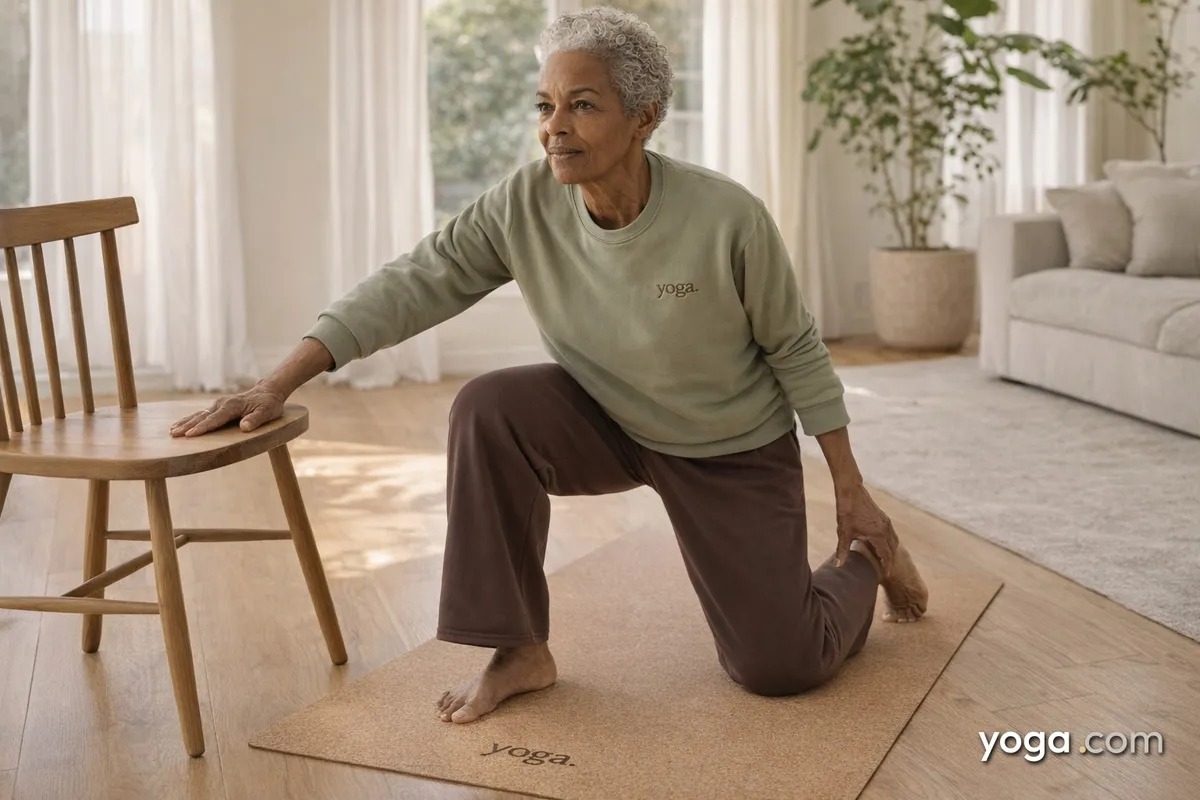
If floor work feels unsafe or uncomfortable, chair yoga delivers real benefits. Seated spinal twists, seated hip flexor stretches, and seated single-leg lifts address the hip and spinal mobility that tends to decline earliest - all from a standard chair, with no fall risk.
Look for a teacher registered at the RYT 200 or RYT 500 level through Yoga Alliance, ideally with training in adaptive or therapeutic yoga. A qualified teacher can tailor a practice to your specific mobility gaps.
When a Structured Program Makes Sense
If you're dealing with a more significant mobility challenge, a supervised program may be the right next step. In a study of 245 participants in home-visit rehabilitation, functional mobility was the most common rehabilitation goal, cited by 36.3% of participants - which tells you how central movement is to recovery and independence for people working with professionals.
Your primary care doctor, a licensed physical therapist, or an occupational therapist can assess your current mobility, identify your specific risks, and build a safe program around them. If you have any existing health condition, please check with a professional before starting a new exercise routine.
What to Skip
A few common missteps are worth naming directly:
- Skipping balance training because it feels too simple. It isn't - it's the piece that prevents falls.
- Waiting until something goes wrong. Mobility practices work best as prevention, not rescue.
- Doing only one type of movement. Walking alone, or yoga alone, won't cover all three components your body needs.
- Assuming you need a gym. Most effective mobility work happens at home, in comfortable clothes, with no equipment.
- Going too hard, too fast. Consistency over intensity - especially when you're starting out.
Move Well, Live Freely
Everyday independence isn't something that just happens or just disappears - it's something you actively maintain, one movement session at a time. A walk, a few strength exercises, some balance practice, a yoga class: none of these are dramatic changes. Together, they're some of the most powerful things you can do to stay mobile, confident, and in charge of your own daily life. Start where you are, move consistently, and let the habit build from there.
Sources
- PMC / NCBI - Mobility Limitations in Older Persons: Health Care Costs and Outcomes
- CDC - Physical Activity Guidelines for Older Adults
- PMC / NCBI - Age-Related Muscle Strength and Mass Decline
- PMC / NCBI - BMC Geriatrics: Determinants of Mobility in Older Adults (2023 Scoping Review)
- PMC / NCBI - Functional Mobility as a Rehabilitation Goal in Home-Visit Programs
- PMC / NCBI - Physical Activity Levels in Older Adults and the Physical Activity Guidelines