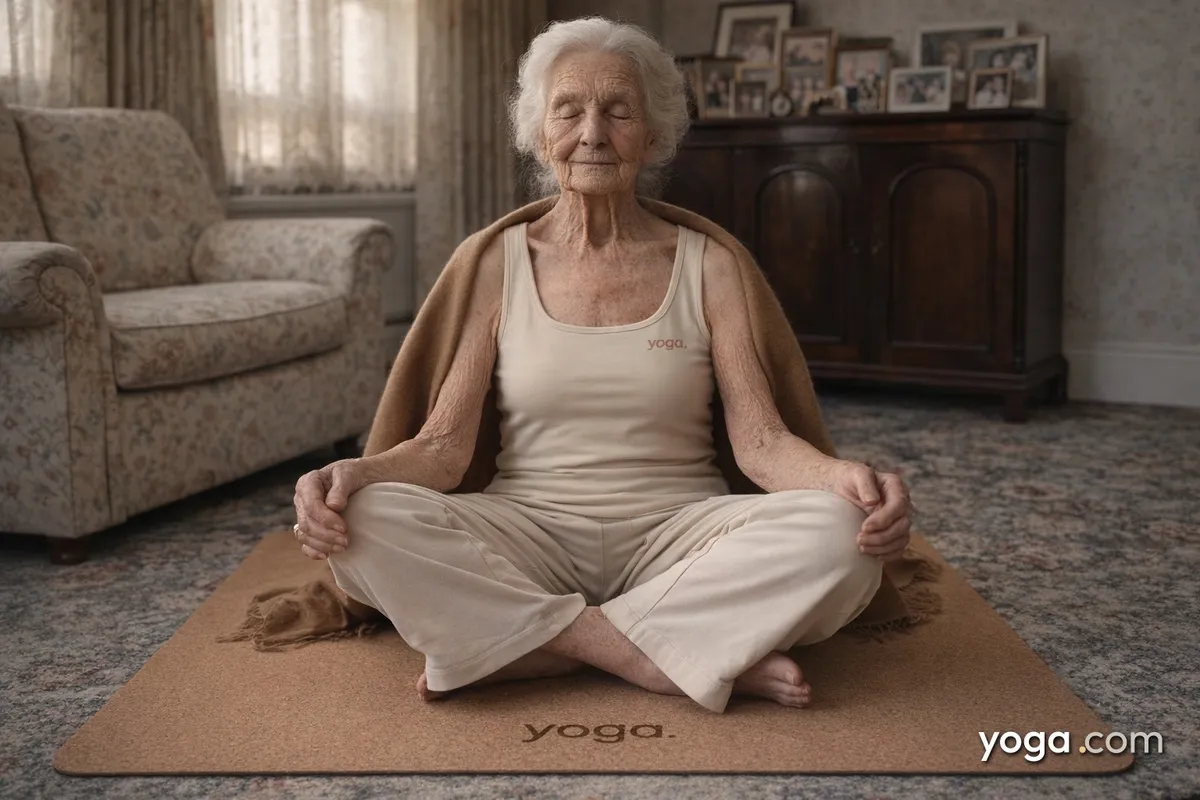
Picture yourself at 100, still moving through a yoga sequence with intention, still breathing with purpose, still showing up on the mat. It sounds extraordinary - but if you want to meet the 100-year-old yogi who has practiced for decades in England, her story isn't just inspiring. It's a practical reminder that yoga, started at any age and sustained with care, can become one of the most powerful tools you have for aging well.
Why Yoga and Aging Belong in the Same Sentence
Here's a quiet truth about getting older: movement becomes more precious, not less. Yet a 10-country study of 350,000 adults aged 60 and older found that the average senior spends 9.4 hours a day in sedentary activities. That's hour after hour when the body isn't being asked to do anything.
Yoga asks something gentle and consistent of the body. And the research is catching up with what long-time practitioners have always known.
What the Research Actually Shows
You do not need to take anyone's word for it. The evidence for yoga among older adults is growing steadily, and real clinical research backs up what many older practitioners already feel in their daily lives.
- Balance and mobility: A systematic review and meta-analysis of six clinical trials found meaningful improvements in both balance and physical mobility among adults aged 60 and older who practiced yoga-based exercise. Better balance matters a great deal for your safety and independence as you get older.
- Walking speed and strength: Researchers at Harvard-affiliated Brigham and Women's Hospital, reviewing 33 studies with 2,384 participants over 65, found that yoga increases walking speed and the ability to rise from a chair - two of the most reliable indicators of healthy aging, and exactly what doctors use to assess physical function in older age.
- Chronic pain: In a randomized trial with a low-income, diverse population living with chronic low back pain, a 12-week yoga programme proved as effective as physical therapy - with benefits that held at one year. Yoga can be a real, practical option for pain management, and those results are not merely short-term.
- Mood and energy: A structured, gentle yoga programme over a month was found to improve mood, reduce anxiety, and lower fatigue in cancer survivors when combined with standard survivorship care. Improvements in mood and energy are just as important as physical improvements.
The World Health Organization highlighted these findings around the theme of "yoga for healthy ageing" - a framing that feels exactly right and one that reflects what the research is consistently showing about yoga and your long-term health.
Chair-Based Yoga: A Real Option at Any Age or Ability Level
One of the most common barriers older beginners mention is this: "I can't get down on the floor." Here's the good news - you don't have to.
The Gentle Years Yoga trial was a 12-week chair-based yoga intervention with weekly 75-minute classes covering postural, breathing, and awareness practices. Participants ranged from 66 to 91 years old - most living with multiple chronic conditions including osteoarthritis, cardiovascular disease, and depression or anxiety.
They practiced anyway. And that matters.
What Chair-Based Yoga Might Include
- Seated Cat-Cow (Marjaryasana-Bitilasana variation) - spinal mobility while sitting upright in a chair
- Seated Mountain Pose (Tadasana variation) - grounding, posture awareness, breath focus
- Seated Forward Fold (Paschimottanasana variation) - gentle hamstring lengthening without floor work
- Supported Warrior I (Virabhadrasana I variation) - building leg strength with a chair for balance
- Seated Spinal Twist (Ardha Matsyendrasana variation) - encouraging mobility through the thoracic spine
- Three-Part Breath (Dirga Pranayama) - calming the nervous system, improving lung capacity
You don't need a single one of these to look like a magazine cover. You just need to show up.
Is Yoga Safe for Older Adults?
It is a fair question, and the honest answer is yes, for most people, with appropriate guidance.
In a survey of yoga practitioners, only 1.9% reported adverse outcomes serious enough that they discontinued practice. When adverse events did occur, the most common were muscular pain (5.3%) and joint pain (4.9%) - the same kinds of discomfort you would expect from any new physical activity, so the overall risk picture is quite reassuring for most people.
If you have osteoporosis, a recent joint replacement, cardiovascular concerns, or any condition that affects your balance or bone density, speak with your doctor or physical therapist before beginning a new yoga practice. Finding a qualified teacher who understands older bodies is genuinely worth the effort, because a good teacher makes a real difference to your safety and your progress.
What to Look for in a Teacher
- Experience teaching seniors or adaptive yoga specifically
- Willingness to offer modifications for every pose
- A calm, unhurried pace - never a sense of competition
- Clear communication about when to rest
Teachers in the Gentle Years Yoga trial had between 4 and 35 years of yoga teaching experience across multiple styles - a reminder that depth of experience matters when working with complex health profiles.
Why More Women Over 65 Should Be on the Mat
According to the 2022 National Health Interview Survey, only 8% of adults aged 65 and older practiced yoga in the past year - the lowest rate of any age group. That gap is worth closing.
Yoga is not a young person's practice. Yoga never was a young person's practice. A 100-year-old yogi from England is not an anomaly to marvel at from a distance - she is a direction you can move toward, one breath at a time, one pose at a time, one Tuesday morning class at a time.
How to Start (Or Start Again) Today
- Choose a gentle or chair-based class. Look for "gentle yoga," "restorative yoga," or "yoga for seniors" in the class description.
- Tell your teacher about your body. Mention any surgeries, injuries, or conditions before the first class. A good teacher will welcome this.
- Bring something to support yourself. A chair near your mat, a yoga block, or a folded blanket can make every pose more accessible.
- Start with two sessions a week. Consistency over intensity - always.
- Give it 12 weeks. That's the timeframe most well-designed studies use, and it's long enough to feel a real difference.
One Last Thing
A century of living, moving, and breathing on the mat is a remarkable thing. You do not need 100 years behind you to begin - yoga's gifts are available wherever you are starting from, right now. Steadier balance, easier movement, and a quieter mind are benefits yoga can offer you today. The mat is waiting. So is the version of you who keeps showing up on it, decade after decade - and that version is already closer than you think.
Sources
- PMC / National Library of Medicine - Yoga for Healthy Aging: Science and Practice
- Harvard Gazette - Strong evidence that yoga protects against frailty in older adults
- PMC / National Library of Medicine - Gentle Years Yoga trial
- World Health Organization - Yoga for Healthy Ageing: Global Practice and Clinical Evidence
- CDC / National Center for Health Statistics - Yoga, Meditation, and Chiropractic Care Among Adults: United States, 2022