Balance is trainable. That is the quiet good news about a skill most of us take for granted until it slips a little with age - and it is never too early, or too late, to start building it back.
One thing before we begin: this article is general information, not medical advice. If you have concerns about steadiness, dizziness, or a past fall, please talk with your doctor or a physical therapist before starting anything new. Our health and safety disclaimer has more detail.
Why Steadiness Shifts Over the Years
Staying upright is a team effort. Your eyes, your inner ear, and the feel of the ground under your feet all send information to your brain, and your muscles make constant small adjustments in response. As the years pass, each part of that team tends to work a touch more slowly, and muscles that once fired instantly take a beat longer. None of this is dramatic on any given day. It is gradual, ordinary, and it happens to everyone.
That gradual quality is also the encouraging part. Skills that fade slowly through disuse tend to respond well to gentle, regular attention - and steadiness is no exception. For many people, simply starting to pay attention to their balance again is the biggest first step.
Where Yoga Comes In
Steadiness is one of the most common reasons people roll out a mat later in life. Yoga does not ask you to do anything extreme. It asks you to stand, to shift your weight slowly, and to notice what your body is doing while you do it. That noticing is the heart of balance practice.
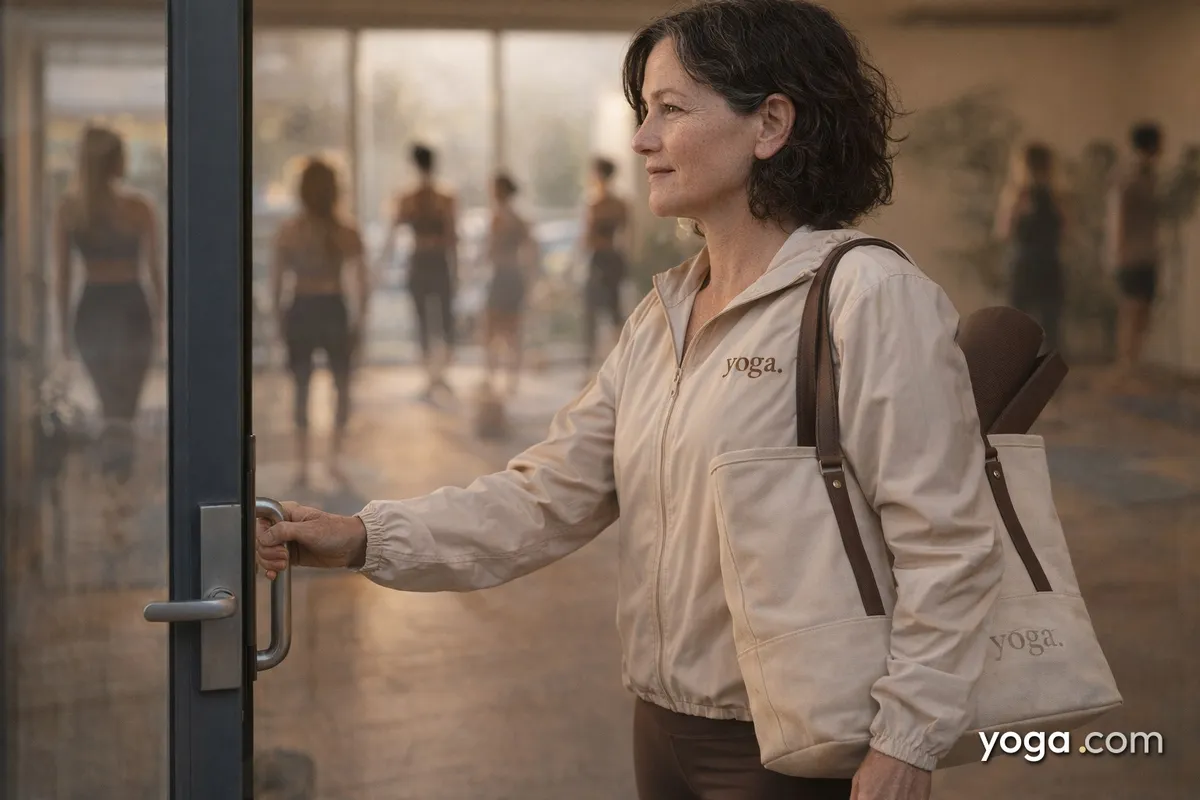
A gentle class also builds confidence, which matters as much as strength. Wobbling in a safe, supported setting - with a wall nearby and a teacher who expects wobbles - takes much of the worry out of it. And yoga fits comfortably alongside the rest of a healthy life: daily walks, time outdoors, good sleep, and whatever care your doctor or physical therapist recommends.
Three Poses Teachers Often Start With
Mountain Pose (Tadasana)
Simple, and worth taking seriously. Stand with your feet about hip-width apart and feel all four corners of each foot pressing into the floor. Let your weight sway gently forward and back, then side to side, and settle in the middle. This is balance practice in its plainest form: standing still, on purpose, with attention.
Tree Pose (Vrikshasana)
Stand on one leg and rest the other foot against your inner calf or inner thigh - never directly on the knee. Keep a wall or a sturdy chair within reach, especially at first, and stay only as long as it feels steady. A shaky Tree is still a Tree. The wall is part of the practice, and there is no shame in using it every single time.
Supported Warrior III (Virabhadrasana III)
With your hands resting on the back of a chair, hinge forward at the hips and let one leg drift back behind you, only as far as feels comfortable. Keep a soft bend in the standing knee. There is no prize for height or depth here - a small, steady shape is worth far more than a big wobbly one.
Small Moments at Home
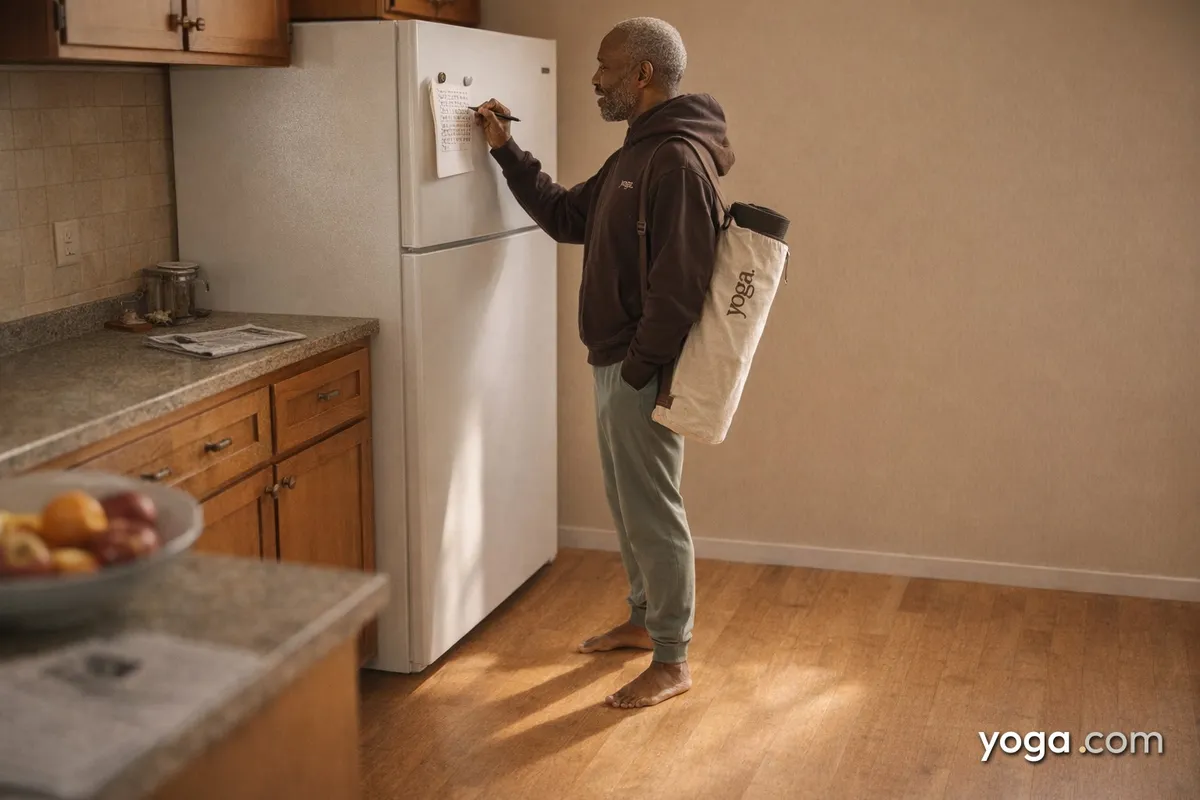
You do not need a studio, equipment, or even a dedicated session. Balance practice slips easily into an ordinary day:
- Stand on one foot while the kettle boils, with a counter close enough to touch.
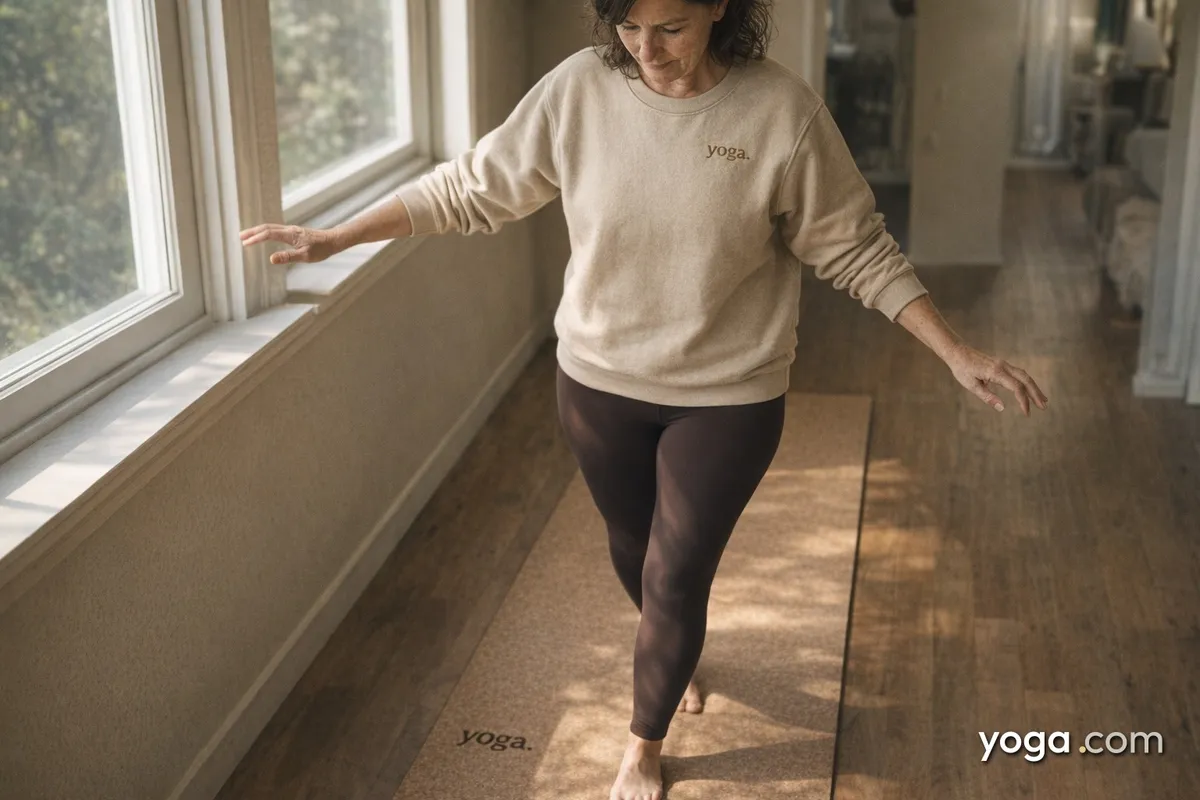
- Take a few slow heel-to-toe steps down a hallway, one foot placed carefully in front of the other, a wall within reach.
- Rise slowly onto your toes and lower back down while holding the back of a chair.
- Stand quietly with your eyes closed for a few breaths near a counter, and notice how different stillness feels without sight to lean on.
Whatever you try, the same gentle rules apply: move slowly, stay within a comfortable range, keep support within reach, and stop if anything hurts. Consistency matters far more than length or intensity. A few mindful minutes, most days, is a genuinely good practice.
Company Helps
Practicing with other people makes it easier to keep going, and a good teacher can watch what you cannot see yourself. Look for classes designed with older adults in mind, where the pacing is unhurried and modifications are offered without fuss:
- Gentle yoga or yoga for seniors, which pairs slow standing work with breath awareness.
- Tai chi, with its slow, deliberate, flowing movement.
- Water-based classes, where the pool offers natural support while you build confidence.
Community centers, senior centers, and the YMCA are practical places to look, and many offer low-cost options.
When a Professional Should Lead
Some things belong with your doctor or a physical therapist rather than a yoga mat. If you have had falls, if you experience dizziness or new unsteadiness, or if you live with a condition that affects your joints, nerves, or vision, start that conversation first. A professional can work out what is going on and point you toward the right kind of movement for your situation - and a gentle yoga practice will still be here, ready to fit around whatever they recommend.
Starting Where You Stand
Balance responds to attention. That is the whole invitation: stand a little more often on purpose, wobble in safe places, let a wall or a chair be your friend, and bring the bigger questions to the people trained to answer them. Steadiness built this way is quiet work, but it pays you back every day - on stairs, on curbs, on winter sidewalks, and in the simple confidence of moving through your own home.